USA Prioritizing Human Return to Moon ~2023, Cislunar Gateway, Private-Public Partnerships
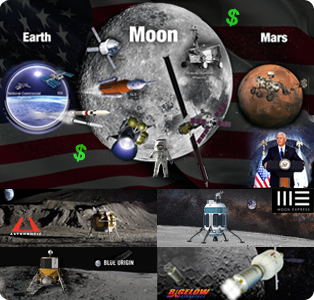
The 2017 U.S. Administration is further clarifying its vision for Space with the proposed NASA FY19 budget and goals: Return to Moon, Deep Space Exploration and R&D, Commercial and Industrial Partnerships, SLS and Orion. A long-awaited, national shift toward and support of the Moon includes a potential US$200 million for commercial robotic landings 2020, leading to human-rated lander developments 2023. Astrobotic, Moon Express, Blue Origin, Bigelow Aerospace, Masten and others may have more opportunities to help establish a permanent and sustainable Moon presence. The Lunar Orbital Platform / Gateway has garnered support from international agencies and private enterprises alike. The Lunar Exploration Campaign and Space Policy Directive-1 are topics of next National Space Council meeting headed by V.P. Mike Pence on February 21 at Cape Canaveral. To show support for an ambitious national space program, the Space Exploration Alliance ‘Legislative Blitz 2018’ is planned for Feb 25-27, followed by the Alliance for Space Development, NSS, SFF ‘March Storm 2018’ on March 11-15, and American Astronautical Society ‘Congressional Visits Day 2018’ March 12-14. While final allocations need to go through Senate approval process, the overall NASA FY19 budget proposal calls for a slight increase of $372.4 million totaling $19.892 billion with a decrease and stagnation at $19.592 billion for 2020-2023 (essentially a pay cut each year due to inflation). Earth science, education and the ISS have been, as expected, designated to receive less-to-zero funding in coming years. (Image Credit: NASA, ME, Astrobotic, Bigelow, Blue Origin, CNBC)
MONDAY
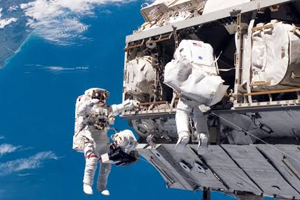
Ongoing… Feb 19 — ISS, 405-km LEO: Expedition 54 six-member crew studying digestive and muscular issues in microgravity, transferring ~2,800 kg cargo from Progress 69P including ISS external payload ICARUS animal tracking system; Misurkin, Vande Hei, Acaba readying for return to Earth next week with Soyuz preparations and lower body negative pressure exercises.
Feb 19 — NewSpace: SpaceX hopes to launch Falcon Heavy in June with customer payloads, crewed flight of Dragon Crew by end of 2018; Space Decentral initiative plans to expand and democratize permanent Human presence in Space.
Feb 19 — Solar System: New Horizons image of ‘Wishing Well’ stars breaks record for picture taken farthest from Earth at 6.12B km; ocean of moon Titan recreated in WSU laboratory to test submarine mission ideas; raw data from Juno latest science pass of Jupiter now available.
JAXA Holds Workshops On Global Exploration Roadmap & Lunar Polar Exploration
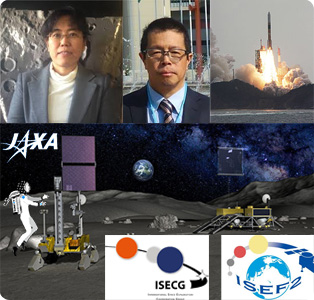
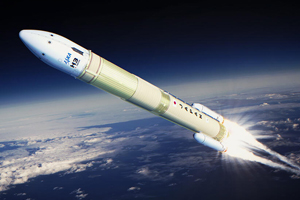
On February 18 and 19, JAXA is convening two all-day public workshops in Tokyo, one to introduce the status of Global Exploration Roadmap (GER) and another to discuss exploration of the polar regions of the Moon. GER is being developed by International Space Exploration Coordination Group (ISECG), which is facilitating discussions among 14 space agencies to expand human presence into the Solar System through coordinated effort. January 2018 edition of GER “reflects consensus about the importance of the Moon on the pathway to Mars”. The Feb 19 workshop on exploration of lunar polar region is the 2nd one following a 2-day workshop on this topic held on Dec 8-9, 2017. It will draw on results from the previous event to deepen discussion toward realizing international collaboration related to scientific instruments and exploration vehicles for investigating water ice at the poles. The GER workshop will be led by JAXA international space exploration advancement team head Naoki Sato (R), and the lunar polar workshop by JAXA scientist Makiko Ohtake (L) and university professors. Also on the horizon this week for Japan is the launch of H-2A rocket #38 from Tanegashima Space Center, scheduled for Feb 25. It will deliver Information Gathering Satellite – Optical 6. Finally, Japanese government is preparing for the 2nd International Space Exploration Forum (ISEF2) to be held March 3, along with I-ISEF for industries on Mar 2 and Y-ISEF for young professionals on Feb 28 – Mar 3. I-ISEF will have panelists including ispace founder Takeshi Hakamada and Moon Village Association president Giuseppe Reibaldi. (Image Credit: JAXA, earth-planets-space.org, ISECG, SPC)
Feb 19 — Australia Telescope National Facility, CSIRO, Sydney, Australia: Colloquium: SKA Update; Robert Braun from Square Kilometre Array.
Feb 19 — Apollo Asteroid 2018 CP2: Near-Earth Flyby (0.016 AU).
Continued from…
Dec 19, 2017 – Mar 6 — CNSA, Online / Beijing, China: CNSA collecting 20,000 digital messages from public to be stored in Chang’e-4 relay satellite launching May-June to Earth-Moon L2 Lagrange Point to support Moon South Pole missions.
Feb 15-19 — American Association of the Advancement of Science (AAAS), European Union Horizon 2020 Programme, University of Texas at Austin, Austin TX: AAAS Annual Meeting.
Feb 15 – Oct 15 — Hawaii Space Exploration Analog and Simulation (HI-SEAS), 2,500-meter Elevation, Mauna Loa HI: HI-SEAS 6 six-member ‘Lavanaut’ crew on 8-month space mission simulation.
Feb 18-19 — JAXA, International Space Exploration Collaboration Group, Tokyo, Japan: Global Exploration Roadmap (GER) meeting focusing on Human Mars exploration; and lunar polar workshop; open to public.
Feb 20 — Apollo Asteroid 2018 CJ: Near-Earth Flyby (0.024 AU).
Feb 20 — Apollo Asteroid 2018 BJ7: Near-Earth Flyby (0.055 AU).
WEDNESDAY
Feb 21 — U.S. National Space Council (NSC), Kennedy Space Center FL:Next meeting of NSC to occur today with U.S. Vice President Mike Pence and NSC council, as well as members of Florida space coast enterprise / industry.
Feb 23 —Institute of Physics in Ireland, Dublin Institute for Advanced Studies, British Council, Northern Ireland Science Festival, Belfast, United Kingdom: Standing Up For Science Workshop; at the Black Box.
Feb 23 — Space Center Houston,Houston TX:Lunch with an Astronaut, Anna Fisher, adult US$69.95, child $35.95.
Feb 24 — JAXA, Launch H-2A / IGS Optical 6, Tanegashima Space Center, Japan: JAXA H-2A rocket to launch Information Gathering Satellite with an optical reconnaissance payload for Japan government.
Feb 24 — Moon: 4.5° S of M35 cluster, 21:00.
Feb 24 — Aten Asteroid 2017 DR109: Near-Earth Flyby (0.009 AU).
SUNDAY
Feb 25 — SpaceX, Launch Falcon 9 / Hispasat 30W-6,Cape Canaveral AFS FL: Falcon 9 rocket to launch Hispasat 30W-6 communications satellite for Madrid-based Hispasat.
Feb 25-27 — Space Exploration Alliance, NSS, AIAA, Moon Society, Federation of Galaxy Explorers, Planetary Society, SEDS, et al,Washington DC: SEA Legislative Blitz 2018; advocating for the exploration and development of Space.
Includes ~150 meetings covering the fields of COSPAR Scientific Commissions / Panels / Task Groups, such as SC B: The Earth-Moon System, Planets, and...
From 02 to 07 August 2026, a few thousand geoscientists across diverse disciplines will gather at the 23rd annual meeting of the Asia Oceania Geosciences...
2:45 pm EDT from Johnson Space Center, NASA astronaut Chris Williams will recap his recent eight-month mission aboard the International Space Station. Williams returned to...
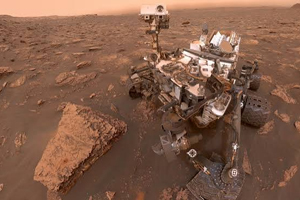
NASA Curiosity (Mars Science Laboratory) rover surpasses another full year of operations on Mars surface today; launched Nov 26, 2011 – landed Aug 5,...
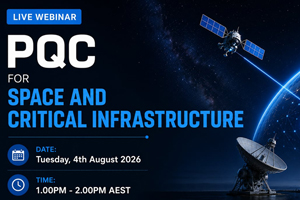
Virtual Series 2026 will offer deeper conversations on why PQC matters and the practical steps businesses should be taking; starts 1:00 pm AEST. Featuring:...
This international lunar science meeting has two objectives: to provide a platform for leading experts to review recent advances across lunar research, from the...
At CSIR International Convention Centre. Key topics are Earth Observation, Developing Space Tourism, Space Supply Manufacturing. Cultural tours are offered.
Participants will receive theoretical and hands-on training in electron imaging and X-ray spectroscopy for application to planetary samples. This training opportunity is targeted at...
"Leading Australia’s Space Future for Our Strategic Advantage". Southern Space 2026 brings together decision-makers who set the direction for Australia’s space sector. It is...
 Feb 19 —
  Feb 19 — NewSpace:
  Feb 19 — USA:
 = All times
 = All times for international terrestrial events in local time unless noted.
 = All times for space events, and…
 = All times for international space / astro events in Hawaii Standard Time unless noted. Add 10 hours to obtain UT (‘Universal Time’).