JAXA Hayabusa2 to Arrive at Ryugu Asteroid for Sample Return Mission
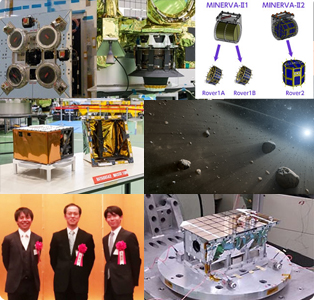
JAXA Hayabusa2 spacecraft is preparing for its rendezvous with C-type asteroid 162173 Ryugu, and is now within ~900 km. The planned arrival at a 20-km altitude orbit is around June 27 where Hayabusa2 will descend to 5 km for observations toward the end of July utilizing Near InfraRed Spectrometer 3μm to investigate mineral, water, and chemical elements and a Thermal Infrared Imager to study temperature and thermal radiation. In August, Hayabusa2 is scheduled to descend to 1-km above surface for gravitational observation in preparation of releasing a target marker prior to landing between September to October. One or more of the 3 MINERVA-II rovers and the MASCOT lander may be deployed to gather samples. MASCOT will study the asteroid with 4 devices including MicrOmega hyperspectral infrared microscope, MAG magnetometer, CAM multispectral camera, and MARA radiometer. At approximately 600 kg, Hayabusa2 has two additional operations planned in 2019, including dropping a 2-kg copper liner (carry-on impactor) to create an artificial crater on collision and retrieving underground samples. A scheduled departure from Ryugu at the end of 2019 and re-entry capsule return to Earth at 12km/second in 2020 could conclude 6-year mission. Hayabusa2 mission hopes to add data on the evolution and origin of solar system and improve on technology in future deep space exploration and sample return. (Pictured: JAXA Project Manager Yuichi Tsuda, Yuya Mimasu, Takashi Ono; Image Credits: JAXA, NASA)
MONDAY
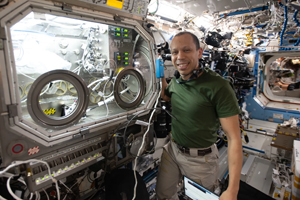
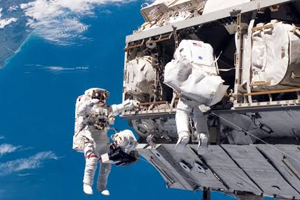
Ongoing… Jun 18 — ISS, 405-km LEO: Expedition 56 six-member crew reviewing procedures for emergency roles and responsibilities, collecting / stowing blood samples for marrow investigations, transferring cargo from Progress MS-08 & Cygnus OA-9 and filling with waste, taking readings of radiation levels, potable water, air quality, microbes on surfaces.
Jun 18 — NewSpace:Base 11 Space Challenge now open to Canada participation, university teams begin planning SSTO systems; Rocket Lab gaining 2018-19 launch contracts through Spaceflight Industries for BlackSky, Canon Electronics, private / gov organizations; Axiom Space planning commercial ISS nodes for tourism starting 2020 at US$55M.
Jun 18 — Solar System: Opportunity rover expected to wake itself up after massive Mars dust storm passes; Juno team planning advanced mission goals after craft receives extension into 2021; ongoing analyses of Cassini data show magnetic outbursts on Saturn, which occur around noon, fuel daytime auroras.
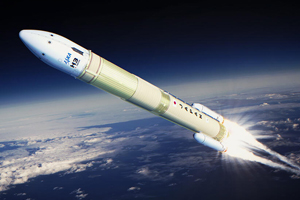
Jun 18 — Global:ISRO working toward Chandrayaan-2 launch early Oct, planning 30 indigenous / 10 ‘high-end’ GSLV rockets within 4 years; Japan aiming to launch prototype of H3 rocket FY2020, reduce launch cost / production time; Roscosmos investigating technology for 3-meter telescope / laser to incinerate space debris.
Jun 18 — Hawai’i: Today PISCES welcomes students for annual 10-week summer research program centered on basalt pavers for vertical launch / landing pads; scientists nearing final stages of NASA-funded phase study for ISRU LEGO blocks using Hawaii rocks & dust; studies of underwater Kilauea volcanic activity could advance techniques in search of alien life.
= All times
for terrestrial events in local time unless noted.
= All times for international terrestrial events in local time unless noted.
= All times for space events, and…
= All times for international space / astro events in Hawaii Standard Time unless noted. Add 10 hours to obtain UT (‘Universal Time’).
UNOOSA, COPUOS Major Events Highlight 50th Observation, Global Coordination of Space Exploration
The United Nations Office of Outer Space Affairs and Committee on the Peaceful Uses of Outer Space (UNOOSA, COPUOS) are holding multiple events in Vienna, Austria in recognition of the 50th observation of the 1st UNISPACE conference held in 1968, and the future of international space exploration. UNISPACE+50 Symposium on June 18-19 will feature welcome remarks from UNOOSA Senior Program Officer Juan-Carlos Villagran, and keynote address by Director Simonetta Di Pippo. Panels and side events will include NewSpace, Universities, Space Agencies, Space Generation, Moon Village, Space Law, and ~25 Heads of Space Agencies. The “Space for Women” panel will have Pascale Ehrenfreund (DLR CEO), Cynda Collins Arsenault (SWF President), Patrizia Caraveo (IASF-INAF Director), and Ersilia Vaudo (ESA Chief Diversity Officer). A special “UNISPACE+50 High-level Segment” June 20-21 with President of Austria Alexander Van der Bellen, UNOV Director-General Yury Fedotov, UN Champion for Space Astronaut Scott Kelly, and Simonetta Di Pippo will feature statements from Heads of State, Government, Ministers, Vice-Ministers and other representatives. COPUOS will revert to its regular session June 22-29. The UNISPACE+50 exhibition will have ~40 exhibitors in Vienna International Centre from June 18-23. Related meetings also include Space Generation Advisory Council “Space Generation Forum 2.0” held June 16-17 and the International Academy of Astronautics Board of Trustees meeting on June 19. (Image Credits: UN, COPOUS, SWF, DLR, INAF, ESA, NASA, SGAC)
Jun 18 — 35th Observation of the 1st American Woman in Space, Nationwide USA / Global: Celebrating the first American woman to fly in Space, Sally Ride on Space Shuttle Challenger STS-7 mission in 1983.
Jun 18-19 — UNOOSA, Committee on the Peaceful Uses of Outer Space (COPUOS), Vienna, Austria:UNISPACE+50; first UN Conference on the Exploration and Peaceful Uses of Outer Space (UNISPACE) was held 1968; featuring panel “Space for Women”.
Jun 18-21 — Heidelberg University Collaborative Research Center 881, House of Astronomy on Königstuhl, GAVO, Heidelberg, Germany: 2nd Gaia Data Release (DR2) Workshop; to provide full 5 dimensional astrometrical solutions for 1.5B objects; second data set is expected to be more than 2 TB.
May 29 – Aug 3 — Lunar and Planetary Society, NASA SSERVI, Center for Lunar Science and Exploration, Houston TX:2018 Exploration Science Summer Intern Program; students to be involved in activities that support missions to the Moon that utilize Orion crew vehicle, Lunar Orbital Platform-Gateway, and robotic assets on lunar surface.
Jun 19 — British Interplanetary Society, Northern Space Consortium, Liverpool, United Kingdom:Conference: The Space Age – A Global Revolution; designed for industry, start ups, small to medium enterprises (SMEs), entrepreneurs and investors.
Jun 19 — Venus Landed Platform Working Group, NASA, Washington DC: First meeting of Venus Landed Platform Working Group; to assess high priority science investigations that are needed on the surface of Venus.
Jun 19 — Maryland Space Business Roundtable, Greenbelt MD: Luncheon featuring Dr. Colleen Hartman, Director of Sciences and Exploration Directorate at GSFC.
Jun 19-21 — Academy of Sciences of Czech Republic, Europlanet 2020 RI, EU Horizon 2020 Programme, Prague, Czech Republic:Didymos Observer Workshop 2018; discussing binary near-Earth asteroid (65803) Didymos observations 2019-2022 – before, during and after the planned Double Asteroid Redirection Test (DART) Mission impact.
Jun 19-22 — Institute of Astronomy and Department of Astronomy and Space Informatics of V.N. Karazin Kharkiv National University, Kharkiv, Ukraine: Atmosphereless Solar System Bodies in the Space Exploration Era; in light of 210th anniversary of astronomy science in Kharkiv, the 100th anniversary since starting regular observations of the Moon and 40th anniversary of asteroid study in Kharkiv Astronomical Observatory.
Jun 19-22 — ESA, Madrid, Spain:SPICE Training Class; free and open to all professionals and students involved in Solar System exploration.
Jun 19 — Apollo Asteroid 2018 KC3: Near-Earth Flyby (0.037 AU)
WEDNESDAY
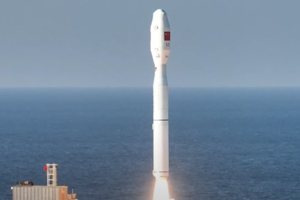
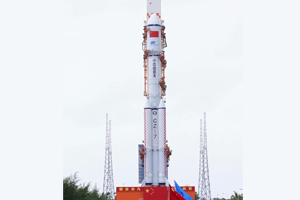
Jun 20 — CNSA, LaunchLong March 3B / Beidou,Xichang Satellite Launch Center, China: Long March 3B rocket with Yuanzheng upper stage to launch 2 satellites for China Beidou navigation network into Medium Earth Orbit.
Jun 23 — Lunar Reconnaissance Orbiter, Moon Orbit: NASA spacecraft reaches 10th year in Moon orbit today; launched Jun 18, 2009, arrived at Moon 5 days later.
Jun 23 — Rocket Lab, Launch Electron / “It’s Business Time” Multi-Payload, Launch Complex 1, Mahia Peninsula, New Zealand: Opening of 14-day launch window (Jun 23 – Jul 6) for first fully commercial launch dubbed ‘It’s Business Time’ with two Spire Lemur 2 CubeSats, one GeoOptics CICERO satellite, IRVINE01 educational payload, and NABEO drag sail technology demonstrator; daily launch windows local time 12:30–16:30, Hawaii time 14:30-18:30 on Jun 22.
Jun 23 — Mauna Kea Astronomy Outreach Committee, Mauna Kea HI, 2,800-meter level: Malalo o ka Po Lani: Stories of the Summer Stars; presentation covering cultural components that surround Mauna O Wakea, 18:00 followed by stargazing program, at Mauna Kea Visitor Information Center.
Jun 23 — Apollo Asteroid 467309 (1996 AW1): Near-Earth Flyby (0.046 AU)
Jun 23 — Kuiper Belt Object 50000 Quaoar: At Opposition (41.883 AU)
SUNDAY
Jun 24 — Asgardia, Vienna, Austria: First Parliamentary Session; holds first session, checks IDs of parliament members, and moves on to form other government bodies.
Jun 24-29 — New Zealand Astrobiology Network, University of Auckland, UNSW, Rotorua, New Zealand:Astrobiology Australasia Meeting.
Jun 24 — Mercury: 4.8° SSW of Pollux, 15:00.
Jun 24 — Aten Asteroid 441987 (2010 NY65): Near-Earth Flyby (0.019 AU)
Includes ~150 meetings covering the fields of COSPAR Scientific Commissions / Panels / Task Groups, such as SC B: The Earth-Moon System, Planets, and...
From 02 to 07 August 2026, a few thousand geoscientists across diverse disciplines will gather at the 23rd annual meeting of the Asia Oceania Geosciences...
2:45 pm EDT from Johnson Space Center, NASA astronaut Chris Williams will recap his recent eight-month mission aboard the International Space Station. Williams returned to...
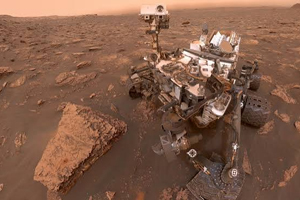
NASA Curiosity (Mars Science Laboratory) rover surpasses another full year of operations on Mars surface today; launched Nov 26, 2011 – landed Aug 5,...
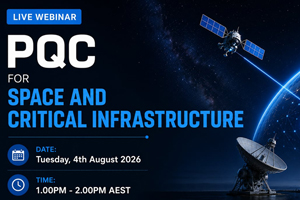
Virtual Series 2026 will offer deeper conversations on why PQC matters and the practical steps businesses should be taking; starts 1:00 pm AEST. Featuring:...
This international lunar science meeting has two objectives: to provide a platform for leading experts to review recent advances across lunar research, from the...
At CSIR International Convention Centre. Key topics are Earth Observation, Developing Space Tourism, Space Supply Manufacturing. Cultural tours are offered.
Participants will receive theoretical and hands-on training in electron imaging and X-ray spectroscopy for application to planetary samples. This training opportunity is targeted at...
"Leading Australia’s Space Future for Our Strategic Advantage". Southern Space 2026 brings together decision-makers who set the direction for Australia’s space sector. It is...
 JAXA Hayabusa2 spacecraft is preparing for its rendezvous with C-type asteroid 162173 Ryugu, and is now within ~900 km. The planned arrival at a 20-km altitude orbit is around June 27 where Hayabusa2 will descend to 5 km for observations toward the end of July utilizing Near InfraRed Spectrometer 3μm to investigate mineral, water, and chemical elements and a Thermal Infrared Imager to study temperature and thermal radiation. In August, Hayabusa2 is scheduled to descend to 1-km above surface for gravitational observation in preparation of releasing a target marker prior to landing between September to October. One or more of the 3 MINERVA-II rovers and the MASCOT lander may be deployed to gather samples. MASCOT will study the asteroid with 4 devices including MicrOmega hyperspectral infrared microscope, MAG magnetometer, CAM multispectral camera, and MARA radiometer. At approximately 600 kg, Hayabusa2 has two additional operations planned in 2019, including dropping a 2-kg copper liner (carry-on impactor) to create an artificial crater on collision and retrieving underground samples. A scheduled departure from Ryugu at the end of 2019 and re-entry capsule return to Earth at 12km/second in 2020 could conclude 6-year mission. Hayabusa2 mission hopes to add data on the evolution and origin of solar system and improve on technology in future deep space exploration and sample return. (Pictured: JAXA Project Manager Yuichi Tsuda, Yuya Mimasu, Takashi Ono; Image Credits: JAXA, NASA)
  Jun 18 —
  Jun 18 — NewSpace:
  Jun 18 — USA: NASA RFI seeks input on flight-readiness of
 = All times
 = All times for international terrestrial events in local time unless noted.
 = All times for space events, and…
 = All times for international space / astro events in Hawaii Standard Time unless noted. Add 10 hours to obtain UT (‘Universal Time’).