Asteroid Day Advocates for Global Awareness as Asteroid Exploration Continues with Hayabusa2, OSIRIS-REx, Dawn
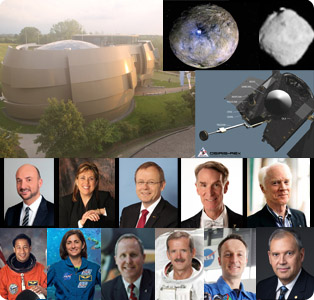
The 4th Annual Asteroid Day will be celebrated on and around June 30 with over 2,500 planned events in 193 countries as well as 2nd Annual Asteroid Day Live podcast from Luxembourg on June 28. Included among 24 planned broadcast speakers are (L-R) Deputy Prime Minister of Luxembourg Etienne Schneider, UNOOSA Director Simonetta di Pippo, ESA Director General Jan Wörner, Bill Nye, and Astronauts Rusty Schweickart, Ed Lu, Nicole Stott, Tom Jones, Chris Hadfield, Matthias Maurer, and Dorin Prunariu. There will be a scheduled live webcast segment on June 30 from ESA at European Southern Observatory Supernova Planetarium in Munich to discuss asteroid updates / science and conduct interviews. Topics globally will range from government and commercial initiatives to advance asteroid studies, detection, tracking, and deflection technology development. Hayabusa2 closes in on asteroid Ryugu with a scheduled arrival of ~June 27. The mission includes observations, possible deployment of lander and 3 rovers, and sample return. OSIRIS-REx approach phase begins August 17. The science team plans for first image of asteroid Bennu using its Polycam Imager within 2 million km as official start of Science Operations. Bennu surveying is planned for October and concludes with a “touch and go sample” return. Meanwhile, Dawn continues examination of Ceres as close as 35 km while detecting gamma ray and neutron spectra to determine chemical composition. (Image Credits: ESO, JAXA, NASA, NATO, ESA, Bill Nye, Rusty Schweickart, Nicole Stott, Tom Jones, CSA-ASC, Moon Village Association, University of Arizona)
MONDAY
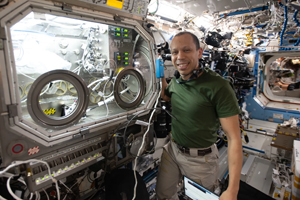
Ongoing… Jun 25 — ISS, 405-km LEO: Expedition 56 crew planning for rendezvous & capture of Dragon CRS-15, transferring cargo from Progress 69P and Cygnus OA-8, working with newly installed 3D sensor array to study Earth magnetic field; 1st UAE Astronaut to fly to ISS 2019, Nick Hague to become 1st member of 2013 NASA Astronaut class to fly to space Sep 2018.
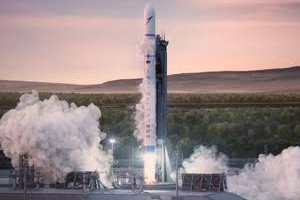
Jun 25 — NewSpace: OneSpace of Beijing planning to unveil family of rockets by end of 2018, envisions future reusable rockets & crew capsule; PLD Space of Spain developing ARION 1 rocket to accomplish 1st private suborbital launch service in Europe by 2019; Virgin Orbit LauncherOne currently undergoing series of tests before maiden flight, captive carry test planned for July.
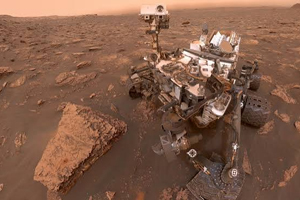
Jun 25 — Solar System: International 6 orbiters at Mars monitor global dust storm while 2 NASA rovers on surface await clear skies / solar power; Hayabusa2 nears Ryugu, continuously delivers detailed images as asteroid topology clarifies; China may announce Tiangong-2 decommissioning as indicated by its ~100 km decrease in altitude.
Jun 25 — Global: UAE Mohammed bin Rashid Center preparing for Mars Hope orbiter 2020, planning to fund 36 space projects to support UAE Mars City / Mars 2117; ESA partners going full speed ahead to develop next-gen Ariane 6 rocket; annual Workshops at NARIT teaching participants to access / conduct further research studies from data of Thai National and Xinglong Observatories.
Jun 25 — Hawai’i: With no decision date set, State Supreme Court will assess whether to hold another contested case hearing or to reinstate TMT sublease; SpinLaunch raises US$40M in funding, looks toward Hawaii Island & 3 other states as potential headquarters; data from East Asian Observatory JCMT and SMA being reviewed for possible errors for Event Horizon Telescope global project.
= All times
for terrestrial events in local time unless noted.
= All times for international terrestrial events in local time unless noted.
= All times for space events, and…
= All times for international space / astro events in Hawaii Standard Time unless noted. Add 10 hours to obtain UT (‘Universal Time’).
SSERVI 2018 ESF and LunGradCon Gain New Energy from USA Return to Moon Priorities
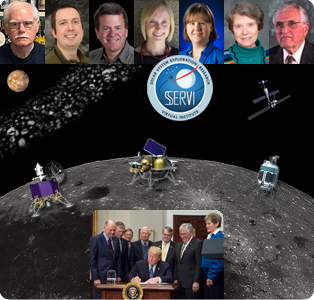
The 5th Annual Exploration Science Forum (ESF) hosted by NASA SSERVI is set to take place at Ames Research Center in Moffett Field, California on June 26-28. ESF will feature 5 plenary and 10 parallel sessions, LEAG Town Hall, focus group sessions, Award ceremonies, and poster sessions. Leading lunar scientists participating include (TR-L) Astronaut Harrison Schmitt, Carle Pieters, Sarah Noble, Ryan Watkins, Greg Schmidt, Noah Petro, and James Head. The ‘Astrophysics Enabled at the Moon’ session will see talks by Jack Burns, Alexander Hegedus and Jordan Mirocha. There is also major focus on Human Return to Moon, lunar robotic support, volatiles, geophysics, magnetics, geology, and asteroids & comets. Mars Institute Co-founder Pascal Lee will present “Human Return to the Moon: A Mars Forward Analog Strategy for Lunar Science and Exploration”. The 9th Lunar and Small Bodies Graduate Conference (LunGradCon) will be held on June 25. Grad students will present research findings in 15-minute oral presentations, allowing for professional development and networking. ESF and LunGradCon have new strength and opportunities this year with Space Policy Directive 1 and lunar prioritization. An RFI due June 27, has been issued to seek input on availability of lunar lander payloads ready to fly as soon as 2019. While allocation of NASA FY19 potential budget of US$19.9B has yet to become official, full funding has been approved by the Senate Appropriations Committee for the Lunar Discovery and Exploration program and its Advanced Cislunar & Surface Capabilities program including lander technologies and Lunar Orbital Platform-Gateway. (Image Credits: SSERVI, NASA, A. Gemignani, Brown University, ILOA, Moon Express, Canadensys Aerospace, Astrobotic)
Jun 25 — Asgardia, Vienna, Austria: Inauguration of the Head of Nation of Asgardia; Igor Ashurbeyli to announce details of Asgardia working timescales for habitation off-planet, development of its economy, cryptocurrency, UN recognition, senior members of Government.
Jun 25 – Aug 17 — Frontier Development Lab (FDL), NASA,Online: FDL 2018 Challenges; an AI R&D accelerator that tackles knowledge gaps useful to NASA space program; 2018 topics are space resources, orbital debris, NEOs, Earth observation, space weather, astrobiology.
Jun 25 – Aug 24 — International Space University, ESA, Netherlands Space Office, Delft University of Technology, Leiden University, Noordwijk, The Netherlands: ISU 31st Space Studies Program (SSP 2018); intensive space course and student projects, plus public events, professional meetings, model rocket launch, robotics competition, space masquerade.
Jun 25 — Moon: 8.9° N of Antares, 15:00.
Continued from…
May 29 – Aug 3 — Lunar and Planetary Society, NASA SSERVI, Center for Lunar Science and Exploration, Houston TX:2018 Exploration Science Summer Intern Program; students to be involved in activities that support missions to the Moon that utilize Orion crew vehicle, Lunar Orbital Platform-Gateway, and robotic assets on lunar surface.
Jun 24-29 — New Zealand Astrobiology Network, University of Auckland, UNSW, Rotorua, New Zealand:Astrobiology Australasia Meeting.
TUESDAY
Jun 26 — Galactic Tick Day, Worldwide: Celebrating Solar System progress around the galactic center of the Milky Way Galaxy every 225 million Earth years; one centi-arcsecond of this rotation is called a Galactic Tick which happens every 633.7 days.
Jun 26 — Apollo Asteroid 2007 UD6: Near-Earth Flyby (0.074 AU)
WEDNESDAY
Jun 27 — Interface Region Imaging Spectrograph (IRIS), Sun-Synchronous Orbit: NASA observation satellite investigating the physical conditions of the chromosphere of Sun enters 6th year in space, launched 2013.
Jun 27 — Hayabusa2, Asteroid 162173 Ryugu: JAXA Hayabusa2 Asteroid Explorer mission expected to arrive at C-type asteroid 162173 Ryugu; will study for about 1.5 years, attempt to make artificial crater, sample asteroid, and return to Earth 2020.
Jun 27 — Cinco Ranch Library, Katy TX: To the Moon and Beyond, discussion by Sudeshna Lahiry of NASA Solar System Ambassador Program.
Jun 27 — The National Academies of Sciences, Engineering, Medicine, Online / Washington DC: Meeting 16: Exoplanet Science Strategy Teleconference; Division on Engineering and Physical Sciences, Board on Physics & Astronomy, Space Studies Board.
Jun 27 — Moon: 1.8° N of Saturn, 18:00; Full Strawberry Moon, 18:53.
Jun 27 — Saturn: At opposition, 03:00.
Jun 27 — Amor Asteroid 2018 MX4: Near-Earth Flyby (0.014 AU)
THURSDAY
Jun 28 — OSIRIS-REx, Deep Space Maneuver 2, Asteroid 101955 Bennu (1999 RQ36) Trajectory: Origins-Spectral Interpretation-Resource Identification-Security-Regolith Explorer (OSIRIS-REx) mission to perform DSM 2 to refine trajectory toward Asteroid Bennu.
Jun 28-29 — Library of Congress – Kluge Center, Washington DC: Decolonizing Mars; an unconference on inclusion and equity in space exploration.
Jun 28 – Jul 3 — Royal Astronomical Society of Canada (RASC), Calgary, Alberta, Canada:RASC 2018 General Assembly.
Jun 28 — Moon: 1.2° N of Pluto, 23:00.
Jun 28 — Apollo Asteroid 2018 LN2: Near-Earth Flyby (0.027 AU)
FRIDAY
Jun 29 — SpaceX, Launch Falcon 9 / CRS 15,Cape Canaveral AFS FL: SpaceX Falcon 9 rocket set to launch 17th Dragon spacecraft on 15th operational cargo delivery mission to ISS at 05:41 EDT.
Jun 29 — Moon: At apogee (distance 405,577 km), 17:00.
Jun 29 — Apollo Asteroid 2018 LR3: Near-Earth Flyby (0.016 AU)
SATURDAY
Jun 30 — Asteroid Day Ltd., Global: Asteroid Day 2018; education, events, films and entertainment hosted by organizations and individuals to increase awareness about asteroids.
Jun 30 — 110th Observation of Tunguska Explosion,Global / Siberia, Russia: Strategies for discovering, monitoring and tracking NEOs advance Worldwide as the largest Earth impact in recorded history is remembered today; so far 18,208 NEOs have been identified.
Jun 30 — Moon: 4.7° N of Mars, 14:00.
SUNDAY
Jul 1 — Deep Space, KBO Ultima Thule Trajectory: New Horizons heading to most distance object to ever be visited by a spacecraft at 44AU, science team utilizing data from Hubble wide-field camera and Gaia data release 2 to develop precise trajectory and orbit predictions.
Jul 1 — Australian Space Agency, Canberra, Australia: Newly formed Space Agency to begin operations today with a budget allotment of US$41M over 4 years; Dr. Megan Clark will lead Australian Space Agency in its 1st year.
Jul 1 — Breakthrough Initiatives, Online / Mountain View CA: Submissions due – Breakthrough Junior Challenge; for a chance to win US$250k college scholarship prize, $50K teacher prize, $100K Breakthrough Science Lab.
Includes ~150 meetings covering the fields of COSPAR Scientific Commissions / Panels / Task Groups, such as SC B: The Earth-Moon System, Planets, and...
From 02 to 07 August 2026, a few thousand geoscientists across diverse disciplines will gather at the 23rd annual meeting of the Asia Oceania Geosciences...
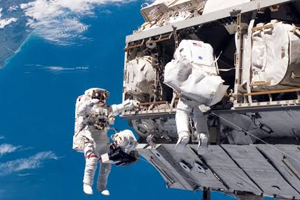
2:45 pm EDT from Johnson Space Center, NASA astronaut Chris Williams will recap his recent eight-month mission aboard the International Space Station. Williams returned to...
NASA Curiosity (Mars Science Laboratory) rover surpasses another full year of operations on Mars surface today; launched Nov 26, 2011 – landed Aug 5,...
Virtual Series 2026 will offer deeper conversations on why PQC matters and the practical steps businesses should be taking; starts 1:00 pm AEST. Featuring:...
This international lunar science meeting has two objectives: to provide a platform for leading experts to review recent advances across lunar research, from the...
At CSIR International Convention Centre. Key topics are Earth Observation, Developing Space Tourism, Space Supply Manufacturing. Cultural tours are offered.
Participants will receive theoretical and hands-on training in electron imaging and X-ray spectroscopy for application to planetary samples. This training opportunity is targeted at...
"Leading Australia’s Space Future for Our Strategic Advantage". Southern Space 2026 brings together decision-makers who set the direction for Australia’s space sector. It is...
 Jun 25 —
  Jun 25 — NewSpace:
  Jun 25 — USA:
 = All times
 = All times for international terrestrial events in local time unless noted.
 = All times for space events, and…
 = All times for international space / astro events in Hawaii Standard Time unless noted. Add 10 hours to obtain UT (‘Universal Time’).