ISS Exp 56 to Welcome Multiple Experiments, Cargo Ships – Possibly 1st Commercial Crew Ships
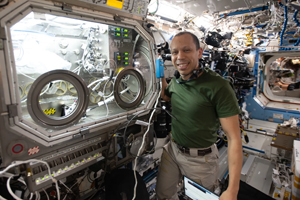
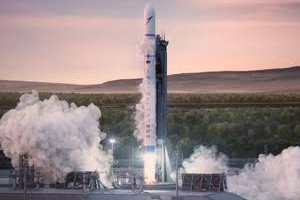
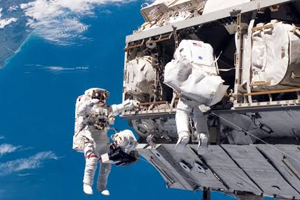
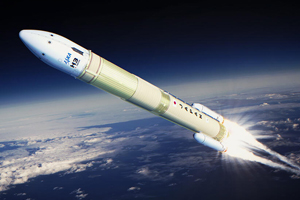
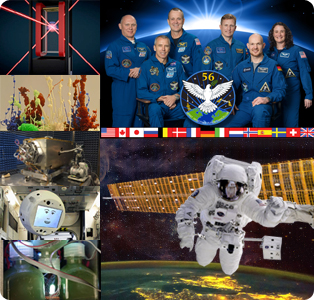
July 2018 ‘Space Month’ begins with International Space Station Expedition 56 space explorers working a full and varied mission at 405-km altitude, sustaining continuous human presence in space for nearly 18 years. Commander Andrew Feustel, flight engineers Oleg Artemyev, Richard Arnold, Sergey Prokopyev, Alexander Gerst and the 61st woman in space Serena Auñón-Chancellor are preparing for installation of SpaceX Dragon CRS-15 with 2,676 kg of cargo. Some of the hardware arriving includes DLR Crew Interactive Mobile companion experiment assessing crew efficiency and acceptance of AI, Chemical Gardens nanotube growth physics study, Ecosystem Spaceborne Thermal Radiometer Experiment, Canadian Space Agency spare Canadarm2 Latching End Effector, Space Algae growth investigation, and Made In Space Fiber Optics-3. The JPL / NASA Cold Atom Laboratory aboard ISS may begin experiments in September, exposing atoms to a temperature 10B times colder than the vacuum of Space (a billionth of a degree above absolute zero), producing clouds of ultra-cooled atoms called Bose-Einstein condensates which can be observed in microgravity for up to 10 seconds. The crew is also transferring cargo from Progress 69P and Cygnus OA-9, monitoring Bigelow Expandable Activity Module, and planning for Progress 70P rendezvous next week. SpaceX and Boeing are optimistically aiming for Aug / Sep uncrewed test launch of Dragon Crew and CST-100 Starliner. When operational they could be the 1st to launch Astronauts from American soil since July 21, 2011. (Image Credits: NASA, JPL, iGoal Animation, ESO, T. Preibisch, Oliver Steinbock Chemistry Group at Florida State University, Airbus)
MONDAY
Highlights… Jul 2 — ISS, 405-km LEO: Alongside science, exercise, public outreach duties, Expedition 56 crew maintaining ISS modules including Zarya, Unity, Zvezda, Destiny Laboratory, Columbus, Kibo & Leonardo, and monitoring 13 trusses, solar arrays, BEAM, Alpha Magnetic Spectrometer 2, Neutron star Interior Composition Explorer, Japanese Experiment Module Exposed Facility, Orbiter Boom Sensor System, Canadarm2, Dextre.
Jul 2 — NewSpace: SpaceX readying for 3 potential launches this month; Space Nation of Finland planning global astronaut competition, Astronaut Greg “Box” Johnson to become Chief Space Officer; Techshot 3D bioprinter may launch to ISS 2019 could advance human tissue manufacturing.
Jul 2 — Global:Canadian Space Agency to award up to 2 contracts at US$800K for Lunar Surface Mobility Precursor to Human and Science Rover study; Russia will phase out Proton rockets for Angara, likely to operate out of Plesetsk and Vostochny instead of Baikonur; Dubai10X initiative to turn Al Maktoum Airport into multi-mode super-port for aircraft and spacecraft.
Jul 2 — USA:Moonworker Buzz Aldrin launching Human Spaceflight Institute, advocates for international lunar return to include China, looking to future pursuits while working through family / business matters; 2 students from Costa Rica to study with Franklin Chang Diaz at NASA JSC; ALSTAR Act heads to Senate for approval to sustain Marshall Space Flight Center as NASA lead rocket propulsion center.
Jul 2 — Hawai’i: Continued characterization on `Oumuamua interstellar object 1st discovered by Hawaii Pan-STARRS indicates it could be a comet; HI-SEAS space mission simulation remains on hold as reviews continue on recent compromised mission 6; Hawaii-based ATLAS survey spots extremely bright supernova, 2 dozen telescopes gathering data – months of analyses to follow.
= All times
for terrestrial events in local time unless noted.
= All times for international terrestrial events in local time unless noted.
= All times for space events, and…
= All times for international space / astro events in Hawaii Standard Time unless noted. Add 10 hours to obtain UT (‘Universal Time’).
Exoplanet Research Expands with July Events in UK, Denmark, California
The University of Cambridge is set to host Exoplanets II July 2-6. Over 85 lecture topics include light and frequency results, planet detection, star mapping, planetary formations, logistics, and biostructures. Among 82 scheduled speakers are astrophysicists (L-R) Michel Mayor, Ruth Murray-Clay, Sara Seager, and Josh Winn. The event will feature ~180 scientific posters during 2 viewing sessions. July 8-11 the European Research Council will hold Spectroscopy of Exoplanets Conference in Windsor. Molecular simulations, volatiles, exoplanet atmospheres, and project updates are some of the 36 planned presentations. Geronimo Villanueva of NASA and astrophysicist Giovanna Tinetti are part of 16 confirmed speakers. Aarhus University will present TESS/Kepler Asteroseismic Science Consortium: First Light in a New Era of Astrophysics Workshop July 8-13 in Denmark. With more than 150 participants, 18 invited speakers, and 65 lectures, topics range from TESS status, software, exoplanet research prospects, galactic archaeology, and reviewing Kepler data. K2 mission is currently in its 18th observing campaign and combined with Kepler mission has confirmed 2,619 exoplanets, 2,724 candidate exoplanets and counting. July 8-28 Other Worlds Laboratory at University of California will host 2nd Annual Exoplanet Summer Program in Santa Cruz. The event encourages participants to generate new ideas, collaborations, and support current projects covering system evolution, magnetic fields, telescope development, and space missions. The faculty of 13 is led by Department of Astronomy and Astrophysics Professor Jonathan Fortney. (Image Credits: NASA, JPL, Caltech, Planetary Society, UC Santa Barbara, MIT, Princeton, UC London, OWL)
Jul 2 — ARTEMIS P1, Moon Orbit: Craft collecting data on Moon interaction with Sun enters 8th year in Moon orbit today; originally launched with constellation of 5 NASA satellites in 2007 to study Earth magnetosphere, reached Moon 2011.
May 29 – Aug 3 — Lunar and Planetary Society, NASA SSERVI, Center for Lunar Science and Exploration, Houston TX:2018 Exploration Science Summer Intern Program; students to be involved in activities that support missions to the Moon that utilize Orion crew vehicle, Lunar Orbital Platform-Gateway, and robotic assets on lunar surface.
Jun 25 – Aug 17 — Frontier Development Lab (FDL), NASA,Online: FDL 2018 Challenges; an AI R&D accelerator that tackles knowledge gaps useful to NASA space program; 2018 topics are space resources, orbital debris, NEOs, Earth observation, space weather, astrobiology.
Jun 25 – Aug 24 — International Space University, ESA, Netherlands Space Office, Delft University of Technology, Leiden University, Noordwijk, The Netherlands: ISU 31st Space Studies Program (SSP 2018); intensive space course and student projects, plus public events, professional meetings, model rocket launch, robotics competition, space masquerade.
Jun 28 – Jul 3 — Royal Astronomical Society of Canada (RASC), Calgary, Alberta, Canada:RASC 2018 General Assembly.
Jul 4 — Juno, Jupiter Orbit: Spacecraft reaches 2nd full year at Jupiter today, planned to continue operations at least until July 2021 before controlled impact to ensure Juno does not impact Jovian moons Europa, Ganymede and Callisto; one-way transmission signal to Earth is ~48 minutes.
Jul 4 — International Lunar Observatory Association, Galaxy Forum, Space Age Publishing Company, Santa Clara CA: Galaxy Forum USA, Silicon Valley with themes First Women on the Moon and Astronomy from the Moon; 09:30-11:30 at Embassy Suites.
Jul 4 — Mercury: 0.39° SSW of Beehive Cluster, 03:00.
Jul 4 — Asteroid 3 Juno: 2.8° S of Uranus, 21:13.
Jul 4 — Apollo Asteroid 2018 MB7: Near-Earth Flyby (0.007 AU)
Jul 5 — JAXA, Tokyo, Japan: JAXA Symposium 2018; to introduce and discuss new JAXA plans for space exploration through international cooperation; 18:15-20:30 at Yurakucho Asahi Hall.
Jul 5-8 — Novaspace, Tucson AZ: 9th Annual Spacefest; bringing together Astronauts, astronomers, scientists, entrepreneurs, authors and the general public; at Starr Pass Resort.
Jul 5 — Moon: Last Quarter, 21:52.
Jul 5 — Apollo Asteroid 2018 MC5: Near-Earth Flyby (0.057 AU)
Jul 5 — Apollo Asteroid 2018 AJ2: Near-Earth Flyby (0.091 AU)
FRIDAY
Jul 6 — Mauna Kea Visitor Information Station, Mauna Kea HI (2,800 meters): Star Gazing program, 18:00 22:00, weather permitting, free.
Jul 6 — Earth: At aphelion (1.01670 AU from Sun), 07:00.
SATURDAY
Jul 7 — Hawai’i Public Radio, Kamuela HI: First Take with Science Friday; live recording with host Ira Flatow, an award-winning science communicator, and Hawaii scientist (TBD); Kahilu Theatre 19:30.
Jul 7 — Moon: 4.7° SSE of Uranus, 07:00; 1.8° SSE of 3 Juno, 07:38.
Jul 7 — Apollo Asteroid 2018 MV6: Near-Earth Flyby (0.065 AU)
Includes ~150 meetings covering the fields of COSPAR Scientific Commissions / Panels / Task Groups, such as SC B: The Earth-Moon System, Planets, and...
From 02 to 07 August 2026, a few thousand geoscientists across diverse disciplines will gather at the 23rd annual meeting of the Asia Oceania Geosciences...
2:45 pm EDT from Johnson Space Center, NASA astronaut Chris Williams will recap his recent eight-month mission aboard the International Space Station. Williams returned to...
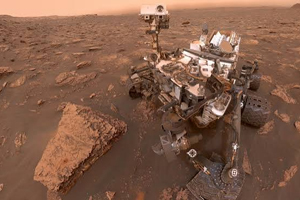
NASA Curiosity (Mars Science Laboratory) rover surpasses another full year of operations on Mars surface today; launched Nov 26, 2011 – landed Aug 5,...
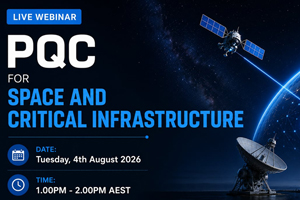
Virtual Series 2026 will offer deeper conversations on why PQC matters and the practical steps businesses should be taking; starts 1:00 pm AEST. Featuring:...
This international lunar science meeting has two objectives: to provide a platform for leading experts to review recent advances across lunar research, from the...
At CSIR International Convention Centre. Key topics are Earth Observation, Developing Space Tourism, Space Supply Manufacturing. Cultural tours are offered.
Participants will receive theoretical and hands-on training in electron imaging and X-ray spectroscopy for application to planetary samples. This training opportunity is targeted at...
"Leading Australia’s Space Future for Our Strategic Advantage". Southern Space 2026 brings together decision-makers who set the direction for Australia’s space sector. It is...
 Jul 2 —
  Jul 2 — NewSpace: SpaceX readying for
  Jul 2 — USA:
 = All times
 = All times for international terrestrial events in local time unless noted.
 = All times for space events, and…
 = All times for international space / astro events in Hawaii Standard Time unless noted. Add 10 hours to obtain UT (‘Universal Time’).
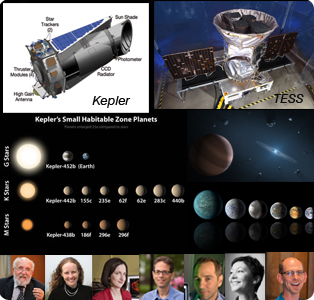 The University of Cambridge is set to host Exoplanets II July 2-6. Over 85 lecture topics include light and frequency results, planet detection, star mapping, planetary formations, logistics, and biostructures. Among 82 scheduled speakers are astrophysicists (L-R) Michel Mayor, Ruth Murray-Clay, Sara Seager, and Josh Winn. The event will feature ~180 scientific posters during 2 viewing sessions. July 8-11 the European Research Council will hold Spectroscopy of Exoplanets Conference in Windsor. Molecular simulations, volatiles, exoplanet atmospheres, and project updates are some of the 36 planned presentations. Geronimo Villanueva of NASA and astrophysicist Giovanna Tinetti are part of 16 confirmed speakers. Aarhus University will present TESS/Kepler Asteroseismic Science Consortium: First Light in a New Era of Astrophysics Workshop July 8-13 in Denmark. With more than 150 participants, 18 invited speakers, and 65 lectures, topics range from TESS status, software, exoplanet research prospects, galactic archaeology, and reviewing Kepler data. K2 mission is currently in its 18th observing campaign and combined with Kepler mission has confirmed 2,619 exoplanets, 2,724 candidate exoplanets and counting. July 8-28 Other Worlds Laboratory at University of California will host 2nd Annual Exoplanet Summer Program in Santa Cruz. The event encourages participants to generate new ideas, collaborations, and support current projects covering system evolution, magnetic fields, telescope development, and space missions. The faculty of 13 is led by Department of Astronomy and Astrophysics Professor Jonathan Fortney. (Image Credits: NASA, JPL, Caltech, Planetary Society, UC Santa Barbara, MIT, Princeton, UC London, OWL)