International Space Station to Host New Crew and Spacecraft
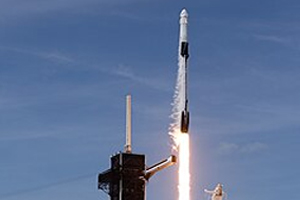
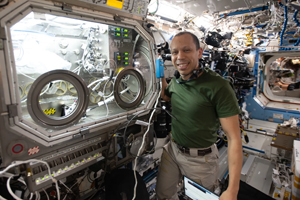
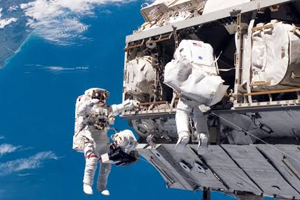
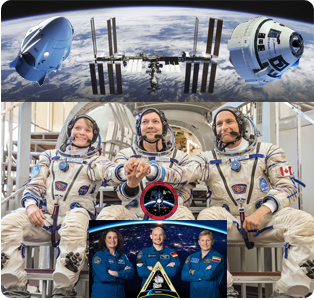
The International Space Station crew observes 20 years of ISS in orbit November 2018, continuously occupied since 2000. The Expedition 58 crew of cosmonaut Oleg Kononenko, Canadian David Saint-Jacques and American Anne McClain count down to launch Dec 3, first human Soyuz launch since the failed attempt Oct 11. McClain will be the 62nd woman in space; Saint-Jacques will be the first Canada astronaut to live on ISS since Chris Hadfield in 2013. Expedition 57 crew of Alexander Gerst, Serena Aunon-Chancellor and Sergey Prokopyev prepare to depart Dec 20. The Northrop Grumman Cygnus cargo ship “S.S. John Young” remains docked to ISS until Feb 2019. Successful launch of Progress MS-10 cargo ship, now also docked to ISS, clears the way for Expedition 58. SpaceX uncrewed Demo-1 Flight prepares for Jan 7 launch date to ISS. Boeing Starliner also prepares for uncrewed launch to ISS on Atlas V booster Mar 2019. A new crew is expected to arrive on Soyuz MS-12 flight Apr 2019. SpaceX and Boeing both expect to perform abort tests followed by crewed missions later in 2019, carrying astronauts aboard American rockets for the first time since 2011. Additions in 2019 may include the Russia Nauka laboratory module and the ESA Atomic Clock Ensemble in Space. 20 years after launch ISS continues to grow, hosting new astronauts, spacecraft and experiments. (Image Credits: NASA, SpaceX, Boeing)
MONDAY
Highlights… Dec 3 — ISS, 405-km LEO: Cygnus NG-10 “S.S. John Young” and Progress MS-10 cargo ships remain docked to station; crew preparing for SpaceX CRS-16 cargo mission and arrival of Expedition 58; Alexander Gerst photographing samples for study of how quartz/clay crystals react in microgravity.
Dec 3 — NewSpace:Rocket Lab wins Royal Aeronautical Society awards, secures US$140M in new funding; Blue Origin releases Payload User Guide for New Glenn booster, continues work on Cape Canaveral launch site; UK Surrey Satellite Technology Ltd plans small lunar communications satellite called DoT-4 for launch in 2021.
Dec 3 — Solar System: With successful InSight landing, operating spacecraft count at Mars equals 6 orbiters, 2 rovers (likely), and 1 lander; twin MarCO cubesats communicate and return photos as they continue beyond Mars; Juno spacecraft photographs volcanic moon Io rising over Jupiter.
Dec 3 — Galaxy: Star system XMM J160050.7–514245 is first found in Milky Way that could potentially produce gamma-ray burst; dwarf galaxy Antlia 2 found orbiting Milky Way.
Dec 3 — Global: Canada Astronaut Chris Hadfield joins Robert Thirsk and Canada aerospace leaders calling to secure a place for Canada’s Interests and Future in Space; China company ADA-Space preparing for launch of its 3rd satellite incorporating artificial intelligence in December; former ISRO Chair K Radhakrishnan says astrobiology could be next frontier for India research.
Asteroids Explored By Japan and USA,
Moon by China
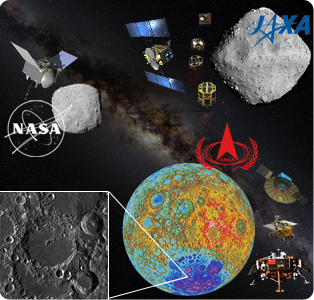
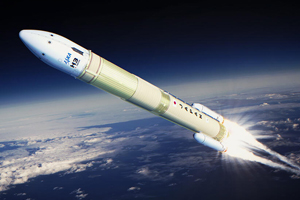
Hayabusa2 reaches 4 full years in Space December 3 since its launch by JAXA on H2A rocket in 2014. This 5th year begins at Near Earth Asteroid 162173 Ryugu during a solar conjunction, temporarily postponing communications. On Dec 29, observations and mapping of Ryugu will continue for ~1 year, and the 1st of 2 touchdowns is planned for February. Two Minerva-2 hoppers continue to transmit data from the surface, and the deployed Mascot lander operated for 16 hours as projected. The final Minerva-2 is to be deployed in July. Also on Dec 3, NASA OSIRIS-REx is set to encounter Asteroid 101955 Bennu and commence a 505-day mission to map its surface at ~5-km altitude. Its July 2020 sample collection is planning for 60 grams up to 2 kg with return to Earth 2023. Set for Dec 8, Chang’e-4 lander / rover will launch from Xichang, China for the first-ever soft landing attempt on the Moon far side. The 1,200-kg lander with 4 payloads and a bio-experiment, and 140-kg rover with 4 payloads will land in NW South Pole – Aitken basin region at 180-km diameter Von Kármán crater and communicate with Queqiao relay satellite. CE-4 lander has the same dual solar arrays, RTG and batteries as CE-3 which is approaching its 5th anniversary of Moon landing. (Image Credits: NASA, GSFC, DLR, ASU, JAXA, Chinese Academy of Sciences)
Dec 3 — Hayabusa2, Asteroid 1999 JU3: JAXA Hayabusa2 reaches 4 full years / enters 5th full year in space today, launched 2014; expected to return asteroid samples to Earth in 2020.
Dec 3 — OSIRIS-REx, Asteroid 101955 Bennu (1999 RQ36) Orbit: Origins-Spectral Interpretation-Resource Identification-Security-Regolith Explorer (OSIRIS-REx) mission expected to rendezvous with asteroid today, take samples and return to Earth in 2023.
Dec 3 — Roscosmos State Corporation, Launch Soyuz MS-11 / ISS 57S, Baikonur Cosmodrome, Kazakhstan: An RSA Soyuz rocket set to launch members of Expedition 58/59 to ISS, Oleg Kononenko of Roscosmos, David Saint-Jacques of Canadian Space Agency and Anne McClain of NASA (to become 62nd Woman in Space).
Dec 6 — Moon: 3.4° NNE of Jupiter. 05:00; 8.4° NNE of Antares, 13:00; New Moon, 21:21.
FRIDAY
Dec 7 — Akatsuki, Venus Orbit: JAXA first successful planetary orbiter imaging Venus atmosphere, monitoring weather changes reaches 3 full years / enters 4th year at Venus today, reached Venus 2015.
Dec 7 — ULA, Launch Delta 4-Heavy / NROL-71,Vandenberg AFB CA: ULA Delta 4-Heavy rocket to launch classified U.S. NRO payload.
Dec 7 — International Lunar Observatory Association, Chinese Society of Astronautics, NAOC, International Astronautical Federation, Beijing, China:Galaxy Forum China 2018: Beijing; themed Astronomy from the Moon, and International Human Moon Missions.
Dec 7 — Puppid Meteor Shower Peak: Appearing to radiate from constellations Puppis, Vela and Carina, up to 10 meteors per hour expected (some very bright) seen from southern hemisphere.
Dec 7 — Mars: 0.04° NNW of Neptune, 04:00.
SATURDAY
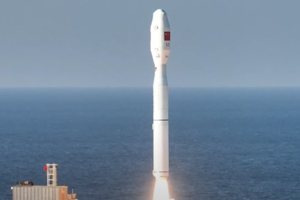
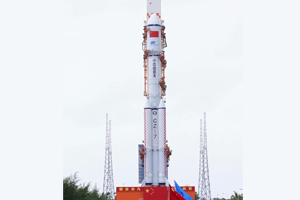
NET Dec 8 — CNSA, Launch Long March 3B / Chang’e-4 Lander & Rover, Xichang Satellite Launch Centre, China: Attempting first-ever landing on Moon far side at northwestern South Pole – Aitken basin 180-km diameter Von Kármán crater (45-46° S, 176.4-178.8° E); launching 1,200-kg lander / 140-kg rover at ~02:30 local time with low-frequency spectrometer, landing and ground cameras, Lunar Lander Neutrons and Dosimetry Experiment, and potato & Arabidopsis thaliana seeds, silkworm eggs, international payloads from Sweden, Germany, Netherlands and Saudi Arabia; may land Dec 30 or 31.
Includes ~150 meetings covering the fields of COSPAR Scientific Commissions / Panels / Task Groups, such as SC B: The Earth-Moon System, Planets, and...
From 02 to 07 August 2026, a few thousand geoscientists across diverse disciplines will gather at the 23rd annual meeting of the Asia Oceania Geosciences...
2:45 pm EDT from Johnson Space Center, NASA astronaut Chris Williams will recap his recent eight-month mission aboard the International Space Station. Williams returned to...
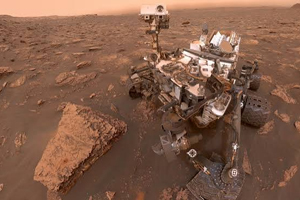
NASA Curiosity (Mars Science Laboratory) rover surpasses another full year of operations on Mars surface today; launched Nov 26, 2011 – landed Aug 5,...
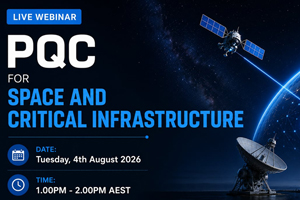
Virtual Series 2026 will offer deeper conversations on why PQC matters and the practical steps businesses should be taking; starts 1:00 pm AEST. Featuring:...
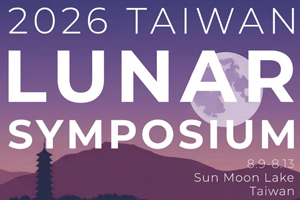
This international lunar science meeting has two objectives: to provide a platform for leading experts to review recent advances across lunar research, from the...
At CSIR International Convention Centre. Key topics are Earth Observation, Developing Space Tourism, Space Supply Manufacturing. Cultural tours are offered.
Participants will receive theoretical and hands-on training in electron imaging and X-ray spectroscopy for application to planetary samples. This training opportunity is targeted at...
"Leading Australia’s Space Future for Our Strategic Advantage". Southern Space 2026 brings together decision-makers who set the direction for Australia’s space sector. It is...
 Dec 3 —
  Dec 3 — NewSpace:
  Dec 3 — USA: NASA Administrator Jim Bridenstine announcing
 = All times
 = All times for international terrestrial events in local time unless noted.
 = All times for space events, and…
 = All times for international space / astro events in Hawaii Standard Time unless noted. Add 10 hours to obtain UT (‘Universal Time’).