Rocket Lab Electron Leads Growing Small Satellite Launcher Business
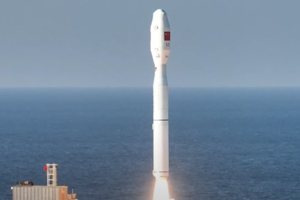
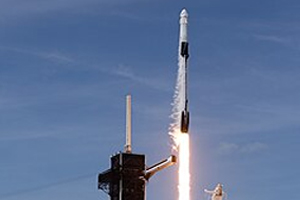
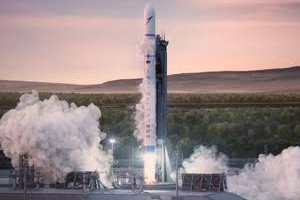
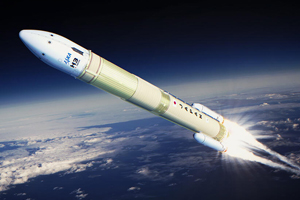
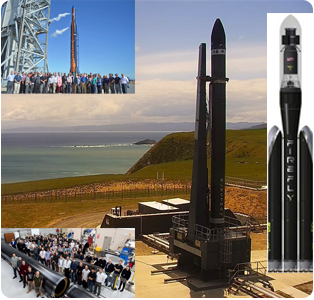
Rocket Lab prepares for its next orbital flight NET December 13 from Launch Complex-1 in the Mahia Peninsula of New Zealand. The payload will be NASA Educational Launch of Nanosatellites ELaNa XIX, 10 CubeSats From NASA Centers and Universities. The satellites will study subjects from the Van Allen Belt to space weather. This will be the first NASA Venture Class Launch Services mission. Though Rocket Lab plans to launch satellites twice per week, they are unsure whether reusing rockets is truly economical. Rocket Lab secures US$140M in funding for a valuation of US$1 Billion, a “Space Unicorn” company. Texas-based Firefly Aerospace, one of nine companies chosen for NASA Commercial Lunar Payload Services, is building the 102-foot Firefly Beta (R) to carry 4,000 kg to LEO. Firefly is opening a research and development center in Ukraine to utilize Ukrainian rocket experience. Launcher, a Brooklyn-based startup company, on Dec 4 hires a chief designer with 30 years’ experience from Ukraine. Launcher hopes to leverage Ukrainian work with oxygen-rich staged combustion. Virgin Orbit has completed carry tests of its Launcher One aboard a 747. Vector (TL) a microsatellite launch provider founded by veterans of SpaceX and the aerospace industry, secures US$70M in funding. The 43-foot Vector-R will carry 65 kg into orbit. Vector will launch from the Mid-Atlantic Regional Spaceport in Wallops Island, Virginia. (Image Credits: Vector, Rocket Lab, Firefly Aerospace)
MONDAY
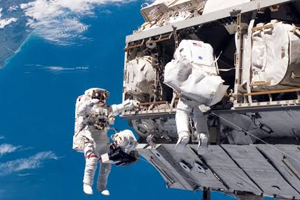
Highlights… Dec 10 — ISS, 405-km LEO: Expedition 57 six-member crew preparing for potential 6-hour Russia EVA #45 on Tuesday (live coverage available) to do an inspection of Soyuz MS-09; the arrival of SpaceX CRS-16 marks a record 6 spacecraft simultaneously docked to ISS; MS-12 Expedition 59/60 crew of failed Soyuz MS-10 will join Christina Hammock Koch on flight Feb 28.
Dec 10 — NewSpace: Southern Launch plans construction of Whalers Way Orbital Launch Complex in Australia for small launchers like Rocket Lab Electron; with over 19,000 known NEOs, Rusty Schweickart of B612 Foundation advocates for NEOCam funding; Parabolic Arc running annual fundraising campaign.
Dec 10 — Solar System: China CE-4 will attempt to land on Moon far side in 3 weeks; OSIRIS-REx performs close flybys of asteroid Bennu equator and poles in preparation for orbital insertion Dec 31; InSight Mars lander generates record solar power for a Mars spacecraft, photographs robotic arm.
Dec 10 — Galaxy: Gamma-ray light from 739 blazars and 1 gamma-ray burst collected over 9 years by Fermi results in study of star formation evolution; LIGO collaboration announces 4 new gravitational wave detections, including a binary black hole; Keck Observatory finds water in atmosphere of exoplanet HR8799c, located 129 LY away in constellation Pegasus.
Dec 10 — Global: Japan moving forward with space robotics, lunar surface research campus in Kyushu; Portugal receives 14 proposals to build spaceport in the Azores, and secures space cooperation agreement with China; Spain startup PLD Space secures EU$17M in funding, plans 2019 suborbital launch of MIURA-1 booster.
Dec 10 — USA: NASA Administrator Jim Bridenstine says January launch of SpaceX uncrewed Demo-1 is “very low probability” and could slip into Spring; Boeing Starliner begins environmental testing in El Segundo, preparing for uncrewed test; space leaders pay tribute to George Bush and commend impact on Space policies.
Dec 10 — Hawai’i: UH Astronomer Ben Shappee is part of international team that discovers Type Ia supernova ASASSN-18bt within one day after its explosion; PISCES newsletter features Hawaii-Mars similarities and 3-D basalt printing.
= All times
for terrestrial events in local time unless noted.
= All times for international terrestrial events in local time unless noted.
= All times for space events, and…
= All times for international space / astro events in Hawaii Standard Time unless noted. Add 10 hours to obtain UT (‘Universal Time’).
South Korea Advancing Indigenous Rocket, Moon Missions, Astrophysics
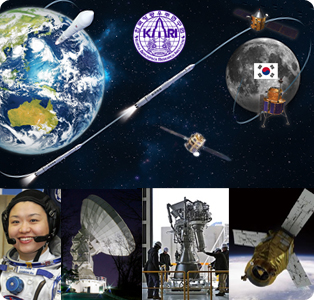
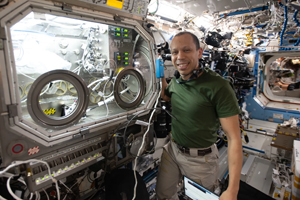
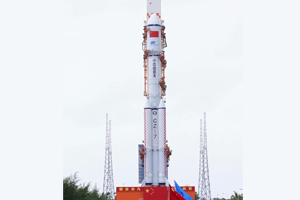
Korea Aerospace Research Institute (KARI) is developing indigenously-built, 3-stage KSLV-2 rocket with the goal of a 2021 maiden flight. The November KRE-075 engine test successfully launched a single-stage Test Launch Vehicle (TLV) with 52.1-ton wet mass to 209-km altitude and landed 429 km SE of Jeju island. Its next test (likely 2019) is expected to fly a 2-stage TLV and utilize KRE-007 as well as KRE-075 engines. KSLV-2, with an estimated launch cost of US$30M, will be used in launching future KOMPSAT Earth-observation satellites, customer medium-class satellites, and KARI Moon lander, rover and orbiter NET 2021. Korea Pathfinder Lunar Orbiter (KPLO) with 6 payloads is set to be launched by SpaceX Falcon 9 in December 2020. It will attempt to achieve lunar polar orbit at 100 km and collect data on the lunar environment, topography, permanently shadowed regions and potential landing sites. The city of Busan will be hosting the 31st General Meeting of the International Astronomical Union in August 2021. Korea Advanced Institute of Science and Technology (KAIST) in Daejeon is holding the 3rd ‘Light Dark World International Forum 2018’ on Dec 17-21. Researchers will join from Korea, China, USA, Turkey and Nigeria. KAIST operates the Korean VLBI Network, comprised of three 21-meter radio telescopes that function as an interferometer at respective separations of 300–500 km. (Pictured: Former KARI Astronaut Soyeon Yi; Image Credits: KARI, KAIST)
Dec 10 — XMM-Newton, VeryEccentric Elliptical LEO: ESA craft studying X-ray emissions, star-forming regions, galaxy clusters, environment of supermassive black holes, mapping dark matter, begins 20th year in space today, launched 1999.
Dec 10 — Apollo Asteroid 2001 XG1: Near-Earth Flyby (0.020 AU)
Dec 10 — Apollo Asteroid 2018 VX6: Near-Earth Flyby (0.043 AU)
Dec 10 — Apollo Asteroid 2015 XV129: Near-Earth Flyby (0.060 AU)
Dec 10 — Apollo Asteroid 2003 NW1: Near-Earth Flyby (0.069 AU)
Dec 10 — Aten Asteroid 2017 NK: Near-Earth Flyby (0.090 AU)
Continued from…
Dec 8 – Jan 3, 2019 — Chang’e-4 Lander & Rover, Moon Trajectory: China CE-4 lander and rover on journey to Moon far side, will attempt touchdown at northwestern South Pole – Aitken basin 180-km diameter Von Kármán crater (45-46° S, 176.4-178.8° E).
Dec 12 — Johnson Space Center, NASA, Houston TX: Interviews starting 14:00 local time with ISS Expedition 59/60 crew Nick Hague, Alexey Ovchinin and Christina Hammock Koch (to become 63rd Woman in Space) launching Feb 28, 2019.
Dec 12 — Institute for Astronomy, University of Hawaii at Mānoa,Honolulu HI: IfA Colloquia: Joan Najita from NOAO will talk on “Disk Spirals, Solids, and Sizes“.
Dec 12 — Moon: At apogee (distance 404,749.63 km), 02:00.
Dec 12 — Asteroid 9617 Grahamchapman: Near-Earth Flyby (1.000 AU)
Dec 13 —Lunar and Planetary Institute, NASA Lunar Exploration Analysis Group, Universities Space Research Association Headquarters,Online / Columbia MD: Abstracts Due for In Situ Resource Utilization (ISRU) 2019; being held Feb 20-22.
Dec 13 — Apollo Asteroid 2015 XX169: Near-Earth Flyby (0.043 AU)
FRIDAY
Dec 14 — NEOWISE, LEO: NASA Wide-field Infrared Survey Explorer (WISE) spacecraft (redubbed Near-Earth Object WISE – NEOWISE) begins 10th year in Space; launched 2009.
Dec 14 — Chang’e-3 Lander and Yutu Rover, Guang Han Gong, Sinus Iridum / Mare Imbrium, 44.12°N 19.51°W, Moon Surface: Spacecraft reach 5 full years on Moon surface, landed 2013; lander instruments operating, rover reported to be sending signals.
Dec 14 — ISRO, Launch GSLV Mk.2 / GSAT 7A, Satish Dhawan Space Center, Sriharikota, India: Geosynchronous Satellite Launch Vehicle Mk. 2, designated GSLV-F11, to launch GSAT 7A communications satellite for Indian Air Force.
Dec 14 — Moon: 2.8° S.S.E. of Neptune, 06:00; with Mars and Neptune within circle of diameter 4.89°, 83° E of Sun; 3.4° SSE of Mars, 16:00.
Dec 14 — Amor Asteroid 2018 VS9: Near-Earth Flyby (0.083 AU)
Dec 14-15 — Geminids Meteor Shower Peak: Appearing to radiate from constellation Gemini, shower can produce 80-130 meteors per hour; bright, medium-slow meteors (35 km/sec), few leave persistent trains.
Dec 15 — Apollo Asteroid 2018 VO9: Near-Earth Flyby (0.007 AU)
SUNDAY
Dec 16 — The Space Show,Online / Tiburon CA: Dr. David Livingston talks with Michael Listner for space law review for 2018.
Dec 16 — ISS Visible Pass, LEO: International Space Station visible pass to occur over North side of Hawai`i Island at 18:34:36 HST from WNW crossing S, magnitude of -1.2.
Includes ~150 meetings covering the fields of COSPAR Scientific Commissions / Panels / Task Groups, such as SC B: The Earth-Moon System, Planets, and...
From 02 to 07 August 2026, a few thousand geoscientists across diverse disciplines will gather at the 23rd annual meeting of the Asia Oceania Geosciences...
2:45 pm EDT from Johnson Space Center, NASA astronaut Chris Williams will recap his recent eight-month mission aboard the International Space Station. Williams returned to...
NASA Curiosity (Mars Science Laboratory) rover surpasses another full year of operations on Mars surface today; launched Nov 26, 2011 – landed Aug 5,...
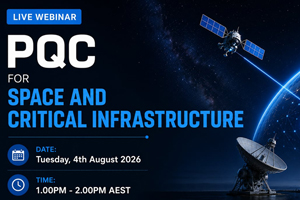
Virtual Series 2026 will offer deeper conversations on why PQC matters and the practical steps businesses should be taking; starts 1:00 pm AEST. Featuring:...
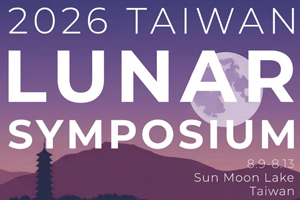
This international lunar science meeting has two objectives: to provide a platform for leading experts to review recent advances across lunar research, from the...
At CSIR International Convention Centre. Key topics are Earth Observation, Developing Space Tourism, Space Supply Manufacturing. Cultural tours are offered.
Participants will receive theoretical and hands-on training in electron imaging and X-ray spectroscopy for application to planetary samples. This training opportunity is targeted at...
"Leading Australia’s Space Future for Our Strategic Advantage". Southern Space 2026 brings together decision-makers who set the direction for Australia’s space sector. It is...
 Dec 10 —
  Dec 10 — NewSpace:
  Dec 10 — USA: NASA Administrator
 = All times
 = All times for international terrestrial events in local time unless noted.
 = All times for space events, and…
 = All times for international space / astro events in Hawaii Standard Time unless noted. Add 10 hours to obtain UT (‘Universal Time’).