Lunar New Year Sees China Moon Stations Developing with Chang’e 3-8 Landers
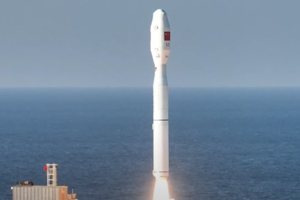
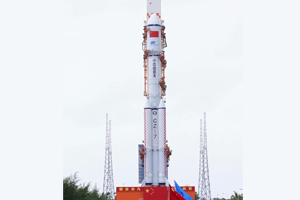
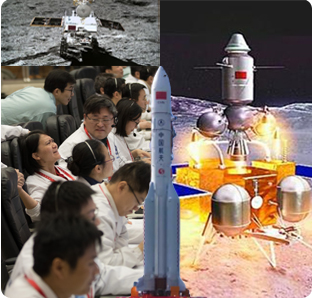
On Lunar New Year Chang’e-4 waking from its first lunar night reports temperatures of -190°C, colder than ever recorded on the near side. CNSA scientists theorize the extreme temperature is due to composition of lunar regolith on the hidden side. Yutu-2 rover has so far traveled 43 meters. The Queqiao relay satellite contains a radio astronomy experiment built in cooperation with the Netherlands. Sweden, Germany and Saudi Arabia also contribute to science payloads. Chang’e-3, which carries a Lunar Ultraviolet Telescope, is still operational. NASA scientists are exchanging data with CNSA, including Lunar Reconnaissance Orbiter imagery of the Chang’e-4 landing site. Lunar data will be shared at the Scientific and Technology Subcommittee of the UN Committee on Peaceful Uses of Outer Space meeting in Vienna Feb 11-22. Chang’e-5 launch is scheduled by end of 2019 from Wenchang Satellite Launch Center on Hainan Island, subject to successful flight of the Long March 5 booster in July. Chang’e-5 lander will collect lunar sample, then ascend for rendezvous with orbiter and sample return to Earth. Autonomous rendezvous in lunar orbit would be a first-ever accomplishment. In Feb 2020 a world-class Galaxy Forum with theme ‘International Human Moon Missions’ will be held on Hainan Island in sight of the Wenchang Launch Center. With plans for Chang’e-6, Chang’e-7, and Chang’e-8 China is assembling a village of lunar landers. (Image Credits: CNSA)
MONDAY
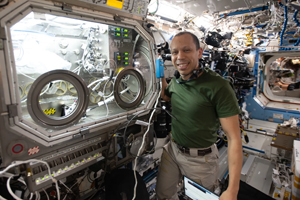
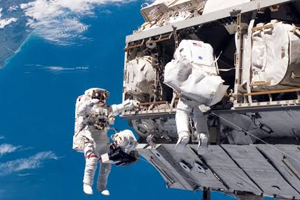
Highlights… Feb 11 — ISS, 405-km LEO: Expedition 58 Commander Oleg Kononenko, Astronauts Anne McClain and David Saint-Jacques working with systems to improve fuel / liquid measurements in space; recently released Cygnus in LEO deploying several sets of CubeSats, then will reenter Earth atmosphere in late February over Pacific Ocean.
Feb 11 — NewSpace: Virgin Galactic SpaceShipTwo Crew awarded astronaut wings for reaching 83-km altitude; Astrobotic ‘MoonBox‘ voting closes this week; Blue Origin to launch broadband satellites for Canada Telesat; Hypergiant Galactic Systems hopes to develop AI-driven aerospace and astronautic software and hardware.
Feb 11 — Solar System: InSight Lander places Sun shield atop seismometer; contact may be permanently lost with twin MarCO cubesats; Queqiao orbiter images full Moon and Earth; Hayabusa2 prepares for first landing attempt on Ryugu Feb 22.
Feb 11 — Galaxy: Astronomers from Australia and Chinese Academy of Sciences release 3D map of the Milky Way revealing a warped shape; ESO VLT images object Herbig-Haro 1177, a star in the process of formation, within Large Magellanic Cloud; ALMA radio telescope finds organic molecules surrounding star V883 Ori located 1,300 LY away.
Feb 11 — Global: India Space Research Organization opens Human Space Flight Centre in Bengaluru, aims to send humans to space in 2021; ESA contracts with ArianeGroup and PTScientists to study feasibility of mining the Moon; Russia announces plans for reusable uncrewed spaceplane to launch from M-55 research aircraft.
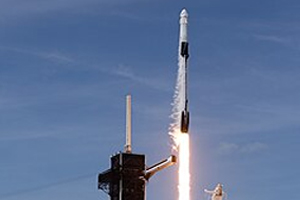
Feb 11 — USA: State of the Union address applauds 50th observation of Apollo 11 with Buzz Aldrin in attendance, misses opportunity to speak on future of space, Moon, international partnerships; Commercial Crew test launches delayed by one month; booster for Orion Ascent Abort Test prepares for full-stress test at KSC.
GSTC 2019 Brings Advanced Space Tech Opportunities to Singapore / Southeast Asia
The Singapore Space and Technology Association (SSTA) Global Space and Technology Convention (GSTC) 2019 expects 600 delegates, 60 speakers and 200 companies from more than 30 nations on February 14-15 at the St. Regis Singapore. With theme ‘Pushing the Innovation Frontier’ topics range from satellite constellations, cost, remote sensing, Earth Observation, NewSpace, global space developments, spaceports, launchers and lunar missions. Some of the guest speakers are (TL-R) SSTA President Jonathan Hung, CNES President Jean-Yves Le Gall, CASC VP Yang Baohua, LAPAN Head Thomas Djamaluddin, Israel Space Agency Chairman Yitzchak Ben Yisrael, Sir Martin Sweeting, and representatives from Spaceflight Inc, Exolaunch, Virgin Orbit, Firefly Aerospace, Hawaii Space Flight Laboratory, Arianespace and Thales. On the eve of GSTC, International Lunar Observatory Association is hosting SEA Benefactors’ Reception to discuss SEA potential role in the ILO-1 mission. It will feature ILOA Director Steve Durst and board members Malaysia Astronaut Sheikh Shukor, Jonathan Hung, Arry Buchori, Chatief Kunjaya, and mission developers Canadensys (Chris Sallaberger) and Moon Express (Bob Richards). Major initiatives accelerating SEA space development include LAPAN of Indonesia, ANGKASA of Malaysia, CRISP and Association of Aerospace Industries of Singapore, Vietnam Space Technology Institute, GISTDA of Thailand, Philippine Space Agency; 2 regional space cooperation organizations APRSAF promoted by Japan and APSCO headquartered in China; and tech accelerators and NewSpace including Astropreneurs HUB, SGInnovate, Gilmour Space, Astroscale, Spire and Bhattacharya Space Enterprises. (Image Credits: SSTA, ILOA, CNES, et al)
Feb 11 — Apollo Asteroid 511684 (2015 BN509): Near-Earth Flyby (0.084 AU)
Continued from…
Jan 2019 – Sep 2020 — New Horizons, Kuiper Belt: Full data from spacecraft 7 instruments during KBO Ultima Thule flyby to be transmitted to Earth over this time period.
Feb 12 — Apollo Asteroid 2017 PV25: Near-Earth Flyby (0.018 AU)
WEDNESDAY
Feb 13 — Juno, Perijove 18 / 17th Science Flyby,Jupiter Orbit: NASA craft in 53-day orbit to come within ~3,500 km of Jupiter cloud tops during Perijove 18, its 18th close flyby of Jupiter and 17th science flyby with instruments turned on.
Feb 13 — Moon: 8.4° SSE of Pleiades, 01:00; 1.68° N of Aldebaran, 18:00.
THURSDAY
Feb 14 — NASA, Washington DC: NASA Media, Industry Forum on Lunar Plans; featuring NASA Administrator Jim Bridenstine, Associate Administrator for Human Exploration and Operations Bill Gerstenmaier and Associate Administrator for Science Thomas Zurbuchen, 12:30 EST.
Feb 14-15 — Singapore Space and Technology Association, Singapore: Global Space and Technology Convention 2019; featuring Jonathan Hung (SSTA), Jean-Yves Le Gall (CNES), Yang Baohua (CASC), Yitzchak Ben Yisrael (Israel Space Agency).
Includes ~150 meetings covering the fields of COSPAR Scientific Commissions / Panels / Task Groups, such as SC B: The Earth-Moon System, Planets, and...
From 02 to 07 August 2026, a few thousand geoscientists across diverse disciplines will gather at the 23rd annual meeting of the Asia Oceania Geosciences...
2:45 pm EDT from Johnson Space Center, NASA astronaut Chris Williams will recap his recent eight-month mission aboard the International Space Station. Williams returned to...
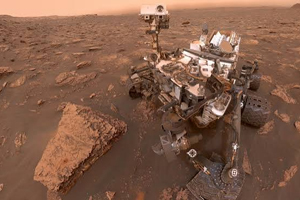
NASA Curiosity (Mars Science Laboratory) rover surpasses another full year of operations on Mars surface today; launched Nov 26, 2011 – landed Aug 5,...
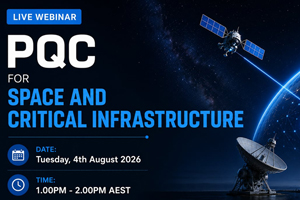
Virtual Series 2026 will offer deeper conversations on why PQC matters and the practical steps businesses should be taking; starts 1:00 pm AEST. Featuring:...
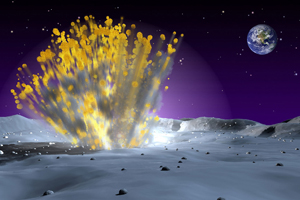
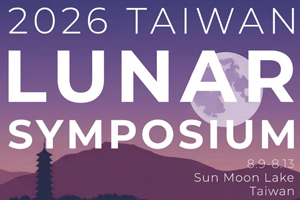
This international lunar science meeting has two objectives: to provide a platform for leading experts to review recent advances across lunar research, from the...
At CSIR International Convention Centre. Key topics are Earth Observation, Developing Space Tourism, Space Supply Manufacturing. Cultural tours are offered.
Participants will receive theoretical and hands-on training in electron imaging and X-ray spectroscopy for application to planetary samples. This training opportunity is targeted at...
"Leading Australia’s Space Future for Our Strategic Advantage". Southern Space 2026 brings together decision-makers who set the direction for Australia’s space sector. It is...
 Feb 11 —
  Feb 11 — NewSpace: Virgin Galactic SpaceShipTwo Crew awarded
  Feb 11 — USA: State of the Union address applauds 50th observation of Apollo 11 with Buzz Aldrin in attendance, misses opportunity to speak on future of space, Moon, international partnerships; Commercial Crew test launches
 = All times
 = All times for international terrestrial events in local time unless noted.
 = All times for space events, and…
 = All times for international space / astro events in Hawaii Standard Time unless noted. Add 10 hours to obtain UT (‘Universal Time’).