SpaceIL, SpaceXand Space Business Roundtable Support Lunar Landers
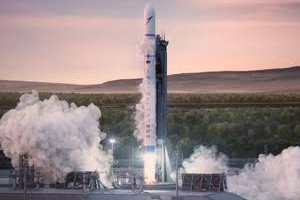
SpaceIL Beresheet, first privately funded lunar lander to reach a launch pad, prepares at SpaceX Launch Processing Facility for launch on a Falcon 9 along with the Indonesia PSN 6 and Blue Canyon S5 satellite. Beresheet, a competitor for the former Google XPrize, would be the smallest spacecraft to land on Moon at 585 kg. Spaceflight Industries manages the payload. Upon Falcon 9 reaching GTO, Beresheet is planned to separate then slowly increase its apogee until captured by lunar gravity. Swiss RUAG Space contributes 3D-printed landing legs. Voyage to Mare Serenitatis landing site between sites of Apollo 15 and Apollo 17 is expected to take approximately 8 weeks. The lander is designed to transmit photos and video using a high-resolution camera system along with scientific measurements. NASA is providing a Laser Retroreflector Array and use of the Deep Space Network for communications. Israel Aerospace Industries is planning to offer future lunar payload delivery for ESA through prime contractor Germany OHB Systems. In Washington DC, Space Business Roundtable meets Feb 21 with subjects of the Moon and lunar landers. Panelists include Dan Hendrickson of Astrobotic, Sarah Noble of NASA, and Ben Roberts of Moon Express. Panel will explain why the time has come to focus on the Moon. Other subjects include landers, commercialization, and maintaining a sustainable presence on the Moon. (Image Credits: SpaceIL, Space Business Roundtable, SSL, Blue Canyon)
MONDAY
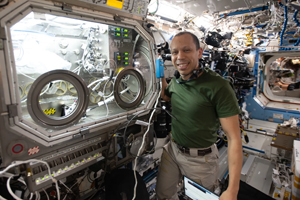
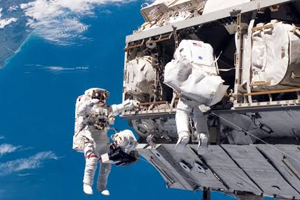
Highlights… Feb 18 — ISS, 405-km LEO: Expedition 58 three-member crew measuring air flow at Intra-Module Ventilation ducts, working with Astrobee robots intended to assist Astronauts and ground controllers, continuing studies for human metabolism, bone marrow, blood changes, motor-sensory coordination in microgravity.
Feb 18 — Solar System: Chang’e-4 lander and Yutu rover in second lunar night hibernation until ~Feb 28; NASA ending attempts to communicate with Opportunity – future human service mission may revive rover; MAVEN orbiter adjusts altitude from 6,200 km to 4,500 km where it will serve as a communications relay for Mars 2020 rover.
Feb 18 — Galaxy: Data from Gaia spacecraft indicates that Andromeda Galaxy will collide with Milky Way in 4.5B years, later than previously thought; physicist lectures that galaxies are accelerating away from each other due to hypothesized Dark Energy.
Feb 18 — USA: NASA reveals ambitious plans for landing humans on Moon with commercial and international partners; SpaceX Crew Dragon DM-1 test flight scheduled for March; Boeing Starliner completes structural testing, flight test scheduled for April.
Feb 18 — Hawai’i: Telescopes back in operation after Mauna Kea summit evacuated due to 100 kph winds; James Clerk Maxwell Telescope observes stellar flare 10B times as powerful as those on Sun; Mauna Loa habitat opens this week for Moon mission simulation studies.
= All times
for terrestrial events in local time unless noted.
= All times for international terrestrial events in local time unless noted.
= All times for space events, and…
= All times for international space / astro events in Hawaii Standard Time unless noted. Add 10 hours to obtain UT (‘Universal Time’).
Hayabusa2 to Attempt Ryugu First Touchdown, Surface Sampling on Feb 22
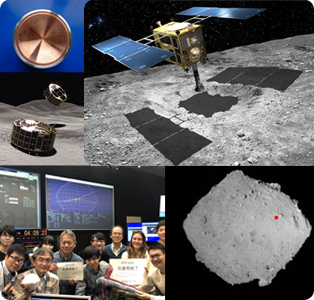
JAXA asteroid sample-return spacecraft, Hayabusa2, orbiting NEA 162173 Ryugu is set to perform its 1st surface sample collection on February 22 at 08:00 JST. The backup window occurs the week of March 4. Hayabusa2 will approach the 1-km wide Cg-type asteroid, touch its 1-meter long sampling horn to the surface and fire a projectile (5-gram tantalum bullet) 300 m/s. The ejected particles will be collected by a catcher at the top of the horn. Hoping to collect at least 0.1 g of material, the system can hold up to 10 g per collection. Subsurface collection is planned for March-April. A 2.5-kg copper projectile from Small Carry-on Impactor will be shot at Ryugu from 500-meter altitude, reaching ~2 km/s. It is expected to create a 2-meter diameter crater, which will be visited by Hayabusa2 after ~2 weeks when the debris has settled. The 3rd touchdown using the sampling horn is planned for April-June. The final MINERVA rover will be released onto the surface in July, and Hayabusa2 will remain at Ryugu for further observations / science until it departs for Earth December 2019. If successful, it will return to Earth December 2020 to release the capsule through Earth atmosphere, where it is planned to land at Woomera Test Range in Western Australia. (Image Credits: JAXA, ISAS)
Feb 18 — Moon: At perigee (distance 356,794 km), 22:51.
Feb 18 — Mercury: 0.67° NNW of Neptune, 20:00.
Feb 18 — Venus: 1.08° N of Saturn, 03:00.
Feb 18 — Apollo Asteroid 2016 CA138: Near-Earth Flyby (0.055 AU)
Continued from…
Jan 2019 – Sep 2020 — New Horizons, Kuiper Belt: Full data from spacecraft 7 instruments during KBO Ultima Thule flyby to be transmitted to Earth over this time period.
Feb 17-23 — Intrepid Sea, Air & Space Museum, NYC NY:Kids Week; live demonstrations, planetarium presentations and performances; featuring by Astronaut Doug Wheelock and NASA flight director Allison Bolinger, Planetary Scientists Ellen Crapster-Pregont and Marina Gemma.
TUESDAY
Feb 19 — Space Florida, Tallahassee FL: Florida Space Day; to educate & bring awareness to Florida legislators on significance of aerospace industry & its impact on Florida economy.
Feb 20 – Mar 6 — University of Hawaii, ESA, ILEWG, International MoonBase Alliance, 2,400-meter elevation, Mauna Loa: Crew to perform 1st Moon simulation.
Feb 20 — Apollo Asteroid 2019 CY1: Near-Earth Flyby (0.008 AU)
Feb 20 — Apollo Asteroid 455176 (1999 VF22): Near-Earth Flyby (0.049 AU)
THURSDAY
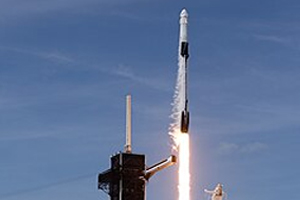
Feb 21 — SpaceX, Launch Falcon 9 / PSN 6, SpaceIL Lunar Lander,Cape Canaveral AFS FL: Indonesia PSN 6 communications satellite and 1st spacecraft from Israel to launch on SpaceX Falcon 9 at 20:45 EST; lunar lander Beresheet “Genesis” will take 2 month journey to Moon surface, attempt landing at Mare Serenitatis ~28.0°N, 17.5°E; 2-meter diameter, 1.5-meter tall, 585-kg wet mass (dry <200 kg) lander contains science experiments, digital time capsule, magnetometer, and Laser Retroreflector Array contributed by NASA.
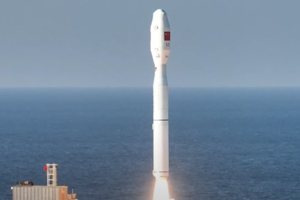
Feb 21 — Roscosmos State Corporation, Launch Soyuz / EgyptSat-A, Baikonur Cosmodrome, Kazakhstan: An RSA Soyuz rocket to launch EgyptSat-A Earth observation satellite built by RSC Energia for Egypt National Authority for Remote Sensing and Space Sciences.
Feb 22 — Hayabusa2, Asteroid 1999 JU3: JAXA Hayabusa2 planning for first of 2 sample collection touchdowns today at 08:00 Japan Standard Time.
Feb 22 — Arianespace, Launch Soyuz / OneWeb Pilot, Sinnamary, French Guiana: Arianespace Soyuz rocket, designated VS21, to launch first 10 communication satellites into orbit for OneWeb.
Feb 22 — Moon: 7.2° NNE of Spica, 20:00.
Feb 22 — Venus: 1.40° N of Pluto, 20:00.
Feb 22 — Apollo Asteroid 2016 CO246: Near-Earth Flyby (0.041 AU)
Feb 23 —U.S. Space and Rocket Center, Huntsville AL: Boeing Rocket Day; participants work alongside engineers to design, build, and launch a water-powered rocket, 10:00-16:00.
SUNDAY
Feb 24-26 — Space Exploration Alliance, NSS, AIAA, Moon Society, Federation of Galaxy Explorers, Planetary Society, SEDS, et al, Washington DC: SEA Legislative Blitz 2019; advocating for the exploration and development of Space.
Feb 24 — Apollo Asteroid 2019 BF1: Near-Earth Flyby (0.029 AU)
Feb 24 — Apollo Asteroid 2019 CK1: Near-Earth Flyby (0.042 AU)
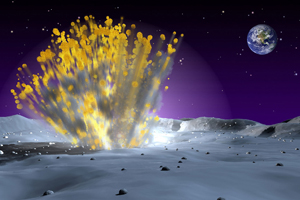
Includes ~150 meetings covering the fields of COSPAR Scientific Commissions / Panels / Task Groups, such as SC B: The Earth-Moon System, Planets, and...
From 02 to 07 August 2026, a few thousand geoscientists across diverse disciplines will gather at the 23rd annual meeting of the Asia Oceania Geosciences...
2:45 pm EDT from Johnson Space Center, NASA astronaut Chris Williams will recap his recent eight-month mission aboard the International Space Station. Williams returned to...
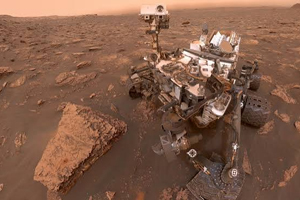
NASA Curiosity (Mars Science Laboratory) rover surpasses another full year of operations on Mars surface today; launched Nov 26, 2011 – landed Aug 5,...
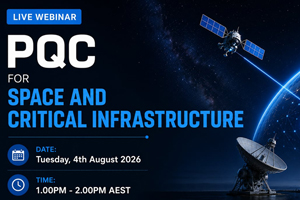
Virtual Series 2026 will offer deeper conversations on why PQC matters and the practical steps businesses should be taking; starts 1:00 pm AEST. Featuring:...
This international lunar science meeting has two objectives: to provide a platform for leading experts to review recent advances across lunar research, from the...
At CSIR International Convention Centre. Key topics are Earth Observation, Developing Space Tourism, Space Supply Manufacturing. Cultural tours are offered.
Participants will receive theoretical and hands-on training in electron imaging and X-ray spectroscopy for application to planetary samples. This training opportunity is targeted at...
"Leading Australia’s Space Future for Our Strategic Advantage". Southern Space 2026 brings together decision-makers who set the direction for Australia’s space sector. It is...
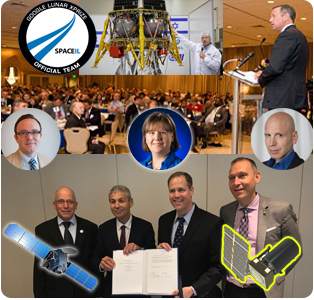 SpaceIL Beresheet, first privately funded lunar lander to reach a launch pad, prepares at SpaceX Launch Processing Facility for launch on a Falcon 9 along with the Indonesia PSN 6 and Blue Canyon S5 satellite. Beresheet, a competitor for the former Google XPrize, would be the smallest spacecraft to land on Moon at 585 kg. Spaceflight Industries manages the payload. Upon Falcon 9 reaching GTO, Beresheet is planned to separate then slowly increase its apogee until captured by lunar gravity. Swiss RUAG Space contributes 3D-printed landing legs. Voyage to Mare Serenitatis landing site between sites of Apollo 15 and Apollo 17 is expected to take approximately 8 weeks. The lander is designed to transmit photos and video using a high-resolution camera system along with scientific measurements. NASA is providing a Laser Retroreflector Array and use of the Deep Space Network for communications. Israel Aerospace Industries is planning to offer future lunar payload delivery for ESA through prime contractor Germany OHB Systems. In Washington DC, Space Business Roundtable meets Feb 21 with subjects of the Moon and lunar landers. Panelists include Dan Hendrickson of Astrobotic, Sarah Noble of NASA, and Ben Roberts of Moon Express. Panel will explain why the time has come to focus on the Moon. Other subjects include landers, commercialization, and maintaining a sustainable presence on the Moon. (Image Credits: SpaceIL, Space Business Roundtable, SSL, Blue Canyon)
 Feb 18 —
  Feb 18 — NewSpace: Second
  Feb 18 — USA: NASA reveals ambitious plans for
 = All times
 = All times for international terrestrial events in local time unless noted.
 = All times for space events, and…
 = All times for international space / astro events in Hawaii Standard Time unless noted. Add 10 hours to obtain UT (‘Universal Time’).