USA Renewed Human Spaceflight Capability Is Next Step Toward Return to Moon, Multi World Species Status
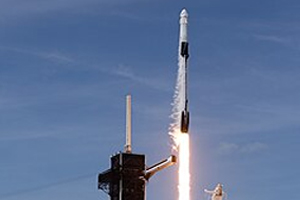
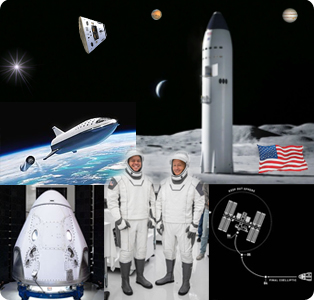
May 27, 2020 may be an auspicious day for USA with its first launch of Astronauts from American soil since July 8, 2011. Bob Behnken and Doug Hurley (in custom-fit spacesuits and 3D printed helmets) will fly on Demo-2 Mission at 16:32 EDT from Kennedy Space Center, Florida LC 39A via Falcon 9 in Crew Dragon V2 “C206” to ISS, docking 11:29 the next day. The TBD duration of their mission could be ≤ 4 months, joining Expedition 63 crew Chris Cassidy, Ivan Vagner and Anatoli Ivanishin. Boeing Starliner may attempt its second uncrewed demo flight for the Commercial Crew Program in September, and if successful, it will launch Michael Fincke, Nicole Mann and Chris Ferguson to ISS early 2021. Partially-reusable SpaceX Crew Dragon is capable of carrying up to 7 passengers and 3,307 kg of cargo. It has 8 SuperDraco engines for launch aborts, 4 Draco thrusters for orbital maneuvering, solar arrays and four main parachutes. SpaceX super-heavy, fully reusable Starship is planned to carry spaceflight participants on a 2023 mission to circumnavigate the Moon, and its Starship Human Landing System (SHLS) variant has been selected by NASA to be used for Artemis. SHLS would launch to lunar orbit, await crew arrival via Orion docking, transport crew to lunar surface in SHLS and ascend to return the crew to Orion for Earth departure. (Image Credits: SpaceX, NASA)
MONDAY
Highlights… May 25 — ISS, 405-km LEO: Expedition 63 three-member crew set to welcome 2 Astronauts from Demo-2 mission, participate in public outreach; preparing for capture of JAXA HTV-9 (Kounotori or White Stork) 08:15 EDT today, live coverage available, and cargo transfer operations; will plan for upcoming EVAs, set up Kibo live-streaming experiment.
May 25 — NewSpace:Blue Origin working on Blue Moon human lander descent element utilizing BE-7 engines; Skyrora of Scotland latest engine test brings Skylark L rocket closer toward suborbital flights with orbital planned for 2023; Astroscale, founded in Singapore, opens Series E funding round.
May 25 — Solar System: 10-month ESA PHILIP study investigates powering craft via lasers in Moon permanently shadowed craters; UAE Hope, USA Perseverance & PR China Tianwen-1 prepare for launch to Mars in July – studies indicate Mars mud volcanoes could exist; Caltech researcher proposes Jupiter Galileo moons formed from hail.
May 25 — Hawai’i: HI-SEAS habitat on Mauna Loa being featured in documentary ‘Spacedrop’, may see new crew later in year; new Keck Observatory infrared sensor improves exoplanet detection abilities; Mauna Kea observatories operations continue to accelerate since partial re-opening.
= All times
for terrestrial events in local time unless noted.
= All times for international terrestrial events in local time unless noted.
= All times for space events, and…
= All times for international space / astro events in Hawaii Standard Time unless noted. Add 10 hours to obtain UT (‘Universal Time’).
NASA Puts Forth Artemis Accords, Statement of Principles Regarding Space Activity
USA National Space Program announces a framework of norms in space and on celestial bodies, proposed as a 10-point set of values to be observed by partners in the USA-led Artemis mission series and the international community at large, although the mechanism for such adoption is unclear. The International Space Station Intergovernmental Agreement, with 20+ years of collaboration between nations such as Russia, USA, Europe, Canada and Japan, may offer a model. With an emphasis on peaceful purposes and cooperation, the Artemis Accords is positioned by the space administration as an adjunct to the 1967 Outer Space Treaty – while providing specific interpretation allowing commercial resource utilization and extraction, consistent with domestic legislation Space Resource Exploration and Utilization Act of 2015 and executive order Encouraging International Support for the Recovery and Use of Space Resources in April. Other tenets of the Accords include Transparency, Interoperability, Emergency Aid, Space Object Registration, Data Sharing, Conservation, Conflict Reduction, and Debris Mitigation. Perhaps influenced by the Antarctic Treaty System, ‘safety zones’ would ensure territorial integrity with buffer space while preserving scientific access. Any claims of sovereignty would put China in a possibly advantageous position, being the only spacefaring power currently in operation on the Moon, and the first to explore the far side surface with Chinese Lunar Exploration Program / Chang’e. A formalized agreement in the future would necessarily involve all stakeholders to bring about orderly exploration in cis-lunar space and beyond. (Image Credits: NASA)
Continued from…
Jan 2019 – Sep 2020 — New Horizons, Kuiper Belt: Full data collected from 7 instruments during KBO Arrokoth flyby to be transmitted to Earth over this time period.
Nov 2019 – Nov 2020 — Hayabusa2, Earth Trajectory: JAXA Hayabusa2 with two samples collected from C-type asteroid 162173 Ryugu on trajectory for Earth return.
May 26-28 — Canadian Aeronautics and Space Institute (CASI),Toronto, Ontario, Canada: ASTRO 2020 – 20th Astronautics Conference of CASI: Space for Business; focusing on Canada capabilities especially with regard to the growing number of small- and medium-sized enterprises; postponed.
May 26 — Moon: 8.2° S of Castor, 05:00; 4.5° S of Pollux, 10:00.
WEDNESDAY
May 27 — SpaceX, Launch Falcon 9 / Dragon V2 (Crew Dragon), LC-39A, KSC FL: SpaceX Crew Dragon to launch Bob Behnken and Doug Hurley on Demo Mission-2 to ISS; would be first to launch from American soil since 2011; launch at 16:32 EDT, live coverage available.
May 27 — Moon: 1.98° NNE of Beehive Cluster, 11:00.
May 27 — Apollo Asteroid 2020 JN3: Near-Earth Flyby (0.011 AU)
May 27 — Apollo Asteroid 2020 JP2: Near-Earth Flyby (0.030 AU)
THURSDAY
May 28 — International Space Station, 405-km Altitude: Dragon V2 with Demo Mission-2 Astronauts Bob Behnken and Doug Hurley to arrive at ISS and dock 11:29 EDT; live coverage available.
May 28 — Aten Asteroid 2020 KV: Near-Earth Flyby (0.018 AU)
May 28 — Apollo Asteroid 2020 JM1: Near-Earth Flyby (0.024 AU)
FRIDAY
May 29 — Cygnus NG-13 Reenters Earth Atmosphere: Northrop Grumman NG-13 cargo resupply craft released from ISS on May 11 to burn up in Earth atmosphere today.
Emanating from ~6km-wide comet with 5.3-year Solar orbit, visible in constellation Aquarius near star Delta Aquarii, fast, faint meteors peak on this night, best...
The International Research Conference is a federated organization dedicated to bringing together a significant number of diverse scholarly events for presentation within the conference...
Includes ~150 meetings covering the fields of COSPAR Scientific Commissions / Panels / Task Groups, such as SC B: The Earth-Moon System, Planets, and...
From 02 to 07 August 2026, a few thousand geoscientists across diverse disciplines will gather at the 23rd annual meeting of the Asia Oceania Geosciences...
2:45 pm EDT from Johnson Space Center, NASA astronaut Chris Williams will recap his recent eight-month mission aboard the International Space Station. Williams returned to...
NASA Curiosity (Mars Science Laboratory) rover surpasses another full year of operations on Mars surface today; launched Nov 26, 2011 – landed Aug 5,...
Virtual Series 2026 will offer deeper conversations on why PQC matters and the practical steps businesses should be taking; starts 1:00 pm AEST. Featuring:...
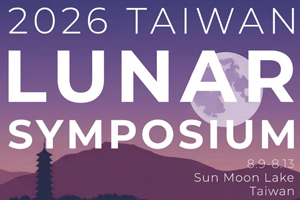
This international lunar science meeting has two objectives: to provide a platform for leading experts to review recent advances across lunar research, from the...
At CSIR International Convention Centre. Key topics are Earth Observation, Developing Space Tourism, Space Supply Manufacturing. Cultural tours are offered.
 May 25 —
  May 25 — NewSpace:
  May 25 — USA: Highly anticipated
 = All times
 = All times for international terrestrial events in local time unless noted.
 = All times for space events, and…
 = All times for international space / astro events in Hawaii Standard Time unless noted. Add 10 hours to obtain UT (‘Universal Time’).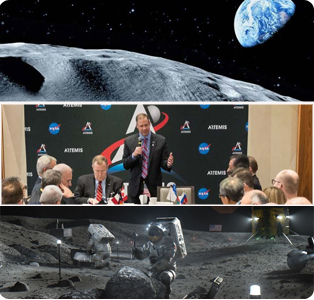
 May 31 — The Space Show, Online / Tiburon CA: Dr. David Livingston hosts open lines for callers.