India, China Increasingly Prioritize NewSpace / Commerce to Reach National Space Goals
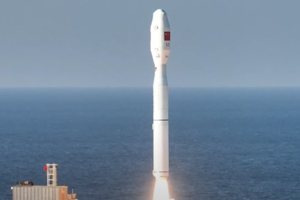
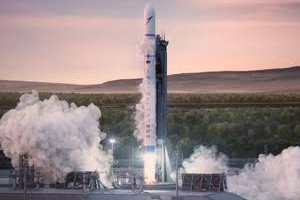
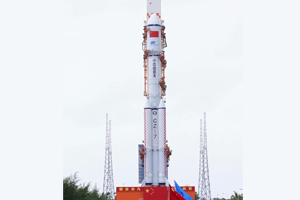
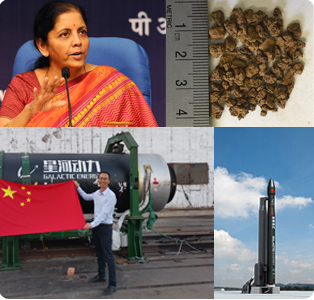
While state-run space agencies ISRO and CNSA continue to lead their respective national space programs, signals from India and China abound suggesting a greater role for private space enterprise. As part of a broad stimulus program aimed at increasing economic resiliency in India, Minister of State for Commerce & Industry, Nirmala Sitharaman, announced that ISRO facilities and technologies are to be opened to commercial interests, characterizing the private sector as a “co-traveler” on a national space journey. Relatedly, Indian Patent Office grants 20-year patent on lunar regolith simulant developed by researchers at ISRO Rao Satellite Centre, Periyar University and India National Institute of Technology, also indicative of a wider shift in space strategy – perhaps influenced by NASA’s increasing reliance on commercial outsourcing of spacecraft construction and support services, often at lower cost. In China, Newspace rocket company Galactic Energy (aka Beijing Xinghe Dongli Space Technology Co. Ltd.) hopes to capitalize on the need for inexpensive, customized launch solutions – named for the first asteroids discovered, Ceres-1 first mission is expected to launch from Jiuquan Satellite Launch Center in June, with reusable Pallas-1 to follow in late 2022. (Image Credits: Galactic Energy, XINHUA, NASA, Ministry of State for Commerce & Industry)
MONDAY
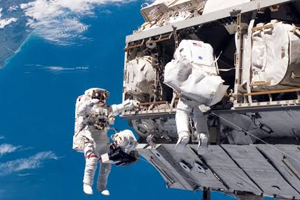
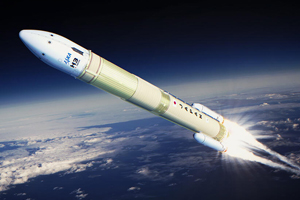
Highlights… Jun 1 — ISS, 405-km LEO: Expedition 63 three-member crew planning for potential arrival of Dragon Demo-2 crew Bob Behnken and Doug Hurley; transferring ~4,000 kg of cargo from JAXA HTV-9; about 215 experiments are ongoing during this Expedition.
Jun 1 — NewSpace:Virgin Orbit analyzes test data from LauncherOne flight anomaly, plans for next rocket for integration; Aldrin Family Foundation starts STEAM series; SpaceX raises US$346M in new funds; Rocket Lab prepares for launch this month.
Jun 1 — Solar System: China Tianwen-1 Mars mission being readied for late July launch on Long March 5; DART asteroid redirection mission on track for 2021 launch to Didymos; Psyche mission may delay beyond 2022.
Jun 1 — Global:Canada advances participation in Artemis / Lunar Gateway; Roscosmos states Russia will not aim to privatize Moon; India 4 Gaganyaan astronauts re-start training program at Star City; Peru & USA strengthen space data sharing agreements; DLR Chair Pascale Ehrenfreund receives Women in Aerospace Europe award.
Jun 1 — USA: SLS 8 green run tests could occur soon; NASA Flight Opportunities Program seeks suborbital flight providers; Northrop Grumman performs Saffire experiment 4 in Cygnus and plans 2 additional; Hubble Image Similarity Project funds professionals to train space object identifying algorithm.
Jun 1 — Hawai’i: PUEO donates first batch of 2,000 PPE masks purchased by NAOC – China partner in TMT; Keck & Hubble observations of rare ‘cosmic ring of fire’ being studied for formation theories; UH postpones discussion of new Maunakea management until June; Gemini North rejoins telescopes for nighttime observation campaigns.
AAS 236 Hosts First Fully Virtual Meeting Including Exhibit, Plenary, Prize, Special and iPoster Sessions
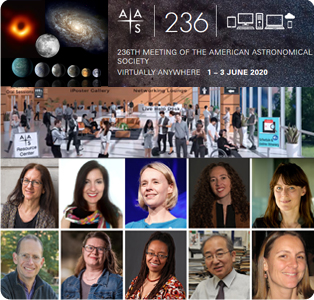
American Astronomical Society is set to hold its 236th Meeting June 1-3, originally to be held in person at Madison WI, and now fully online to advance science while maintaining physical distance. Each day will run for ~10 hours and allow for online interactions during live oral and iPoster sessions, Q&A chats, exhibitor webinars and social lounges. There are about 700 participants listed. Major topics for consideration this year are black holes, exoplanets, galaxies, observatories / telescopes, dark matter, stars and interstellar medium. AAS President Megan Donahue will give welcome comments on Day 1, followed by Lisa Kaltenegger of Cornell University talking on ‘Searching for Habitable Worlds: Challenges, Opportunities & Adventures’. The Astronomy from the Moon Special Session, which could be a continuing series of events, will feature Jack Burns (Univ. of Colorado, Boulder), Linjie Chen (NAOC, CAS), Steve Durst (ILOA, Hawai’i) and possibly others. Day 2 will feature James Webb Telescope, Sofia, Hubble, a talk on mega-satellite constellations, and ‘Atacama Cosmology Telescope and the Simons Observatory: The Millimeter-Wave Sky from Chile’ by Jo Dunkley from Princeton Univ. On Day 3 Keck Observatory will host a Webinar title ‘A Public Goldmine of 26 Years of Observations’. There will also be Laboratory Astrophysics Division Meetings and a Solar Physics Division Prize Lecture. Two ‘Meetings-in-a-Meeting’ Sessions spanning all 3 days are Supermassive Black Hole Studies with the LSST, and The Interstellar Medium of Galaxies in the Era of Big Data. (Pictured: Plenary Speakers; Image Credits: AAS, Event Horizon Telescope, NASA)
NET Jun — Galactic Energy Company, Launch Ceres-1,Jiuquan Satellite Launch Center, China: China commercial space company to attempt maiden orbital flight of rocket Ceres-1.
Jun 1-2 — Small Bodies Assessment Group (SBAG), NASA, Online / Laurel MD:SBAG Virtual Meeting.
Jun 1-3 — American Astronomical Society, Online / Madison WI:236th Meeting of the AAS; virtual meeting.
Jun 1 — Moon: 6.8° NNE of Spica, 22:00.
Jun 1 — Mars and Saturn: at heliocentric conjunction, 08:00.
Continued From…
Jan 2019 – Sep 2020 — New Horizons, Kuiper Belt: Full data collected from 7 instruments during KBO Arrokoth flyby to be transmitted to Earth over this time period.
Nov 2019 – Nov 2020 — Hayabusa2, Earth Trajectory: JAXA Hayabusa2 with two samples collected from C-type asteroid 162173 Ryugu on trajectory for Earth return.
Jun 2 — Juno, Perijove 27 / 26th Science Flyby,Jupiter Orbit: NASA craft in 53-day orbit to come within ~3,500 km of Jupiter cloud tops during Perijove 27, its 27th close flyby of Jupiter and 26th science flyby with instruments turned on, 10:19:55.
Jun 2-4 — International Academy of Astronautics, American Astronautical Society,RUDN University,Moscow, Russia: 3rd IAA/AAS Scitech Forum; conference TBD.
Jun 5 — Moon: 6.3° NNE of Antares, 02:00; Full Strawberry Moon, 09:12.
Jun 5 — Penumbral eclipse of the Moon: Visible in Europe, Asia, Australia, Africa, South/East South America, Pacific, Atlantic, Indian Ocean, Antarctica; stars 07:45:55, maximum 09:24:55, ends 11:04:03.
Jun 5 — Apollo Asteroid 2020 KA6: Near-Earth Flyby (0.030 AU)
Emanating from ~6km-wide comet with 5.3-year Solar orbit, visible in constellation Aquarius near star Delta Aquarii, fast, faint meteors peak on this night, best...
The International Research Conference is a federated organization dedicated to bringing together a significant number of diverse scholarly events for presentation within the conference...
Includes ~150 meetings covering the fields of COSPAR Scientific Commissions / Panels / Task Groups, such as SC B: The Earth-Moon System, Planets, and...
From 02 to 07 August 2026, a few thousand geoscientists across diverse disciplines will gather at the 23rd annual meeting of the Asia Oceania Geosciences...
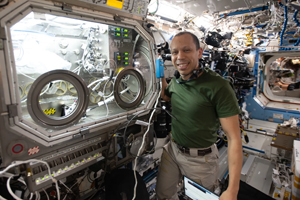
2:45 pm EDT from Johnson Space Center, NASA astronaut Chris Williams will recap his recent eight-month mission aboard the International Space Station. Williams returned to...
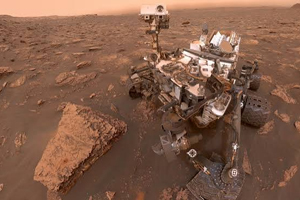
NASA Curiosity (Mars Science Laboratory) rover surpasses another full year of operations on Mars surface today; launched Nov 26, 2011 – landed Aug 5,...
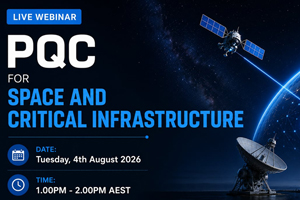
Virtual Series 2026 will offer deeper conversations on why PQC matters and the practical steps businesses should be taking; starts 1:00 pm AEST. Featuring:...
This international lunar science meeting has two objectives: to provide a platform for leading experts to review recent advances across lunar research, from the...
At CSIR International Convention Centre. Key topics are Earth Observation, Developing Space Tourism, Space Supply Manufacturing. Cultural tours are offered.
 Jun 1 —
  Jun 1 — NewSpace:
  Jun 1 — USA:
 = All times
 = All times for international terrestrial events in local time unless noted.
 = All times for space events, and…
 = All times for international space / astro events in Hawaii Standard Time unless noted. Add 10 hours to obtain UT (‘Universal Time’).