2021 to See Re-Set Meetings for PTMSS / SRR, GLEX, and ISCOPS
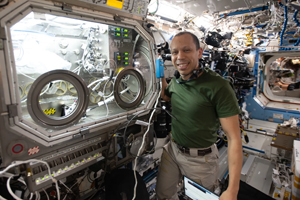
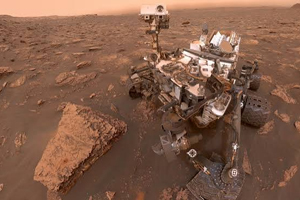
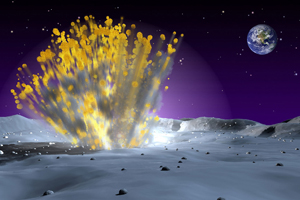
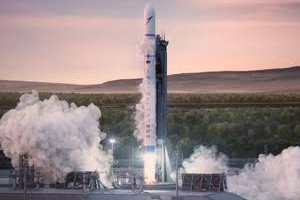
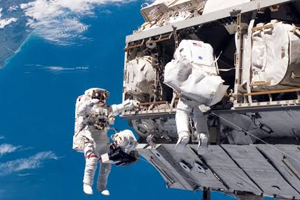
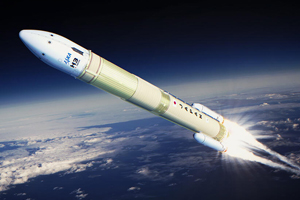
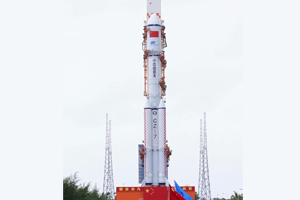
Three conferences are being rescheduled for next year, which were originally planned to start on June 9. The 11th annual Planetary & Terrestrial Mining Sciences Symposium and Space Resources Roundtable (PTMSS / SRR) is now planned for May 18-20, 2021 in Ottawa. It will cover main themes of Moon, Mars, Asteroids and Earth; and sub-themes of Exploration Science and Technology, Resource Extraction and Utilization, and Commercialization. Through technical presentations and roundtable discussions, PTMSS / SRR builds interconnected relationships between space and mining sectors. Canada leads the world in investment in mineral extraction, receiving US$7.9B annually. Global Space Exploration Conference (GLEX), being hosted by International Astronautical Federation and Roscosmos will now be planned for June 2021 in St. Petersburg, Russia. GLEX will feature an opening event, plenary and keynote lectures, technical program, Global Networking Forum, welcome reception and gala. The 2017 GLEX held in Beijing hosted 1,000+ attendees from 51 countries. The 16th International Space Conference of Pacific-basin Societies (ISCOPS), sponsored since 1985 by American Astronautical Society, Chinese Society of Astronautics and Japanese Rocket Society, will also be re-set to 2021. With the goal to exchange space technology ideas and discuss the future of space development, ISCOPS publishes full technical proceedings from every event. Regional representatives for 16th ISCOPS are Arun Misra from AAS, Zhang Yao and Huang Zewen from CSA, and Yasuhiro Morita and Satoshi Nonaka from JRS. (Image Credits: PTMSS, SRR, CSA-ASC, IAF, Roscosmos, AAS, CSA, JRS, NASA)
MONDAY
Highlights… Jun 8 — ISS, 405-km LEO: Expedition 63 five-member crew performing in-flight / outreach interviews this week, monitoring Bigelow BEAM habitat, transferring cargo from Progress 75P, HTV-9 and Crew Dragon; Behnken and Hurley continue ISS orientation procedures.
Jun 8 — NewSpace: Xplore planning missions to inner Solar System, first XCRAFT mission will be to Moon orbit 2021; combined corporation Redwire to develop mission critical systems and electronics; International Space Elevator Consortium sponsoring summer interns and hosting webinars.
Jun 8 — Solar System: Ice Favorability Index to aid Moon prospecting mission planning, especially at poles; New Horizons in Kuiper Belt until 2027-28, data from Pluto flyby leads to mountain evolution theories; Mars may once have had rings.
Jun 8 — Galaxy: KSU astronomer finds early Universe could have been spinning; classical novae could be responsible for most of lithium in MWG and Solar System; further examination of MWG halo shows the entire halo could be up to 10M° Kelvin; confirmation of Proxima Centauri c will lead to more detailed investigations.
Rocket Lab, Spacebase Lead the Way Establishing New Zealand NewSpace Ecosystem
12th Electron launch nicknamed “Don’t Stop Me Now” is set to leave Earth during 11 – 24 June launch window – setting a pace that may see New Zealand exceed India, Japan and even Europe in launches for 2020. 8 additional launches are planned from Rocket Lab Launch Complex 1, located at Ahuriri Point on Mahia Peninsula, by end of year. 2019 saw the launch of 6 Electron Rockets – making NZ 4th in world in terms of national orbital launches – and being the only commercial spaceport, 1st in that category. Attributes of NZ conducive to space industry include not just geographical isolation, advantageous trajectory options and vast downrange, but also government that appears to strike a balance between industry deregulation and socio-environmental policy. Space has contributed NZ$1.8B to the national economy in the last financial year and sustains some 12,000 workers. Exploration is deeply rooted in the national character, being one of few gateways to Antarctica. While Rocket Lab success has put NZ on the NewSpace map, ISU pioneers Emeline Paat-Dahlstrom and Eric Dahlstrom look to firmly establish space industry and education in their nation with SpaceBase, a nonprofit aiming to encourage indigenous space activity. Propulsion system builder Dawn Aerospace and Cubesat control and hazard avoidance company Swarm NZ Limited are newer actors being fostered by New Zealand Space Agency, each receiving NZ$500,000 to fund innovative R&D. (Image Credits: Rocket Lab, SpaceBase, Ministry of Justice of New Zealand)
Jun 8 — Apollo Asteroid 2020 KZ3: Near-Earth Flyby (0.008 AU)
Jun 8 — Apollo Asteroid 2013 XA22: Near-Earth Flyby (0.020 AU)
Jun 8 — Moon: 2.21° SE of Jupiter, 09:00; with Jupiter and Saturn within circle of diameter 5.06°, 12:00; 2.66° SE of Saturn, 18:00.
Continued From…
Jan 2019 – Sep 2020 — New Horizons, Kuiper Belt: Full data collected from 7 instruments during KBO Arrokoth flyby to be transmitted to Earth over this time period.
Nov 2019 – Nov 2020 — Hayabusa2, Earth Trajectory: JAXA Hayabusa2 with two samples collected from C-type asteroid 162173 Ryugu on trajectory for Earth return.
Jun 9 — NASA, Online / Cape Canaveral AFS FL: Due date for international media to apply to watch July 17 launch of Mars 2020 ‘Perseverance’ rover in person.
Jun 9-11 – National Academies Space Studies Board (SSB) and Aeronautics and Space Engineering Board (ASEB),Online /Washington DC: SSB / ASEB 2020 Meeting.
Jun 9 — Apollo Asteroid 2013 EC20: Near-Earth Flyby (0.067 AU)
WEDNESDAY
Jun 10 — Catapult Satellite Applications, Online: UK Launch Vehicles Webinar; featuring Skyrora, Nammo, Reaction Engines, Small Spark, Dragon Aerospace, Raptor Aerospace, Protolaunch, Black Arrow.
Jun 10 — British Interplanetary Society, Online / London, United Kingdom: Virtual Lecture: Alcohol in Space; by Chris Carberry, CEO and Co-Founder of Explore Mars, Inc.
Jun 10 — Amor Asteroid 2020 KY: Near-Earth Flyby (0.044 AU)
THURSDAY
Jun 11 — Rocket Lab, Launch Electron / “Don’t Stop Me Now”, Launch Complex 1, Mahia Peninsula, New Zealand: 14-day launch window begins for 12th Electron launch to carry ANDESITE and NRO satellites.
Jun 11 — Fermi Gamma-ray Telescope, LEO: Spacecraft with Large Area Telescope & Gamma-ray Burst Monitor instruments reaches 12 full years / enters 13th year in Space; launched 2008.
Jun 12 – Smithsonian National Air and Space Museum, Online / Washington DC: Online Lecture: Hubble at 30; by David Leckrone, emeritus senior scientist at NASA, 20:00 EST.
Jun 12 — Moon: with Mars and Neptune within circle of diameter 4.16°, 16:00; 2.54° SE of Mars, 17:00; 4.2° SE of Neptune, 18:00; at last quarter, 20:24.
Emanating from ~6km-wide comet with 5.3-year Solar orbit, visible in constellation Aquarius near star Delta Aquarii, fast, faint meteors peak on this night, best...
The International Research Conference is a federated organization dedicated to bringing together a significant number of diverse scholarly events for presentation within the conference...
Includes ~150 meetings covering the fields of COSPAR Scientific Commissions / Panels / Task Groups, such as SC B: The Earth-Moon System, Planets, and...
From 02 to 07 August 2026, a few thousand geoscientists across diverse disciplines will gather at the 23rd annual meeting of the Asia Oceania Geosciences...
2:45 pm EDT from Johnson Space Center, NASA astronaut Chris Williams will recap his recent eight-month mission aboard the International Space Station. Williams returned to...
NASA Curiosity (Mars Science Laboratory) rover surpasses another full year of operations on Mars surface today; launched Nov 26, 2011 – landed Aug 5,...
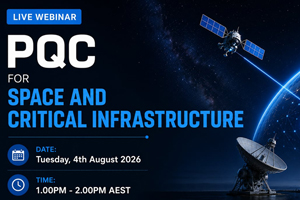
Virtual Series 2026 will offer deeper conversations on why PQC matters and the practical steps businesses should be taking; starts 1:00 pm AEST. Featuring:...
This international lunar science meeting has two objectives: to provide a platform for leading experts to review recent advances across lunar research, from the...
At CSIR International Convention Centre. Key topics are Earth Observation, Developing Space Tourism, Space Supply Manufacturing. Cultural tours are offered.
 Three conferences are being rescheduled for next year, which were originally planned to start on June 9. The 11th annual Planetary & Terrestrial Mining Sciences Symposium and Space Resources Roundtable (PTMSS / SRR) is now planned for May 18-20, 2021 in Ottawa. It will cover main themes of Moon, Mars, Asteroids and Earth; and sub-themes of Exploration Science and Technology, Resource Extraction and Utilization, and Commercialization. Through technical presentations and roundtable discussions, PTMSS / SRR builds interconnected relationships between space and mining sectors. Canada leads the world in investment in mineral extraction, receiving US$7.9B annually. Global Space Exploration Conference (GLEX), being hosted by International Astronautical Federation and Roscosmos will now be planned for June 2021 in St. Petersburg, Russia. GLEX will feature an opening event, plenary and keynote lectures, technical program, Global Networking Forum, welcome reception and gala. The 2017 GLEX held in Beijing hosted 1,000+ attendees from 51 countries. The 16th International Space Conference of Pacific-basin Societies (ISCOPS), sponsored since 1985 by American Astronautical Society, Chinese Society of Astronautics and Japanese Rocket Society, will also be re-set to 2021. With the goal to exchange space technology ideas and discuss the future of space development, ISCOPS publishes full technical proceedings from every event. Regional representatives for 16th ISCOPS are Arun Misra from AAS, Zhang Yao and Huang Zewen from CSA, and Yasuhiro Morita and Satoshi Nonaka from JRS. (Image Credits: PTMSS, SRR, CSA-ASC, IAF, Roscosmos, AAS, CSA, JRS, NASA)
 Jun 8 —
  Jun 8 — NewSpace:
  Jun 8 — USA: NASA Artemis Program
 = All times
 = All times for international terrestrial events in local time unless noted.
 = All times for space events, and…
 = All times for international space / astro events in Hawaii Standard Time unless noted. Add 10 hours to obtain UT (‘Universal Time’).
 Jun 9 — NASA, Online / Cape Canaveral AFS FL: Due date for international media to apply to watch July 17 launch of Mars 2020 ‘Perseverance’ rover in person.