2020 NIAC Symposium Features 23 Visionary Concepts for Solar System + Beyond Exploration
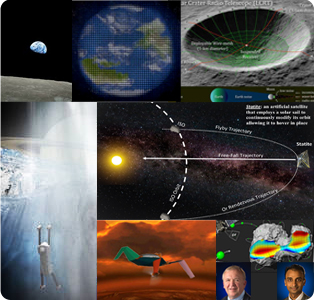
The 9th NASA Innovative Advanced Concepts (NIAC) Symposium is being held September 22-24. Originally set for Tucson AZ, the event is now virtual, free and open to public. It will feature 23 NIAC Phase 1-3 studies, totaling US$7M, addressing areas relevant to Artemis including Revolutionary Exploration Systems, Novel Propulsion, Human Systems & Architectures for Extreme Environments, Sensors, and Imaging. Part of Space Technology Mission Directorate, NIAC is headed by (L) James Reuter and Prasun Desai. Some 2020 NIAC selections are: Lunar Crater Radio Telescope on the Far-Side of the Moon proposed by JPL to deploy a 1km-diameter wire-mesh telescope in a 3-5km-diameter lunar crater observing in 10-50m wavelength band; MIT-proposed Dynamic Orbital Slingshot for Rendezvous with Interstellar Objects to launch a Statite (satellite with solar sail) to quickly intercept an Interstellar visitor; Heat Exchange-Driven Aircraft for Low Altitude and Surface Exploration of Venus by Planetary Science Institute to investigate a fixed wing aircraft using Venus atmosphere heat for power; JPL-submitted Enceladus Vent Explorer robotic mission to collect samples of ocean water that could contain intact organisms and perform in-situ science. Receiving $2M, the only Phase 3 study of 2020 is Direct Multipixel Imaging and Spectroscopy of an Exoplanet with a Solar Gravitational Lens Mission which could see direct high-resolution imaging and spectroscopy of Earth-like exoplanets ‘at a resolution comparable to Apollo 8 Earthrise photo’. (Image Credits: NASA, JPL, MIT, S. Bandyopadhyay, R. Linares, E. N.Dobrea, M. Ono, S.Turyshev)
MONDAY
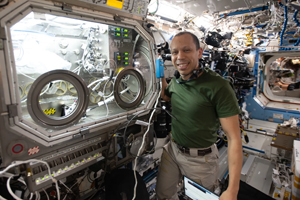
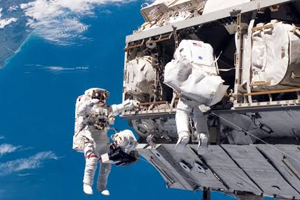
Highlights… Sep 21 — ISS, ~405-km LEO: Expedition 63 crew of 3 working on science hardware upkeep including electrostatic levitation furnace, acoustic monitoring, life sciences glovebox, microgravity glovebox, glacier science freezer; long-awaited Nauka module being prepped in Baikonur for launch.
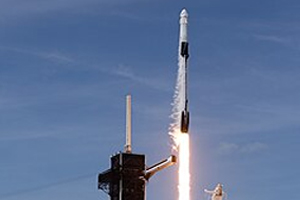
Sep 21 — NewSpace:Southern Launch testing suborbital rockets from Australia west coast; SpaceX Starship SN8 may be launched to 18.2 km as early as Oct; Nanoracks Bishop airlock launching to ISS Oct 29 will increase current transfer volume by 5x.
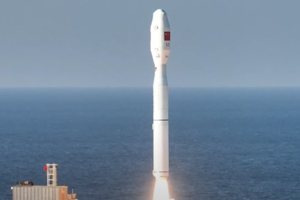
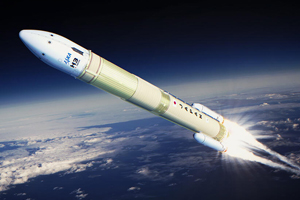
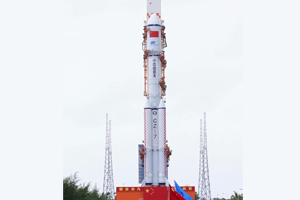
Sep 21 — Global:Chandrayaan-3 undergoes design change to have 4, not 5, engines for Moon landing; China / Zhongguo second successful sea launch marks 27 launches so far in 2020; Japan converting Oita Airport into spaceport, announces new logo; reconstruction of Russia Sea Launch to start in 2 months.
Sep 21 — USA: NASA Administrator Bridenstine discusses advantages of Artemis landing at Apollo sites, some speculate 2024 Moon South Pole landing doubts; Blue Origin advancing human lunar lander, passes baseline requirements, while Dynetics team reveals full-scale model design.
Sep 21 — MAVEN, Mars Orbit: NASA Mars Atmosphere and Volatile Evolution (MAVEN) spacecraft reaches 6 full years / enters 7th year of operations in Mars orbit after insertion on this day 2014; continuing to study upper atmosphere.
= All times
for terrestrial events in local time unless noted.
= All times for international terrestrial events in local time unless noted.
= All times for space events, and…
= All times for international space / astro events in Hawaii Standard Time unless noted. Add 10 hours to obtain UT (‘Universal Time’).
SG[France] 2020: Our Giant Leap Strives to Advance Space Diversity
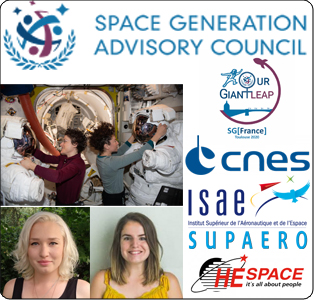
September 26 SGAC France chapter will host some 60-80 members and mentors in Toulouse, home to National Centre for Space Studies (CNES), to discuss and debate how best to achieve parity within space industry and academia, with emphasis on increasing female representation. The first in a series of ‘Our Giant Leap’ events, with theme Women Of The Aerospace Sector, will feature 2 video submissions on “What does gender equality in aerospace mean to you”, 3 motivational keynotes, artwork and 4 roundtables: Tackling Gender Bias and Discrimination, Mentorship Strategies, Tips to Make Your Work Environment and Conditions More Inclusive and Fill the Gaps in Female-Oriented Space Research. Space Generation Advisory Council, representing 15,000+ space students and professionals between age 18-35 from over 150 countries, holds inclusiveness as a core organizational value – recognized by receipt of the 2018 International Astronautical Federation 3G award. In addition to the organizational work of some 30+ global events annually, SGAC contributes insight to United Nations Committee on the Peaceful Uses of Outer Space as Permanent Observer from its headquarters in Vienna, Austria and maintains standing project groups on: Commercial Space, NEOs, Ethics / Human Rights, Small Satellites, Space Exploration, Law / Policy, Safety / Sustainability, Medicine, Technologies for Earth Applications and Cyber Security. (Pictured: Astronauts Christina Koch and Jessica Meir; Event Managers Yulia Akisheva and Pauline Delande; Image Credits: SGAC, NASA, CNES, HE Space, Association Planète Mars, ISAE-SUPAERO)
Sep 21 — Apollo Asteroid 2020 RQ6: Near-Earth Flyby (0.009 AU)
Continued From…
Nov 2019 – Nov 2020 — Hayabusa2, Earth Trajectory: JAXA Hayabusa2 with two samples collected from C-type asteroid 162173 Ryugu on trajectory for Earth return.
Jul 29 – Oct 31 — CNSA, Ministry of Education, Ministry of Science and Technology, Chinese Academy of Sciences, Online / Beijing, China: Students to submit ideas for payloads for Chang’e-7 lunar south pole craft, and ZhengHe mission that will return samples from Asteroid 2016HO3 and visit Comet 133P.
Sep 11-21 — ESA,Online / Paris, France: First virtual Space App Camp 2020; bringing programmers together to develop creative and innovative apps that make Earth observation data accessible to a wide range of citizens.
Sep 18-21 — Chinese Society of Astronautics, China Space Foundation, Fuzhou, Fujian, China:2020 China Space Conference; 16 events with 10 specific space engineering and science challenges to be addressed, international participation and cooperation invited.
TUESDAY
Sep 22 — CNSA, Launch Long March 4B / Haiyang 2, Taiyuan Satellite Launch Center: Launch of Haiyang “Ocean” Earth observation satellite focused on dynamic marine environment.
Sep 22-24 — ISS National Lab, Center for the Advancement for Science in Space, NASA, Online: ISS R&D Technical Sessions; free.
Sep 22—September Equinox: The Sun rises exactly in east traveling through sky for 12 hours, sets exactly in west; day and night are approximately equal duration every place on Earth; 03:32.
Sep 22 — Moon: 5.8° NNE of Antares, 04:00.
Sep 22 — Mercury: 0.27° NE of Spica, 02:00.
Sep 22 — Apollo Asteroid 2020 RB6: Near-Earth Flyby (0.017 AU)
Sep 22 — Apollo Asteroid 2020 RD5: Near-Earth Flyby (0.027 AU)
Sep 22 — Apollo Asteroid 2020 RU7: Near-Earth Flyby (0.039 AU)
Sep 24 — Mars Orbiter Mission (Mangalyaan), Mars Orbit: India ISRO orbiter reaches 6 full years / enters 7th year of operations in Mars orbit; launched Nov 5, 2013.
Sep 25 — Asteroid 2 Pallas: At opposition, magnitude 8.3, 11:00.
Sep 25 — Apollo Asteroid 2020 R: Near-Earth Flyby (0.039 AU)
SATURDAY
Sep 26 — International Observe the Moon Night Organization, Global: International Observe the Moon Night 2020; encouraging observation, appreciation, understanding of the Moon and its connection to planetary science & exploration; 1st quarter Moon is considered the best time to observe the Moon due to shallow angle of sunlight hitting surface and illuminating details.
Sep 26 — The Astronomical League,Global / Online: Fall Astronomy Day 2020; astronomical societies, planetariums, museums, observatories sponsoring public viewing sessions, presentations, workshops.
Sep 26 — British Interplanetary Society, Online / London, United Kingdom: Interstellar Precursor Missions; by Rob Swinney of the Institute for Interstellar Studies, 14:00 BST.
Sep 26 — International Lunar Observatory Association, Daejeon National Science Museum (DNSM), KASI, Daejeon, S Korea: Galaxy Forum Korea 2020 Daejeon; reset to 2021.
Sep 26 — Apollo Asteroid 2020 RF4: Near-Earth Flyby (0.030 AU)
Sep 27-28 — Europlanet Society, Online: Europlanet Science Congress 2020; covering a broad area of science topics related to planetary science and planetary missions.
Sep 27 — Apollo Asteroid 2020 RF5: Near-Earth Flyby (0.036 AU)
Emanating from ~6km-wide comet with 5.3-year Solar orbit, visible in constellation Aquarius near star Delta Aquarii, fast, faint meteors peak on this night, best...
The International Research Conference is a federated organization dedicated to bringing together a significant number of diverse scholarly events for presentation within the conference...
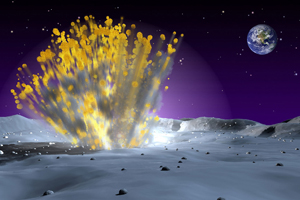
Includes ~150 meetings covering the fields of COSPAR Scientific Commissions / Panels / Task Groups, such as SC B: The Earth-Moon System, Planets, and...
From 02 to 07 August 2026, a few thousand geoscientists across diverse disciplines will gather at the 23rd annual meeting of the Asia Oceania Geosciences...
2:45 pm EDT from Johnson Space Center, NASA astronaut Chris Williams will recap his recent eight-month mission aboard the International Space Station. Williams returned to...
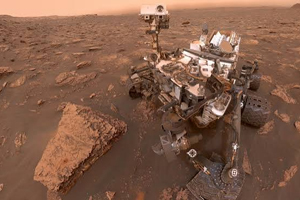
NASA Curiosity (Mars Science Laboratory) rover surpasses another full year of operations on Mars surface today; launched Nov 26, 2011 – landed Aug 5,...
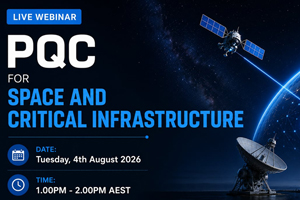
Virtual Series 2026 will offer deeper conversations on why PQC matters and the practical steps businesses should be taking; starts 1:00 pm AEST. Featuring:...
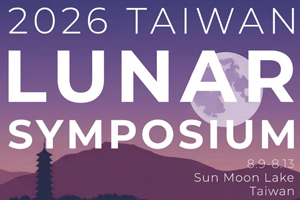
This international lunar science meeting has two objectives: to provide a platform for leading experts to review recent advances across lunar research, from the...
 Sep 21 —
  Sep 21 — NewSpace:
  Sep 21 — USA:
 = All times
 = All times for international terrestrial events in local time unless noted.
 = All times for space events, and…
 = All times for international space / astro events in Hawaii Standard Time unless noted. Add 10 hours to obtain UT (‘Universal Time’).
 September 26 SGAC France chapter will host some 60-80 members and mentors in Toulouse, home to National Centre for Space Studies (CNES), to discuss and debate how best to achieve parity within space industry and academia, with emphasis on increasing female representation. The first in a series of ‘Our Giant Leap’ events, with theme Women Of The Aerospace Sector, will feature 2 video submissions on “What does gender equality in aerospace mean to you”, 3 motivational keynotes, artwork and 4 roundtables: Tackling Gender Bias and Discrimination, Mentorship Strategies, Tips to Make Your Work Environment and Conditions More Inclusive and Fill the Gaps in Female-Oriented Space Research. Space Generation Advisory Council, representing 15,000+ space students and professionals between age 18-35 from over 150 countries, holds inclusiveness as a core organizational value – recognized by receipt of the 2018 International Astronautical Federation 3G award. In addition to the organizational work of some 30+ global events annually, SGAC contributes insight to United Nations Committee on the Peaceful Uses of Outer Space as Permanent Observer from its headquarters in Vienna, Austria and maintains standing project groups on: Commercial Space, NEOs, Ethics / Human Rights, Small Satellites, Space Exploration, Law / Policy, Safety / Sustainability, Medicine, Technologies for Earth Applications and Cyber Security. (Pictured: Astronauts Christina Koch and Jessica Meir; Event Managers Yulia Akisheva and Pauline Delande; Image Credits: SGAC, NASA, CNES, HE Space, Association Planète Mars, ISAE-SUPAERO)