Thailand Hosts Astronomy Tours Through March 2021, Looks Forward to New Observations from New Locations
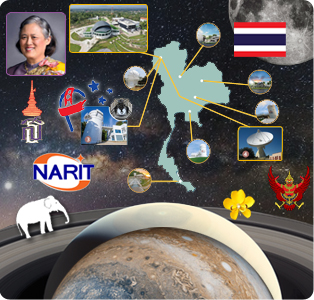
National Astronomical Research Institute of Thailand (NARIT) and Tourism Authority of Thailand are facilitating 7 astronomy tours for domestic tourists from December 2020 (Thai / Buddhist year 2563) through March 2021. Thailand is celebrating the ‘Great Conjunction’ December 19-23, followed by NARIT AstroFest January 9, 2021, and Thai National Observatory (TNO) Open House on February 13 and March 6. The establishment of NARIT in 2008 (first founded as NARI in 2004) has led to rapid development of astronomy facilities in the nation. NARIT oversees telescopes in 13 different locations for academic / public and research / science: observatories in Nakhon Ratchasima, Chachoengsao, Songkhla, Khon Kaen (under construction); the 2.4-meter TNO (built 2013) one of the largest in Southeast Asia and situated on the highest Thai mountain 2,565-meter Doi Inthanon; the 40-meter single-dish Thai National Radio Telescope (2020); and Thai Robotic Telescope Network operating 0.6-0.7 meter telescopes in Chile, PRC / Zhongguo, Australia, USA and at a location yet to be selected in South Africa. NARIT also manages the 21-acre, US$13M Princess Sirindhorn AstroPark in Chiang Mai. Her Royal Highness Princess Maha Chakri Sirindhorn, whose exceptionally keen interest in astronomy is well known for decades, has earned the nickname “Princess of Astronomy” and international admiration for her dedication / philanthropy to science and education – worthy of a Nobel Peace Prize nomination. (Image Credits: Thai Bureau of the Royal Household, NARIT, TNO, NASA)
MONDAY
Highlights… Dec 21 — ISS, ~405-km LEO: Expedition 64 crew of 7 attend to ongoing cardiac investigations within Kibo Lab module Life Sciences Glovebox; maintaining rigorous exercise regime to stave off muscle atrophy; Mission Control reviewing cause / prevention of temporary power loss to 4B channel.
Dec 21 — Global: China / Zhongguo Long March 8 new generation rocket awaiting inaugural launch at Wenchang SLC this month; Indonesia President Joko Widodo and SpaceX CEO Elon Musk in talks to bring battery factory and launch site to Indonesia; Thailand planning lunar orbit mission within 7 years.
Dec 21 — Hawai’i: Keck observations confirm distance of farthest Galaxy GN-z11 – noting UV flash, Observatory also updating solar power system; CFHT data being used to study / confirm binary system composed of two young planet-like objects.
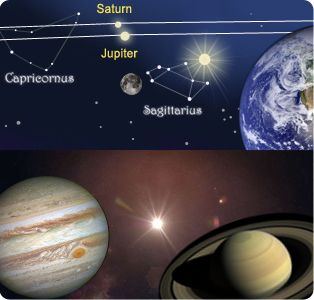
Jupiter – Saturn Great Conjunction on December Solstice is Poignant Symbol of Space Age
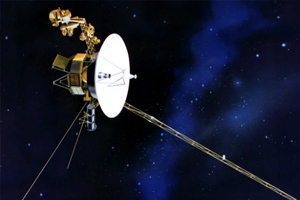
The 2 largest planets in the Solar System will align within 0.101° (1/5 of the diameter of a full Moon) of one another from geocentric point of view on December 21 – Winter Solstice in the Northern Hemisphere, Summer Solstice in the Southern. Human fascination with astronomical conjunctions, and specifically so-called Great Conjunctions of Jupiter and Saturn (the rarest of bright-planet conjunctions, owing to slow orbits) has a rich archeoastronomical history, perhaps most famously speculated as the “Christmas Star” in Biblical lore. While there was a closer Great Conjunction in 1623 (0.086°), no observation was recorded due to conditions. The most recently observed ‘Double Planet’ conjunction of the behemoth gas giants stretches back to 1226 and is thought to have influenced Genghis Khan to withdraw his armies from China. With modern technology, humanity has extended its reach to the farthest reaches of the Solar System, with Juno currently in orbit and Pioneer / Voyager missions conducting flybys of both giants, gaining momentum from gravity assist on the way to interstellar medium. This aspect of orbit mechanics has been described in detail by Serbian researcher Nataša Todorović in the just-released paper The arches of chaos in the Solar System, identifying outward manifold pathways through space generated by planets with dramatic effect on object speed. Notably, the upcoming Great Conjunction will be the first observed by humans living in Space. (Image Credits: NASA)
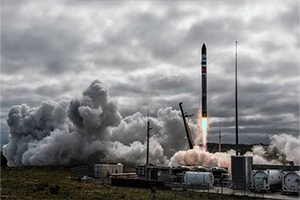
Dec 21 — Firefly Aerospace, Launch Alpha Rocket,SLC-2Vandenberg AFB CA: First launch attempt of Alpha rocket to reach space; launch window open through Jan 31, 2021.
Dec 21 — December Solstice: The Sun reaches the point where it is farthest South of the celestial equator, marking the shortest day and longest night of the year (opposite in Southern Hemisphere); 00:02.
Dec 21 — Moon: At first quarter, 13:41.
Dec 21 — Jupiter: 0.10° SE of Saturn, 09:00; will appear as a ‘double planet’, for the first time since July 16, 1623; next occurrence 2080, then 2400.
Dec 21 — Apollo Asteroid 2017 XQ60: Near Earth Flyby (0.032 AU)
Dec 21 — Apollo Asteroid 2020 XA3: Near Earth Flyby (0.033 AU)
Dec 19-23 — NARIT, Tourism Authority of Thailand,Multiple Locations, Thailand: Celebrating the Great Conjunction of Jupiter and Saturn, NARIT and TAT hold stargazing tours for domestic tourists.
TUESDAY
Dec 22 — ISS, ~405-km LEO: In-flight interviews with Expedition 64 Astronauts Kate Rubins and Victor Glover (09:10 EST), and Victor Glover and Shannon Walker (12:35 EST), live coverage available.
Dec 22 — The Space Show,Online / Tiburon CA: Dr. David Livingston talks with Ajay Kothari, President and Founder of Astrox Corporation of Washington DC.
Dec 22 — Ursid Meteor Shower Peak: Appearing to radiate from β star of Ursa Minor, Ursids are associated with comet 8P/Tuttle, they offer medium speed (33 km/sec), mostly faint with a few fireballs, ~15 per hour, visible in northern Hemisphere.
Dec 22 — Apollo Asteroid 2020 XH6: Near Earth Flyby (0.016 AU)
WEDNESDAY
Dec 23 — Moon: 5.1° SE of Mars, 14:00.
Dec 23 — Venus: 5.6° N of Antares, 11:00.
Dec 23 — Apollo Asteroid 2020 XJ3: Near Earth Flyby (0.013 AU)
THURSDAY
Dec 24 — Hubble Space Telescope, LEO: Spacecraft makes visible pass over Hawai’i starting 05:18:05 from SSW to 05:23:53 in E, magnitude 2.1.
Dec 24 — Moon: At apogee (distance 405,013.16 km), 07:00; 3.2° SE of Uranus, 16:00.
Dec 24 — Aten Asteroid 2011 CL50: Near Earth Flyby (0.003 AU)
FRIDAY
Dec 25 — Mars Express, Mars Orbit: ESA spacecraft reaches 17 full years / enters 18th year in Mars orbit today; will continue to study Mars atmosphere & climate, planet structure, mineralogy, geology, and search for traces of water; launched June 2, 2003.
Dec 25 — Aten Asteroid 501647 (2014 SD224): Near Earth Flyby (0.020 AU)
Dec 25 — Apollo Asteroid 2020 XY: Near Earth Flyby (0.040 AU)
SATURDAY
Dec 26 — Solar Orbiter,Heliocentric Orbit: Dedicated to solar and heliospheric physics, ESA Solar Orbiter to perform 1st Venus flyby today for gravity assist to reach its operational orbit (over next 3.5 years) with perihelion 0.28 AU and aphelion 0.91 AU; launched February 10, 2020.
Dec 26 — Moon: 5.8° SE of Pleiades 16:00.
Dec 26 — Apollo Asteroid 2018 XE4: Near Earth Flyby (0.014 AU)
Dec 26 — Aten Asteroid 2012 XE133: Near Earth Flyby (0.031 AU)
Dec 26 — Apollo Asteroid 2020 XT2: Near Earth Flyby (0.034 AU)
SUNDAY
Dec 27 — The Space Show,Online / Tiburon CA: Dr. David Livingston hosts open lines for call-in discussions.
Dec 27 — Moon: 4.6° N of Aldebaran, 10:00.
Dec 27 — Aten Asteroid 2016 AF2: Near Earth Flyby (0.019 AU)
At the Spokane Convention Center. The meeting will have a broad scope, with a wide-ranging program of science and workforce topics, and celebrating planetary...
Occurring 31 October from 09:00-11:00 local time (16:00-18:00 HST, 19:00-21:00 PDT, 22:00-24:00 EDT on 30 October), this Galaxy Forum will be in hybrid format...
Originally planned around this date for Wenchang, China -- TBC (to be confirmed); As the only professional association for astronauts, ASE supports the advancement of...
Coordinating Division Division C Education, Outreach and Heritage The IAU Symposium on Innovative Research and Techniques in Astronomy Communication will take place from November...
Change clocks back 1 hour from Daylight Saving to Standard Time; does not include Hawai’i, Arizona (except the Navajo Nation), American Samoa, Guam, Northern...
ESWW is the main annual event in the European Space Weather and Space Climate calendar. It is an international meeting organised annually within the...
IAU Symposium: IAUS409 - A Journey Towards Effective Astronomy Communication; online and at National Astronomical Observatory of Japan, 2-21-2 Osawa Mitaka, Tokyo. Topics include:...
Launch Complex 1, ~39°S, Mahia Peninsula, New Zealand
iQPS Launch 9, an Earth observation satellite with Synthetic aperture radar for Japan-based imaging company iQPS, to launch on "The Sea God Surveys" mission...
Launch window 10:34am - 2:34pm local time for the 15th batch of classified satellites for a reconnaissance constellation built by SpaceX and Northrop Grumman...
Expecting senior government and executives from NASA, Firefly, Blue Origin to discuss innovation, competitive advantages and a "space industrial revolution in LEO". Capped at...
Launch Complex 1, ~39°S, Mahia Peninsula, New Zealand
iQPS Launch 10, an Earth observation satellite with Synthetic aperture radar for Japan-based imaging company iQPS, to launch on “The Mountain God Rises” mission...
Promoting the New Space Economy: The first major national meeting of the space, technology and scientific industries. Three days to connect science, industry and...
Major international forum in space hardware environmental testing for research and development and qualification. It provides a unique opportunity for engineers, technicians and scientists...
At the Jakarta International Expo (JIExpo) Kemayoran. This event represents one of Southeast Asia’s most significant aerospace gatherings, connecting industry leaders, innovators, policymakers, and...
NASA interstellar craft set to reach 16.1 billion miles today, marking one full light-day of communication delays. Craft is operating with only 2 science...
 Dec 21 —
 Dec 21 — NewSpace:
 Dec 21 — USA:

 = All times
 = All times for international terrestrial events in local time unless noted.
 = All times for space events, and…
 = All times for international space / astro events in Hawaii Standard Time unless noted. Add 10 hours to obtain UT (‘Universal Time’).