Commemorating ISS@20: Nobel Peace Prize Considerations and the Future of Humans in Deep Space
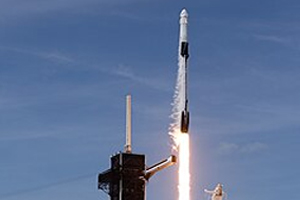
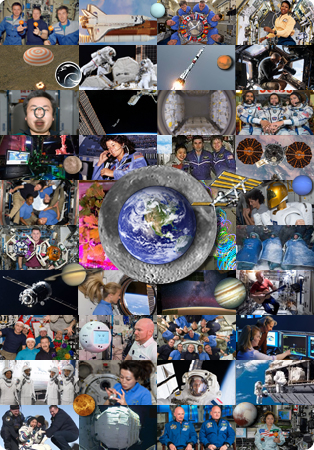
Aboard the human outpost, Expedition 64 Commander Sergey Ryzhikov and Flight Engineers Sergey Kud-Sverchkov and Kathleen Rubins are set to celebrate 20 full years of continuous human occupation of the International Space Station, and look forward to the start of its 21st. ISS partner space agencies could one day receive a Nobel Peace Prize for this unique, peaceful, international, scientific, long-duration mission involving 241 Astronauts from 19 countries, and 3,000+ investigations from 108 countries. The Artemis program returning humans to the Moon, for good, could be more international, inclusive and dynamic – overcoming advanced challenges of working and living on another world and sustaining humans as a Multi World Species. (Image Credits: NASA, Roscosmos, ESA, JAXA, CSA-ASC, SpaceX)
MONDAY
Highlights… Nov 2 — ISS, ~405-km LEO: Today marks 20 full years / start to 21st year of continuous Human occupation of ISS; first component Zarya ‘Unity’ launched Nov 20, 1998, occupation began Nov 2, 2000; three-member crew of Expedition 64 continuing cargo transfers and experiments, awaiting Dragon crew arrival next week.
Nov 2 — NewSpace: Jameel Janjua and Patrick Moran join Virgin Galactic, raising its total Pilot Corps to 8; Starlink begins beta testing with internet access starting at $99/month; ISRO seeks input on new commercial space rules draft ‘Spacecom Policy 2020‘.
Nov 2 — Solar System: ALMA data points to Titan possibly having cyclopropenylidene in atmosphere;16 Psyche asteroid estimated to be worth US$10 Quintillion, if purely metallic; Juno finds upper atmosphere electrical flashes (sprites) for 1st time at Jupiter, will continue to be studied each flyby.
Nov 2 — Galaxy:Galactic Center Sonification derived from Chandra featured on ‘Sinister Sounds of Space’ NASA playlist; magnetic field of jellyfish galaxy JO206 found to be congruent with gaseous tail, affecting stellar formation; UV readings from NASA Genesis show modern elemental differentiation existed in protosolar molecular cloud
Nov 2 — Global: ISRO and JAXA working to resume launches this month; China / Zhongguo chooses Mars Utopia Planitia 110°E, 24°N for Tianwen-1 landing site Feb 2021; South Africa, Mexico collaboration planning mid-2021 launch of hyperspectral imaging and communication payloads.
Nov 2 — USA: As 3 commercial companies make progress, requested US$3.2B budget / timing for Artemis Human Landing System in question; Jim Bridenstine and Jan Wörner sign formalized agreement for cislunar Gateway partnership; Europa Clipper 2024 requires launch provider requirement review due to SLS unavailability.
China 21st Century Lunar Surface Exploration Displays Robust Progression
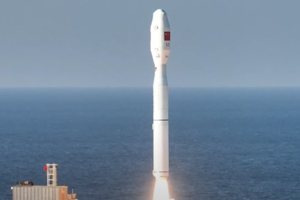
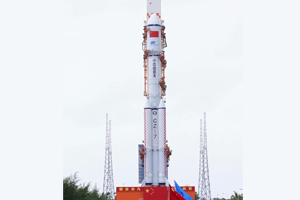
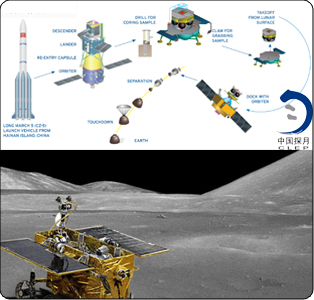
Chang’e Mission Series, known collectively as Chinese Lunar Exploration Program, is poised for Phase 3 – lunar sample return – with CE-5 set to launch from Wenchang SLC, Hainan Island Nov 24 on a Long March-5 rocket. In the 21st century, teams from Europe, Japan, India, USA and Israel have reached the lunar surface via remotely piloted craft, but only China has soft-landed operational exploratory landers (CE-3/4). The 3,780-kg, 4-module (orbiter / lander / ascender / returner) CE-5 is to extract ~2 kg of lunar regolith from a depth ≤ 1 m, which will be lifted to an Earthbound return module within a terrestrial month, making China the 2nd nation to conduct robotic lunar collection after USSR. CE-6 is planned as a redundant backup should CE-5 fail, or in the event of mission success will be redirected to the far side of Moon South Pole region – thought to contain a higher concentration of volatiles such as water. 8,200-kg CE-7, scheduled for 2024, is to contain an orbiter, lander, ground rover, L2 communications relay with very long baseline interferometry node and a water detecting aerial drone of unspecified nature, focusing intently on MSP with an expected 23 science instruments. CE-8 is to focus on In-Situ Resource Utilization and 3-D printing, objectives with clear significance to permanent lunar settlement. (Image Credits: CNSA, Loren Roberts / The Planetary Society)
Nov 2 — Moon: 5.8° SE of Pleiades, 02:00; 4.5° N of Aldebaran, 20:00.
Nov 2 — Jupiter and Saturn: At heliocentric conjunction, 09:00.
Nov 2 — Apollo Asteroid 2018 VP1: Near Earth Flyby (0.003 AU)
Continued From…
Nov 2019 – Dec 2020 — Hayabusa2, Earth Trajectory: JAXA Hayabusa2 on trajectory for Earth to return two samples collected from C-type asteroid 162173 Ryugu; craft will then head toward Asteroid 1998 KY26, arriving 2031.
NET Nov 1 — SpaceX, Launch Falcon 9 / NROL-108,SLC-40, Cape Canaveral AFS: SpaceX Falcon 9 rocket to launch classified spacecraft payload for U.S. National Reconnaissance Office.
TUESDAY
Nov 3 — United Launch Alliance, Launch Atlas 5 / NROL-101,SLC-41, Cape Canaveral AFS: ULA Atlas 5 rocket to launch classified spacecraft payload for U.S. National Reconnaissance Office.
Nov 5-6 — American Society for Gravitational and Space Research (ASGSR), Online / Houston TX: 2020 ASGSR Annual Meeting; at Royal Sonesta Hotel.
Nov 5 — Apollo Asteroid 2010 JL88: Near Earth Flyby (0.027 AU)
FRIDAY
Nov 6 — ISRO, Launch PSLV / RISAT 2BR2, Satish Dhawan Space Center, Sriharikota, India: Polar Satellite Launch Vehicle, designated PSLV-C49, to launch RISAT 2BR2 radar Earth observation satellite for ISRO.
Nov 6 — CNSA, Launch Long March 6 / ÑuSat 9-18, Taiyuan Satellite Launch Center, China: Long March 6 rocket to launch 10 ÑuSat Earth-imaging satellites for Satellogic of Argentina.
Nov 7 — Moon: 2.54° NNE of Beehive Cluster, 12:00.
SUNDAY
Nov 8 — Juno, Perijove 30 / 29th Science Flyby,Jupiter Orbit: NASA craft in 53-day orbit to come within ~3,500 km of Jupiter cloud tops during Perijove 30, its 30th close flyby of Jupiter and 29th science flyby with instruments turned on, 01:49:39.
Nov 8 — Intrepid Sea, Air & Space Museum, Online / NYC NY: Life in Space; for ages 5-11, train like an Astronaut.
Emanating from ~6km-wide comet with 5.3-year Solar orbit, visible in constellation Aquarius near star Delta Aquarii, fast, faint meteors peak on this night, best...
The International Research Conference is a federated organization dedicated to bringing together a significant number of diverse scholarly events for presentation within the conference...
Includes ~150 meetings covering the fields of COSPAR Scientific Commissions / Panels / Task Groups, such as SC B: The Earth-Moon System, Planets, and...
From 02 to 07 August 2026, a few thousand geoscientists across diverse disciplines will gather at the 23rd annual meeting of the Asia Oceania Geosciences...
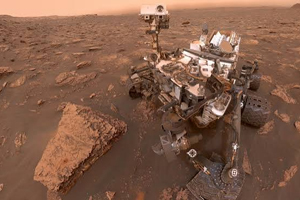
NASA Curiosity (Mars Science Laboratory) rover surpasses another full year of operations on Mars surface today; launched Nov 26, 2011 – landed Aug 5,...
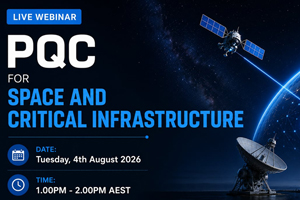
Virtual Series 2026 will offer deeper conversations on why PQC matters and the practical steps businesses should be taking; starts 1:00 pm AEST. Featuring:...
This international lunar science meeting has two objectives: to provide a platform for leading experts to review recent advances across lunar research, from the...
At CSIR International Convention Centre. Key topics are Earth Observation, Developing Space Tourism, Space Supply Manufacturing. Cultural tours are offered.
Participants will receive theoretical and hands-on training in electron imaging and X-ray spectroscopy for application to planetary samples. This training opportunity is targeted at...
 Nov 2 —
  Nov 2 — NewSpace: Jameel Janjua and Patrick Moran join
  Nov 2 — USA: As 3 commercial companies make progress, requested US$3.2B budget / timing for Artemis
 = All times
 = All times for international terrestrial events in local time unless noted.
 = All times for space events, and…
 = All times for international space / astro events in Hawaii Standard Time unless noted. Add 10 hours to obtain UT (‘Universal Time’).
 Chang’e Mission Series, known collectively as Chinese Lunar Exploration Program, is poised for Phase 3 – lunar sample return – with CE-5 set to launch from Wenchang SLC, Hainan Island Nov 24 on a Long March-5 rocket. In the 21st century, teams from Europe, Japan, India, USA and Israel have reached the lunar surface via remotely piloted craft, but only China has soft-landed operational exploratory landers (CE-3/4). The 3,780-kg, 4-module (orbiter / lander / ascender / returner) CE-5 is to extract ~2 kg of lunar regolith from a depth ≤ 1 m, which will be lifted to an Earthbound return module within a terrestrial month, making China the 2nd nation to conduct robotic lunar collection after USSR. CE-6 is planned as a redundant backup should CE-5 fail, or in the event of mission success will be redirected to the far side of Moon South Pole region – thought to contain a higher concentration of volatiles such as water. 8,200-kg CE-7, scheduled for 2024, is to contain an orbiter, lander, ground rover, L2 communications relay with very long baseline interferometry node and a water detecting aerial drone of unspecified nature, focusing intently on MSP with an expected 23 science instruments. CE-8 is to focus on In-Situ Resource Utilization and 3-D printing, objectives with clear significance to permanent lunar settlement. (Image Credits: CNSA, Loren Roberts / The Planetary Society)
 Nov 6 — ISRO, Launch PSLV / RISAT 2BR2, Satish Dhawan Space Center, Sriharikota, India: Polar Satellite Launch Vehicle, designated PSLV-C49, to launch RISAT 2BR2 radar Earth observation satellite for ISRO.