SpaceX Launching Expedition 64/65 Crewmembers To ISS And Sentinel-6 To Orbit
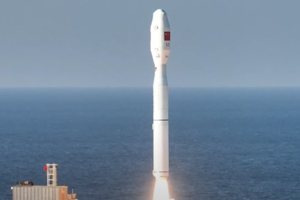
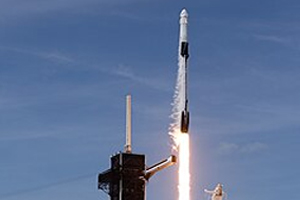
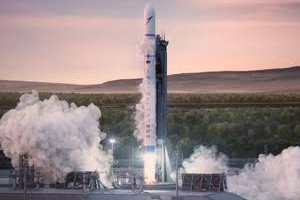
Commercial Crew Program officially assumes operational responsibility for transiting Astronauts to and from space with launch of US Crew-1 from venerable Kennedy Space Center Launch Complex 39. Set for 19:49 EST on November 14, the Dragon C207 craft given moniker ‘Resilience’ is to be lifted on a Falcon 9 rocket for an 8.5-hour commute to LEO (~405 km) before docking autonomously with Harmony module (equipped with International Docking Adapter 3), from which NASA Astronauts Shannon Walker, Victor Glover and Mike Hopkins and JAXA Astronaut Soichi Noguchi aka ‘Dragon Riders’ will disembark. May 2021, after an approximately 6-month duration mission, Resilience and crew will make an ocean splashdown in the Atlantic. A number of historic ‘firsts’ are to be made during the mission, including the first black ISS expedition Astronaut (Glover) and the first off-world US Space Force inauguration (Hopkins). Next week, ESA/NASA collaboration Sentinel-6A Michael Freilich (named in honor of the late NASA Earth Science Division Director) is to be lifted to a 1,336-km, 66° inclination orbit, also via Falcon 9, where it will continue the nearly 30-year JASON ocean topography monitoring mission series – utilizing microwave radiometry and Poseidon-4 radar altimeter. Sentinel-6A is to be followed by duplicate satellite Sentinel-6B in 2025, both built by a 58-company consortium led by Airbus Germany. (Image Credits: SpaceX, NASA, ESA)
MONDAY
Highlights… Nov 9 — ISS, ~405-km LEO: Three-member Expedition 64 crew set to welcome four ‘Dragon Riders’ arriving Nov 15, planning Cygnus NG-14 CubeSat deployments from Kibo; Zvezda module air leak to be investigated during next EVA to check for possible external damage.
Nov 9 — NewSpace: Starship SN8 to undergo 2nd static fire test ahead of 15.25-km test flight; Vector restarting under new ownership, plans rocket engine testing asap, first flight ~12 months; Colorado organizational partners form ‘Aerospace Alley‘ initiative to support growing regional industry.
Nov 9 — Solar System: ‘Shifting and stacking’ method utilized by Yale astronomers in attempt to locate hypothetical 9th planet; New Horizons readings find interstellar density 40% higher than previously thought; Cassini data shows impact craters on Titan subject to varying levels of methane rain depending on latitude.
Nov 9 — Galaxy: Fast Radio Burst discovered within MWG for first time; new transmitters on Deep Space Network enable contact with Voyager 2; Milky Way may contain 300 million habitable planets per Kepler space telescope data.
Nov 9 — Hawai’i: For proposed HI Big Telescope, incoming Mayor Roth plans to “move the dialogue forward in an open, inclusive manner”; six female researchers sequestered in HI-SEAS for 2-week Sensoria M2 Mars analog mission; Subaru Telescope observations detect Yarkovsky effect moving asteroid Apophis 170-m/year from expected trajectory.
= All times
for terrestrial events in local time unless noted.
= All times for international terrestrial events in local time unless noted.
= All times for space events, and…
= All times for international space / astro events in Hawaii Standard Time unless noted. Add 10 hours to obtain UT (‘Universal Time’).
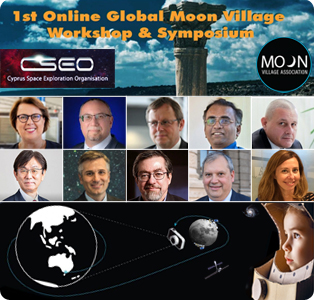
Moon Village Association Hosting 2020 Workshop and Symposium Online from Cyprus
A 2-day, 7-hour, 5-session and 25-speaker meeting co-organized by MVA and Cyprus Space Exploration Organization (CSEO) is being held November 9-10 online from Nicosia, Cyprus. This year the Workshop and Symposium pay special attention to international cooperation, particularly Africa and the Middle-East. The first day is open from 15:00-18:00 CET and includes a session on future missions with speakers (TL-BR): Simonetta Di Pippo (UNOOSA), Mike Gold (NASA), Jan Woerner (ESA), Umamaheswaran R. (ISRO), Marius-Ioan Piso (Romanian Space Agency), Hiroshi Sasaki (JAXA), Mathias Link (Luxemburg Space Agency), John Mankins (MVA) and a CNSA colleague. The panel ‘in cooperation with UNOOSA’ on New Opportunities and International Cooperation will be moderated by Cosmonaut Dorin Prunariu and have representatives from UNOOSA, Lockheed Martin, Blue Origin, Yuzhnoye State Design Office (Russia), Mitsubishi and Astrobotic. Day two runs from 15:00-19:00 and will see Session 3 ‘in cooperation with UNOOSA’ on Capacity Building for Space Developing Countries and Engaging the Young Generation featuring SGAC, UNOOSA, MVA and CSEO. The MVA activities session will update on its architectural concepts, cultural considerations, education / outreach, engaging non-space business and global network. MVA also works on 2 ambitious projects: advocating for Women on the Moon and sending a camera to the Moon 2022-23 to live stream Earth. CSEO, founded 2012, is the official representative of Cyprus to COSPAR, IAU, MVA, Mars Society and is a member of IAF. (Also Pictured: Aline Decadi – MVA Women on the Moon project; Image Credits: MVA, CSEO, NASA)
Nov 9 — Amor Asteroid 2018 VS4: Near Earth Flyby (0.038 AU)
Continued From…
Nov 2019 – Dec 2020 — Hayabusa2, Earth Trajectory: JAXA Hayabusa2 on trajectory for Earth to return two samples collected from C-type asteroid 162173 Ryugu; craft will then head toward Asteroid 1998 KY26, arriving 2031.
Nov 6-14 — Czech Republic Ministry of Transport, CzechInvest, et al,Online:Czech Space Week 2020.
Nov 10-12 — Regional Center for Space Science and Technology Education for Western Asia / United Nations, Arab Union for Astronomy and Space Sciences, International Astronomical Union,Online / Amman, Jordan:5th Middle-East and Africa Regional IAU Meeting (MEARIM).
Nov 10 — Mercury: At westernmost elongation, 07:00.
Nov 10 — Apollo Asteroid 2020 UN3: Near Earth Flyby (0.030 AU)
Nov 10 — Apollo Asteroid 2020 UL3: Near Earth Flyby (0.039 AU)
Nov 11 — Northern Taurids Meteor Shower Peak: Appearing to radiate from constellation Taurus, Taurids are associated with Comet Encke and offer about 7 meteors per hour and travel at ~28 km/s.
THURSDAY
Nov 12 — Luxembourg Space Agency,Luxembourg:NewSpace Europe 2020; reset to Nov 24, 2021.
Nov 12-14 — International Lunar Observatory Association, Kamuela HI and Online: ILOA Annual Board of Directors Meeting, with Galaxy Forum Hawai’i 2020 Kamuela on Nov 12.
Nov 12 — Moon: 2.81° NNE of Venus, 15:00; 6.4° NNE of Spica, 22:00.
Nov 12 —Mars and Uranus: At heliocentric conjunction, 14:00.
Nov 12 — Apollo Asteroid 2020 VC: Near Earth Flyby (0.035 AU)
FRIDAY
Nov 13 — Arianespace, Launch Vega / SEOSat-Ingenio & Taranis, Kourou, French Guiana: Arianespace Vega rocket, designated VV17, to launch SEOSat-Ingenio Earth observation satellite and Taranis scientific research satellite.
Nov 13-14 — CNES, ESA, Aerospace Valley, Online:ActInSpace2021; international contest to meet challenges with solutions based on space technologies, data, patents and infrastructures to launch start-ups.
Nov 13 —Moon: 1.61° NE of Mercury, 13:00.
SATURDAY
Nov 14 — SpaceX, Launch Falcon 9 / Crew Dragon 1 (US Crew-1), LC-39A, KSC FL: SpaceX Crew Dragon, dubbed Resilience, to launch 05:47 EST second crewed mission / first mission carrying ISS crew for Expedition 64: Mike Hopkins, Victor Glover and Shannon Walker from NASA, Soichi Noguchi of JAXA.
Nov 14 —Moon: At perigee (distance 357,878 km), 01:49; New Moon, 19:08.
Nov 14 — Apollo Asteroid 2020 TB9: Near Earth Flyby (0.034 AU)
SUNDAY
Nov 15 — ISS, Crew Dragon 1 (US Crew-1) Rendezvous, 405-km LEO: SpaceX Crew Dragon to arrive 04:20 EST with hatch opening 07:00 and ISS crew welcoming for Expedition 64 members Mike Hopkins, Victor Glover and Shannon Walker from NASA, Soichi Noguchi of JAXA; live coverage available.
Nov 15 — Rocket Lab, Launch Electron / “Return to Sender”, LC 1, Mahia Peninsula, New Zealand: 14-day launch window for Electron Flight 16 carrying 30 satellites to a sun-synchronous orbit at 500 km altitude for a range of customers, including TriSept, Unseenlabs, Swarm, Auckland Programme for Space Systems, and global gaming software company Valve; launch opens at 15:44-18:34 HST.
Emanating from ~6km-wide comet with 5.3-year Solar orbit, visible in constellation Aquarius near star Delta Aquarii, fast, faint meteors peak on this night, best...
The International Research Conference is a federated organization dedicated to bringing together a significant number of diverse scholarly events for presentation within the conference...
Includes ~150 meetings covering the fields of COSPAR Scientific Commissions / Panels / Task Groups, such as SC B: The Earth-Moon System, Planets, and...
From 02 to 07 August 2026, a few thousand geoscientists across diverse disciplines will gather at the 23rd annual meeting of the Asia Oceania Geosciences...
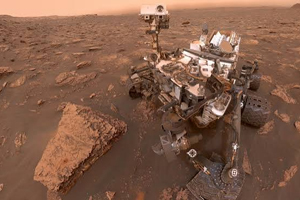
NASA Curiosity (Mars Science Laboratory) rover surpasses another full year of operations on Mars surface today; launched Nov 26, 2011 – landed Aug 5,...
Virtual Series 2026 will offer deeper conversations on why PQC matters and the practical steps businesses should be taking; starts 1:00 pm AEST. Featuring:...
This international lunar science meeting has two objectives: to provide a platform for leading experts to review recent advances across lunar research, from the...
At CSIR International Convention Centre. Key topics are Earth Observation, Developing Space Tourism, Space Supply Manufacturing. Cultural tours are offered.
Participants will receive theoretical and hands-on training in electron imaging and X-ray spectroscopy for application to planetary samples. This training opportunity is targeted at...
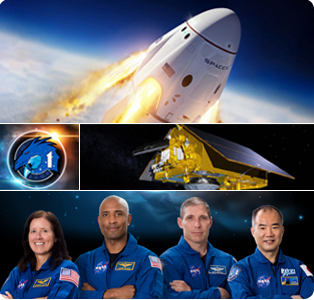 Commercial Crew Program officially assumes operational responsibility for transiting Astronauts to and from space with launch of US Crew-1 from venerable Kennedy Space Center Launch Complex 39. Set for 19:49 EST on November 14, the Dragon C207 craft given moniker ‘Resilience’ is to be lifted on a Falcon 9 rocket for an 8.5-hour commute to LEO (~405 km) before docking autonomously with Harmony module (equipped with International Docking Adapter 3), from which NASA Astronauts Shannon Walker, Victor Glover and Mike Hopkins and JAXA Astronaut Soichi Noguchi aka ‘Dragon Riders’ will disembark. May 2021, after an approximately 6-month duration mission, Resilience and crew will make an ocean splashdown in the Atlantic. A number of historic ‘firsts’ are to be made during the mission, including the first black ISS expedition Astronaut (Glover) and the first off-world US Space Force inauguration (Hopkins). Next week, ESA/NASA collaboration Sentinel-6A Michael Freilich (named in honor of the late NASA Earth Science Division Director) is to be lifted to a 1,336-km, 66° inclination orbit, also via Falcon 9, where it will continue the nearly 30-year JASON ocean topography monitoring mission series – utilizing microwave radiometry and Poseidon-4 radar altimeter. Sentinel-6A is to be followed by duplicate satellite Sentinel-6B in 2025, both built by a 58-company consortium led by Airbus Germany. (Image Credits: SpaceX, NASA, ESA)
 Nov 9 —
  Nov 9 — NewSpace:
  Nov 9 — USA:
 = All times
 = All times for international terrestrial events in local time unless noted.
 = All times for space events, and…
 = All times for international space / astro events in Hawaii Standard Time unless noted. Add 10 hours to obtain UT (‘Universal Time’).