Chang’e-5 Poised for 1st Lunar Sample Return of 21st Century, 1st for Zhongguo
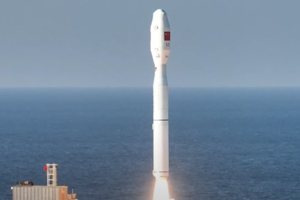
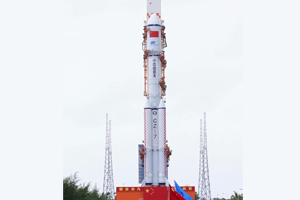
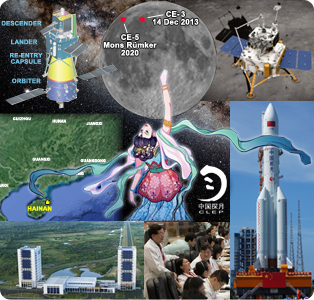
Long March 5 heavy-lift rocket at Wenchang Satellite Launch Center, Hainan Island is ready to launch the ~8,200-kg Chang’e-5 lander and sample-return vehicle early morning November 24. The mission will aim to return to Siziwang Banner, Inner Mongolia December 16-17 at least 2 kg of regolith from a depth of 2 meters from 70-km diameter Mons Rümker region in Oceanus Procellarum (18.4° N, 57.4° W) where lunar sunrise will occur on Nov 27. CE-5 Deputy Chief Designer Li Chunlai states most of the samples will be stored at Chinese Academy of Sciences, National Astronomical Observatories of China in Beijing. The lander carries cameras, a spectrometer, soil composition analytical instruments, a sampling sectional thermo-detector and ground-penetrating radar. CE-5 mission is part of the final phase of CLEP robotic lunar exploration before a planned international research station and human Moon landings, possibly mid-to-late 2020s. CE-6 (sample return), CE-7 and CE-8 plans are underway with all 3 launching from Wenchang and potentially landing at Moon South Pole locations. CE-7 would include 23 science payloads, a lander, rover, relay satellite and hopper (‘mini-flying probe’ for permanently shadowed crater observations). CE-6 is incorporating international payloads. China Space Station first module Tianhe “Harmony of the Heavens” is to launch April 2021, followed by module Wentian “Quest for the Heavens”, and crew missions Shenzhou 12 and 13. (Image Credits: CNSA, CSA-NAOC, CCTV, Xinhua, ESO)
MONDAY
Highlights… Nov 23 — ISS, ~405-km LEO: Expedition 64 acclimate to crew of 7 with newly arrived Dragon Crew-1 members; expecting arrival of SpaceX CRS-21 cargo including Nanoracks Bishop Airlock and experiments involving biomining, cardiac tissue, fabrication, neurological organoids.
Nov 23 — Solar System: C chondrite meteorite recovered in Indonesia fetches US$1.85M on collector market; interplanetary sounds recorded by Perseverance en route to Mars available for listening; concept of liquid mirror “Ultimately Large Telescope” on Moon revisited by UT Austin astronomers.
Nov 23 — Galaxy: Repeating FRB from magnetar SGR 1935+2154 observed by 4 telescopes including FAST, signals vary by 7 orders of magnitude; mathematical modelling of so-called ‘Blue Ring Nebula’ determines object to be in-process stellar merger; Hubble images UGC 12588, a ‘circular’ spiral galaxy 31M LY distant.
Nov 23 — Global: India human spaceflight program Gaganyaan on track with first booster segment delivery; Russia declassifies Moon Race documents; Arianespace plans no interruptions of launches as Vega failure linked to wiring issue; Ukraine becomes 9th to sign Artemis Accords; Arecibo Radio Telescope to be decommissioned.
Nov 23 — Hawai’i: ILOA Hawai’i precursor instrument ILO-X headed to Moon surface in 2021 via Intuitive Machines Nova-C lander; short gamma-ray burst 10X brighter than expected being investigated by Keck Observatory; awaiting IAU approval, Hawaiian program names TNO “Leleakūhonua” referencing a life form mentioned in Kumulipo.
= All times
for terrestrial events in local time unless noted.
= All times for international terrestrial events in local time unless noted.
= All times for space events, and…
= All times for international space / astro events in Hawaii Standard Time unless noted. Add 10 hours to obtain UT (‘Universal Time’).
Roscosmos, Arianespace, JAXA & SpaceX Have Orbital Missions Planned This Week
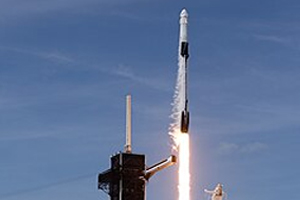
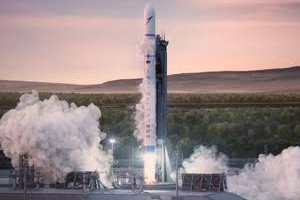
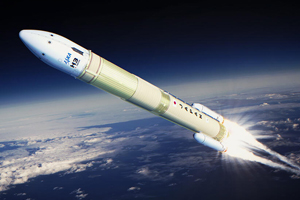
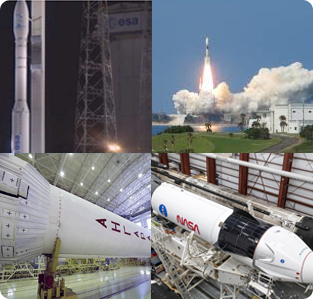
A flurry of launches are upcoming: November 28, Russia space agency Roscosmos hopes to reach geosynchronous orbit with Angara-A5 heavy lift launch vehicle, intended to be Proton successor. Plesetsk Cosmodrome will again be site of the A5 test launch, as it was once previously in 2014. Also on Nov 28 the 1,200-kg UAE-owned Earth observation satellite Falcon Eye 2, built by Airbus, is set for launch from the Sinnamary site of Guiana Space Centre. Falcon Eye 2 is to provide UAE Armed Forces with reconnaissance after being placed in sun-synchronous polar orbit by Arianespace Soyuz (Fregat configuration). Japanese Data Relay Satellite-1 (JDRS-1) will test experimental in-space optical communication technology from GEO, transmitted to ground stations via Ka-Band (26.5 – 40 GHz) frequencies. JDRS-1 is to launch from Tanegashima Space Center Nov 29 on a Mitsubishi-built H-2A rocket. SpaceX is contracted by the government of Turkey to place 3,500-kg communications satellite Turksat 5A at 31 E° GEO with Falcon 9 (Block 5 configuration) Nov 30, which will utilize 42 transponders operating within Ku-band frequency (12 – 18 GHz). Also heading to space on a Falcon 9, the first mission (CRS-21) of the next Generation Cargo Dragon 2 craft is to deliver supplies and experiments to ISS December 2. The new Cargo Dragon has 50% greater payload capacity and will dock autonomously. (Image Credits: Arianespace, Roscosmos, SpaceX, JAXA)
Nov 23 — CNSA, Launch Long March 5 / Chang’e-5, Wenchang Spacecraft Launch Center, Hainan Island, China (19° N): CE-5 sample return to collect up to 2 kg of lunar regolith over 2-day period near Mons Rümker Region and transport back to Siziwang Banner, Inner Mongolia around 15-16 Dec; launch 11:00 HST / 21:00 UTC on Nov 23 (05:00 Beijing Time on Nov 24).
Nov 23 — Apollo Asteroid 2020 WC: Near Earth Flyby (0.011 AU)
Nov 23 — Apollo Asteroid 2020 VW2: Near Earth Flyby (0.048 AU)
Continued From…
Nov 2019 – Dec 2020 — Hayabusa2, Earth Trajectory: JAXA Hayabusa2 on trajectory for Earth to return two samples collected from C-type asteroid 162173 Ryugu; craft will then head toward Asteroid 1998 KY26, arriving 2031.
NET Nov 19-23 — Virgin Galactic, Spaceport America, Las Cruces NM: Launch window open for VG to attempt VSS Unity space plane third piloted test flight to suborbital space.
Nov 24-27 — Canada Space Society,Canada / Virtual: Canada Space Summit 2020 “To Lunar and Beyond”; highlighting space research, building space business, developing space policy, networking, starts 04:00 HST.
Nov 24 — Aten Asteroid 2017 WJ16: Near Earth Flyby (0.014 AU)
Nov 24 — Amor Asteroid 2020 TJ8: Near Earth Flyby (0.043 AU)
WEDNESDAY
Nov 25 — Southern Australia Space Industry Centre, Australian Space Agency, SmartSat CRC,Adelaide, Australia: 10th Australian Space Forum; at the Adelaide Convention Centre.
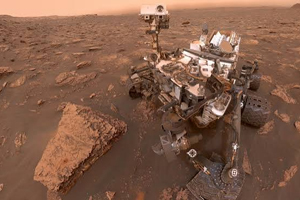
Nov 26 — Curiosity, Mars Surface: Mars Science Laboratory celebrates 9th year off Earth since its launch on this day in 2011, landed on Mars Aug 5, 2012 (Pacific Daylight Time).
Nov 26 — InSight, Elysium Planitia,Mars Surface: Interior Exploration using Seismic Investigations, Geodesy and Heat Transport (InSight) lander reaches 2 full years / enters 3rd year on Mars today; continues investigations with seismometer, heat probe, radio science experiments.
Nov 26 — Moon: At apogee (distance 405,904 km), 15:00.
Nov 26 — Dwarf planet 1 Ceres: At opposition, magnitude 7.0, 11:00.
Nov 26 — Apollo Asteroid 2018 RQ4: Near Earth Flyby (0.021 AU)
Nov 26 — Apollo Asteroid 2020 VO2: Near Earth Flyby (0.032 AU)
Nov 28 — Roscosmos State Corporation, Launch Angara-A5 / Test Flight 2, Plesetsk Cosmodrome, Russia: Second orbital test flight of Angara-A5 rocket with dummy payload.
Nov 28 — Arianespace, Launch Soyuz / Falcon Eye 2, Sinnamary, French Guiana: Arianespace Soyuz rocket, designated VS24, to launch Falcon Eye 2 high-resolution Earth-imaging satellite for UAE, launch 20:33:28 EST.
Nov 28 — Apollo Asteroid 2020 KZ2: Near Earth Flyby (0.015 AU)
Nov 28 — Apollo Asteroid 2020 VF6: Near Earth Flyby (0.021 AU)
SUNDAY
Nov 29 — JAXA, Launch H-2A / Optical Data Relay Satellite, Tanegashima Space Center, Japan: H-2A rocket to launch 1st Optical Data Relay Satellite for Japan with a laser communications payload in geosynchronous orbit.
Nov 29 — Moon: 5.8° SE of Pleiades, 09:00; Full / Beaver Moon, 23:41.
Nov 29 — Penumbral Eclipse of Moon: Visible from much of Europe, Asia, Australia, North America, South America, Pacific, Atlantic, Arctic beginning 21:32:22 HST, max 23:42:53, and ending Nov 30 at 01:53:22.
Nov 29 — Aten Asteroid 153201 (2000 WO107): Near Earth Flyby (0.029 AU)
Emanating from ~6km-wide comet with 5.3-year Solar orbit, visible in constellation Aquarius near star Delta Aquarii, fast, faint meteors peak on this night, best...
The International Research Conference is a federated organization dedicated to bringing together a significant number of diverse scholarly events for presentation within the conference...
Includes ~150 meetings covering the fields of COSPAR Scientific Commissions / Panels / Task Groups, such as SC B: The Earth-Moon System, Planets, and...
From 02 to 07 August 2026, a few thousand geoscientists across diverse disciplines will gather at the 23rd annual meeting of the Asia Oceania Geosciences...
NASA Curiosity (Mars Science Laboratory) rover surpasses another full year of operations on Mars surface today; launched Nov 26, 2011 – landed Aug 5,...
Virtual Series 2026 will offer deeper conversations on why PQC matters and the practical steps businesses should be taking; starts 1:00 pm AEST. Featuring:...
This international lunar science meeting has two objectives: to provide a platform for leading experts to review recent advances across lunar research, from the...
At CSIR International Convention Centre. Key topics are Earth Observation, Developing Space Tourism, Space Supply Manufacturing. Cultural tours are offered.
Participants will receive theoretical and hands-on training in electron imaging and X-ray spectroscopy for application to planetary samples. This training opportunity is targeted at...
 Nov 23 —
  Nov 23 — NewSpace:
  Nov 23 — USA: Streamlined FAA
 = All times
 = All times for international terrestrial events in local time unless noted.
 = All times for space events, and…
 = All times for international space / astro events in Hawaii Standard Time unless noted. Add 10 hours to obtain UT (‘Universal Time’).
 Nov 23 — CNSA, Launch Long March 5 / Chang’e-5, Wenchang Spacecraft Launch Center, Hainan Island, China (19° N): CE-5 sample return to collect up to 2 kg of lunar regolith over 2-day period near Mons Rümker Region and transport back to Siziwang Banner, Inner Mongolia around 15-16 Dec; launch 11:00 HST / 21:00 UTC on Nov 23 (05:00 Beijing Time on Nov 24).
 A flurry of launches are upcoming: November 28, Russia space agency Roscosmos hopes to reach geosynchronous orbit with Angara-A5 heavy lift launch vehicle, intended to be Proton successor. Plesetsk Cosmodrome will again be site of the A5 test launch, as it was once previously in 2014. Also on Nov 28 the 1,200-kg UAE-owned Earth observation satellite Falcon Eye 2, built by Airbus, is set for launch from the Sinnamary site of Guiana Space Centre. Falcon Eye 2 is to provide UAE Armed Forces with reconnaissance after being placed in sun-synchronous polar orbit by Arianespace Soyuz (Fregat configuration). Japanese Data Relay Satellite-1 (JDRS-1) will test experimental in-space optical communication technology from GEO, transmitted to ground stations via Ka-Band (26.5 – 40 GHz) frequencies. JDRS-1 is to launch from Tanegashima Space Center Nov 29 on a Mitsubishi-built H-2A rocket. SpaceX is contracted by the government of Turkey to place 3,500-kg communications satellite Turksat 5A at 31 E° GEO with Falcon 9 (Block 5 configuration) Nov 30, which will utilize 42 transponders operating within Ku-band frequency (12 – 18 GHz). Also heading to space on a Falcon 9, the first mission (CRS-21) of the next Generation Cargo Dragon 2 craft is to deliver supplies and experiments to ISS December 2. The new Cargo Dragon has 50% greater payload capacity and will dock autonomously. (Image Credits: Arianespace, Roscosmos, SpaceX, JAXA)
 Nov 23 — Lunar and Planetary Institute, Online / Houston TX: