Australia Steps Up Astronomical Research and Collaborative Space Exploration
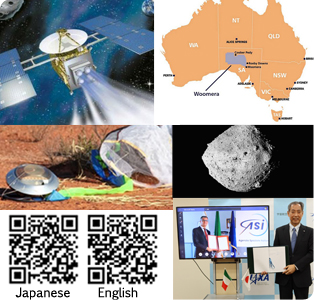
Australian Space Agency is partnering with Japan, providing safe landing site (122,000-km2 Woomera Range Complex) for Hayabusa2 sample return capsule, a 40-cm vessel expected to reenter Earth atmosphere December 6 between 03:30-04:30 ACDT after a 5.24B km round-trip. JAXA-developed augmented reality app (QR codes imaged) allows remote observation, simulating views from Coober Pedy. At least 100 mg of C-type asteroid Ryugu (0.96-1.41 AU) is expected to have been procured, permitting analysis of material thought to be 4.6B years old, and exchange samples from NASA OSIRIS-Rex currently inbound from Bennu carrying ~60 g sample mass. The 10th Australian Space Forum being held virtually November 25 is a biannual event showcasing domestic space enterprise and industry, and will also focus on strengthening international space ties within Artemis and especially with Japan. Currently ~700 delegates and 300 online RSVPs are slated to participate, with unlimited free observation of the proceedings via Vimeo. Astronomically, Parkes Observatory has a storied history stretching from Apollo to cutting-edge star surveys funded by Breakthrough Listen – and now reflects local culture with fitting indigenous names derived from Wiradjuri language: Murriyang “home world of creator spirit”, Giyalung Miil “smart eye” and Giyalung Guluman “smart dish”. Academic conference “Linking the Galactic and Extragalactic: Stellar Dynamics and Stellar Populations of the Milky Way and its Siblings” Dec 3-4, will contrast MWG observations with extragalactic spectroscopy data. (Image Credits: JAXA, ASA, NASA, ISAS)
MONDAY
Highlights… Nov 30 — ISS, ~405-km LEO: Expedition 64, to remain crew of 7 until April 2021, working with new Airborne Particulate Monitor, Avatar-X robot experiment, grip testing, plant habitat, spacesuit microbial testing and stowing refabricator (3D printer / recycler for polymer plastics) for return to Earth.
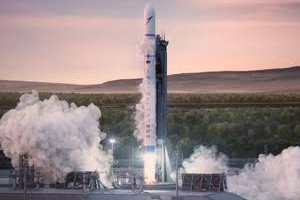
Nov 30 — NewSpace: Flying on IM-1, Lunar Outpost providing MAPP tech for Moon Mark 2021 lunar rover race; Astroscale debris removal demo to launch March 2021; Skyrora plans launch service agreements within 6 months for 2023 launch; Jim Cantrell forms Phantom Space, hopes for orbital launch in 2 years.
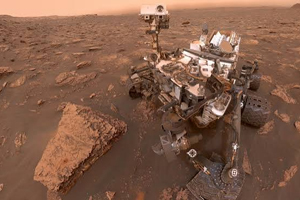
Nov 30 — Solar System: China / Zhongguo Chang’e-5 to enter lunar orbit, potentially land near Mons Rümker early this week; Curiosity data being analyzed for indication of mega floods ~4B years ago in Mars Gale Crater; ‘switch like’ magnetosphere of Uranus may allow solar wind penetration, causing daily atmospheric gas release.
Nov 30 — Galaxy: JHU-APL scientists demonstrating solar thermal propulsion which could be used for interstellar travel; RAS studying ancient ‘Heracles’ galaxy that may have collided with MW 10B years ago; winner of international competition, Tactile Universe program using 3D printed images for vision-impaired to learn galaxy shapes.
Nov 30 — Global:ISRO considering 20 international experiment proposals for Shukrayaan 2023 Venus orbiter mission; Russia Cosmonauts are welcome to fly on Crew Dragon, per Kathy Lueders of NASA HEOMD; ESA ground stations aiding lunar missions and Moonlight initiative to coordinate Moon communication / navigation.
Nov 30 — USA: Teams begin to stack SLS twin 5-segment boosters on mobile launcher at KSC for 2021 Artemis-1 launch; HALO lunar outpost design moves closer toward production after initial review; change of Administration considerations for Artemis 2024 landing advocacy / analysis continues.
Nov 30 — Hawai’i: UH 2.2-m telescope and CFHT aid in detailed studies of 2nd minimoon discovery; Mayor Harry Kim to leave office next Monday, Mauna Kea World Peace Park could be advanced; restarting selection process for IfA new Director to be re-considered 2021.
= All times
for terrestrial events in local time unless noted.
= All times for international terrestrial events in local time unless noted.
= All times for space events, and…
= All times for international space / astro events in Hawaii Standard Time unless noted. Add 10 hours to obtain UT (‘Universal Time’).
CODER 2020 Focuses on Orbital Debris, and 17th CSBR RoundUp on Science, Commerce, Policy Advances
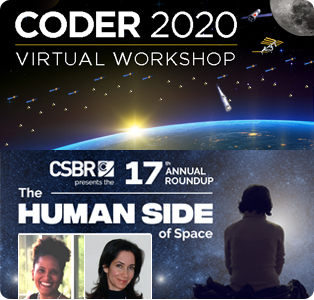
December 1-3 is to see two meetings with Colorado connections hosted online: 2020 Center for Orbital Debris Education and Research (CODER) Workshop, and Virtual RoundUp 2020: The Human Side of Space. CODER is hosted by University of Maryland with support from Secure World Foundation of Broomfield CO, George Washington University Space Policy Institute (SPI) and SDA Bocconi School of Management Space Economy Evolution Lab of Italy. 5 main themes cover Space Situational Awareness, The Space Environment, Mitigation Practices and Technologies, Remediation Technologies & Architectures, and Space Policy. There are an estimated 22,000 pieces of orbital debris larger than 10 centimeters currently being tracked in Earth orbit, and potentially millions of smaller pieces untracked. CODER speakers include representatives from Aerospace Corporation, Australian Space Agency, Astroscale, Colorado School of Mines, Space Policy Institute, Italian Space Agency and NASA. The Colorado Space Business Roundtable, now in its 17th year, is holding the Virtual RoundUp 2020 to focus on recent scientific and commercial advances and their effects on various industries, Artemis Return to the Moon, and latest Colorado space news. There will be 4 panels and 2 keynote speakers: Sian Proctor (BL) – geoscientist, explorer, space artist, and science communication specialist, and Saralyn Mark – former senior medical / policy advisor for Health and Human Service, NASA and the White House. (Image Credits: UMD, SPI, SEE, SWF, CSBR, NASA, et al)
NET Nov 30 — SpaceX, Launch Falcon 9 / Turksat 5A,Cape Canaveral AFS FL: Falcon 9 rocket to launch Turksat 5A communications satellite for Ku-band television broadcast services over Turkey, Middle East, Europe and Africa.
Nov 30 — ESA, Online / Noordwijk, The Netherlands: Agile 4 European Space; 09:00-13:00 CET.
NET Dec — SpaceX, Launch Falcon 9 / NROL-108,SLC-40, Cape Canaveral AFS: SpaceX Falcon 9 rocket to launch classified spacecraft payload for U.S. National Reconnaissance Office.
NET Dec — Virgin Galactic, Spaceport America, Las Cruces NM: Launch window open for VG to attempt VSS Unity space plane third piloted test flight to suborbital space.
Dec 1 — Deep Space, Kuiper Belt: Now more than 49.5 AU from Earth heading toward next potential KBO flyby, New Horizons images being analyzed for darkness / light in space.
Dec 1-3 — University of Maryland Center for Orbital Debris Education and Research (CODER), Secure World Foundation, George Washington University Space Policy Institute (SPI), SDA Bocconi School of Management Space Economy Evolution (SEE) Lab, Online / College Park MD: CODER 2020 Virtual Workshop.
Dec 1-17 — American Geophysical Union, Online / Washington DC: AGU Fall Meeting 2020.
Dec 1 — Moon: 0.37° NE of M35 cluster, 23:00.
Dec 1 — Apollo Asteroid 2020 SO: Near Earth Flyby (0.0003 AU)
WEDNESDAY
Dec 2 —Solar and Heliospheric Observatory (SOHO),LEO: ESA / NASA craft studying sun, reaches 25 full years / begins 26th year of operations in space today, launched 1995; has discovered more than 3,000 comets.
Dec 2-3 — Defense Strategies Institute, Rocket Lab, Roccor, NearSpace Launch Inc., SatNews, Tactical Defense Media, Online / Alexandria VA: 7th Space Resiliency Summit.
Dec 2 — Apollo Asteroid 2019 XH2: Near Earth Flyby (0.041 AU)
THURSDAY
Dec 3 — Gaia, Sun-Earth L2 Lagrange Point: ESA Gaia data release 3 is expected around this date, improving on the mapping of billions of Stars, astrometry and photometry.
Dec 3 — Apollo Asteroid 2020 WB4: Near Earth Flyby (0.004 AU)
Dec 3 — Apollo Asteroid 2020 WP: Near Earth Flyby (0.024 AU)
Dec 3 — Moon: 7.4° S of Castor, 11:00; 3.7° S of Pollux, 16:00; 2.65° NNE of Beehive Cluster, 18:00.
FRIDAY
Dec 4 — Apollo Asteroid 2020 WO: Near Earth Flyby (0.027 AU)
Dec 4 — Apollo Asteroid 2020 WS2: Near Earth Flyby (0.031 AU)
SATURDAY
Dec 5 — SpaceX, Launch Falcon 9 / Dragon CRS-21, Cape Canaveral AFS FL: SpaceX to launch Dragon CRS-21 cargo resupply ship for ISS Expedition 64 at 11:39 EST.
Dec 6 — Hayabusa2, Earth Surface: JAXA Hayabusa2 Asteroid Explorer mission expected to arrive at Earth and land samples from C-type asteroid 162173 Ryugu today in Woomera, Australia.
Dec 6 — ISS, SpaceX Dragon CRS-21 Rendezvous and Docking, ~405 km LEO: Resupply ship to rendezvous and autonomous docking to occur, 11:30 EST, live coverage available.
Dec 6 — ISRO, Launch PSLV / CMS 1,Satish Dhawan Space Center, Sriharikota, India: Polar Satellite Launch Vehicle designated PSLV-C50 to launch CMS 1 communications satellite.
Dec 6 — Puppid-Velid Meteor Shower Peak: Appearing to radiate from constellations Puppis, Vela and Carina, up to 10 meteors per hour expected (some very bright) seen from southern hemisphere, peak 14:00; followed closely by Monocerotid meteors which offer ~2 per hour at most.
Emanating from ~6km-wide comet with 5.3-year Solar orbit, visible in constellation Aquarius near star Delta Aquarii, fast, faint meteors peak on this night, best...
The International Research Conference is a federated organization dedicated to bringing together a significant number of diverse scholarly events for presentation within the conference...
Includes ~150 meetings covering the fields of COSPAR Scientific Commissions / Panels / Task Groups, such as SC B: The Earth-Moon System, Planets, and...
From 02 to 07 August 2026, a few thousand geoscientists across diverse disciplines will gather at the 23rd annual meeting of the Asia Oceania Geosciences...
NASA Curiosity (Mars Science Laboratory) rover surpasses another full year of operations on Mars surface today; launched Nov 26, 2011 – landed Aug 5,...
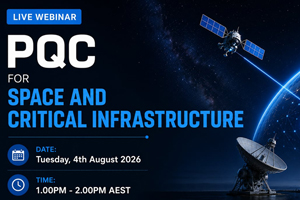
Virtual Series 2026 will offer deeper conversations on why PQC matters and the practical steps businesses should be taking; starts 1:00 pm AEST. Featuring:...
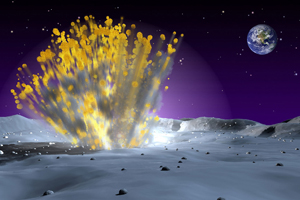
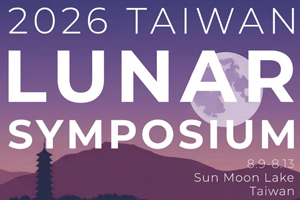
This international lunar science meeting has two objectives: to provide a platform for leading experts to review recent advances across lunar research, from the...
At CSIR International Convention Centre. Key topics are Earth Observation, Developing Space Tourism, Space Supply Manufacturing. Cultural tours are offered.
Participants will receive theoretical and hands-on training in electron imaging and X-ray spectroscopy for application to planetary samples. This training opportunity is targeted at...
 Nov 30 —
  Nov 30 — NewSpace: Flying on IM-1,
  Nov 30 — USA: Teams begin to
 = All times
 = All times for international terrestrial events in local time unless noted.
 = All times for space events, and…
 = All times for international space / astro events in Hawaii Standard Time unless noted. Add 10 hours to obtain UT (‘Universal Time’).