Return to the Moon for Good, 1st Woman on the Moon Mid-2020s Decade
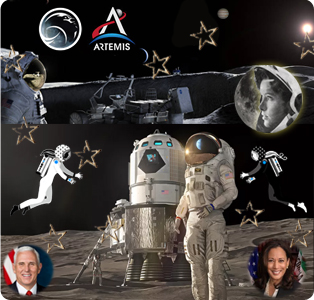
The visionary, extensive 21st Century Artemis program would keep USA on course to be the first to return humans to the Moon, land the first woman on the Moon and maintain leadership in outer space – if vital support is given by new emerging American leadership including incoming President Biden and Vice President Harris. Through the reestablishment of National Space Council and Space Policy Directive-1, Artemis catalyzed a multitude of programs and policies encompassing national, international, scientific, commercial, private, public and inter-global considerations in keeping with the 2024-2026 timeline to pioneer the Moon South Pole and begin establishing humans as a Multi World Civilization. As China ‘Zhongguo’ operates robotic craft on Earth’s nearest celestial neighbor in 3 locations, USA CLPS providers are planning to launch 2 landers late 2021 and Orion + SLS are advancing toward November 2021 test flight. The crucial human-landing system (proposed by teams led by Blue Origin, Dynetics and SpaceX) remains in question under funding constraints. Innovative and enhanced technologies, Earth-space observations, science and communications will come from returning people to the Moon; while landing the first woman and first Black American would expand the sphere of influence, activity and domain by nearly 1 Billion times, and take first steps toward a more inclusive way forward ‘In Peace For All’. The 8th NSC is set to meet Dec 9 with current VP Mike Pence and NASA Administrator Jim Bridenstine, giving updates and future prospects. (Image Credits: NASA, Lockheed Martin)
MONDAY
Highlights… Dec 7 — ISS, ~405-km LEO: Expedition 64 crew of 7 transferring 2,903 kg of supplies and experiments from Cargo Dragon 2 CRS-21, tending radishes in Plant Habitat-02, conducting ammonia-removing water recycling investigation, and packing waste in Cygnus NG-14 to be jettisoned for reentry / disposal.
Dec 7 — NewSpace: Momentus to transport Canadensys craft from LEO to LLO via water plasma-powered Ardoride 2023-24; off-world tourism company Space Perspective raises US$7M for stratospheric dirigible, plans Q1 2021 test flight; ClearSpace SA to launch debris mitigation mission with $104M ESA funding + $29M private capital.
Dec 7 — Galaxy: Planck readings of CMB contrasted with MWG light suggests parity asymmetry, challenges standard model; Japan VLBI observations indicate Earth moving 227 km/s, distance from Sun-Sgr A* 25,800 LY; new model suggests Proxima c unaffected by stellar winds which make Proxima b inhospitable.
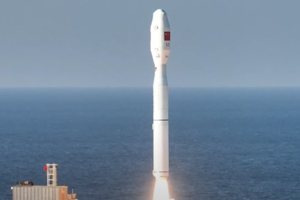
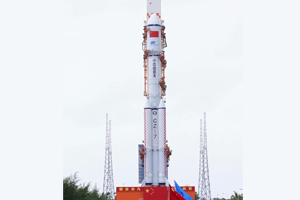
Dec 7 — Global: CNSA super heavy-lift launch vehicle (SHLLV) Long March 9 core stage ready for hot-fire test; spaceport leadership shakeups occurring in Russia and USA; ESA-developed supercapacitor ready for use in space; Pikangikum Nation connects to Starlink from rural Ontario, Canada.
Dec 7 — USA: NASA accepts precedent-setting bids from Lunar Outpost, ispace Japan / Europe, Masten to collect and sell Moon material; SFW urges incoming administration to maintain ‘strategic direction’, avoid ‘antagonistic rhetoric’; Masten and Virgin Galactic awarded combined $45M by NASA for flight & payload integration service.
NASA Flagship Rocket Space Launch System Set for Final Core Stage Assessments
Preparations are underway at Stennis Space Center, Mississippi test stand B-2 for the last two SLS Core Green Run Tests: #7, a wet dress rehearsal in which 2,650 kl of cryogenic fuels (liquid oxygen and hydrogen) are to be filled via 114 tanker trucks then drained NET December 7, and #8 hot fire test where core rocket engines are to ignite for 8 minutes NET Dec 21. Successful completion of these tests is essential for the program, which has had a somewhat storied history of congressional intransigence and budgetary overruns. The core stage is comprised of 4 RS-25 units designed and manufactured by Aerojet Rocketdyne plus two 5-segment boosters, both recycled elements from the Space Shuttle (STS). SLS is by some measures the most powerful rocket system ever built – initial Block 1 configured with Interim Cryogenic Propulsion Stage, as it will be for Artemis 1-3, will produce 39,144 kN of thrust, capable of launching 95 metric tons to LEO and 27 metric tons into translunar orbit. Core stage alone stands 64.6 m tall with a diameter of 8.4 m, while the integrated launch vehicle including ICPS and Orion Multi-Purpose Crew Vehicle will top out over 98 m. SLS is to join Falcon 9 as the only 2 operational super heavy-lift rockets currently existent. (Image Credits: NASA, Boeing, Thorenn / Wikipedia)
Dec 7 — Hayabusa2, Main Asteroid Belt Trajectory: JAXA Hayabusa2 enters extended mission phase heading toward July 2026 flyby of asteroid 2001 CC21, and July 2031 rendezvous of asteroid 1998 KY26; attempted samples return to Earth from 162173 Ryugu on Dec 6, 2020; launched Dec 3, 2014.
Dec 7 — Akatsuki, Venus Orbit: JAXA first successful planetary orbiter imaging Venus atmosphere, monitoring weather changes reaches 5 full years / enters 6th year at Venus today, reached Venus 2015.
Dec 7 — ISRO, Launch PSLV / CMS 1,Satish Dhawan Space Center, Sriharikota, India: Polar Satellite Launch Vehicle designated PSLV-C50 to launch CMS 1 communications satellite.
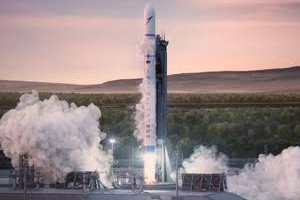
Dec 7 — Astra, Launch Rocket 3.2, Pacific Spaceport Complex, Kodiak AK: 12-day launch window opens for second orbital attempt of Astra Rocket, daily window 10:00-13:30 AKST.
Dec 7-11 — European Global Navigation Satellite Systems Agency, European Commission, Online: European Space Week.
Dec 8 — International Lunar Observatory Association, Online / Hawai’i, USA / Argentina: Galaxy Forum South America 2020 Argentina; held on opening evening of IAU 367, 18:00-20:00 UT.
Dec 8 — Apollo Asteroid 2020 WK3: Near Earth Flyby (0.026 AU)
Dec 8 — Aten Asteroid 2018 PK21: Near Earth Flyby (0.031 AU)
WEDNESDAY
Dec 9 — National Space Council, KSC, Florida: Meeting of the National Space Council; 12:30-14:30 EST, with VP Mike Pence, Scott Pace, Jim Bridenstine, others.
Dec 9-10 — United Nations Office for Outer Space Affairs, United Arab Emirates Space Agency,Online: World Space Forum: Space for our Future; to exchange views on four pillars of space economy, space society, space accessibility and space diplomacy.
Dec 10 — XMM-Newton, VeryEccentric Elliptical LEO: ESA craft studying X-ray emissions, star-forming regions, galaxy clusters, environment of supermassive black holes, mapping dark matter, reaches 21 full years / begins 22nd year in space today, launched 1999.
Dec 10 — CNSA, Launch Long March 11 / GECAM, Xichang Satellite Launch Center, China: Long March 11 rocket to launch Gravitational Wave High-energy Electromagnetic Counterpart All-sky Monitor (GECAM) dual satellites to detect electromagnetic counterparts of gravitational waves and other astrophysical signals.
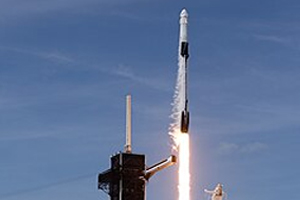
Dec 10 — SpaceX, Launch Falcon 9 / SXM 7, SLC-40, Cape Canaveral AFS FL: SpaceX Falcon 9 rocket to launch SXM 7 satellite for SiriusXM, launch window 11:19-13:19 EST.
Dec 10 — Johns Hopkins University Applied Physics Laboratory, Online: Lecture: Interstellar Dust Grains – Galactic Messengers; with Pontus Brandt of JHU-APL, Veerle Sterken of ETH Zurich, Bruce Draine of Princeton University.
Dec 11 — Roscosmos State Corporation, Launch Angara-A5 / Test Flight 2, Plesetsk Cosmodrome, Russia: Second orbital test flight of Angara-A5 rocket with dummy payload.
Dec 11 — Rocket Lab, Launch Electron / “Owl’s Night Begins”, LC 1, Mahia Peninsula, New Zealand: Rocket Lab to launch StriX-α synthetic aperture radar satellite for Synspective, a Japan Earth-imaging company planning for a constellation of 30; launch window opens 23:00 HST.
Dec 11 — Virgin Galactic, Spaceport America, Las Cruces NM: Launch window opens for VG to attempt VSS Unity space plane third piloted test flight to suborbital space.
Dec 12 — Moon: At perigee (distance 361,767.93 km), 10:43; 0.78° NNE of Venus, 02:00.
SUNDAY
Dec 13 — Geminids Meteor Shower Peak: Appearing to radiate from constellation Gemini, shower can produce 80-130 meteors per hour; bright, medium-slow meteors (35 km/sec), few leave persistent trains.
Emanating from ~6km-wide comet with 5.3-year Solar orbit, visible in constellation Aquarius near star Delta Aquarii, fast, faint meteors peak on this night, best...
The International Research Conference is a federated organization dedicated to bringing together a significant number of diverse scholarly events for presentation within the conference...
Includes ~150 meetings covering the fields of COSPAR Scientific Commissions / Panels / Task Groups, such as SC B: The Earth-Moon System, Planets, and...
From 02 to 07 August 2026, a few thousand geoscientists across diverse disciplines will gather at the 23rd annual meeting of the Asia Oceania Geosciences...
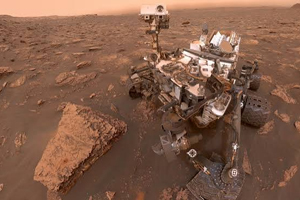
NASA Curiosity (Mars Science Laboratory) rover surpasses another full year of operations on Mars surface today; launched Nov 26, 2011 – landed Aug 5,...
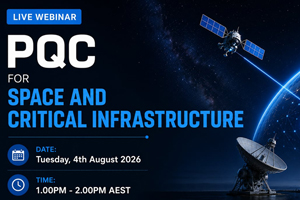
Virtual Series 2026 will offer deeper conversations on why PQC matters and the practical steps businesses should be taking; starts 1:00 pm AEST. Featuring:...
This international lunar science meeting has two objectives: to provide a platform for leading experts to review recent advances across lunar research, from the...
At CSIR International Convention Centre. Key topics are Earth Observation, Developing Space Tourism, Space Supply Manufacturing. Cultural tours are offered.
Participants will receive theoretical and hands-on training in electron imaging and X-ray spectroscopy for application to planetary samples. This training opportunity is targeted at...
 Dec 7 —
  Dec 7 — NewSpace:
  Dec 7 — USA: NASA accepts
 = All times
 = All times for international terrestrial events in local time unless noted.
 = All times for space events, and…
 = All times for international space / astro events in Hawaii Standard Time unless noted. Add 10 hours to obtain UT (‘Universal Time’).
 Preparations are underway at Stennis Space Center, Mississippi test stand B-2 for the last two SLS Core Green Run Tests: #7, a wet dress rehearsal in which 2,650 kl of cryogenic fuels (liquid oxygen and hydrogen) are to be filled via 114 tanker trucks then drained NET December 7, and #8 hot fire test where core rocket engines are to ignite for 8 minutes NET Dec 21. Successful completion of these tests is essential for the program, which has had a somewhat storied history of congressional intransigence and budgetary overruns. The core stage is comprised of 4 RS-25 units designed and manufactured by Aerojet Rocketdyne plus two 5-segment boosters, both recycled elements from the Space Shuttle (STS). SLS is by some measures the most powerful rocket system ever built – initial Block 1 configured with Interim Cryogenic Propulsion Stage, as it will be for Artemis 1-3, will produce 39,144 kN of thrust, capable of launching 95 metric tons to LEO and 27 metric tons into translunar orbit. Core stage alone stands 64.6 m tall with a diameter of 8.4 m, while the integrated launch vehicle including ICPS and Orion Multi-Purpose Crew Vehicle will top out over 98 m. SLS is to join Falcon 9 as the only 2 operational super heavy-lift rockets currently existent. (Image Credits: NASA, Boeing,