Climate in Focus, Landsat Set to Continue 50-Year Earth Observation Mission
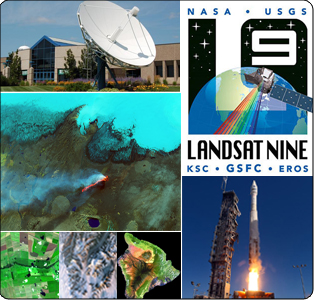
As NASA / USGS global monitoring collaboration nears half century, latest version Landsat 9 is to take off from Vandenberg Space Force Base on September 27 – controlled remotely by Launch Services Program at KSC, riding on ULA Atlas V 401. The 2.6 metric ton spacecraft, built by Northrup Grumman, is to provide observational continuity from 705km SSO as Landsat 8 reaches the end of fuel supply, having surpassed 5-year nominal mission duration. Operational Land Imager (OLI-2) and Thermal Infrared Sensor (TIRS-2) instruments are capable of recording in a total of eleven spectral bands: OLI-2, developed by Ball Aerospace, registers 9 visible and infrared wavelengths from 0.435–2.294μm with 30m resolution (with the exception of a panchromatic band with 15m resolution); TIRS-2, built at Goddard Space Flight Center, will detect infrared thermals from 10.60–12.51μm with 100m resolution (30m with post processing). The mission comes as UN Intergovernmental Panel on Climate Change determines global warming ‘unequivocally’ anthropogenic in cause and world and national leaders grow increasingly adamant that data-driven solutions to address global warming be implemented. National Space Council Executive Secretary Chirag Parikh has indicated USA VP Kamala Harris considers continuity of Earth observation to be a top priority which should influence upcoming selection of candidates for National Space Council Users’ Advisory Group (Image Credits: NASA, USGS)
MONDAY
Highlights… Sep 20 — ISS, ~405-km LEO: Expedition 65 seven-member crew continues work on microgravity, robotics, space biology experiments; Mark Vande Hei to break USA time in space record with 353-day ISS stay ending March 2022.
Sep 20 — Tiangong Space Station, ~370-km LEO: Tianzhou-3 craft is being prepared to launch to TSS, dock autonomously after Shenzhou 12 three-member crew return to Earth.
Sep 20 —NewSpace: Apple co-founder Steve Wozniak aims to reduce space debris with new company Privateer; Spaceflight to utilize lunar gravity assist while placing rideshares in GEO; Rocket Lab (Nasdaq: RKLB) yields stronger results than other space SPACs.
Sep 20 — Solar System:216 Kleopatra less massive and voluminous than previously believed, porosity possibly indicative of violent origin; Equatorial Jupiter impact observed by amateur utilizing DeTeCt software.
Sep 20 —Galaxy: Lambda Cold Dark Matter model of cosmology to be tested by 21-cm radio instruments, JWST; Oumuamua ‘snowball’ theory refuted on cosmic ray erosion grounds.
Sep 20 — USA: Dynetics, Blue Origin, Lockheed, SpaceX, Northrop to share US$146M for work on NASA HLS tech over 15 months; SpaceX takes over $152.5M GOES-U launch contract after ULA pullout; support for FAA-licensed central California spaceport grows.
Sep 20 — Hawai’i: UH solicits community input on Mauna Kea Master Plan; Massachusetts teacher gains astronomical / geological experience on Hawaii Island via Almazing Fund grant.
Sep 20 — CNSA, Launch Long March 7 / Tianzhou-3, Wenchang Spacecraft Launch Center, Hainan Island, China: Tianzhou-3 cargo craft to launch to Tiangong Space Station, dock automatically.
= All times for terrestrial events in local time unless noted.
= All times for international terrestrial events in local time unless noted.
= All times for space events, and…
= All times for international space / astro events in Hawaii Standard Time unless noted. Add 10 hours to obtain UT (‘Universal Time’).
Visionary Long-Range Concepts Presented at NIAC 2021 and 7th Interstellar Symposium
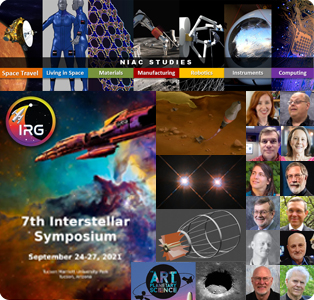
NASA Innovative Advanced Concepts (NIAC) 2021 is being held September 21-23 updating progress on Phase 1-3 diverse research studies. Originally set as an in-person event in Tucson AZ prior to Interstellar Research Group 7th Interstellar Symposium on Sep 24-27, NIAC will now be online and livestreamed for the >45 speakers. Some of the Phase 1 studies speakers are (TL-BR) Sigrid Close on Exploring Uranus through SCATTER: Sustained ChipSat / CubeSat Activity Through Transmitted Electromagnetic Radiation; Steven Oleson – A Titan Sample Return Using In-Situ Propellants; Jane Shevtsov – Making Soil for Space Habitats by Seeding Asteroids with Fungi; Phase 2: Kerry Nock – Pluto Hop, Skip, and Jump; Jeffrey Balcerski – Lofted Environmental Venus Sensors; Phase 3: William Whittaker – Robotic Technologies Enabling the Exploration of Lunar Pits; Nick Solomey – Cube-Sat Space Flight Test of a Neutrino Detector. IRG 7th Interstellar Symposium at Tucson Marriott University Park plans for ~60 speakers, 100 participants, 4 seminars, 18 posters, 2 working tracks and 5 tour locations. Keynote speakers are Esther Dyson, Mark Shelhamer, Avi Loeb, David Brin and Homer Hickam. Topics covered include propulsion studies, communications challenges, moving faster than light, cryopreservation, pulsed plasma rocket, gravitational wave transmitter, extrasolar object intercept, an interstellar university, wormholes & warpdrives, and icy moon geothermal energy generation. The Art of Planetary Science: Space Travel also opens at Univ of Arizona LPL Sep 24. (Image Credits: NASA, IRG, K. Miller, University of Arizona Lunar and Planetary Laboratory)
Aug 2 – Oct 31 — SpaceBase, Planet, Christchurch, New Zealand and Online: Space for Planet Earth Challenge; seeking innovative ideas from New Zealand, Australia, and Pacific Island residents at High School and University / Start-up level to address climate change through space technologies.
Sep 21 — MAVEN, Mars Orbit: NASA Mars Atmosphere and Volatile Evolution (MAVEN) spacecraft reaches 7 full years / enters 8th year of operations in Mars orbit after insertion on this day 2014; continuing to study upper atmosphere.
Sep 21 — W. M. Keck Observatory, Rob and Terry Ryan Foundation, Online / Kamuela HI: Astronomy Talks: Lifting the Fog on the Early Universe; by Steven Finkelstein, Associate Professor of Astronomy, University of Texas at Austin, 17:00 HST.
Sep 21 — Space Telescope Science Institute, Online / Baltimore MD: Colloquium: Putting the I in ISS; by Jim Van Laak, 12:00-13:00 EDT.
Sep 22 — September Equinox: The Sun rises exactly in east traveling through sky for 12 hours, sets exactly in west; day and night are approximately equal duration every place on Earth; 09:22.
Sep 22 — Apollo Asteroid 2021 NY1: Near-Earth Flyby (0.010 AU)
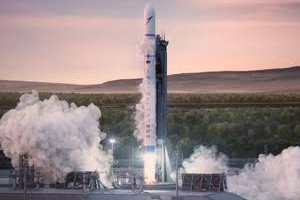
NET Sep 23 — Taiwan Innovative Space, Southern Launch, Launch Hapith-1,Whalers Way Orbital Launch Complex, Southern Australia: First flight of Hapith-1 rocket dubbed ‘Flying Squirrel’ by private company, TiSpace; Southern Launch of Australia to support 3 more Hapith-1 missions before end of 2021.
Sep 23 — Singapore Space and Technology Limited, Online / Singapore: Webinar: Space, Spaces and Ecosystems; discover what the future holds for Singapore industrial estates, 15:00-16:00.
Sep 23 — Mitre Corporation, Online / McLean VA:Webinar: Preserving the Space Domain; featuring Azita Valina, Chief Scientist at NASA Engineering and Safety Center and a panel of speakers.
Sep 23-24 — Policy Studies Organization, The American Public University System, Online:Space Education and Strategic Applications; featuring Eileen Collins, Robert Zubrin, Kelvin Coleman, others; 09:00 EDT.
FRIDAY
Sep 24 — Mars Orbiter Mission (Mangalyaan), Mars Orbit: India ISRO orbiter reaches 7 full years / enters 8th year of operations in Mars orbit; launched Nov 5, 2013.
Emanating from ~6km-wide comet with 5.3-year Solar orbit, visible in constellation Aquarius near star Delta Aquarii, fast, faint meteors peak on this night, best...
The International Research Conference is a federated organization dedicated to bringing together a significant number of diverse scholarly events for presentation within the conference...
Includes ~150 meetings covering the fields of COSPAR Scientific Commissions / Panels / Task Groups, such as SC B: The Earth-Moon System, Planets, and...
From 02 to 07 August 2026, a few thousand geoscientists across diverse disciplines will gather at the 23rd annual meeting of the Asia Oceania Geosciences...
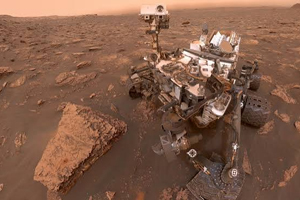
NASA Curiosity (Mars Science Laboratory) rover surpasses another full year of operations on Mars surface today; launched Nov 26, 2011 – landed Aug 5,...
This international lunar science meeting has two objectives: to provide a platform for leading experts to review recent advances across lunar research, from the...
At CSIR International Convention Centre. Key topics are Earth Observation, Developing Space Tourism, Space Supply Manufacturing. Cultural tours are offered.
Participants will receive theoretical and hands-on training in electron imaging and X-ray spectroscopy for application to planetary samples. This training opportunity is targeted at...
"Leading Australia’s Space Future for Our Strategic Advantage". Southern Space 2026 brings together decision-makers who set the direction for Australia’s space sector. It is...
 As NASA / USGS global monitoring collaboration nears half century, latest version Landsat 9 is to take off from Vandenberg Space Force Base on September 27 – controlled remotely by Launch Services Program at KSC, riding on ULA Atlas V 401. The 2.6 metric ton spacecraft, built by Northrup Grumman, is to provide observational continuity from 705km SSO as Landsat 8 reaches the end of fuel supply, having surpassed 5-year nominal mission duration. Operational Land Imager (OLI-2) and Thermal Infrared Sensor (TIRS-2) instruments are capable of recording in a total of eleven spectral bands: OLI-2, developed by Ball Aerospace, registers 9 visible and infrared wavelengths from 0.435–2.294μm with 30m resolution (with the exception of a panchromatic band with 15m resolution); TIRS-2, built at Goddard Space Flight Center, will detect infrared thermals from 10.60–12.51μm with 100m resolution (30m with post processing). The mission comes as UN Intergovernmental Panel on Climate Change determines global warming ‘unequivocally’ anthropogenic in cause and world and national leaders grow increasingly adamant that data-driven solutions to address global warming be implemented. National Space Council Executive Secretary Chirag Parikh has indicated USA VP Kamala Harris considers continuity of Earth observation to be a top priority which should influence upcoming selection of candidates for National Space Council Users’ Advisory Group (Image Credits: NASA, USGS)
 Sep 20 — ISS, ~405-km LEO: Expedition 65 seven-member crew continues work on microgravity, robotics, space biology experiments; Mark Vande Hei to break USA time in space record with
  Sep 20 — NewSpace: Apple co-founder Steve Wozniak aims to reduce space debris with new company
  Sep 20 — USA: Dynetics, Blue Origin, Lockheed, SpaceX, Northrop to share US$146M for work on
 = All times for terrestrial events in local time unless noted.
 = All times for international terrestrial events in local time unless noted.
 = All times for space events, and…
 = All times for international space / astro events in Hawaii Standard Time unless noted. Add 10 hours to obtain UT (‘Universal Time’).