Mission Cadence to/from LEO at All Time Peak as 2 Space Stations Conduct Operations
ISS (51.6° inclination, 405-km orbit) is busy: Soyuz MS-18 is to relocate from Zarya docking interface Rassvet / Mini-Research Module 1 to Zvezda / Multipurpose Laboratory Module on Sep 28, allowing Soyuz MS-19, launching Oct 5 carrying Russian director Klim Shipenko, actress Yulia Peresild and Flight Commander Anton Shkaplerov (Roscosmos) to occupy Rassvet berth. After filming scenes for film Vyzov (Challenge), Shipenko and Peresild are scheduled to return to Earth on Soyuz MS-18 on Oct 17. Meanwhile CRS-23, the 3rd SpaceX mission contracted under NASA Commercial Resupply Service phase 2 (23rd overall), is to undock from ISS Harmony module September 30 for Earth return via Gulf of Mexico Splashdown. Newly arrived Tianzhou 3 mission, launched to Tiangong space station (41.5° inclination, 370-km orbit) from Wenchang SLC on LM-7, ready to support Shenzhou-13 human mission with supply of EVA, fuel, science experiments and equipment (5,600kg total). Shenzhou 13 is expected to launch 3 Taikonauts within Oct 15-18 window from Jiuquan SLC on LM-2F to TSS, beginning standard 6-month duration mission sequence. Looking to deep space, Human Moon missions are also on the horizon: Chief Long March rocket designer Long Lehao is expected to announce details on LM-5DY variant at China International Aviation & Aerospace Exhibition in Zhuhai, Guangdong Sep 28 to Oct 3; USA VP Kamala Harris expected to announce space priorities / convene National Space Council within the month.(Image Credits: CNSA, NASA, Roscosmos, SpaceX)
MONDAY
Highlights… Sep 27 — ISS, ~405-km LEO: Expedition 65 seven-member crew preparing for MS-18 relocation, Dragon CRS-23 undocking, working with sleep / dream monitor, rodent skin / wound healing experiment; Nauka module outfitting continues.
Sep 27 — Tiangong Space Station, ~370-km LEO: Newly arrived Tianzhou-3 with 5,600 kg of cargo including food, experiments and equipment awaiting arrival of 3-person Shenzhou-13 mission launching mid-Oct to continue construction of TSS; Tianzhou-2 will remain docked to test robotic arm.
Sep 27 —NewSpace:Astroscale orbital debris removal mission to be launched by Rocket Lab; Former SpaceX engineer launches ‘last mile’ logistics company Impulse Space; 4 Australia companies share US$2,169,600 under Moon to Mars initiative.
Sep 27 — Solar System:Ingenuity prop cadence being adjusted in response to Martian atmospheric density variability; Green Bank Telescope, VLT and Raytheon collaborate to image Tycho Crater via SAR.
Sep 27 —Galaxy: Researchers seeking clarity on supernova origins of Per-Tau Shell void; Chemical makeup of protoplanetary discs and subsequent formation being studied with ALMA.
Sep 27 — Global: UAE and Turkey space officials consider collaboration on future missions; ESA planning policy for elimination of space rubbish by 2030s; UN Secretary-General Guterres urging space billionaires to address poverty.
Sep 27 — USA: NASA HEOMD to operate as distinct Exploration Systems / Space Operations Directorates; Congressperson Jared Huffman introduces No Militarization of Space Act, FAA solicits public comments on SpaceX Starship environmental impact.
Sep 27 — Hawai’i: Alex Fielding to lead Privateer Space as CEO, partnering with Desktop Metal for 3D printed spacecraft chassis; UH Hilo seeks community input ahead of Hōkū Ke‘a telescope decommissioning.
Sep 27 — ULA, Launch Atlas 5 / Landsat 9,SLC-3E, Vandenberg SFB CA: United Launch Alliance Atlas 5 to launch Landsat 9 Earth observation satellite for NASA and U.S. Geological Survey, 11:11 PDT.
= All times for terrestrial events in local time unless noted.
= All times for international terrestrial events in local time unless noted.
= All times for space events, and…
= All times for international space / astro events in Hawaii Standard Time unless noted. Add 10 hours to obtain UT (‘Universal Time’).
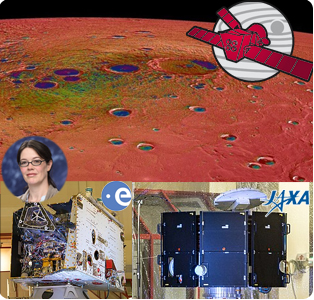
Marking its 3rd full year in space October 20, BepiColombo is set to perform its first Mercury periherm Oct 1. Named after scientist Giuseppe “Bepi” Colombo who first proposed interplanetary gravity assist maneuvers, the ESA / JAXA mission consisting of 21 science instruments aboard 2 orbiters (Mercury Planetary Orbiter and Mercury Magnetospheric Orbiter dubbed Mio), is planned to complete 6 Mercury flybys before entering orbit December 5, 2025. At least 1 year of science will study Mercury solid and liquid iron core, tenuous surface-bounded exosphere, gravity and magnetic fields, and work to confirm the existence of water ice which was observed by MESSENGER nearly a decade ago. While Mercury is the closest planet to the Sun, Astronomers in Chile recently located 1-km diameter asteroid (2021 PH27) traveling in an inclined orbit coming within 20M km of Sol every 113 days, reaching 500° C. Being tidally locked with an perihelion of 0.307 AU (~46M km), Mercury surface temperatures range from −173° C at night to 427° C during the day, with polar regions remaining below −93° C. The permanently shadowed craters are thought to be slowly accumulating water molecules from energetic reactions between the hydroxyls in surface minerals and solar wind. The 1st surface mission, if funded, could be the proposed US$1.2B Mercury Lander launching on a Falcon Heavy March 2035. (Pictured; Elsa Montagnon, ESA BepiColombo Operations Manager; Image Credits: ESA, JAXA, NASA)
Sep 27 — Mars Exploration Program Analysis Group (MEPAG), Online / Washington DC: 13th Virtual MEPAG.
Sep 27-28 —Secure World Foundation, United Nations Institute for Disarmament Research (UNIDIR),Hybrid /Geneva, Switzerland and Online: Space Security Conference 2021; in person, Room XXI of the Palais des Nations and livestreamed.
Sep 27 – Oct 1 —Tokyo Institute of Technology, Florida Space Institute, Yukawa Institute for Theoretical Physics,Online: Conference: Black Holes Inside and Out.
Sep 27 — Apollo Asteroid 2021 RP10: Near-Earth Flyby (0.025 AU)
Continued From…
Aug 2 – Oct 31 — SpaceBase, Planet, Christchurch, New Zealand and Online: Space for Planet Earth Challenge; seeking innovative ideas from New Zealand, Australia, and Pacific Island residents at High School and University / Start-up level to address climate change through space technologies.
Sep 28 — ISS, ~405-km LEO: Relocation of Soyuz MS-18 spacecraft from Rassvet Module to Nauka Module (with Novitskiy, Dubrov, Vande Hei aboard); undocking 08:21 EDT, redocking 09:00); live coverage available.
Sep 28 — Astrosat, 650-km Near Equatorial LEO: ISRO first dedicated multi-wavelength space observatory reaches 6th full year / begins its 7th year in space today, launched 2015.
Sep 28-30 — Draper, MIT, Hybrid /Cambridge MA and Online:Space Sector Market Conference; featuring in-person speakers and think tank sessions, live stream of our speakers and pitch competition, online networking.
Sep 28 – Oct 3 — Zhuhai Airshow Company, CNSA, Civil Aviation Administration of China, Zhuhai, Guangdong: China International Aviation & Aerospace Exhibition; 13th occurrence of largest airshow in China, major lunar rocket announcement expected.
Sep 28 — Moon: 1.59° N of M35 cluster, 09:00; at last quarter, 15:57.
Sep 28 — Apollo Asteroid 2021 RG19: Near-Earth Flyby (0.006 AU)
Sep 29 — Apollo Asteroid 2021 RM5: Near-Earth Flyby (0.027 AU)
THURSDAY
Sep 30 — ISS, SpaceX Dragon CRS-23 Return to Earth, ~405-km LEO: Coverage of SpaceX-23 Cargo Dragon undocking from ISS 09:00 EDT; live coverage available, will splashdown carrying return cargo and experiments.
Oct 1 — Deep Space, Jupiter Orbit: Juno spacecraft data showing ammonia concentration is higher below atmosphere may aid in understanding of Uranus, Neptune and support ‘mushball’ theory.
Oct 1 —BepiColombo,Mercury Flyby: European Space Agency / JAXA Mercury Planetary Orbiter (MPO) and Mercury Magnetospheric Orbiter (dubbed Mio ‘waterway or fairway’) to perform its first Mercury flyby today on its planned schedule to enter Mercury orbit December 5, 2025 after being launched 2018.
Oct 1 — JAXA, Launch Epsilon / RAISE 2,Uchinoura Space Center, Japan: Japan Epsilon rocket to launch Rapid Innovative Payload Demonstration Satellite 2 (RAISE 2) technology demonstration satellite with 8 rideshare payloads.
Emanating from ~6km-wide comet with 5.3-year Solar orbit, visible in constellation Aquarius near star Delta Aquarii, fast, faint meteors peak on this night, best...
The International Research Conference is a federated organization dedicated to bringing together a significant number of diverse scholarly events for presentation within the conference...
Includes ~150 meetings covering the fields of COSPAR Scientific Commissions / Panels / Task Groups, such as SC B: The Earth-Moon System, Planets, and...
From 02 to 07 August 2026, a few thousand geoscientists across diverse disciplines will gather at the 23rd annual meeting of the Asia Oceania Geosciences...
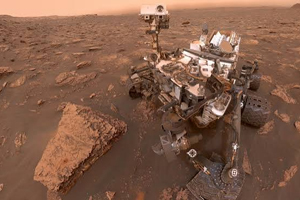
NASA Curiosity (Mars Science Laboratory) rover surpasses another full year of operations on Mars surface today; launched Nov 26, 2011 – landed Aug 5,...
This international lunar science meeting has two objectives: to provide a platform for leading experts to review recent advances across lunar research, from the...
At CSIR International Convention Centre. Key topics are Earth Observation, Developing Space Tourism, Space Supply Manufacturing. Cultural tours are offered.
Participants will receive theoretical and hands-on training in electron imaging and X-ray spectroscopy for application to planetary samples. This training opportunity is targeted at...
"Leading Australia’s Space Future for Our Strategic Advantage". Southern Space 2026 brings together decision-makers who set the direction for Australia’s space sector. It is...
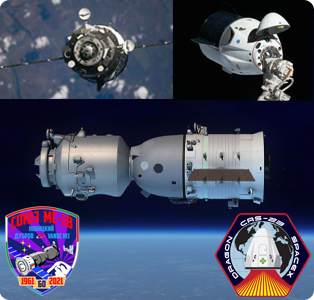 ISS (51.6° inclination, 405-km orbit) is busy: Soyuz MS-18 is to relocate from Zarya docking interface Rassvet / Mini-Research Module 1 to Zvezda / Multipurpose Laboratory Module on Sep 28, allowing Soyuz MS-19, launching Oct 5 carrying Russian director Klim Shipenko, actress Yulia Peresild and Flight Commander Anton Shkaplerov (Roscosmos) to occupy Rassvet berth. After filming scenes for film Vyzov (Challenge), Shipenko and Peresild are scheduled to return to Earth on Soyuz MS-18 on Oct 17. Meanwhile CRS-23, the 3rd SpaceX mission contracted under NASA Commercial Resupply Service phase 2 (23rd overall), is to undock from ISS Harmony module September 30 for Earth return via Gulf of Mexico Splashdown. Newly arrived Tianzhou 3 mission, launched to Tiangong space station (41.5° inclination, 370-km orbit) from Wenchang SLC on LM-7, ready to support Shenzhou-13 human mission with supply of EVA, fuel, science experiments and equipment (5,600kg total). Shenzhou 13 is expected to launch 3 Taikonauts within Oct 15-18 window from Jiuquan SLC on LM-2F to TSS, beginning standard 6-month duration mission sequence. Looking to deep space, Human Moon missions are also on the horizon: Chief Long March rocket designer Long Lehao is expected to announce details on LM-5DY variant at China International Aviation & Aerospace Exhibition in Zhuhai, Guangdong Sep 28 to Oct 3; USA VP Kamala Harris expected to announce space priorities / convene National Space Council within the month.(Image Credits: CNSA, NASA, Roscosmos, SpaceX)
 Sep 27 — ISS, ~405-km LEO: Expedition 65 seven-member crew preparing for MS-18 relocation, Dragon CRS-23 undocking, working with sleep / dream monitor, rodent skin / wound healing experiment; Nauka module outfitting continues.
 Sep 27 — NewSpace:
  Sep 27 — USA:
 = All times for terrestrial events in local time unless noted.
 = All times for international terrestrial events in local time unless noted.
 = All times for space events, and…
 = All times for international space / astro events in Hawaii Standard Time unless noted. Add 10 hours to obtain UT (‘Universal Time’).