Solar System Science and Discovery in Focus with Venus VEXAG, and Talks on Uranus, Neptune, Jupiter
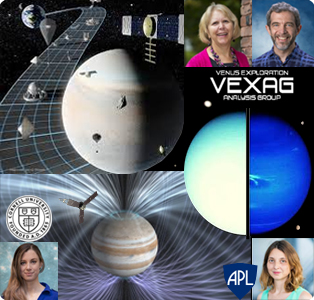
The 19th meeting of NASA Venus Exploration Analysis Group is set for November 8-9, online. Organized by Melinda Darby Dyar (TL) of Mount Holyoke College and Noam Izenberg (TR) of JHU APL, there will be ~20 presentations and 65 one-minute lightning talks introducing e-posters. Some missions being discussed will be Akatsuki, BepiColombo, Parker Solar Prove, Solar Orbiter, JUICE and Venera-D. Active research on possible life on Venus continues, while data shows Earth’s sister planet atmosphere consists of >96% carbon dioxide, has 92 times pressure on its surface than sea level pressure on Earth, average temperature of 464° C (867 °F) and is shrouded by highly reflective sulfuric acid clouds. Farther out, Jupiter and its magnetic field & interior are the subject of a Cornell Colloquium by Juno scientist (BL) Kimee Moore of Caltech on Nov 11. Juno is now 5 years into its 9.5-year mission, and made the first definitive detection beyond Earth of a changing planetary magnetic field (called ‘geomagnetic secular variation’) which aids understandings of Jupiter interior and Earth magnetic field. At an average of 19.2 and 30 AU, respectively, Uranus and Neptune ‘Origin, Evolution and Structure’ will be topics of Ravit Helled (University of Zurich) seminar hosted by JHU APL on Nov 9. No dedicated mission has yet launched to the ice giants, which together host 41 known moons. (Image Credits: JHUAPL, RS, Caltech, NASA, JPL, VEXAG)
MONDAY
Highlights… Nov 8 — ISS, ~405-km LEO: 7-member Expedition 66 conducting health and combustion research; Thomas Pesquet shares views on climate change; Atlantan Shane Kimbrough celebrates ‘world series’ baseball victory.
Nov 8 — Tiangong Space Station, ~370-km LEO: 3-member crew continues preparations for Wentian Lab Module launching NET May 2022; enjoying 120 food types heated by first microwave oven in space, private quarters, 58-decibel workspace.
Nov 8 —NewSpace: SpaceFund financing Rhea Space Activity development of cislunar space navigation module; Terran Orbital of Irvine CA set for SPAC listing valued at US$1.58B.
Nov 8 — Solar System: Machine learning algorithmic reconstruction of geological processes suggests late volcanism on Mars; Proteins associated with neurodegenerative disease found to be elevated in 5-Cosmonaut study.
Nov 8 — Global: UK suggests United Nations working group be formed to study space rules as Russia and China push for outright weapons ban; ESA to augment Copernicus Programme with greenhouse gas detecting constellation CO2MVS.
Nov 8 — USA: NASA creates new Office of Technology, Policy, and Strategy led by Bhavya Lal; Blue Ghost lunar lander and VIPER rover pass design reviews, now build ready; Space Philosopher Frank White reflects on ‘Overview Effect’ in light of Private Astronaut rise, VR experiences.
Nov 8 — Hawai’i: Maui students image Lucy en route to Jupiter trojan asteroids with Las Cumbres FTN; Astro2020 Decadal Survey requests 3 space telescopes in IR, UV, X-ray and visible spectra, at least 1 flagship ground-based observatory (GMT / TMT).
Nov 8 — ISS, SpaceX Crew 2 Undocking / Return to Earth, ~405-km LEO: Scheduled departure of Crew 2 Vehicle with Expedition 65-66 Astronauts Thomas Pesquet, R. Shane Kimbrough, K. Megan McArthur, Akihiko Hoshide; marks start of Expedition 67.
= All times for terrestrial events in local time unless noted.
= All times for international terrestrial events in local time unless noted.
= All times for space events, and…
= All times for international space / astro events in Hawaii Standard Time unless noted. Add 10 hours to obtain UT (‘Universal Time’).
Rocket Lab Status in Small Launch Market Grows as New Techniques and Technologies Set to Debut
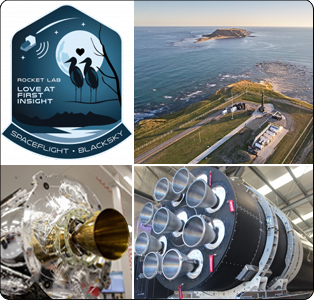
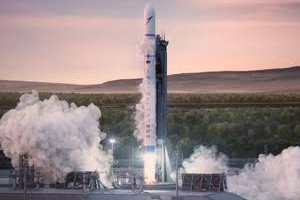
‘Love At First Insight’ will be the 22nd Electron (BR) mission / 107th satellite placed in orbit from Rocket Lab, with launch window opening November 11 from LC-1 Māhia Peninsula, NZ (TL). The payload is 2 BlackSky Global Gen two 56-kg, butane propulsed Earth observation craft with SpaceView-24 imaging systems (~1 m / pixel resolution) capable of recording 1000 images per day, bringing total count to 9 out of planned 16 satellite constellation backbone manufactured by LeoStella, subsidiary of Spaceflight Industries (parent company of Blacksky) and Thales Alenia Space. Blacksky has contracted with ISRO (PSLV), SpaceX (Falcon 9) and Rocket Lab on previous launches. ‘Love At First Insight’ is also notable for several revisions of launch protocol and vehicle, including an earlier deployal of first stage main parachute at ~5.7-km altitude, <1 minute after drogue (13 km), at which time a helicopter waiting 370 km offshore will be dispatched to monitor descent – an experimental precursor to attempt capture of Electron first stage mid-air, which paired with new 2200°C heat resistant shield should allow reuse of fuselage and 9 Rutherford engines after refurbishment. Electron kick stage will be employed to circularize orbit before payload release, technology (including 3D printed Curie engine) planned to be utilized on Photon (BL) craft – which will take NASA Capstone to trial near-rectilinear halo orbit NET 19 March 2022 and private mission to Venus NET 2023. (Image Credits: Rocket Lab)
Nov 8 — SpaceX, Launch Falcon 9 / Crew 3 (US Crew Vehicle-3), LC-39A, Kennedy Space Center FL: SpaceX Crew Dragon to launch its fourth crewed mission / third mission carrying ISS crew to join Expedition 66: NASA Astronauts Raja Chari, Kayla Barron, and Tom Marshburn, ESA Astronaut Matthias Maure; 21:51 EST.
Nov 8-9 — Venus Exploration Analysis Group (VEXAG),Online / Washington DC: 19th Meeting of VEXAG.
Nov 8-10 — NASA,Online / Washington DC: Spaceflight for Everybody Virtual Symposium; to communicate the current state of NASA spaceflight health knowledge; with Pam Melroy, Kathy Lueders, Ken Bowersox, Vanessa Wyche, Serena Auñón-Chancellor, J.D. Polk, Charles Bolden.
Nov 4 – Jun 29 — Russian Academy of Sciences, Institute of Biomedical Problems, NASA Human Exploration Research Analog (HERA),Moscow, Russia: Mixed gender crew of 6 to participate in 8-month space / lunar simulation mission SIRIUS-21 (Scientific International Research In Unique Terrestrial Station).
TUESDAY
NET Nov 9 — Astra, Launch Rocket 3 LV0007 / STP-27AD2, Pacific Spaceport Complex, Kodiak AK: Launch window open today through November 12; commercial launch vehicle carrying second of 3 USSF test payloads.
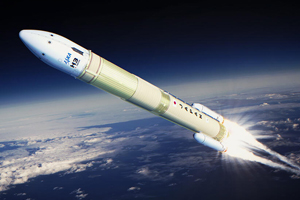
NET Nov 9 — JAXA, Launch Epsilon / RAISE-2,Uchinoura Space Center, Japan: Japan Epsilon rocket to launch Rapid Innovative Payload Demonstration Satellite 2 (RAISE-2) technology demonstration satellite with 8 rideshare payloads.
Nov 9 — Apollo Asteroid 2019 XS: Near-Earth Flyby (0.004 AU)
Nov 9 — Apollo Asteroid 2021 US5: Near-Earth Flyby (0.035 AU)
WEDNESDAY
Nov 10 — ISS, U.S. EVA #78 , 405-km LEO: Thomas Marshburn and Kayla Barron to perform 6.5-hour EVA to replace Port 1 Truss S-Band communications antenna, live coverage available, starts 05:30 EDT.
Nov 10 — Washington National Cathedral,Online / Washington DC: 2021 Ignatius Forum: Our Future in Space; featuring Bill Nelson (NASA Administrator), Avi Loeb (Harvard University Department of Astronomy), David Wilkinson (Durham University), Avril Haines (Director of National Intelligence).
Nov 11 — Rocket Lab,Launch Electron / BlackSky Global 10 & 11, Launch Complex 1A, Mahia Peninsula, New Zealand: 14-day launch window opens for mission ‘Love At First Insight’ to loft 2 Earth-observation satellites for BlackSky; will attempt splash down and recovery of Electron first stage and use helicopter to test communications and tracking.
Nov 11 — Moon: At first quarter, 02:47; 4.2° SE of Jupiter, 11:00.
Nov 11 — Apollo Asteroid 2021 UA5: Near-Earth Flyby (0.029 AU)
FRIDAY
Nov 12 — NASA,Online: Submissions Due: CubeSat Mission Logo / Patch Contest; for Kansas students grades 6-12 for Wichita State University, NASA NIAC S.N.A.P.P.Y. (Solar Neutrino and Particle PhYsics) CubeSat mission.
Nov 12 — Northern Taurids Meteor Shower Peak: Appearing to radiate from constellation Taurus, Taurids are associated with Comet Encke and offer about 5 meteors per hour and travel at ~28 km/s.
Nov 12 — Amor Asteroid 2007 VD138: Near-Earth Flyby (0.041 AU)
SATURDAY
Nov 13 — Moon: 3.9° SE of Neptune, 13:00.
Nov 13 — Apollo Asteroid 2021 UO3: Near-Earth Flyby (0.012 AU)
Nov 13 — Apollo Asteroid 2004 UE: Near-Earth Flyby (0.029 AU)
SUNDAY
Nov 14 — AstroDay, IfA, CFHT, Subaru, Keck, Gemini, PANOPTES, Thelma Parker Library, DKICP, Hawaii Electric, Onizuka SSP, CMS, DKIST,Kailua-Kona HI: AstroDay West 2021; at Kona Commons, 10:00-16:00.
Emanating from ~6km-wide comet with 5.3-year Solar orbit, visible in constellation Aquarius near star Delta Aquarii, fast, faint meteors peak on this night, best...
The International Research Conference is a federated organization dedicated to bringing together a significant number of diverse scholarly events for presentation within the conference...
Includes ~150 meetings covering the fields of COSPAR Scientific Commissions / Panels / Task Groups, such as SC B: The Earth-Moon System, Planets, and...
From 02 to 07 August 2026, a few thousand geoscientists across diverse disciplines will gather at the 23rd annual meeting of the Asia Oceania Geosciences...
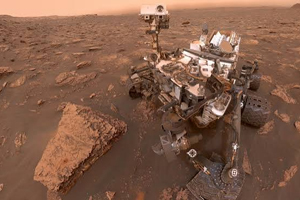
NASA Curiosity (Mars Science Laboratory) rover surpasses another full year of operations on Mars surface today; launched Nov 26, 2011 – landed Aug 5,...
This international lunar science meeting has two objectives: to provide a platform for leading experts to review recent advances across lunar research, from the...
At CSIR International Convention Centre. Key topics are Earth Observation, Developing Space Tourism, Space Supply Manufacturing. Cultural tours are offered.
Participants will receive theoretical and hands-on training in electron imaging and X-ray spectroscopy for application to planetary samples. This training opportunity is targeted at...
"Leading Australia’s Space Future for Our Strategic Advantage". Southern Space 2026 brings together decision-makers who set the direction for Australia’s space sector. It is...
 Nov 8 — ISS, ~405-km LEO: 7-member Expedition 66 conducting health and combustion research;
  Nov 8 — NewSpace:
  Nov 8 — USA: NASA creates new Office of Technology, Policy, and Strategy led by
 = All times for terrestrial events in local time unless noted.
 = All times for international terrestrial events in local time unless noted.
 = All times for space events, and…
 = All times for international space / astro events in Hawaii Standard Time unless noted. Add 10 hours to obtain UT (‘Universal Time’).