Russia to Launch 6-Port Prichal Module to Nauka / ISS via Soyuz November 24
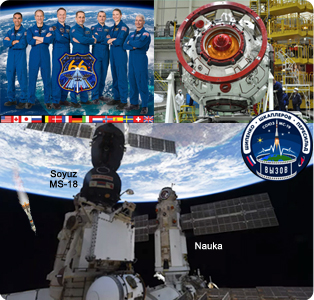
Nauka, the first major expansion of Russia ISS segment in over 20 years, is set to receive 4,650-kg Prichal (berth) module planned to launch via Progress M-UM vehicle aboard Soyuz-2.1b from Baikonur Cosmodrome, Kazakhstan Nov 24. About the same time as the launch, ISS Expedition 66 crew will help oversee Progress MS-17 / 78P undocking from Nauka nadir port for Earth atmosphere reentry disintegration, which will take with it the adapter from nadir, allowing for Prichal to rendezvous and dock with the wider passageway Nov 26. The sphere-shaped Prichal has an internal volume of 14 m3 and six hybrid docking ports (1 attached to ISS) – bringing the total number of available docking ports on Russian Orbital Segment to 8. Nauka and Prichal show significant investment at ISS: not only monetarily from Russia, but decades of planning, European Robotic Arm contribution, ISS partners’ cooperation, and time / energy required for 10 additional EVAs to fully outfit and commission the modules. The ~20,000-kg Nauka planned lifetime is >10 years, pushing Russia LEO presence through 2031 – when human Moon missions should be a reality for nations / independents — and thus far, Roscosmos is committed to ISS through 2027-28, while exploring options for possible new-generation LEO outposts. The 2022-23 movie ‘The Challenge’ will feature views inside Nauka after the ~12-day filming visit in October. (Image Credits: NASA, Roscosmos, ESA)
MONDAY
Nov 22 — ISS, ~405-km LEO: Seven-member Expedition 66 reviewing procedures for EVA next week, working with body heat measurements, Plant Habitat-04 cultivation preparation; teams continue space debris and Zvezda air leak monitoring.
Nov 22 — Tiangong Space Station, ~370-km LEO: Three-member crew working to transfer cargo from Shenzhou-13, Tianzhou-2, Tianzhou-3; station being planned to host 20 experimental racks within enclosed, pressurized environment.
Solar System: Tianwen-1 orbiter changing orbit to support Zhurong rover and conduct Mars survey science; processing of New Horizons 2015 Pluto / Charon flyby images reveal new views of ‘dark side’ and south pole.
Galaxy: Potential black hole in young (100M years) Galaxy NGC 1850 being studied using ESO VLT; brittle lithosphere exoplanets and other geological models may refine search for habitable worlds in MWG.
Global: UAE to soon construct & test 2022 lunar rover flight model, set to deliver to ispace Japan next April; China to build new vessel for sea launching Long March 11 rockets from Haiyang; JAXA readying Drums (‘Debris Removal Unprecedented Micro-Satellite’) for testing in LEO after 5th successful Epsilon launch.
USA: OIG estimates NASA may spend US$93B for Artemis by 2025; Northrup Grumman to work with AVL, Intuitive Machines, Lunar Outpost, Michelin for ~2025 Lunar Terrain Vehicle; 7 Startups to receive US$90K each from NASA Entrepreneur’s Challenge for smallsat science.
First Asteroid Redirect Planetary Protection Mission, DART, Set to Launch from Earth
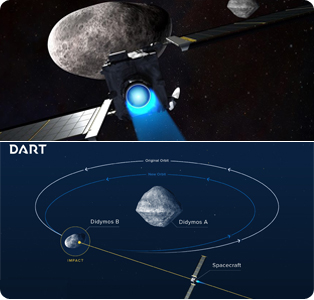
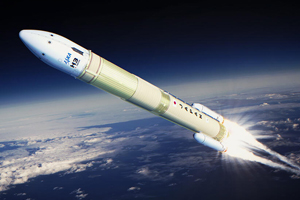
NASA Planetary Defense Coordination Office and researchers at the Johns Hopkins Applied Physics Laboratory hope to validate kinetic impactor model of asteroid trajectory deflection with Double Asteroid Redirection Test (DART). Lifting off from Vandenberg Space Force Base California SLC-4E on 23 November at 22:20 PST via SpaceX Falcon 9, the 500-kg DART with 6U secondary craft LICIACube (Light Italian CubeSat for Imaging of Asteroids) is planned to rendezvous with binary asteroid pair 65803 Didymos on 2 October 2022, ~11 million km distant from Earth (0.073 AU). DART is powered by advanced ion propulsion (NASA Evolutionary Xenon Thruster – Commercial) paired with solar arrays measuring 22 m2, deployed with ROSA system, similar to ISS. Main craft houses tracking sensors and Didymos Reconnaissance and Asteroid Camera for Optical navigation (DRACO) and is designed to be destroyed upon 23,760 KPH collision with 160-m Dimorphos (tidally locked moonlet in ~1 km retrograde orbit around 780-m Didymos A). Prior to impact, DART will characterize the asteroid system and transmit imagery until destruction – the fallout of which will be recorded by LICIACube, provided by Italian Space Agency. The collision is anticipated to produce minimal change in velocity (<1%), but over millions of kilometers, trajectory should be significantly altered. ESA plans complimentary mission HERA launching NET 2024 via Ariane 6, in which 2 additional 6U CubeSats (Juventas / Milani) are to analyze orbital changes. (Image Credits: NASA, ESA)
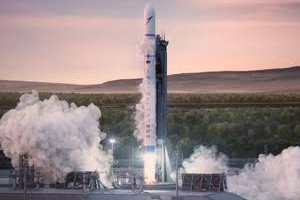
NET Nov 19 — Astra, Launch Rocket 3 LV0007 / STP-27AD2, Pacific Spaceport Complex, Kodiak AK: Commercial launch vehicle carrying second of three USSF test payloads.
Nov 23 — Moon: 6.1° S of Castor, 13:00; 2.54° S of Pollux, 18:00.
Nov 23 — Apollo Asteroid 2021 VL16: Near-Earth Flyby (0.037 AU)
WEDNESDAY
Nov 24 — Roscosmos, Launch Soyuz / Progress M-UM / Prichal, Baikonur Cosmodrome, Kazakhstan: Russia Soyuz to launch Prichal module to ISS; also known as Uzlovoy Module (Nodal Module Berth), Prichal is to dock with Nauka and used as a docking port for Russia vehicles.
Nov 24 — Luxembourg Space Agency,Luxembourg:NewSpace Europe 2021, ‘Connecting Entrepreneurs & Investors in the New Space Age’.
Nov 24 — Moon: 3.6° NNE of Beehive Cluster, 22:00.
Nov 24 — Apollo Asteroid 2014 WF201: Near-Earth Flyby (0.034 AU)
THURSDAY
Nov 25 — ISS, Progress 78P Undocking, ~405-km LEO: Russia Progress 78P filled with trash to undock from ISS for disintegration over South Pacific Ocean.
Nov 25 — Apollo Asteroid 2021 VR4: Near-Earth Flyby (0.005 AU)
Nov 25 — Aten Asteroid 2009 WB105: Near-Earth Flyby (0.039 AU)
Nov 25 — Aten Asteroid 2019 BB5: Near-Earth Flyby (0.048 AU)
Nov 25 — Amor Asteroid 2021 VF11: Near-Earth Flyby (0.048 AU)
FRIDAY
Nov 26 — ISS, Prichal Module Rendezvous and Docking, ~405-km LEO: Russia Prichal module to dock to ISS, 10:25 EST, live coverage available.
Nov 26 — Solar Orbiter, Heliocentric Orbit: Dedicated to solar and heliospheric physics, ESA Solar Orbiter to perform Earth flyby today for gravity assist to reach its operational orbit with perihelion 0.28 AU and aphelion 0.91 AU, launched February 10, 2020.
Nov 26 — Curiosity, Mars Surface: Mars Science Laboratory celebrates 10th year off Earth since its launch on this day in 2011, landed on Mars Aug 5, 2012 (Pacific Daylight Time).
Nov 26 — InSight, Elysium Planitia,Mars Surface: Interior Exploration using Seismic Investigations, Geodesy and Heat Transport (InSight) lander reaches 3 full years / enters 4th year on Mars today; continues investigations with seismometer, heat probe, radio science experiments.
Nov 26 — Moon: 4.8° NNE of Regulus, 17:00.
SATURDAY
NET Nov 27 — Rocket Lab,Launch Electron / BlackSky Global 12 & 13, Launch Complex 1A, Mahia Peninsula, New Zealand: 14-day launch window opens for mission ‘Love At First Insight’ to loft 2 Earth-observation satellites for BlackSky; will attempt splash down and recovery of Electron first stage and use helicopter to test communications and tracking.
Nov 27 — 50th Observation of First Craft to Reach Mars Surface, Roscosmos / Worldwide: As Russia ExoMars partnership with ESA continues and Luna-25 is being prepared for launch in 2022, the Soviet Mars 2 lander is celebrated today for becoming the first human-made object to reach Mars surface (though landing system failed).
Nov 27 — Moon: At last quarter, 02:29.
Nov 27 — Apollo Asteroid 2021 VM: Near-Earth Flyby (0.024 AU)
SUNDAY
Nov 28 — Zero-G,Cape Canaveral FL: The ZERO-G Experience; special weightless flight in modified Boeing 727 with Apollo Moonworker Charlie Duke; duration ~5 hours with 15 parabolas, US$10K.
Nov 28 — Mercury: At superior conjunction with Sun, 18:00.
Nov 28 — Apollo Asteroid 2021 VO12: Near-Earth Flyby (0.019 AU)
Emanating from ~6km-wide comet with 5.3-year Solar orbit, visible in constellation Aquarius near star Delta Aquarii, fast, faint meteors peak on this night, best...
The International Research Conference is a federated organization dedicated to bringing together a significant number of diverse scholarly events for presentation within the conference...
Includes ~150 meetings covering the fields of COSPAR Scientific Commissions / Panels / Task Groups, such as SC B: The Earth-Moon System, Planets, and...
From 02 to 07 August 2026, a few thousand geoscientists across diverse disciplines will gather at the 23rd annual meeting of the Asia Oceania Geosciences...
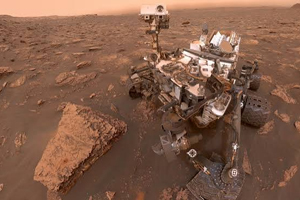
NASA Curiosity (Mars Science Laboratory) rover surpasses another full year of operations on Mars surface today; launched Nov 26, 2011 – landed Aug 5,...
This international lunar science meeting has two objectives: to provide a platform for leading experts to review recent advances across lunar research, from the...
At CSIR International Convention Centre. Key topics are Earth Observation, Developing Space Tourism, Space Supply Manufacturing. Cultural tours are offered.
Participants will receive theoretical and hands-on training in electron imaging and X-ray spectroscopy for application to planetary samples. This training opportunity is targeted at...
"Leading Australia’s Space Future for Our Strategic Advantage". Southern Space 2026 brings together decision-makers who set the direction for Australia’s space sector. It is...
 NewSpace:
  Solar System:
  USA:
USA: 
 = All times for terrestrial events in local time unless noted.
 = All times for international terrestrial events in local time unless noted.
 = All times for space events, and…
 = All times for international space / astro events in Hawaii Standard Time unless noted. Add 10 hours to obtain UT (‘Universal Time’).