Moon Matters: LPSC2024 in USA Being Held Prior to PRC Launch of Queqiao 2 Lunar Relay
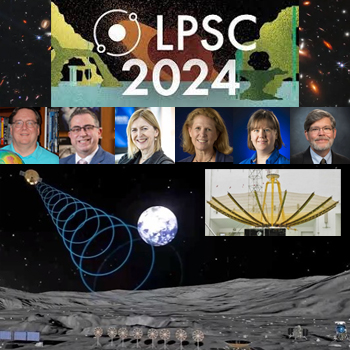
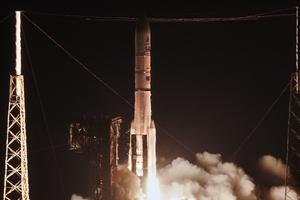
The 55th Lunar and Planetary Science Conference, sponsored by NASA, USRA and the Lunar and Planetary Institute, will convene ~2,000 planetary scientists and students from March 11-15 in the Woodlands, Texas. There will be 5 simultaneously occurring tracks featuring oral and poster presentations, plenary and special sessions, as well as awards for NASA early-career winners. LPSC24 co-chairs are Walter Kiefer (USRA, LPI) and Justin Filiberto (JSC). Louise Prockter will speak on ‘The Secret Lives of Icy Moons’, followed by a NASA HQ Briefing with Lori Glaze, Sarah Noble, Joel Kearns and others. Lunar-focused sessions will cover dark sites on the Moon, magma, science of upcoming missions, impacts, polar volatiles, samples, crust and tectonics. Launching to a halo orbit around Earth-Moon Lagrange point L2 in support of Chang’E-6, -7 and -8 lunar missions is the ~1,200 kg Queqiao 2 relay satellite aboard a Long March 8 rocket from Wenchang Space Launch Center, Hainan Island, China on March 18. This mission will also carry two small satellites called Tiandu 1 and 2 which will fly in formation with Queqiao 2 to verify further communication and navigation tests. Queqiao 2 is a more advanced version of Queqiao 1 which also resides at Earth–Moon L2. It has a deployable 4.2-meter dish antenna, and will provide four X-band links to communicate with Chang’E landers and rovers on the lunar surface, and one S-band link for Earth. (Image Credits: LPI, USRA, STScI, NASA, ESA, CSA, Webb ERO, CNSA, CCTV)
MONDAY
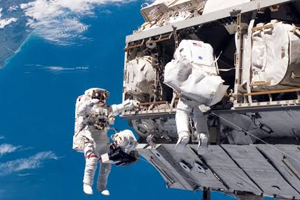
☆ Mar 11 — International Space Station,~415-km LEO: Expedition 70 becomes 10-member crew with newly arrived SpaceX Crew-8 Matthew Dominick, Michael Barratt, Jeanette Epps, Alexander Grebenkin; preparing for Expedition 71 handover.
☆ Mar 11 — Tiangong Space Station, ~390-km LEO: Shenzhou 17 three-member crew continue to monitor solar panels on Tianhe core after 8-hour EVA repaired damage from space debris (14th spacewalk overall at TSS).
Highlights…
o NewSpace: mu Space of Thailand and Airbus to partner on smallsat development under new MoU; Reusable launch vehicle Callisto, built by CNES, DLR and JAXA, set to make 1st launch from Guiana NET 2025; NASA to develop Handheld Universal Lunar Camera for Artemis with Nikon of Japan based on mirrorless, full frame Z 9 model.
☆ SolarSystem: Juno measurements show Europa producing 12 kg of oxygen per second, contrary to previous estimates of 1,000+ kg/s; NASA and Roscosmos to address increasing air leak on ISS, Zvezda module to remain closed until April; Canada study finds 330-m diameter asteroid 99942 Apophis will safely pass ~31,600 km from Earth, within GEO ring.
☆ Galaxy: Caltech / Carnegie astronomer Stella Ocker hopes research interrupted by Voyager 1 anomaly can be continued by Interstellar Probe in 2030s; JWST Cycle 3 starting in July to include 253 General Observers programs over 5,500 hours including attempt to confirm first exomoon and TRAPPIST-1 b / -1 e studies.
●USA: NASA to receive US$24.875B appropriation for 2024, $509M less than 2023 and $2.31B less than requested; Harvard & Smithsonian CfA building 750 devices to allow people with vision impairment to ‘hear’ upcoming eclipse on April 8 via Lightsound Project; VIPER build 80%+ complete at JSC clean room, landing on Astrobotic Griffin now in doubt per CLPS manager Joel Kearns.
● Hawai’i: IfA astronomers detect closest (160 ly) Tidal Disruption Event observed in visible spectrum via All-Sky Automated Survey for Supernovae and further characterized with ATLAS and Keck telescopes; Mary Beth Laychak of CFHT is 24th ATHENA Leadership Award recipient; NSF decision to cap funding of giant telescope-class projects to $1.6B will limit development of Giant Magellan Telescope or Thirty Meter Telescope.
● = Terrestrial and… o = International terrestrial events
☾ = Moon activity
★ = Space and… ☆ = International space / astro events in Hawaii Standard Time unless noted. Add 10 hours to obtain UT (‘Universal Time’).
March Storm Space Lobbying Blitz Kicks off in Washington DC
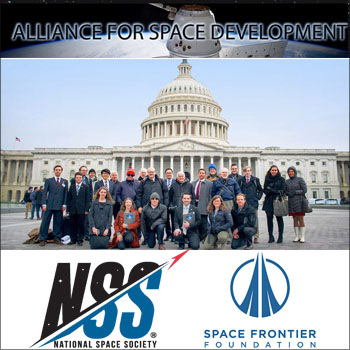
Alliance for Space Development, supported by National Space Society and Space Frontier Foundation, is gearing up for its annual space advocacy event March Storm on March 11-13 at House and Senate office buildings on Capitol Hill. A 1-day training session will be held Monday March 11, while March 12 and 13 will be dedicated to in-person meetings with legislators, where space advocates will pitch policy ideas – this year regulatory issues will be a subject of focus. Specifically, March Storm will lobby for the extension of the Commercial Space Launch Amendments Act of 2004 for an additional 8 years, which would prevent the FAA from regulating private spaceflight during an extended ‘learning period’. Secondary initiatives include passage of 2 pieces of legislation: the Commercial Space Act (H.R. 6131 sponsored by Representative Brian Babin [R-TX]) which would empower the Department of Commerce to oversee private space activity, and the ORBITS Act (S. 477, sponsored by Senator John Hickenlooper [D-CO]) which aims to mitigate orbital debris. March Storm will also advocate appropriation increases for Office of Commercial Space Transportation as well as funding for NEO Surveyor earth defense telescope, an economic feasibility study of space-based solar power transmission to Earth, and for development of in situ resource utilization technology by NASA STMD – necessary for Artemis era long-term human presence on the lunar surface. Donations are accepted from those who support the development of space but are unable to attend. (Image Credits: NSS, SFF)
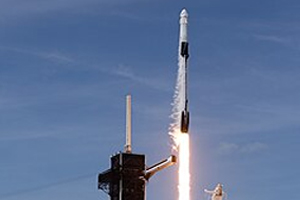
★ Mar 11 — SpaceX, Launch Falcon 9 / CRS SpX-30, SLC-40, Cape Canaveral SFS FL: SpaceX to launch CRS-30 Commercial Resupply Service mission to International Space Station.
☆ Sep 6, 2023 – NET Mar — X-Ray Imaging and Spectroscopy Mission (XRISM), ~550-km LEO: XRISM undergoing 6 month check out testing phase before start of science operations to study galactic plasma.
At the Spokane Convention Center. The meeting will have a broad scope, with a wide-ranging program of science and workforce topics, and celebrating planetary...
Convene, connect, and collaborate at the 19th annual von Braun Space Exploration Symposium! This year’s event will spotlight how bold ideas, emerging technologies, and...
Themes include: Space & the Arctic; Space & AI; Space & International Collaboration. There is a Student Session, a Technical Session, a Frontier Session,...
Oslo Spaceport Norway offers monthly a knowledgeable speaker and opportunity for networking, 17:00-20:00 local time; free entry but registration required. Ground Control is for...
45 satellites to launch for Amazon Leo, formerly named Project Kuiper. This LEO mega constellation will offer broadband internet access with 3,276 satellites.
Occurring 31 October from 09:00-11:00 local time (16:00-18:00 HST, 19:00-21:00 PDT, 22:00-24:00 EDT on 30 October), this Galaxy Forum will be in hybrid format...
Originally planned around this date for Wenchang, China -- TBC (to be confirmed); As the only professional association for astronauts, ASE supports the advancement of...
Coordinating Division Division C Education, Outreach and Heritage The IAU Symposium on Innovative Research and Techniques in Astronomy Communication will take place from November...
Change clocks back 1 hour from Daylight Saving to Standard Time; does not include Hawai’i, Arizona (except the Navajo Nation), American Samoa, Guam, Northern...
ESWW is the main annual event in the European Space Weather and Space Climate calendar. It is an international meeting organised annually within the...
IAU Symposium: IAUS409 - A Journey Towards Effective Astronomy Communication; online and at National Astronomical Observatory of Japan, 2-21-2 Osawa Mitaka, Tokyo. Topics include:...
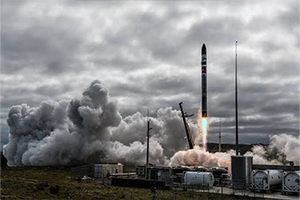
Launch Complex 1, ~39°S, Mahia Peninsula, New Zealand
iQPS Launch 9, an Earth observation satellite with Synthetic aperture radar for Japan-based imaging company iQPS, to launch on "The Sea God Surveys" mission...
Launch window 10:34am - 2:34pm local time for the 15th batch of classified satellites for a reconnaissance constellation built by SpaceX and Northrop Grumman...
Expecting senior government and executives from NASA, Firefly, Blue Origin to discuss innovation, competitive advantages and a "space industrial revolution in LEO". Capped at...
Launch Complex 1, ~39°S, Mahia Peninsula, New Zealand
iQPS Launch 10, an Earth observation satellite with Synthetic aperture radar for Japan-based imaging company iQPS, to launch on “The Mountain God Rises” mission...
Promoting the New Space Economy: The first major national meeting of the space, technology and scientific industries. Three days to connect science, industry and...