ISS Undergoes Multi-Crew Changeovers and Cargo Arrival Heading into Expedition 71
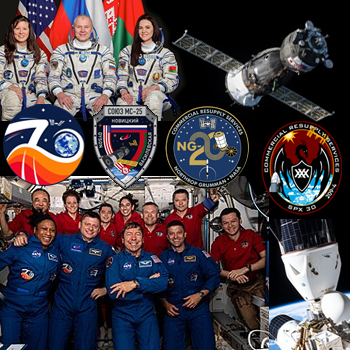
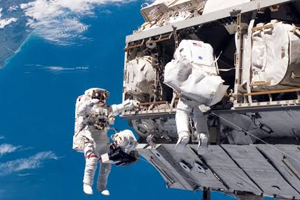
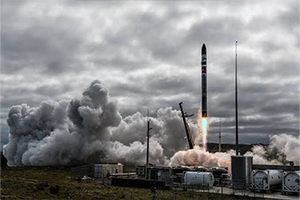
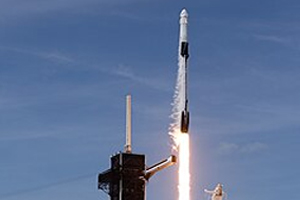
The International Space Station, now more than 25 years in LEO and having 270+ Astronaut visitors, will see many rendezvous and departures this month of crewed and cargo spacecraft. Expedition 70 Commander Oleg Kononenko, Nikolai Chub and Loral O’Hara (arrived in Soyuz MS-24), and SpaceX Crew-8 members Matthew Dominick, Michael Barratt, Jeanette Epps and Alexander Grebenkin are set to welcome Oleg Novitsky, Tracy Caldwell-Dyson and the first Belarus woman in space Marina Vasilevskaya via Soyuz MS-25 on March 21. Exp 70 will remain a 10-member crew until April 2 when O’Hara, and “Visiting Expedition 21 Crew” Novitsky and Vasilevskaya are planned to return to Earth in Soyuz-24 and Expedition 71 will officially begin. Kononenko and Chub are assigned for a one-year long mission that will end on September 24 (marking 375 continuous days). Cargo craft docked are NG Cygnus-20 (S.S. Patricia “Patty” Hilliard Robertson), Progress 86 and 87 resupply ships. Set to launch March 23 aboard a SpaceX Falcon 9 rocket is the CRS-30 ship with nearly 3,000 kg of cargo including experiments C4 Photosynthesis in Space (APEX-09) which will grow 2 different grasses to test their ability to capture carbon dioxide in microgravity, the Nano Particle Haloing Suspension investigation to test how particles interact within an electrical field, and a Multi-resolution Scanner to be added to Astrobee to further test automated 3D sensing, mapping, and situational awareness systems. (Image Credits: NASA, Roscosmos, SpaceX, Northrop Grumman)
MONDAY
☆ Mar 18 — International Space Station,~415-km LEO: Expedition 70 seven-member crew preparing for arrival of 3 others this week, planning change of command and start to Expedition 71 in early April.
☆ Mar 18 — Tiangong Space Station, ~390-km LEO: Shenzhou 17 three-member crew working with in-orbit electroencephalogram (EEG) test to study brain adaptions / functions; Shenzhou 18 now planned to launch to TSS on May 24.
Highlights…
o NewSpace: Indian Institute of Technology Madras partnering with Vellon Space to develop orbital biomanufacturing facility AsteriX Lab; Investigation ongoing into cause of Space One Kairos rocket self-destruct explosion 5 seconds after launch from Space Port Kii, Japan; NASA assisting Varda Space, Inversion Space, Rocket Lab with thermal insulation materials.
☆ SolarSystem: 9022-m equatorial Volcano on Mars “Noctis volcano” which may harbor glacial ice and be suitable for human landing identified using MRO; 18×28 cm tantalum plate inscribed with affixed silicon microchip containing 2.6M names and waveforms of ‘water’ in 103 languages to launch on Europa Clipper NET Oct; SPEARS2 polymer sensors capable of 400% stretch designed for off-Earth agriculture under development at UI Urbana-Champaign.
☆ Galaxy: 1.3-gigapixel image of Vela Supernova Remnant by Dark Energy Camera on Blanco 4-m telescope being analyzed; Hubble & JWST observation of 1,000 Cepheid variable stars in 5 galaxies confirms Hubble Constant universe expansion rate, conflicting with CMB measurements by 10%; Himalayan Chandra Telescope and Gaia observe open cluster NGC 2345 9,100-ly distant, determine 33.8-ly radius.
o Global: China statement to UN COPUOS expresses support for space resource utilization without appropriation, within legal structure built around Outer Space Treaty; S Korea to increase space spending to US$1.14B by 2027 ahead of NET 2032 Moon landing; CASC considering establishment of federal agency to organize space data collected from 100+ launches expected from China in 2024.
●USA: SpaceX IFT-3 of Starship successfully reaches orbital speed, flight terminated over Indian Ocean; Biden-Harris Administration requesting NASA budget of $25.4B for FY2025 including $7.8B allocated for Artemis program; Zero-Boil-Off technology for cryogenic propellant efficiency during deep space missions being developed at Case Western under NASA grant.
● Hawai’i: TMT International Observatory director Kirshner optimistic for an ELT in Hawai’i as May decision on $1.6B funding nears; ILOA Hawai’i awaiting possible reactivation of Ka’ Imi NFoV and WFov imagers if Odysseus lunar lander awakens; UH Mānoa study produces glyceric acid under 10°K conditions at Keck Research Laboratory in Astrochemistry, mimicking abiogenesis processes which may be confirmed by ALMA.
● = Terrestrial and… o = International terrestrial events
☾ = Moon activity
★ = Space and… ☆ = International space / astro events in Hawaii Standard Time unless noted. Add 10 hours to obtain UT (‘Universal Time’).
JAXA SLIM and Intuitive Machines Odysseus Await Lunar Daylight for Possible Reactivation
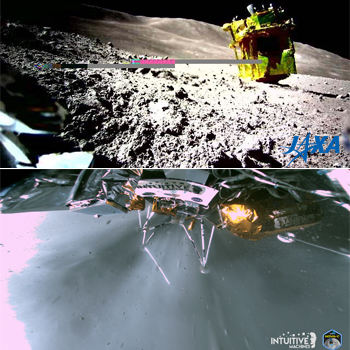
2 Moon Landers, JAXA SLIM and Intuitive Machines Odysseus, are in hibernation on the lunar surface following semi-successful landings and periods of operation. The US$121.5M SLIM is resting 55 m east of targeted site within Cyrillus crater (near Shioli crater) on Mare Nectaris (13.3160°S, 25.2510°E) following Jan 19 landing which, while meeting the primary objective of soft landing within a 100m ellipse, settled in an off-nominal orientation due to a failed engine nozzle. Operations were suspended after a brief time in which multiband spectroscopic camera (MBC) collected data and LEV-1 / LEV-2 mini rovers were deployed due to battery depletion, but resumed Jan 29 after the Sun moved sufficiently westward to power the craft’s photovoltaic panel. Activity was again suspended March 1 upon lunar nightfall, but may resume sometime during the upcoming lunar day. ~2,050 km to the southwest, near Malapert A crater (80.13°S, 1.44°E), the $118M Nova-C class Odysseus lander is also awaiting daybreak for what mission planners hope will be a second period of operation following a similarly off-nominal landing caused by an oversight which prevented operation of the craft’s laser rangefinder, affecting orientation after tip-over 1.5 km from targeted landing site. Lunar day begins around March 16 for SLIM, whereas the Sun rises later near the Moon South Pole location of Odysseus, around March 17. Controllers are likely to wait to issue activation commands until the angle of sunlight is optimal for their respective landers. (Image Credits: JAXA, IM)
☆ Mar 18 — CNSA, Launch Long March 8 / Queqiao 2 & Tiandu 1/2,Wenchang Space Launch Center, Hainan Island, China (19° N): Queqiao 2 (Magpie Bridge 2) satellite to establish communications between Moon far side and Earth to launch with Tiandu 1 and Tiandu 2 to test and verify a wider Queqiao constellation for lunar communications and navigation.
☾ Mar 18 — Moon: 4.9° S of Castor, 16:00; 1.51° S of Pollux, 22:00.
Ongoing…
☆ Sep 6, 2023 – NET Mar — X-Ray Imaging and Spectroscopy Mission (XRISM), ~550-km LEO: XRISM undergoing 6 month check out testing phase before start of science operations to study galactic plasma.
☾ NET Mar 19 — JAXA Smart Lander for Investigating Moon (SLIM) Lander, Lunar Surface, 13.31°S, 25.25°E: Lunar lander on surface of Moon may awaken for a second time around this date if conditions allow.
☾ NET Mar 19 — Intuitive Machines IM-1 Nova-C Lander, Lunar Surface, 80.13°S, 1.44°E: Lunar lander on surface of Moon being monitored from ground controllers, hoping to recharge / awaken around this date if conditions allow.
★ Mar 19 — Rocket Lab, Launch Electron / Live and Let Fly (NROL-123), Wallops Flight Facility VA: Launch of classified payload for National Reconnaissance Agency, 02:15 local time.
☆ Mar 19— March Equinox: The Sun rises exactly in east traveling through sky for 12 hours, sets exactly in west; every place on Earth experiences a ~12-hour day; 17:03.
☆ Mar 19— Venus: At aphelion, 0.7282 AU from Sun, 12:00.
☾ Mar 20 — Moon: 3.6° NNE of Beehive Cluster, 02:00.
THURSDAY
☆Mar 21 — Roscosmos State Corporation, Launch Soyuz 2.1a / MS-25, Baikonur Cosmodrome, Kazakhstan: Roscosmos to launch Roscosmos Cosmonaut Oleg Novitsky, NASA Astronaut Tracy Caldwell Dyson and Belarus Cosmonaut Marina Vasilevskaya to ISS; 13:21 UTC.
★ Mar 21 — SpaceX, Launch Falcon 9 / Dragon CRS2 SpX-30, SLC-40, Cape Canaveral SFS FL: SpaceX to launch next Dragon cargo ship under Commercial Resupply Services program to ISS; 20:54 UTC.
☆ Mar 22 — Apollo Asteroid 2023 RK44: Near-Earth Flyby (0.084 AU)
SATURDAY
☾ Mar 23 — Moon: At apogee; distance 406,288 km, 06:00.
☆ Mar 23 — Apollo Asteroid 2017 UQ7: Near-Earth Flyby (0.071 AU)
SUNDAY
☾ Mar 24 — Penumbral eclipse of the Moon: Visible from parts of Antarctica, Africa, western Europe, Atlantic Ocean, Americas, Pacific Ocean, Japan, and eastern Australia; begins at 18:53 HST.
☾ Mar 24 — Moon: Full Worm Moon, 21:00.
☆ Mar 24 — Apollo Asteroid 2019 CJ: Near-Earth Flyby (0.031 AU)
At the Spokane Convention Center. The meeting will have a broad scope, with a wide-ranging program of science and workforce topics, and celebrating planetary...
Convene, connect, and collaborate at the 19th annual von Braun Space Exploration Symposium! This year’s event will spotlight how bold ideas, emerging technologies, and...
Themes include: Space & the Arctic; Space & AI; Space & International Collaboration. There is a Student Session, a Technical Session, a Frontier Session,...
Oslo Spaceport Norway offers monthly a knowledgeable speaker and opportunity for networking, 17:00-20:00 local time; free entry but registration required. Ground Control is for...
45 satellites to launch for Amazon Leo, formerly named Project Kuiper. This LEO mega constellation will offer broadband internet access with 3,276 satellites.
Occurring 31 October from 09:00-11:00 local time (16:00-18:00 HST, 19:00-21:00 PDT, 22:00-24:00 EDT on 30 October), this Galaxy Forum will be in hybrid format...
Originally planned around this date for Wenchang, China -- TBC (to be confirmed); As the only professional association for astronauts, ASE supports the advancement of...
Coordinating Division Division C Education, Outreach and Heritage The IAU Symposium on Innovative Research and Techniques in Astronomy Communication will take place from November...
Change clocks back 1 hour from Daylight Saving to Standard Time; does not include Hawai’i, Arizona (except the Navajo Nation), American Samoa, Guam, Northern...
ESWW is the main annual event in the European Space Weather and Space Climate calendar. It is an international meeting organised annually within the...
IAU Symposium: IAUS409 - A Journey Towards Effective Astronomy Communication; online and at National Astronomical Observatory of Japan, 2-21-2 Osawa Mitaka, Tokyo. Topics include:...
Launch Complex 1, ~39°S, Mahia Peninsula, New Zealand
iQPS Launch 9, an Earth observation satellite with Synthetic aperture radar for Japan-based imaging company iQPS, to launch on "The Sea God Surveys" mission...
Launch window 10:34am - 2:34pm local time for the 15th batch of classified satellites for a reconnaissance constellation built by SpaceX and Northrop Grumman...
Expecting senior government and executives from NASA, Firefly, Blue Origin to discuss innovation, competitive advantages and a "space industrial revolution in LEO". Capped at...
Launch Complex 1, ~39°S, Mahia Peninsula, New Zealand
iQPS Launch 10, an Earth observation satellite with Synthetic aperture radar for Japan-based imaging company iQPS, to launch on “The Mountain God Rises” mission...
Promoting the New Space Economy: The first major national meeting of the space, technology and scientific industries. Three days to connect science, industry and...