NewSpace Africa Conference 2024 Highlights Growing Commercial Space Activity in Region
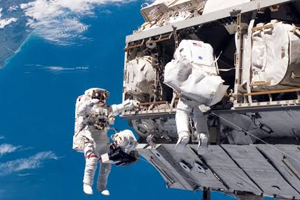
3rd annual NewSpace Africa Conference being held at Talatona Convention Centre in Luanda, Angola from April 2-5 with theme ‘The Role of Space in Closing Africa’s Poverty Gap’. The Nigeria-based event co-organizer, data analytics company Space in Africa, estimates that the space sector of the world’s 2nd largest and 2nd most populous continent will reach US$22.64B by 2026. Over the 4-day conference, 93 speakers will present on various topics relating to the space industry and its relation to economic health, including updates on African space agencies from Amin Mestar (Algerian Space Agency), Grace Mutavu (Rwanda Space Agency), Islam Abou El-Magd (National Authority for Remote Sensing and Space Sciences, Egypt) and Humbulani Mudau (South African National Space Agency). Major international space powers will also be represented, including the CNSA Deep Space Exploration Lab, whose Deputy Director Hu Zhaobin will deliver a keynote address; ESA Sustainable Initiatives Office, whose head Benjamin Koetz will speak on International Perspective on Space Development in Africa; NASA, whose Administrator Bill Nelson will speak on US-Africa Space Cooperation, Trade and Sustainability; and Roscosmos subsidiary Glavkosmos, whose Director Ilya Tarasenko is to present on Data, Earth Observation and Sustainable Development. 64 Africa-based and global commercial entities, 64 governmental organizations, 9 academic institutions, and 8 foundations are slated to participate in NewSpace Africa Conference 2024. (Image Credits: NewSpace Africa Conference, David Stanley / Wikipedia)
MONDAY
☆ Apr 1 — International Space Station,~415-km LEO: Expedition 70 planning to become Expedition 71 this week with departure of Soyuz MS-24 with Oleg Novitsky, Loral O’Hara, Marina Vasilevskaya; crew working with cargo Dragon CRS-30, Progress 86 and 87.
☆ Apr 1 — Tiangong Space Station, ~390-km LEO: Shenzhou 17 three-member crew preparing for arrival of next crew in two weeks, monitoring ~150 in-orbit science research and application projects.
Highlights…
o NewSpace: Exploration Labs of Long Beach CA working toward 2028 mission to deploy 3 cubesats in path of asteroid Apophis ahead of April 2029 close Earth approach; Astrolab to sell advertisements on Flex Moon Rover (launching NET 2026) marketed by Group of Humans agency.
☆ SolarSystem: 1:25,000 map of Rosalind Franklin rover landing region Oxia Planum created using ExoMars / Mars Reconnaissance orbiters to inform NET 2030 ESA mission; China 1,200-kg Queqiao-2 data relay in 200×100,000 km lunar orbit 3 science payloads ahead of Chang’E-6,7,8 surface missions; JAXA SLIM operates for 3rd lunar day of mission despite frigid nights and scorching days.
☆ Galaxy: Event Horizon Telescope polarized observation of Sagittarius A* reveals magnetic fields similar to those seen in M87*; 3D map Quaia shows location of 1.3B quasars cataloged using ESA Gaia space telescope data.
o Global: Ownership case over 14-kg meteorite which geologists located and transferred to Sweden museum may go to supreme court following ruling in favor of land owner; India reusable space plane Pushpak advancing toward orbital operation by end of decade following successful landing test by ISRO.
●USA: Space Development Agency seeking industry proposals to de-orbit defunct satellites in LEO as director urges increased proliferation; 18-member Texas Space Commission including representatives of SpaceX, Firefly, Intuitive Machines, CesiumAstro, Texas A&M, Rice University to promote industry with $350M public funding; Lunar Environment Monitoring Station, Lunar Effects on Agricultural Flora and Lunar Dielectric Analyzer are 1st instruments approved by NASA for Artemis 3 science.
● Hawai’i: IfA astronomer Shadia Habbal and ‘Solar Wind Sherpas’ cohort to utilize spectrometer mounted on kite with 4,000-m tether to observe emissions during April 8 solar eclipse; Pan-STARRS, MDM Observatory, XMM-Newton and Chandra data being used to trace supernova observed for 185-days in 1181 to circular nebula Pa 30; ‘Kaulana Mahina: Look Up, Look Down, Look All Around!’ Moon exhibit running at ‘Imiloa Astronomy Center until June 9.
● = Terrestrial and… o = International terrestrial events
☾ = Moon activity
★ = Space and… ☆ = International space / astro events in Hawaii Standard Time unless noted. Add 10 hours to obtain UT (‘Universal Time’).
Four Luna-firma Events Focus on Surface Science, Samples, Transportation, Payloads
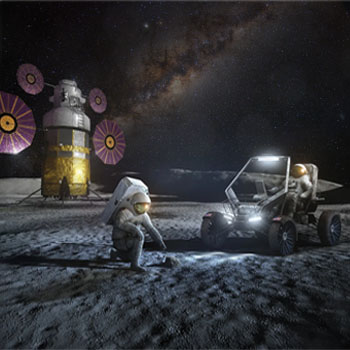
NASA will be announcing April 3 the companies selected to develop the Lunar Terrain Vehicle (LTV) for Artemis human Moon missions. The live broadcast event will take place at Johnson Space Center and feature Vanessa Wyche (JSC Director), Jacob Bleacher (Chief Exploration scientist), and Lara Kearney (Extravehicular Activity & Human Surface Mobility Program Manager). The unpressurized LTV is expected to be completed in time for Artemis 5 in 2029. There were 5 proposals that were made public which included teams of 1) Lockheed Martin, General Motors, MDA and Goodyear; 2) Northrop Grumman, AVL, Intuitive Machines, Lunar Outpost and Michelin; 3) Teledyne Brown Engineering, Sierra Space and Bridgestone; 4) Astrolab; 5) Leidos and NASCAR. Also on April 3 is the 22nd Online Lunar Surface Science Workshop themed Science Enabled by the Artemis Base Camp. Sarah Noble will open the meeting which will have Plenary Perspectives, 30 minutes of Lightning Talks, Breakout Sessions and Summaries. The CASA Moon webinar series continues this week with Alexander Nemchin of Curtin University discussing lunar glass and impact ages in “U-Pb systematics of lunar samples” talk on April 4. Expected to wrap up this month is the selection of international payloads (totaling 200 kg) to be included on Chang’E-8. CNSA will be launching the mission to the Moon South Pole region to test in-situ resource utilization in development of International Lunar Research Station NET 2028. (Image Credits: NASA, ESO)
★ Apr 1 — Deep Space, Interstellar Space: Engineers continue to make progress with Voyager 1 communication issues, hoping its steady radio signal will begin to also transmit accurate data again.
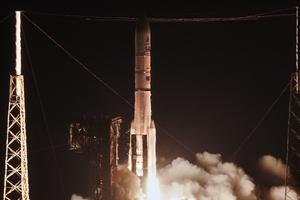
★ Apr 1 — United Launch Alliance, Launch Delta IV Heavy / NROL-70, LC37B, Cape Canaveral SFS FL: Last flight of Delta IV heavy rocket carrying mission for the National Reconnaissance Office.
☆ Apr 2 — International Space Station, Soyuz MS-24 Return to Earth,~415-km LEO: Expedition 70 members Oleg Kononenko, Nikolai Chub and Loral O’Hara set to return to Earth; live coverage of undocking available.
● Apr 3-5 — Massachusetts Institute of Technology, Cambridge MA: MIT Space Week 2024; including SpaceTech Conference, Beyond the Cradle event, and New Space Age Conference.
● Apr 3-6 — American Physical Society, Hybrid / Sacramento CA and Online: APS April Meeting 2024.
☆ Apr 3 — Venus: 0.26° SE of Neptune, 04:00.
☆ Apr 3 — Apollo Asteroid 2018 CC14: Near-Earth Flyby (0.050 AU)
At the Spokane Convention Center. The meeting will have a broad scope, with a wide-ranging program of science and workforce topics, and celebrating planetary...
Convene, connect, and collaborate at the 19th annual von Braun Space Exploration Symposium! This year’s event will spotlight how bold ideas, emerging technologies, and...
Themes include: Space & the Arctic; Space & AI; Space & International Collaboration. There is a Student Session, a Technical Session, a Frontier Session,...
Oslo Spaceport Norway offers monthly a knowledgeable speaker and opportunity for networking, 17:00-20:00 local time; free entry but registration required. Ground Control is for...
45 satellites to launch for Amazon Leo, formerly named Project Kuiper. This LEO mega constellation will offer broadband internet access with 3,276 satellites.
Occurring 31 October from 09:00-11:00 local time (16:00-18:00 HST, 19:00-21:00 PDT, 22:00-24:00 EDT on 30 October), this Galaxy Forum will be in hybrid format...
Originally planned around this date for Wenchang, China -- TBC (to be confirmed); As the only professional association for astronauts, ASE supports the advancement of...
Coordinating Division Division C Education, Outreach and Heritage The IAU Symposium on Innovative Research and Techniques in Astronomy Communication will take place from November...
Change clocks back 1 hour from Daylight Saving to Standard Time; does not include Hawai’i, Arizona (except the Navajo Nation), American Samoa, Guam, Northern...
ESWW is the main annual event in the European Space Weather and Space Climate calendar. It is an international meeting organised annually within the...
IAU Symposium: IAUS409 - A Journey Towards Effective Astronomy Communication; online and at National Astronomical Observatory of Japan, 2-21-2 Osawa Mitaka, Tokyo. Topics include:...
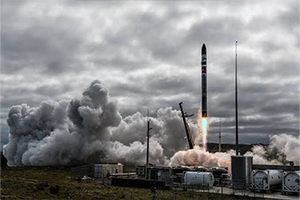
Launch Complex 1, ~39°S, Mahia Peninsula, New Zealand
iQPS Launch 9, an Earth observation satellite with Synthetic aperture radar for Japan-based imaging company iQPS, to launch on "The Sea God Surveys" mission...
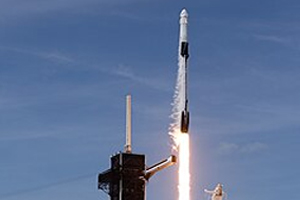
Launch window 10:34am - 2:34pm local time for the 15th batch of classified satellites for a reconnaissance constellation built by SpaceX and Northrop Grumman...
Expecting senior government and executives from NASA, Firefly, Blue Origin to discuss innovation, competitive advantages and a "space industrial revolution in LEO". Capped at...
Launch Complex 1, ~39°S, Mahia Peninsula, New Zealand
iQPS Launch 10, an Earth observation satellite with Synthetic aperture radar for Japan-based imaging company iQPS, to launch on “The Mountain God Rises” mission...
Promoting the New Space Economy: The first major national meeting of the space, technology and scientific industries. Three days to connect science, industry and...