Boeing Starliner CST-100 Inaugural Crewed Flight to ISS Set for May 6
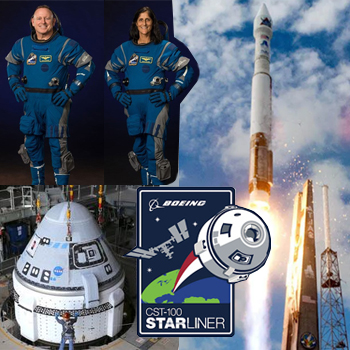
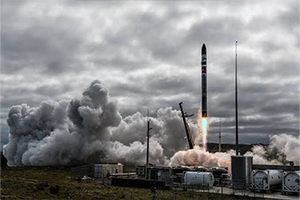
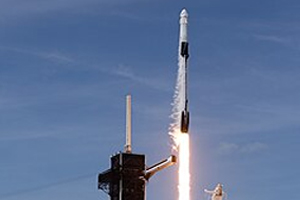
United Launch Alliance is set to launch its Atlas V rocket NET May 6 from SLC-41, Cape Canaveral SFS, Florida for the long-awaited Boeing CST-100 Starliner Crew Flight Test with a launch mass of 13,000 kg carrying Astronauts Sunita Williams and Butch Wilmore. This launch comes after the Starliner first test flight in 2019 which did not make it to the ISS, the successful second uncrewed flight in 2022, and final safety improvements to the parachutes and wiring harnesses in 2023. Before docking to ISS, the crew will perform operational testing of manual flying, communication procedures and emergency power systems. The craft is planned to stay docked for ~8 days while the ISS Expedition 71 crew helps to transfer cargo from Starliner, and Williams, Wilmore and ground teams work to assess data from the flight. The crew and craft will return to Earth utilizing parachutes for a ground-landing at White Sands, New Mexico, approaching at ~6.5 kph and landing on 6 inflatable air bags. The capsule should be able to be reused up to 10 missions. Starliner is part of the NASA Commercial Crew Program—the original contract won by Boeing was US$4.82B. Assuming things go nominally for this crewed test flight, the Starliner-1 operational mission in 2025 will carry Michael Fincke and Scott Tingle of NASA, Joshua Kutryk of Canadian Space Agency, and Kimiya Yui of JAXA to ISS for a 6-month stay. (Image Credits: Boeing, ULA / Pat Corkery)
MONDAY
☆ May 6 — International Space Station,~415-km LEO: Expedition 71 seven-member crew ready for arrival for two crew of Starliner, working with SpaceX Dragon-30 cargo, cardio monitors and pharmaceutical experiments.
☆ May 6 — Tiangong Space Station, ~390-km LEO: Shenzhou 18 three-member crew Ye Guangfu, Li Cong and Li Guangsu begin first week of work and life in orbit, estimated to oversee 90 payloads during 6-month mission.
Highlights…
o NewSpace: Exploration Labs and Blue Origin among companies proposing to launch missions to study Apophis prior to 2029 close Earth approach (0.00025 AU); China Newspace companies LandSpace and Space Pioneer detail launch plans for ZQ-3 and TL-3; LEROS 4-ET engine set to power Firefly Blue Ghost to Moon NET Q4 being readied for shipping by Nammo UK.
☆ SolarSystem: Los Alamos National Laboratory study of Mars Curiosity ChemCam data shows manganese oxide levels suggestive of past life-bearing conditions; University of Milan study indicates lunar residents may maintain muscle and bone density by running within 4.7m diameter cylinder, mimicking Earth gravity.
☆ Galaxy: 6M galaxy map generated by Dark Energy Spectroscopic Instrument on Kitt Peak compared to 3 supernova catalogues shows ‘hint’ of dark energy dissipation; TOI 4633 c / Percival in binary star system 310-ly distant, identified by TESS Citizen Science program, may hold liquid water.
o Global: SES to acquire Intelsat under $3.1B deal pending regulatory approval in 2025, creating combined 100 GEO / 26 MEO satellite fleet; CSA-ASC gauging commercial interest in leasing David Florida Laboratory for space hardware testing; Indian Space Situational Assessment Report finds increasing need for collision avoidance maneuvers, recommends standardized traffic management.
●USA: SpaceX to demonstrate in-space cryogenic propellant transfer between Starships dubbed ‘target’ and ‘chaser’ during NET 2025 test; NASA-H71M Hall-effect thruster developed at GSFC to power spacecraft transfers between LEO and Moon / Mars trajectories requiring up to 8 km/s of delta-v.
● Hawai’i: Amid “rising threats”, USAF begins required environmental review process for construction of 6-telescope AMOS Small Telescope Advanced Research Facility on Haleakalā; NEO 2016 HO3 / Kamo’oalewa may originate from >1 km impactor which created Giordano Bruno crater on Moon far side per University of Arizona LPL study; Lithium-rich variable star V470 Cas characterized by UH-led team using CFHT suggests gap in understanding of Cepheid formation.
● = Terrestrial and… o = International terrestrial events
☾ = Moon activity
★ = Space and… ☆ = International space / astro events in Hawaii Standard Time unless noted. Add 10 hours to obtain UT (‘Universal Time’).
2024 Humans to Mars Summit Advances Sustainable, Permanent Human Presence NLT 2030s
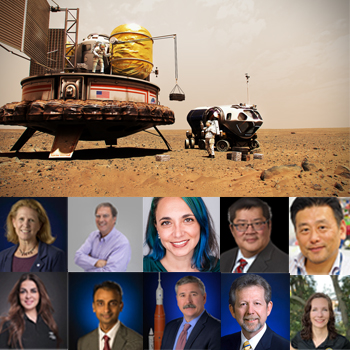
Mars mission architecture, technology requirements, human resources, government-industry collaboration, and 2033 Mars human landing feasibility are overarching topics of the 2024 Humans to Mars Summit, organized by Explore Mars and set for May 7-8 at George Washington University in Washington DC. An additional day of networking at Elliott School of International Affairs and Capitol Hill advocacy on May 9 expands this year’s event to ‘Humans to Mars Week’. 58 speakers including (L-R) Lori Glaze (NASA PSD), Grant Anderson (Paragon Space), Tiffany Vora (Singularity University), Dean Cheng (United States Institute of Peace), Masaki Fujimoto (ISAS/JAXA), Virgin Galactic spaceflight participant Namira Salim, and a TBA congressional guest will give talks, engage in panel discussions, and mingle with attendees. Day 1 ‘Progress Toward Mars’ agenda shows strong lunar focus with Prasun Desai (NASA STMD) giving plenary Innovating Our Way to the Moon and Mars immediately following opening remarks, followed by an update on Artemis Moon missions 1-5 from Artemis Mission Manager Mike Sarafin. On Day 2 ‘Opportunities and Challenges’ retired NASA scientist James Green will present A Single Launch Mars Sample Return Mission to Reduce Complexity, Adele Luta (Explore Titan) will give talk Our Journey to the Stars is through Titan and panel discussion When Will China Send Humans to the Moon and Mars? will be moderated by Kara Cunzeman (Aerospace Corporation). Sponsors include Aerojet Rocketdyne, Draper, and National Institute of Aerospace. (Image Credits: NASA, Explore Mars)
★ May 6 — United Launch Alliance, Boeing, Launch Atlas V / CST-100 Starliner Crew Flight Test, SLC-41, Cape Canaveral SFS FL: Boeing to launch Astronauts Sunita Williams and Butch Wilmore to ISS on first crewed flight of Starliner.
★ May 7 — SpaceX, Launch Falcon 9 / Starlink 6-57, SLC-39A, Kennedy Space Center FL: Falcon 9 to launch next batch of Starlink satellites.
● May 7 — Consultative Committee for Space Data Systems, Interagency Operations Group, Washington DC: Lunar Interoperability Forum.
● May 7-8 — Explore Mars Inc., Washington DC: 2024 Humans to Mars Summit; featuring Mars Day on the Hill, networking receptions, tours, collaborative initiatives, expert-led workshops.
☾ May 7 — Moon: 3.2° NNW of Venus, 04:00; New Moon, 17:23.
☾ May 8 — Moon: 3.4° NNW of Uranus, 02:00; with Jupiter and Uranus within circle of diameter 4.46°, 04:00; 4.1° NNW of Jupiter, 07:00; 0.49° ESE of Pleiades, 15:00.
☆ May 8 — Mars: At perihelion, 1.3815 AU from the Sun, 01:00.
☆ May 8 — Apollo Asteroid 2020 HJ6: Near-Earth Flyby (0.083 AU)
● May 9 — Astronaut Scholarship Foundation, Online: Space Explorers Club 2024-2025 Season Kick Off; Astronaut Scott Parazynski to talk about space endeavors and the future of commercial space.
☆ May 9 — Mercury: At westernmost elongation, 26.4° from Sun in morning sky, magnitude 0.5, 11:00.
☆ May 9 — Amor Asteroid 2024 GN5: Near-Earth Flyby (0.070 AU)
☆ May 10 — Apollo Asteroid 2021 JG9: Near-Earth Flyby (0.043 AU)
SATURDAY
☆ May 11 — Aten Asteroid 2021 JX3: Near-Earth Flyby (0.068 AU)
SUNDAY
★ May 12 — Juno, Perijove 61 / 60th Science Flyby,Jupiter Orbit: NASA craft to perform Jupiter flyby during Perijove 61, its 61th close flyby of Jupiter and 60th science flyby with instruments turned on.
☾ May 12 — Moon: 4.9° S of Castor, 07:00; 1.60° S of Pollux, 13:00.
☆ May 12 — Uranus: At conjunction with Sun, 20.602 AU from Earth, 23:00.
At the Spokane Convention Center. The meeting will have a broad scope, with a wide-ranging program of science and workforce topics, and celebrating planetary...
Convene, connect, and collaborate at the 19th annual von Braun Space Exploration Symposium! This year’s event will spotlight how bold ideas, emerging technologies, and...
Themes include: Space & the Arctic; Space & AI; Space & International Collaboration. There is a Student Session, a Technical Session, a Frontier Session,...
Oslo Spaceport Norway offers monthly a knowledgeable speaker and opportunity for networking, 17:00-20:00 local time; free entry but registration required. Ground Control is for...
45 satellites to launch for Amazon Leo, formerly named Project Kuiper. This LEO mega constellation will offer broadband internet access with 3,276 satellites.
Occurring 31 October from 09:00-11:00 local time (16:00-18:00 HST, 19:00-21:00 PDT, 22:00-24:00 EDT on 30 October), this Galaxy Forum will be in hybrid format...
Originally planned around this date for Wenchang, China -- TBC (to be confirmed); As the only professional association for astronauts, ASE supports the advancement of...
Coordinating Division Division C Education, Outreach and Heritage The IAU Symposium on Innovative Research and Techniques in Astronomy Communication will take place from November...
Change clocks back 1 hour from Daylight Saving to Standard Time; does not include Hawai’i, Arizona (except the Navajo Nation), American Samoa, Guam, Northern...
ESWW is the main annual event in the European Space Weather and Space Climate calendar. It is an international meeting organised annually within the...
IAU Symposium: IAUS409 - A Journey Towards Effective Astronomy Communication; online and at National Astronomical Observatory of Japan, 2-21-2 Osawa Mitaka, Tokyo. Topics include:...
Launch Complex 1, ~39°S, Mahia Peninsula, New Zealand
iQPS Launch 9, an Earth observation satellite with Synthetic aperture radar for Japan-based imaging company iQPS, to launch on "The Sea God Surveys" mission...
Launch window 10:34am - 2:34pm local time for the 15th batch of classified satellites for a reconnaissance constellation built by SpaceX and Northrop Grumman...
Expecting senior government and executives from NASA, Firefly, Blue Origin to discuss innovation, competitive advantages and a "space industrial revolution in LEO". Capped at...
Launch Complex 1, ~39°S, Mahia Peninsula, New Zealand
iQPS Launch 10, an Earth observation satellite with Synthetic aperture radar for Japan-based imaging company iQPS, to launch on “The Mountain God Rises” mission...