CAPS and AbSciCon24 Astrobiology Meetings Share Progress, Plans for Next-Gen Exploration Missions
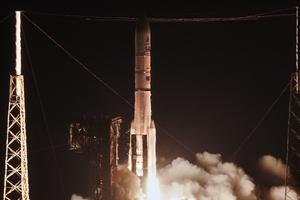
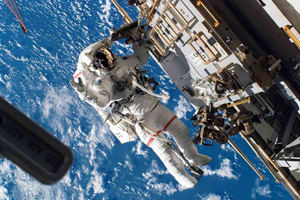
The 3rd open session of the National Academies of Sciences Committee on Astrobiology and Planetary Sciences (CAPS) will be held May 20 in Washington DC. CAPS connects the research community, federal government and public, and gathers information on the growth in the astrobiology and planetary science fields to provide reviews on the implementation of decadal surveys including its current project Proposed Science Themes for NASA’s 5th New Frontiers Mission. Some advancements include instrumentation developments for microbe detection, application of artificial intelligence, machine learning, and next-gen computing. The CAPS recommendations will influence the next New Frontiers Announcement of Opportunity for Solar System exploration missions which will be released NET 2026. Ongoing New Frontiers missions are New Horizons in the Kuiper Belt, Juno at Jupiter and OSIRIS-REx heading toward Apophis in the Main Asteroid Belt. The next mission is Dragonfly launching July 2028 to study the prebiotic chemistry and extraterrestrial habitability of Saturn moon Titan. The Astrobiology Science Conference (AbSciCon24) on May 5-10 in Providence RI, supported by American Geophysical Union, NASA, SETI, Univ of Rhode Island, KBR and Blue Marble Space, brings together ~1,000 participants for 6 days of plenaries, oral presentations, eLightning sessions, posters, online discussion sessions, town halls, meeting mentor program, special events and an exhibition. There are 7 Keynotes and Plenaries including Tim Lyons on ‘Earth’s Complicated Relationship with Oxygen and How It May Help Us Find Life Elsewhere’ convened by Dawn Cardace. (Image Credits: ESA, Johns Hopkins APL)
MONDAY
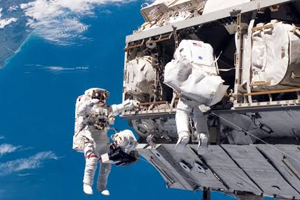
☆ May 13 — International Space Station,~415-km LEO: Expedition 71 seven-member crew expecting arrival of Starliner CST-100 this weekend, working with pharmaceutical, antimicrobial & fuel combustion experiments, participating in in-flight events with KMGH-TV Denver, Pima Community College Arizona, New York Hall of Science.
☆ May 13 — Tiangong Space Station, ~390-km LEO: Shenzhou 18 three-member crew continue working with cargo / experiments, are planned to perform 2-3 extravehicular activities during 6-month mission; over 400 material samples exposed to space brought back to Earth by Shenzhou 17.
Highlights…
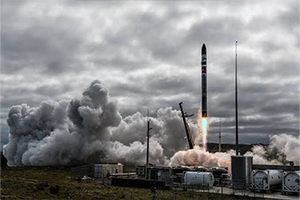
o NewSpace:Portal Space Systems of Seattle promises 50x increase in satellite maneuverability between LEO and cislunar space with solar-thermal propulsion Supernova satellite bus; Rocket Lab preparing for static-fire of Archimedes methalox engine at Stennis Space Center ahead of NET 2025 Neutron launch; Starfish Space to further develop in-space docking technology with US$37.5M USSF contract following successful rendezvous with D-Orbit ION SCV006 satellite.
☆ SolarSystem: Several X-class flares evidence of space weather increasing intensity ahead of NLT 2026 11-year solar cycle maximum; CNSA operators at Beijing Aerospace Flight Control Center working to determine optimal time for Chang’E-6 lander / ascender separation in lunar orbit; UC-Boulder study posits formyl cation (HCO+) in Venus atmosphere causes hydrogen in water to escape into space.
☆ Galaxy: Thermal emissions measured with JWST NIRCam and MIRI suggest rocky exoplanet 55 Cancri e (41 ly distant) may hold an atmosphere; NASA / JAXA XRISM observing SMBH at center of galaxy NGC 4151 reveals iron emissions lines at ~ 6.5 keV.
o Global: National Space Council of Canada to be co-chaired by Canadian Space Agency and Department of National Defence; ISRO of India working to ensure its missions do not leave debris in space by end of decade; ispace (Japan) to carry 275 languages to Moon for UNESCO on Resilience lander NET winter 2024.
●USA: Astronaut / former JSC director Ellen Ochoa and JWST astrophysicist Jane Rigby among latest recipients of Presidential Medal of Freedom; Virgin Galactic building Delta-class fleet of horizontal-launch spacecraft in new Orange County facility ahead of NET 2026 inaugural launch; 4 teams selected to conduct 1-year, $5M concept studies under NASA Earth System Explorers Program, 2 will be developed into space missions ready for launch NET 2030/2.
● Hawai’i: Magnetic field detection instrument at CFHT receives name Wenaokeao (‘earliest glow of light’ in ʻŌlelo Hawaiʻi) via A Hua He Inoa program at ʻImiloa Astronomy Center; Privateer of Maui acquires Orbital Insight, raises $56.5M in funding round led by Aero X Ventures, and plans launch of SSA platform in ~6 months.
● = Terrestrial and… o = International terrestrial events
☾ = Moon activity
★ = Space and… ☆ = International space / astro events in Hawaii Standard Time unless noted. Add 10 hours to obtain UT (‘Universal Time’).
India Issues Guidance on Space Policy, Streamlining Commercial Space Regulation
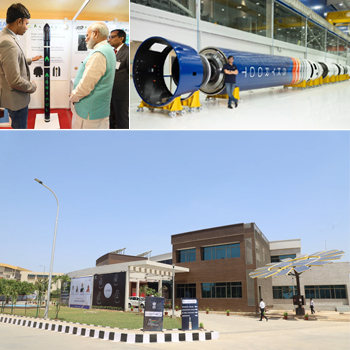
180+ space companies in India, defined as Non-Government Entities, to conduct space activities under authorization defined by Norms, Guidelines and Procedures for Implementation of Indian Space Policy 2023, issued May 2024 by Indian National Space Promotion and Authorization Center (IN-SPACe) located in Ahmedabad. Formal application process will collect information including launch details, orbital position, payloads, propulsion systems, expected in-orbit lifetime, and space debris mitigation measures from prospective space operators. Approvals anticipated to be issued within 75–120-day timeframe, with all applicants required to be either India entities or subsidiaries of India entities – however, a constellation exclusion is provided for IN-SPACe authorization of foreign operators. Also, domestic companies will be allowed to utilize international satellite data for the first time under new framework. This latest private space guidance comes following the announcement of US$1.6B Department of Space budget for 2024 and the opening of the India space sector to foreign investment. The race to provide commercial space services in India is led by Skyroot Aerospace of Hyderabad, which aims to become the first non-governmental orbital launch provider with Vikram I set to fly NET Q2 2024 from Satish Dhawan Space Centre. AgniKul Cosmos of Chennai is also slated to launch suborbital Agnibaan rocket NET Q3 2024. ISRO continues work towards human spaceflight (Gaganyaan NET 2026), Bharatiya Antariksha space station (first module launching NET 2028) and India Vyomanaut Moon landing (NET 2040). (Image Credits: Skyroot Aerospace, Agnikul Cosmos, IN-SPACe)
☾ May 13 — Moon: 3.5° NNE of Beehive Cluster, 16:00.
☆ May 13 — Apollo Asteroid 2024 JB2: Near-Earth Flyby (0.029 AU)
TUESDAY
☆ May 14 — Tianwen-1 Lander,Utopia Planitia, Mars Surface: China Tianwen-1 Lander reaches 3 full years / enters 4th year of Mars surface operations at / near 25.1°N, 109.9°E; landed 2021 with Zhurong Rover.
★ May 14 — SpaceX, Launch Falcon 9 / Starlink 8-7, SSLC-4E, Vandenberg SFB CA: Next batch of Starlink satellites to launch for SpaceX constellation.
☆ May 14 — Apollo Asteroid 2014 WF6: Near-Earth Flyby (0.018 AU)
WEDNESDAY
● May 15 — American Institute of Aeronautics and Astronautics (AIAA), Washington DC: 2024 AIAA Awards Gala.
● May 15-16 — Consortium for Space Mobility and ISAM Capabilities (COSMIC), Logan UT: COSMIC Convergence; workshop on In-Space Servicing, Assembly, and Manufacturing.
☾ May 15 — Moon: At first quarter, 01:48; 3.2° NNE of Regulus, 13:00.
☆ May 16 — Apollo Asteroid 2017 HP3: Near-Earth Flyby (0.059 AU)
FRIDAY
★ May 17 — United Launch Alliance, Boeing, Launch Atlas V / CST-100 Starliner Crew Flight Test, SLC-41, Cape Canaveral SFS FL: Boeing to launch Astronauts Sunita Williams and Butch Wilmore to ISS on first crewed flight of Starliner.
☾ May 17 — Moon: At apogee, distance 404,630 km, 09:00.
☆ May 17 — Mars and Saturn: At heliocentric conjunction, 05:00.
☆ May 17 — Apollo Asteroid 2022 WN2: Near-Earth Flyby (0.035 AU)
SATURDAY
☆ May 18 — Venus: With Jupiter and Uranus within circle of diameter 4.86°, 02:00; 0.45° SE of Uranus, 03:00.
☆ May 18 — Jupiter: At conjunction with Sun, 6.027 AU from Earth, 09:00.
☆ May 18 — Asteroid 2 Pallas: At opposition in longitude, magnitude 8.9, 13:00.
☆ May 18 — Aten Asteroid 2024 GQ7: Near-Earth Flyby (0.014 AU)
SUNDAY
★ May 19 — SpaceX, Launch Falcon 9 / NROL-146, SLC-4E, Vandenberg SFB CA: Falcon 9 to launch the first (of up to 6) launches of SpaceX-Northrop built satellites for National Reconnaissance Office.
☆ May 19 — Amor Asteroid 2024 GQ7: Near-Earth Flyby (0.057 AU)
At the Spokane Convention Center. The meeting will have a broad scope, with a wide-ranging program of science and workforce topics, and celebrating planetary...
Convene, connect, and collaborate at the 19th annual von Braun Space Exploration Symposium! This year’s event will spotlight how bold ideas, emerging technologies, and...
Themes include: Space & the Arctic; Space & AI; Space & International Collaboration. There is a Student Session, a Technical Session, a Frontier Session,...
Oslo Spaceport Norway offers monthly a knowledgeable speaker and opportunity for networking, 17:00-20:00 local time; free entry but registration required. Ground Control is for...
45 satellites to launch for Amazon Leo, formerly named Project Kuiper. This LEO mega constellation will offer broadband internet access with 3,276 satellites.
Occurring 31 October from 09:00-11:00 local time (16:00-18:00 HST, 19:00-21:00 PDT, 22:00-24:00 EDT on 30 October), this Galaxy Forum will be in hybrid format...
Originally planned around this date for Wenchang, China -- TBC (to be confirmed); As the only professional association for astronauts, ASE supports the advancement of...
Coordinating Division Division C Education, Outreach and Heritage The IAU Symposium on Innovative Research and Techniques in Astronomy Communication will take place from November...
Change clocks back 1 hour from Daylight Saving to Standard Time; does not include Hawai’i, Arizona (except the Navajo Nation), American Samoa, Guam, Northern...
ESWW is the main annual event in the European Space Weather and Space Climate calendar. It is an international meeting organised annually within the...
IAU Symposium: IAUS409 - A Journey Towards Effective Astronomy Communication; online and at National Astronomical Observatory of Japan, 2-21-2 Osawa Mitaka, Tokyo. Topics include:...
Launch Complex 1, ~39°S, Mahia Peninsula, New Zealand
iQPS Launch 9, an Earth observation satellite with Synthetic aperture radar for Japan-based imaging company iQPS, to launch on "The Sea God Surveys" mission...
Launch window 10:34am - 2:34pm local time for the 15th batch of classified satellites for a reconnaissance constellation built by SpaceX and Northrop Grumman...
Expecting senior government and executives from NASA, Firefly, Blue Origin to discuss innovation, competitive advantages and a "space industrial revolution in LEO". Capped at...
Launch Complex 1, ~39°S, Mahia Peninsula, New Zealand
iQPS Launch 10, an Earth observation satellite with Synthetic aperture radar for Japan-based imaging company iQPS, to launch on “The Mountain God Rises” mission...