China NewSpace Launch Providers’ Success May Bolster Further Commercial Aerospace / Lunar Developments
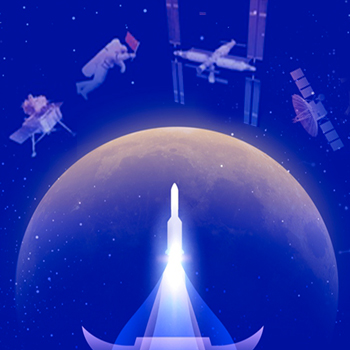
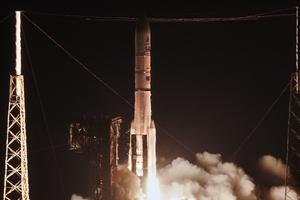
Expected mid-August is the launch of China Rocket Co. Jielong-3 (Smart Dragon-3) which has had 3 successful launches from East and South China Sea ocean platforms. i-Space (aka Interstellar Glory) has 3 successes and 4 failures of Hyperbola rocket from Jiuquan – next attempt in 2025. OrienSpace is planning Yinli-1 (Gravity-1) next flight in September; inaugural launch was from a Yellow Sea platform. Landspace is working toward a June 2025 launch of Zhuque-3 from Jiuquan. The company had 2 failures, followed by 2 successes. Galactic Energy has 13 successes and 1 failure with Ceres-1 from Jiuquan and from a converted ocean barge. Its next launch may be NET August with mission “How Far I’ll Go” from the Yellow Sea. Space Pioneer Tianlong-3 (Heavenly Dragon 3) hopes to launch from Wenchang commercial LC-2 pad this year. CAS Space Kinetica-1 rocket managed 3 launches from Jiuquan, while Deep Blue Aerospace is planning its first Nebula-1 launch in 2024 from Wenchang. Other companies are OneSpace, LinkSpace and ExPace. As commercial launch providers’ prosperity grows, future sectors in China are likely to contribute to lunar, LEO and deep space – the CMSEO 2023 solicitation for a lunar rover took proposals from universities, automotive enterprises and scientific research institutions; CMSA requested low-cost commercial cargo spacecraft ideas in 2021; and Origin Space, established in 2019, is the first commercial space mining company in China. (Image credits: CNSA)
MONDAY
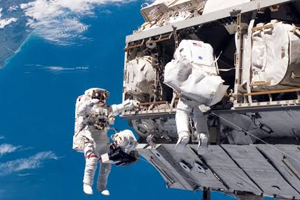
☆Jul 29 — International Space Station,~415-km LEO: Two members of Boeing CST-100 Starliner coming up on 2 full months in space, working with Expedition 71 seven-member crew on thunderstorm studies, NanoRacks airlock payload installations, monitoring blood pressure and body fluid changes, inspecting and cleaning station modules.
☆Jul 29 — Tiangong Space Station, ~390-km LEO: Shenzhou 18 three-member crew undergoing emergency preparedness drills for station debris strike / decompression events; debris hit station earlier this year resulting in partial power loss – EVAs performed to fix external damage and install debris protection equipment.
Highlights…
o NewSpace: Blue Origin selects crew for New Shepard 26th mission date TBA, New Glenn heavy-lift rocket to debut possibly in September; SpaceX is moving its headquarters from Hawthorne CA to Starbase, Texas; Axiom Space partners with UK Space Agency and Astronaut Tim Peake to send all-British crew to ISS — AX-4 mission in Oct will carry Peggy Whitson and Astronauts from India, Poland, Hungary.
☆ Solar System: As Chang’E-6 lunar far side samples are being prepared for analyses, researchers in China reveal discovery of unidentified mineral ‘ULM-1’ with 41% water mass in Chang’E-5 near side regolith; scientists suggest Mercury may have a layer of diamond under its surface up to 16 km thick; Japan Akatsuki team continue efforts to communicate with the 14-year old Venus spacecraft after unexpected degradation of precision of attitude control.
American Astronautical Society and AIAA Advance Living and Working in Space
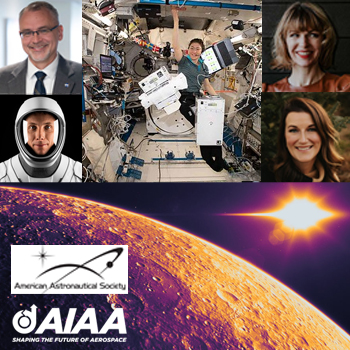
The ISSRDC is hosted by AAS, NASA and the ISS National Laboratory Center for the Advancement of Science in Space. Pre-conference July 29 and main conference July 30 – August 1 seek to foster knowledge of how to employ the International Space Station (ISS) for answering R&D questions. Keynote speakers are from NASA: Jim Free / Astronaut Warren Hoburg / Kate Darling, and White House representative Jinni Meehan. Research on essential science and space manufacturing are two possible uses of the ISS microgravity environment and harsh location. Events include networking, 15-minute “Lightning Talks,” and payload operations game show. AAS was founded in 1954 by 37 people wanting to promote space flight and now has 1,500+ members. ASCEND (Accelerating Space Commerce, Exploration and New Discovery) is “the only community on the planet focused on building humanity’s off-world future — faster“. Key space topics at the July 30 – August 1 ASCEND event are: expanding the economy, infrastructure for living and working, security, interacting with society / education / workforce, sustainability and traffic management. Over 1,200 in-person and 500 virtual registrants are expected. Host American Institute of Aeronautics and Astronautics, founded 1963, now ~35,000 members from ~80 countries, convenes yearly forums such as ASCEND, publishes aerospace books / journals and keeps an industry archive dating to the early 1900s. Its mission is “to advance the state of aerospace science, engineering, technology, operations and policy to benefit global society”. University-student memberships are US$30 annually. (Image credits: AAS, AIAA)
o Jul 1 – Aug 30 — Academia Sinica Institute of Astronomy and Astrophysics, Taipei, Taiwan: 2024 Summer Student Program; students conduct original research under supervision of professional astronomers.
TUESDAY
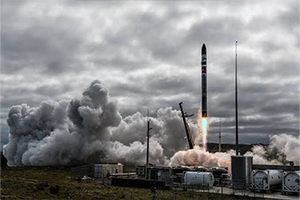
☆ Jul 30 — Rocket Lab, Launch Electron / StriX 5, Mahia Peninsula, New Zealand: Launch of mission dubbed “Owl for One, One for Owl” of synthetic aperture radar satellites for Japan Earth imaging company Synspective.
★ Jul 30 — ULA, Launch Atlas 5 / USSF-51, SLC 41, Cape Canaveral SFS FL: Atlas 5 to launch classified payload for USA Space Force.
●Jul 30 – Aug 1 — American Institute of Aeronautics and Astronautics,Las Vegas NV:2024 ASCEND Conference.
☆ Jul 30 — Southern Delta-Aquarids Meteor Shower Peak: Shower mostly visible in Southern Hemisphere, meteors appear to radiate from Aquarius constellation; may produce up to 25 meteors per hour with speed of ~41 km/sec; 14:00.
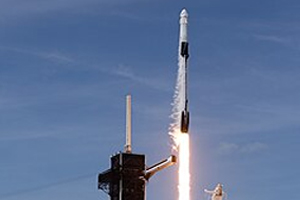
★ NET Jul 31 — SpaceX, Launch Falcon 9 / Polaris Dawn Crew Dragon, LC-39A, Kennedy Space Center FL: Jared Isaacman, Scott Poteet, Sarah Gillis and Anna Menon to reach apogee of 1,400 km, perform first commercial EVA, and test spacecraft-to-spacecraft communications with Starlink on 5-day mission.
☆ Aug 1 — Deep Space, Kuiper Belt: New Horizons, now 58.3 AU from Earth, is expected to have operational mission support until it escapes the Kuiper Belt between 2028-2029; should reach interstellar space in 2040s.
● Aug 1 — NASA, Online / Washington DC:NASA seeking input / interest from national industry and international partners on disassembly and reuse of Volatiles Investigating Polar Exploration Rover (VIPER) after cancelling project.
FRIDAY
☾ Aug 2 — Moon: 5.1° S of Castor, 08:00; 1.81° S of Pollux, 14:00.
☆ Aug 2 — Amor Asteroid 2024 NS1: Near-Earth Flyby (0.013 AU)
SATURDAY
★ Aug 3 — SpaceX, Launch Falcon 9 / Cygnus CRS-2 (NG-21), SLC 40, Cape Canaveral SFS FL: Launch of Orbital ATK uncrewed cargo spacecraft Cygnus to ISS under NASA Commercial Resupply Services program.
● Aug 3 — NASA@MyLibrary, Maunakea Observatories, et al, Kamuela HI: AstroBash; at Thelma Parker Memorial Library, 10:00.
☾ Aug 3 — Moon: 3.1° NNE of Beehive Cluster, 17:00.
SUNDAY
☾ Aug 4 — Korean Pathfinder Lunar Orbiter ‘Danuri’, Moon Orbit: KARI first lunar spacecraft Danuri reaches 2nd full year / enters 3rd year in space since launching on this day in 2022, reached Moon orbit Dec 16.
☾ Aug 4 — Moon: New Moon, 01:13.
☆ Aug 4 — Mars: 4.9° N of Aldebaran, 04:00.
☆ Aug 4 — Venus: 1.02° NNE of Regulus, 20:00.
☆ Aug 4 — Aten Asteroid 2020 MP2: Near-Earth Flyby (0.093 AU)
At the Spokane Convention Center. The meeting will have a broad scope, with a wide-ranging program of science and workforce topics, and celebrating planetary...
Convene, connect, and collaborate at the 19th annual von Braun Space Exploration Symposium! This year’s event will spotlight how bold ideas, emerging technologies, and...
Themes include: Space & the Arctic; Space & AI; Space & International Collaboration. There is a Student Session, a Technical Session, a Frontier Session,...
Oslo Spaceport Norway offers monthly a knowledgeable speaker and opportunity for networking, 17:00-20:00 local time; free entry but registration required. Ground Control is for...
45 satellites to launch for Amazon Leo, formerly named Project Kuiper. This LEO mega constellation will offer broadband internet access with 3,276 satellites.
Occurring 31 October from 09:00-11:00 local time (16:00-18:00 HST, 19:00-21:00 PDT, 22:00-24:00 EDT on 30 October), this Galaxy Forum will be in hybrid format...
Originally planned around this date for Wenchang, China -- TBC (to be confirmed); As the only professional association for astronauts, ASE supports the advancement of...
Coordinating Division Division C Education, Outreach and Heritage The IAU Symposium on Innovative Research and Techniques in Astronomy Communication will take place from November...
Change clocks back 1 hour from Daylight Saving to Standard Time; does not include Hawai’i, Arizona (except the Navajo Nation), American Samoa, Guam, Northern...
ESWW is the main annual event in the European Space Weather and Space Climate calendar. It is an international meeting organised annually within the...
IAU Symposium: IAUS409 - A Journey Towards Effective Astronomy Communication; online and at National Astronomical Observatory of Japan, 2-21-2 Osawa Mitaka, Tokyo. Topics include:...
Launch Complex 1, ~39°S, Mahia Peninsula, New Zealand
iQPS Launch 9, an Earth observation satellite with Synthetic aperture radar for Japan-based imaging company iQPS, to launch on "The Sea God Surveys" mission...
Launch window 10:34am - 2:34pm local time for the 15th batch of classified satellites for a reconnaissance constellation built by SpaceX and Northrop Grumman...
Expecting senior government and executives from NASA, Firefly, Blue Origin to discuss innovation, competitive advantages and a "space industrial revolution in LEO". Capped at...
Launch Complex 1, ~39°S, Mahia Peninsula, New Zealand
iQPS Launch 10, an Earth observation satellite with Synthetic aperture radar for Japan-based imaging company iQPS, to launch on “The Mountain God Rises” mission...