21st Century Solar System Complete and
USA 2024 Campaigns
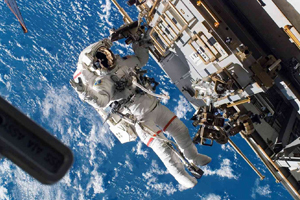
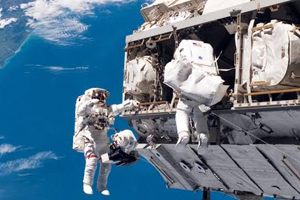
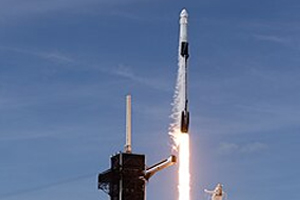
2025 Q1 will mark one quarter of the 21st Century and prompt high-importance planning for the next 75 years, not only for terrestrial Earth matters, but also exploration of our Solar System. Shaping the future of USA contribution toward deep-space exploration are the space policies to be enacted by the next US Administration. Current vision for NASA, guided by Space Policy Directives 1-7, is the international Artemis program to land the 1st women, 1st people of color, and 1st internationals near the unexplored Moon South Pole, while building a sustainable lunar base and testing technologies for Mars and beyond. By 2100, how many of the potential 10B people of Earth might be permanently living on the Moon and Mars? How many worlds of the Jupiter and Saturn systems will be inhabited? When will more support be given to the pursuit of peaceful, scientific, international expansion and exploration of the Solar System for the benefit of humankind – and less to the US / World’s largest DoD budget (33:1 DoD:NASA)? International space agencies, universities, NewSpace enterprises, think tanks and aerospace companies should give diligent consideration and 21st Century planning for this highly valuable, almost imperative challenge to explore / travel beyond, for science and discovery. China, India and Japan have laid out plans to land humans on the Moon as soon as reasonably possible, while long-range planning for China includes Uranus, Neptune, Kuiper Belt and interstellar space. Short-sighted space policies could see USA Astronauts on the Moon / Mars by mid-Century while other nations pass them by. (Image credits: ILOA Hawai’i, NASA, SpaceX)
MONDAY
☆Sep 30 — International Space Station,~415-km LEO: Expedition 71 Astronauts and Boeing Starliner CST-100 crew are brought new science investigations with planned arrival of Crew-9, Nick Hague and Aleksandr Gorbunov, including studies of heart muscle atrophy, plant growth, gene editing mechanisms, neurodegenerative pharmaceuticals and heatless welding.
☆Sep 30 — Tiangong Space Station, ~390-km LEO: Of a maximum occupation of six, 3 Taikonauts onboard continue to be Commander Ye Guangfu, Li Cong and Li Guansu, enjoying foods such as ‘Space Mooncakes’ with lotus paste, spicy lamb and braised pork chops.
o Sep 30 — International Astronautical Federation, Italian Space Agency, Italian Association of Aeronautics and Astronautics, Leonardo Space, et al, Online:Registration Due for Technical Tours at 75th International Astronautical Congress; to be held Oct 14-18.
☆ Sep 30 — Apollo Asteroid 2024 SC: Near-Earth Flyby (0.010 AU)
Ongoing…
● Sep 4 – Nov 25 —NASA, Online:Lunar Navigation Challenge; ahead of Artemis mission, 2 prizes available for orienteering aid and mapping bottom of Shackleton Crater.
World Space Week and “Hackathon” Show Humanity Working Together
Observed globally, both events seek to engage youth / students in forwarding human presence in space. World Space Week Association (WSWA) mission is “to strengthen the link between space and society through public education, participation and dialogue on the future of space activity.” World Space Week first theme was “The Space Millennium Begins” after a 1999 UN declaration to hold it in honor of October 4, 1957 launch of Sputnik 1 and October 10, 1967 signing of the Peaceful Uses of Space treaty. WSWA National Coordinators are listed for 68 countries with ~83 expected, encompassing ~16,000 events. The NASA International Space Apps Challenge, October 5-6, called the “largest annual global hackathon,” expects 280,000+ registrations / 2,400+ local events in 185+ countries / territories, 13 space agency partners including those of EU, Japan, India, Canada, Australia, Brazil, Italy, Mexico, Argentina, Turkey, South Africa, Paraguay. Invited are “coders, scientists, designers, storytellers, makers, technologists and innovators” of “all ages, skill levels and professional backgrounds”. Part of NASA Open Government Initiative to share data, participants are given tasks by NASA Subject Matter Experts, varied in complexity, ranging from visualizations of NASA data to developing apps / software, and this year asked to incorporate the idea of the influence of our Sun. This year’s theme is “The Sun Touches Everything.” Ten Global Awards are given. (Image credits: WSWA, NASA / Space Apps Challenge)
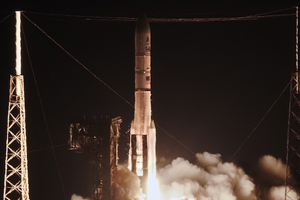
★Oct 1 — SpaceX, Launch Falcon 9 / Starlink Group 10-10, Cape Canaveral SFS FL: Falcon 9 to launch next batch of Starlink v2-mini satellites to LEO for space-based internet communication system.
☆ Oct 1 — Apollo Asteroid 2024 RN15: Near-Earth Flyby (0.021 AU)
WEDNESDAY
☾ Oct 2 — Moon: New Moon, 08:49; at apogee (distance 406,543 km), 10:00; 1.59° SSW of Mercury, 13:00.
☆ Oct 2 — Sun: Annular eclipse of Sun, 08:49.
☆ Oct 2 — Apollo Asteroid 2024 RO2: Near-Earth Flyby (0.010 AU)
THURSDAY
☾ Oct 3 — Moon: 0.49° NE of Spica, 14:00.
FRIDAY
★ Oct 4 — United Launch Alliance, Launch Vulcan VC2S / Certification Flight 2, SLC-41, Cape Canaveral SFS FL: Second Vulcan test launch with inert payload, experiments, and demonstrations for certification with USSF, 06:00 EDT.
★Oct 4 — SpaceX, Launch Falcon 9 / Starlink Group 6-61, Cape Canaveral SFS FL: Falcon 9 to launch next batch of Starlink v2-mini satellites to LEO for internet communication system.
● Oct 4 — The Space Show, Online / Las Vegas NV: Dr. David Livingston hosts Sara Seager, astrophysicist and planetary scientist.
o Oct 4-10 — World Space Week Association, Global:World Space Week 2024; to celebrate international contributions of space science and technology to the betterment of the human condition; Oct 4 is 67th observation of 1st Space mission Sputnik One launched by Soviet Union 1957; Oct 10 is 57th observation of Outer Space Treaty going into effect 1967.
SATURDAY
● Oct 5-6 — NASA and space agencies of Australia, Bahrain, Brazil, Canada, Europe, India, Italy, Japan, Mexico, Paraguay, Saudi Arabia, South Africa, Spain and Turkey, In person and Online: Space Apps Challenge 2024 (13th annual); 48-hour hackathon in French and English for space enthusiasts, programmers, designers, engineers, entrepreneurs and students.
☾ Oct 5 — Moon: 2.81° SSW of Venus, 09:00.
☆ Oct 5 — Apollo Asteroid 2024 RJ32: Near-Earth Flyby (0.019 AU)
SUNDAY
● Oct 6-10 —American Astronomical Society Division of Planetary Sciences, Boise ID: AAS DPS 2024 Meeting.
☆ Oct 6 — Apollo Asteroid 2022 SU21: Near-Earth Flyby (0.044 AU)
At the Spokane Convention Center. The meeting will have a broad scope, with a wide-ranging program of science and workforce topics, and celebrating planetary...
Convene, connect, and collaborate at the 19th annual von Braun Space Exploration Symposium! This year’s event will spotlight how bold ideas, emerging technologies, and...
Themes include: Space & the Arctic; Space & AI; Space & International Collaboration. There is a Student Session, a Technical Session, a Frontier Session,...
Oslo Spaceport Norway offers monthly a knowledgeable speaker and opportunity for networking, 17:00-20:00 local time; free entry but registration required. Ground Control is for...
45 satellites to launch for Amazon Leo, formerly named Project Kuiper. This LEO mega constellation will offer broadband internet access with 3,276 satellites.
Occurring 31 October from 09:00-11:00 local time (16:00-18:00 HST, 19:00-21:00 PDT, 22:00-24:00 EDT on 30 October), this Galaxy Forum will be in hybrid format...
Originally planned around this date for Wenchang, China -- TBC (to be confirmed); As the only professional association for astronauts, ASE supports the advancement of...
Coordinating Division Division C Education, Outreach and Heritage The IAU Symposium on Innovative Research and Techniques in Astronomy Communication will take place from November...
Change clocks back 1 hour from Daylight Saving to Standard Time; does not include Hawai’i, Arizona (except the Navajo Nation), American Samoa, Guam, Northern...
ESWW is the main annual event in the European Space Weather and Space Climate calendar. It is an international meeting organised annually within the...
IAU Symposium: IAUS409 - A Journey Towards Effective Astronomy Communication; online and at National Astronomical Observatory of Japan, 2-21-2 Osawa Mitaka, Tokyo. Topics include:...
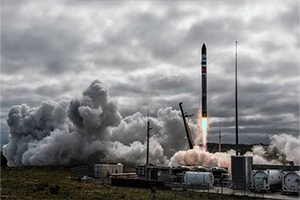
Launch Complex 1, ~39°S, Mahia Peninsula, New Zealand
iQPS Launch 9, an Earth observation satellite with Synthetic aperture radar for Japan-based imaging company iQPS, to launch on "The Sea God Surveys" mission...
Launch window 10:34am - 2:34pm local time for the 15th batch of classified satellites for a reconnaissance constellation built by SpaceX and Northrop Grumman...
Expecting senior government and executives from NASA, Firefly, Blue Origin to discuss innovation, competitive advantages and a "space industrial revolution in LEO". Capped at...
Launch Complex 1, ~39°S, Mahia Peninsula, New Zealand
iQPS Launch 10, an Earth observation satellite with Synthetic aperture radar for Japan-based imaging company iQPS, to launch on “The Mountain God Rises” mission...