ISS Human Outpost Carries on with Science, International Collaboration, Continuous Occupation of Space
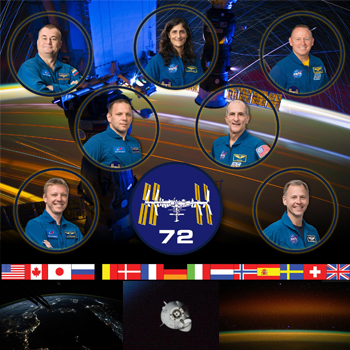
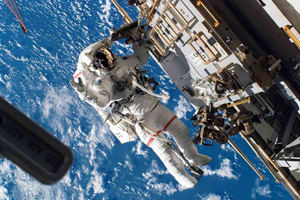
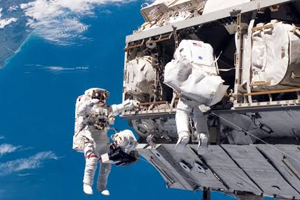
The ISS 72nd International Expedition is currently led by Sunita Williams as Commander, with Flight Engineers Barry Wilmore, Aleksey Ovchinin, Ivan Vagner, Donald Pettit, Nick Hague and Aleksandr Gorbunov. Return to Earth on October 13 after 220 days of SpaceX Crew-8 — Matthew Dominick, Michael Barratt, Jeanette Epps, Alexander Grebenkin — leaves 7 astronauts focusing on experiments including STEMonstration Earth Science Demonstration with 3D Printing, Sleep in Orbit studies and CloudNet Testing, while also performing maintenance with tasks such as Overhead Crew Quarters (CQ) Airflow measurements, CST Hot Fire Thruster Test #2, and installing Veggie Light Meters. Both internal and external welds of a Russian section of the ISS are being investigated since there is a daily air loss of 1.7kg. Joining the already docked ships of SpaceX Crew-9, Northrop Grumman resupply, Soyuz MS-26 crew, and Progress 88 and 89 resupply will be the Dragon CRS-2 SpX-31 cargo ship, which is scheduled to launch NET Oct 30 aboard a Falcon 9 rocket. FAA gave clearance for the Falcon 9s to launch again starting with the HERA mission after temporarily grounding them for investigation of partial failures in September and July. November 2 will mark 24 full years of continuous human occupation of the International Space Station, heading toward a quarter-century. (Image credits: NASA, ISS Partners)
MONDAY
☆Oct 14 — International Space Station, ~415-km LEO: Expedition 72 seven-member crew continue human presence in Low Earth Orbit.
☆Oct 14 — Tiangong Space Station, ~390-km LEO: Shenzhou-18 three-member crew preparing for return to Earth by end of month, spending last full week alone on TSS as Shenzhou-19 crew is now scheduled to launch / arrive around October 24.
☆ Oct 14 — Chinese H-alpha Solar Explorer (CHASE), 517-km SSO: First solar observatory for China known as CHASE or Xihe / 羲和 reaches 3rd full year / enters 4th year in space since launching on this day via Long March 2D in 2021.
★Oct 14 — SpaceX, Launch Falcon 9 / Starlink Group 10-10, SLC-40, Cape Canaveral SFS FL: Satellites for space-based Internet communication system, 01:48 EDT, launch cost ~US$52M.
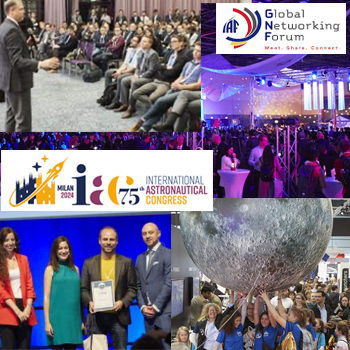
o Oct 14 — International Astronautical Federation, Italian Space Agency (ASI), Italian Association of Aeronautics and Astronautics (AIDAA), Leonardo Space, et al, Milan, Italy: Meet Executive Director of World Space Week Association and World Space Week National Coordinators at 75th International Astronautical Congress (IAC24); 14:00-14:45, D-Orbit Booth.
o Oct 14-18 — International Astronautical Federation, Italian Space Agency (ASI), Italian Association of Aeronautics and Astronautics (AIDAA), Leonardo Space, et al, Milan, Italy:IAFGlobal Networking Forum (GNF) held on same days as 75th IAC.
☾ Oct 14 — Moon: 0.24° NE of Saturn, 09:00.
☆ Oct 14 — Apollo Asteroid 2021 TK11: Near-Earth Flyby (0.020 AU)
● = Terrestrial and… o = International terrestrial events
☾ = Moon activity
★ = Space and… ☆ = International space / astro events; in Hawaii Standard Time unless noted. Add 10 hours to obtain UT (‘Universal Time’).
International Astronautical Federation to Hold Record-Breaking 75th IAC, Associated Events in Milan
The 2024 IAC of the IAF expects more than 8,000 experts to gather / discuss / collaborate in Milan, Italy at Europe’s largest conference venue around the theme “Responsible Space for Sustainability.” Important focus will be the ~5,000 operational / ~8,000 total – and growing — Earth-orbit satellites and how our Space environment can be explored peacefully, securely and co-operatively; e.g., satellites are indispensable for communications / environmental monitoring yet affect radio astronomy: How to solve this? From opening 09:30 Monday Oct 14 to closing 16:30 Friday Oct 18, ~3,000 abstracts will be presented out of record ~7,000 submitted from 106 countries. Highest submissions were from Italy (985), USA (782), China (539), India (476) and Azerbaijan (345, host of IAC 2023). Running concurrently is the IAF Global Networking Forum, 3-7 events daily of 30-60 minutes each, for “the space community to connect, share and meet.” Subjects range from space food, to investing in space companies (multiple sessions), to lunar landers for sustainable exploration. Amazing Public Day Oct 18 offers admission to exhibition hall, meet-and-greet photo-op with astronauts, music, award ceremony, interactive / hands-on activities, round-table discussion / Q&A with experts on NewSpace Economy / Sustainability. Global Expert Group on Sustainable Lunar Activities “GEGSLA” meets later that day, an initiative of Moon Village Association for members from space agencies, government, industry, academia and NGOs. (Image credits: IAF)
Ongoing…
● Sep 4 – Nov 25 —NASA, Online:Lunar Navigation Challenge; ahead of Artemis mission, 2 prizes available for invention of orienteering aid and device to map bottom of Shackleton Crater.
★Oct 15 — SpaceX, Launch Falcon 9 / Starlink Group 9-7, SLC-4E, Vandenberg SFB CA: Satellites for space-based Internet communication system, 02:03 PDT, launch cost ~US$52M.
☆Oct 15 — CNSA, Launch Long March 6A / Unknown Payload,Taiyuan Satellite Launch Center, China: May continue launch of China G60 “Thousand Sails Constellation” of more than 12,000 satellites, aiming to provide global internet access and national data security; launch window 13:25-13:36 HST.
● Oct 15 — NASA, Online: Town Hall for Planetary Science Research Programs regarding selection and subjects for Research Opportunities in Space and Earth Science; provide input prior to webinar, then join Webex webinar; 15:00 EDT / 19:00 UT.
o Oct 15-18 — ESA, CNES, DLR, ESCC, Noordwijk, The Netherlands: Space Passive Component Days 5th International Symposium; Technical conference dedicated to EEE passive components for space applications with experts from industry, academia and agencies.
☾ Oct 15 — Moon: 0.57° N of Neptune, 08:00.
☆ Oct 15 — Apollo Asteroid 2024 TO4: Near-Earth Flyby (0.011 AU)
WEDNESDAY
★ Oct 16 — Lucy, Inner Main Asteroid Belt: NASA spacecraft to encounter 11 asteroids reaches 3rd full year / enters 4th in space since launching this day via ULA Atlas V in 2021.
★Oct 16 — SpaceX, Launch Falcon 9 / Starlink Group 8-19, SLC-40, Cape Canaveral SFS FL: Satellites for space-based Internet communication system, 16:18 EDT, launch cost ~US$52M.
☾ Oct 16 — Moon: With Jupiter at heliocentric conjunction, 05:00; at perigee (distance 357,176 km), 14:59.
☆ Oct 16 — Aten Asteroid 2022 UY: Near-Earth Flyby (0.081 AU)
THURSDAY
● Oct 17 — American Institute of Aeronautics & Astronautics (AIAA), Online / Los Angeles CA: Hyperspectral Coastal Water Imaging From Space; presented by Jeff Puschell, AIAA Fellow; register by Oct 10 to include dinner at 17:00 PDT, presentation in-person and online at 19:00 PDT, at The Proud Bird Mission Room.
o Oct 17 — International Astronautical Federation, Italian Space Agency (ASI), Italian Association of Aeronautics and Astronautics (AIDAA), Leonardo Space, et al, Milan, Italy: Global Networking Forum session Innovative Lunar Lander Technologies for Sustainable Exploration; with A. C. Charania (NASA), Dan Hendrickson (Astrobotic), Tim Crain (Intuitive Machines), Masaki Fujimoto (JAXA); during 75th IAC.
o Oct 18 — International Astronautical Federation, Italian Space Agency (ASI), Italian Association of Aeronautics and Astronautics (AIDAA), Leonardo Space, et al, Milan, Italy:Public Day; with expert round table / Q&A, meet-the-Astronauts, music, exhibition, idea exchange; during 75th IAC.
o Oct 18 — International Astronautical Federation, Italian Space Agency (ASI), Italian Association of Aeronautics and Astronautics (AIDAA), Leonardo Space, et al, Milan, Italy:7th GEGSLA Operational Meeting; at 75th IAC, 15:30-17:30, email gegsla@moonvillageassociation.org for location.
☆ Oct 18 — Apollo Asteroid 2024 RV50: Near-Earth Flyby (0.049 AU)
SATURDAY
★ Oct 19 — Interstellar Boundary Explorer (IBEX), HEO: NASA spacecraft mapping boundary between the Solar System and interstellar space reaches 16 full years / enters 17th year in Space today, launched on this day 2008.
☾ Oct 19 — Moon: 4.3° N of Uranus, 05:00; 0.28° NNE of Pleiades, 11:00.
☆ Oct 19 — Mars: 5.7° S of Pollux, 08:00.
☆ Oct 19 — Apollo Asteroid 2024 SA5: Near-Earth Flyby (0.089 AU)
SUNDAY
oOct 20 — Moon Village Association, Luxembourg Space Agency, Luxembourg: Early bird registration deadline for 8th Global Moon Village Workshop & Symposium 2024; to be held December 2-3 at European Convention Center, €215-390.
☆ Oct 20 — BepiColombo,Mercury Trajectory: European Space Agency / JAXA Mercury Planetary Orbiter (MPO) and Mercury Magnetospheric Orbiter (dubbed Mio ‘waterway or fairway’) reach 6 full years / enter 7th year in space today, launched 2018; expected to reach Mercury polar orbit 2025 to map planet, investigate magnetosphere.
☾ Oct 20 — Moon: 0.28° NNE of Pleiades, 14:00.
☆ Oct 20 — Orionids Meteor Shower Peak: The 2nd of 2 showers from Halley’s Comet dust, Orionids appear to radiate from Constellation Orion, are swift (68 km/sec), can be bright & leave persistent trains; 20-70 meteors per hour.
At the Spokane Convention Center. The meeting will have a broad scope, with a wide-ranging program of science and workforce topics, and celebrating planetary...
Convene, connect, and collaborate at the 19th annual von Braun Space Exploration Symposium! This year’s event will spotlight how bold ideas, emerging technologies, and...
Themes include: Space & the Arctic; Space & AI; Space & International Collaboration. There is a Student Session, a Technical Session, a Frontier Session,...
Oslo Spaceport Norway offers monthly a knowledgeable speaker and opportunity for networking, 17:00-20:00 local time; free entry but registration required. Ground Control is for...
45 satellites to launch for Amazon Leo, formerly named Project Kuiper. This LEO mega constellation will offer broadband internet access with 3,276 satellites.
Occurring 31 October from 09:00-11:00 local time (16:00-18:00 HST, 19:00-21:00 PDT, 22:00-24:00 EDT on 30 October), this Galaxy Forum will be in hybrid format...
Originally planned around this date for Wenchang, China -- TBC (to be confirmed); As the only professional association for astronauts, ASE supports the advancement of...
Coordinating Division Division C Education, Outreach and Heritage The IAU Symposium on Innovative Research and Techniques in Astronomy Communication will take place from November...
Change clocks back 1 hour from Daylight Saving to Standard Time; does not include Hawai’i, Arizona (except the Navajo Nation), American Samoa, Guam, Northern...
ESWW is the main annual event in the European Space Weather and Space Climate calendar. It is an international meeting organised annually within the...
IAU Symposium: IAUS409 - A Journey Towards Effective Astronomy Communication; online and at National Astronomical Observatory of Japan, 2-21-2 Osawa Mitaka, Tokyo. Topics include:...
Launch Complex 1, ~39°S, Mahia Peninsula, New Zealand
iQPS Launch 9, an Earth observation satellite with Synthetic aperture radar for Japan-based imaging company iQPS, to launch on "The Sea God Surveys" mission...
Launch window 10:34am - 2:34pm local time for the 15th batch of classified satellites for a reconnaissance constellation built by SpaceX and Northrop Grumman...
Expecting senior government and executives from NASA, Firefly, Blue Origin to discuss innovation, competitive advantages and a "space industrial revolution in LEO". Capped at...
Launch Complex 1, ~39°S, Mahia Peninsula, New Zealand
iQPS Launch 10, an Earth observation satellite with Synthetic aperture radar for Japan-based imaging company iQPS, to launch on “The Mountain God Rises” mission...