China / Zhongguo to Launch Shenzhou 19 Crew, Celebrate 21 Years of Human Spaceflight
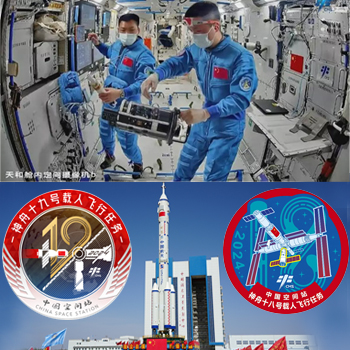
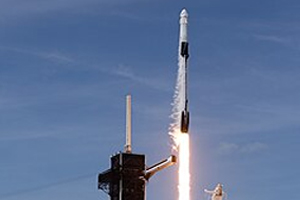
The next three-member crew destined for Tiangong Space Station will be aboard the Shenzhou-19 craft launching via Long March 2F NET October 29 from Jiuquan Satellite Launch Center. This will be the 14th crewed spaceflight for China and the 19th flight overall of the Shenzhou program. Shenzhou-19 will complete a 6-month mission aboard TSS. The crew was selected in February 2024 and their names will be announced to the public about a day prior to launch. China has now flown 22 people to space–the 1st Taikonaut, Yang Liwei, reached space aboard Shenzhou-5 on October 15, 2003. Shenzhou-18 Commander Ye Guangfu, Operator Li Cong and Science Operator Li Guangsu will receive the new Taikonauts, passing over command and helping to orient them before returning to Earth, landing in Inner Mongolia, after ~3 days of overlap. In May 2024, Ye Guangfu and Li Guangsu performed the longest duration spacewalk for China of ~8.5 hours to install space debris protection equipment. Ongoing experiments for the crew involve zebrafish, high-temperature material science, noise exposure, bone density measurements, fatigue levels, neuromuscular stimulators and botany. Launch of the Tianzhou 8 cargo ship with 7,400 kg of supplies is set for November 10 on a Long March 7 from Wenchang, joining the Tianzhou 7 which is still docked to the station. Among the cargo will be bricks made from lunar regolith simulant for testing in space. (Image credits: CMSA, CCTV)
MONDAY
☆Oct 21 — International Space Station, ~415-km LEO: Nick Hague, Butch Wilmore and Don Pettit of Expedition 72 seven-member crew connect live this week with Iowa State University – Ames, KFI-AM Radio Los Angeles, City Cast Nashville podcast, Columbia Space Initiative at Columbia University – New York.
☆Oct 21 — Tiangong Space Station, ~390-km LEO: Shenzhou-18 three-member crew continue human presence in Low Earth Orbit, take photos of China spaceport locations: Jiuquan Satellite Launch Center, Dongfeng Space City, Wenchang Satellite Launch Center; Shenzhou-19 crew is now scheduled to launch / arrive around October 29.
● Oct 21-22 — SatNews, Agile Communication Systems, Firefly, Goonhilly, Hughes, et al, Mountain View CA: Satellite Innovation 2024; at Computer History Museum.
● Oct 21-25 — Lunar and Planetary Institute, USRA, Online: Conference: 2024 Advancing IDEA in Planetary Science; ~38 presentations / ~100 abstracts aim to boost momentum for Inclusion, Diversity, Equity and Accessibility principles in the workforce.
o Oct 21-25 — Space Research Institute of RAS (IKI), Vernadsky Institute of Geochemistry & Analytical Chemistry RAS, Brown University of USA, et al, Online / Moscow, Russia: Fifteenth Moscow Solar System Symposium (15M-S3); includes welcomes from academia / Roscosmos / international partners.
☾ Oct 21 — Moon: 4.4° N of M35 cluster, 18:00.
☆ Oct 21 — Amor Asteroid (2021 SF4): Near-Earth Flyby (0.081 AU)
Ongoing…
● Sep 4 – Nov 25 —NASA, Online:Lunar Navigation Challenge; ahead of Artemis mission, 2 prizes available for invention of orienteering aid and device to map bottom of Shackleton Crater.
● = Terrestrial and… o = International terrestrial events
☾ = Moon activity
★ = Space and… ☆ = International space / astro events; in Hawaii Standard Time unless noted. Add 10 hours to obtain UT (‘Universal Time’).
Federal Aviation Administration Keeping Busy with USA, State Spaceport and Launch Licenses
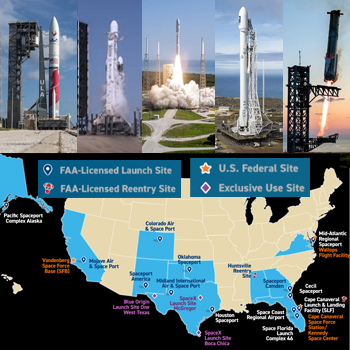
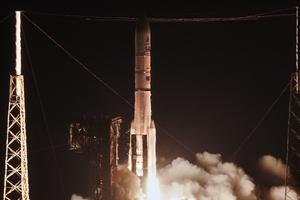
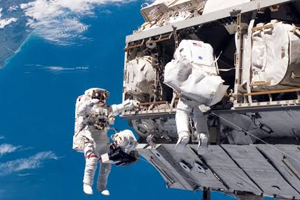
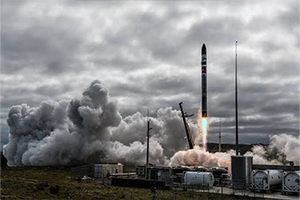
The Federal Aviation Administration (FAA) oversees craft traveling through air (Latin “avis” = “bird”), including those headed to space. The FAA leads a working group with NASA, USSF and Departments of State / Commerce / Defense to strategize around 3 spaceport areas: innovation / investment, consistency in operational standards, federal / commercial cooperation. The FAA Office of Spaceports, established 2018, has mission to enable the safest, most efficient spaceports, vision of supporting commercial space transportation, and strategic goals around competitiveness / modernization / collaboration. Under the Office of Commercial Space Transportation (established 1984), it licenses commercial / government / private spaceports around USA: Alabama (Huntsville), Alaska (Kodiak Island), California (Mojave, Vandenberg), Florida (Kennedy Space Center, Cape Canaveral two, Wilson, Titusville, Jacksonville), Georgia (Camden), New Mexico (Truth or Consequences), Oklahoma (Burns Flat), Texas (Brownsville, Midland, Houston, West Texas), Virginia (Wallops Island). Except for “Private Exclusive Use” spaceports of Blue Origin / SpaceX in Texas, all are licensed for Horizontal and / or Vertical takeoff, and / or Orbital Reentry. First license for a non-federal spaceport was 1996 and today there are 14. Launch site location is determined by access to useful orbits, and by public safety, meaning, away from major cities with most built close to bodies of water. 1989-2024 FAA has licensed: 400 Florida launches, 147 California, 32 Texas, and licensed 381 SpaceX launches, 54 Lockheed Martin, 53 Rocket Lab, 47 McDonnell Douglas, 40 Orbital. (Image credits: FAA, Adam Bernstein/Spaceflight Now, NASA, SpaceX)
TUESDAY
● Oct 22 — American Institute of Aeronautics and Astronautics – San Francisco,Mountain View CA: Tech Talk: Leadership, Technology and Innovation; with pilot, flight instructor and leadership trainer Gene Hudson; 18:00-20:30 PDT.
☾ Oct 22 — Moon: Shows maximum libration for the year, 10.39°, 11:00.
☆ Oct 22 — Apollo Asteroid (2024 SE4): Near-Earth Flyby (0.018 AU)
WEDNESDAY
★ Oct 23 — Juno, Perijove 66 / 65th Science Flyby,Jupiter Orbit: NASA craft to perform Jupiter flyby during Perijove 66, its 66th close flyby of Jupiter and 65th science flyby with instruments turned on.
o Oct 23 — Academia Sinica Institute of Astronomy and Astrophysics, Taipei, Taiwan: Colloquium: presented by Ryosuke Tominaga of Tokyo Institute of Technology, 14:20-15:20.
o Oct 24 — Academia Sinica Institute of Astronomy and Astrophysics, Taipei, Taiwan: Seminar: presented by speaker Yuya Fukuhara of Tokyo Institute of Technology, with host Min-Kai Lin, 14:20-15:20.
☾ Oct 24 — Moon: 3.2° NNE of Beehive Cluster, 11:00.
☆ Oct 24 — Apollo Asteroid (2015 HM1): Near-Earth Flyby (0.012 AU)
FRIDAY
☆ Oct 25 — JAXA, Launch H322 / DSN 3 (Kirameki 3), Yoshinobu Launch Complex LP-2, Tanegashima Space Center, Japan: Geostationary, pure X-band communications satellite to be operated by DSN Corporation, subsidiary of SKY Perfect JSAT Group; 18:44 HST.
● Oct 25 — Stanford On the Moon (SOM) Alumni Club, Palo Alto CA:SOM 2024 Symposium; being held during the Stanford Alumni Reunion Conference, featuring presentations on First Women on the Moon and USA return to the Moon by Grant Anderson, Paragon Space Development Corp.; Steve Durst, SOM / SPC / ILOA Hawai’i; Will Neal-Boyd, Michelle S. Park, Ashley Raigosa of Stanford Student Space Initiative (SSSI).
● Oct 26-27 —Center for Space Education, Federal Business Council, United Launch Alliance, NearSpace Education et al, Kennedy Space Center FL: 2024 SmallSat Education Conference; for community college, high / middle school faculty / students; at Kennedy Space Center M6-306 405 State Road.
☾ Oct 26 — Moon: 2.65° NNE of Regulus, 07:00.
☆ Oct 26 — Aten Asteroid (2024 TB2): Near-Earth Flyby (0.008 AU)
SUNDAY
☆ Oct 27 — Apollo Asteroid (2016 BF1): Near-Earth Flyby (0.027 AU)
At the Spokane Convention Center. The meeting will have a broad scope, with a wide-ranging program of science and workforce topics, and celebrating planetary...
Convene, connect, and collaborate at the 19th annual von Braun Space Exploration Symposium! This year’s event will spotlight how bold ideas, emerging technologies, and...
Themes include: Space & the Arctic; Space & AI; Space & International Collaboration. There is a Student Session, a Technical Session, a Frontier Session,...
Oslo Spaceport Norway offers monthly a knowledgeable speaker and opportunity for networking, 17:00-20:00 local time; free entry but registration required. Ground Control is for...
45 satellites to launch for Amazon Leo, formerly named Project Kuiper. This LEO mega constellation will offer broadband internet access with 3,276 satellites.
Occurring 31 October from 09:00-11:00 local time (16:00-18:00 HST, 19:00-21:00 PDT, 22:00-24:00 EDT on 30 October), this Galaxy Forum will be in hybrid format...
Originally planned around this date for Wenchang, China -- TBC (to be confirmed); As the only professional association for astronauts, ASE supports the advancement of...
Coordinating Division Division C Education, Outreach and Heritage The IAU Symposium on Innovative Research and Techniques in Astronomy Communication will take place from November...
Change clocks back 1 hour from Daylight Saving to Standard Time; does not include Hawai’i, Arizona (except the Navajo Nation), American Samoa, Guam, Northern...
ESWW is the main annual event in the European Space Weather and Space Climate calendar. It is an international meeting organised annually within the...
IAU Symposium: IAUS409 - A Journey Towards Effective Astronomy Communication; online and at National Astronomical Observatory of Japan, 2-21-2 Osawa Mitaka, Tokyo. Topics include:...
Launch Complex 1, ~39°S, Mahia Peninsula, New Zealand
iQPS Launch 9, an Earth observation satellite with Synthetic aperture radar for Japan-based imaging company iQPS, to launch on "The Sea God Surveys" mission...
Launch window 10:34am - 2:34pm local time for the 15th batch of classified satellites for a reconnaissance constellation built by SpaceX and Northrop Grumman...
Expecting senior government and executives from NASA, Firefly, Blue Origin to discuss innovation, competitive advantages and a "space industrial revolution in LEO". Capped at...
Launch Complex 1, ~39°S, Mahia Peninsula, New Zealand
iQPS Launch 10, an Earth observation satellite with Synthetic aperture radar for Japan-based imaging company iQPS, to launch on “The Mountain God Rises” mission...