ISS Observes 24 Years, Going on 25; Looking Ahead to De-orbit, Commercial Space Station
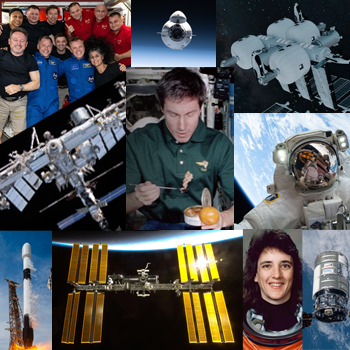
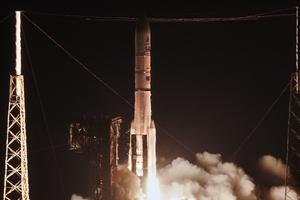
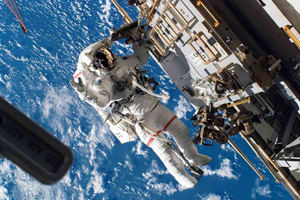
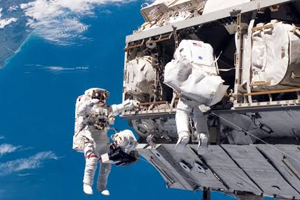
November 2, 2024 marks 24 years of continuous human occupation in space aboard the International Space Station, operated by 15 countries in partnership; 280+ people from 23 countries have visited. ISS travels ~29,000 km per hour, orbiting Earth every 90 minutes; ~16 orbits per 24 hours, equivalent distance is to-the-Moon-and-back. It has ~350,000 sensors, monitored / controlled by 50+ computers using 1.5+ million lines of software code, 6 sleeping quarters, 2 bathrooms, gyms, 8 miles of electrical wires, docking ports for 8 ships such cargo spacecraft Northrop Grumman Cygnus, SpaceX Dragon, Russian Progress, JAXA HTV. ISS is 109 meters long, solar array wingspan is 109 meters, weighs ~420,000 kg. First segment Zarya launched Nov 1998, Astronaut Nancy Currie was part of first assembly mission Dec 1998 attaching Unity Node 1; 5 space agencies contributed to assembly: NASA, Roscosmos, ESA, JAXA, CSA-ASC. Expedition 1 (2000-2001) commander was Astronaut William Shepherd with 2 Cosmonauts as crew. Science labs were added 2001 by USA, 2008 by ESA, 2008 by Japan; 3,000+ investigations have been done, devised by scientists in 108 countries. Millions of Earth photos have been taken. First commercial payloads launched April 2014 by SpaceX after grants awarded 2012-2013, with 31st SpaceX resupply Oct 30 2024; Northrop Grumman 21st resupply was Aug 4 2024. Companies involved in building the first commercial space station, which NASA hopes will be in place before deorbit of the ISS — now planned via SpaceX facilitated by US$843 million contract — include Sierra Space / Blue Origin / Redwire / Boeing; Northrop / Dynetics; Voyager Space / Nanoracks / Lockheed / Airbus; Axiom Space; VAST. (Image credits: NASA, NASA, Roscosmos, SpaceX, Northrop Grumman, Sierra Space)
● Oct 28-29 —Keystone Space Collaborative, Acoustic Research Systems, Astrobotic et al, Pittsburgh PA: Keystone Space Collaborative 2024 Conference; focusing on the impact a thriving space industry has on economy and job market; at Omni William Penn Hotel.
●Oct 28-30— American Astronautical Society (AAS), University of Alabama Huntsville, NASA MSFC, NSC of Huntsville, Huntsville AL: AAS 2024 von Braun Space Exploration Symposium; 17th annual event features NASA Chief Technologist A.C. Charania; topics include Artemis Program, Lunar Logistics / Mobility.
o Oct 28-31 — Mars Society Argentina, Argentinian Space Agency (CONAE), University of Mendoza, National University of Technology, National University of Cuyo, Mendoza, Argentina: 2024 Pan-American Space Conference.
☆ Oct 28 — Apollo Asteroid (2020 WG): Near-Earth Flyby (0.022 AU)
Ongoing…
● Sep 4 – Nov 25 —NASA, Online:Lunar Navigation Challenge; ahead of Artemis mission, 2 prizes available for invention of orienteering aid and device to map bottom of Shackleton Crater.
● = Terrestrial and… o = International terrestrial events
☾ = Moon activity
★ = Space and… ☆ = International space / astro events; in Hawaii Standard Time unless noted. Add 10 hours to obtain UT (‘Universal Time’).
Houston Hosts Earthlight Foundation’s New Worlds ‘Space Revolution’ Conference, and LEAG Annual 2024 Meeting
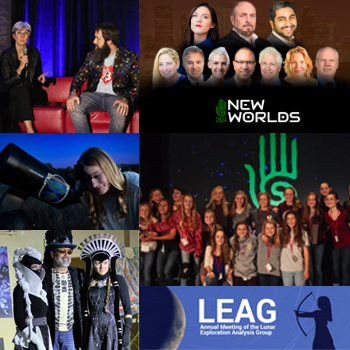
The New Worlds 2024 Conference is set for another big show in Houston, Texas on November 1-2, put together by Earthlight Foundation with 23 sponsors and 8 media partners. It will feature 300+ participants, 50+ speakers, and a Cowboy Ball. The event will inspire ‘new ideas, insights and ideologies’ through dynamic space leaders such as Rick Tumlinson (Earthlight Foundation), Phil Metzger (Stephen Hawking Center) and Barbara Belvisi (Interstellar Labs). Space entrepreneurs, industry celebrities, tech developers, policymakers and visionaries will share thoughts on AI and Our Future in Space, The Moon Race – Us vs. China, Women’s Space Leadership, The First Private Lunar Landers, and The Space Settlement – Act or Law? Speakers include Vanessa Wyche, Mike Foreman, Kathy Lueders, Namrata Goswami, Kam Ghaffarian, Jane Poynter, Dennis Stone, James Logan, Jim Keravala, Charlie Chafer. Preceding New Worlds 2024 is the annual Annual Meeting of the Lunar Exploration Analysis Group (LEAG) on October 28-30, at Houston and online. LEAG will bring together members from science, exploration, academia and commercial sub-fields to support Moon exploration and provide analyses of potential issues for objectives, planning and prioritizations. Experts speaking will be Lori Glaze, Joel Kearns, Ryan Watkins, Sarah Noble, Noah Petro, Brad Jolliff. Giving updates for CLPS / USA commercial lunar landers is Dan Hendrickson of Astrobotic, Trent Martin of Intuitive Machines and Joseph Marlin of Firefly. (Image credits: Earthlight Foundation, LEAG)
TUESDAY
☆Oct 29 — CNSA, Launch Long March 2 / Shenzhou-19,Jiuquan Satellite Launch Center, China: Shenzhou-19 three-member crew (names announced ~1 day before launch) to fly to Tiangong Space Station, overlap with current crew for ~3 days and spend 6 months in space.
o Oct 29 — Canadian Space Agency, Online: Canadian backup crewmember of the Artemis II mission Jenni Gibbons will talk live to hundreds of elementary /high school students; on Teams platform.
☾ Oct 29 — Moon: At apogee, distance 405,705 km, 13:00.
☆ Oct 29 — Apollo Asteroid (2024 SU13): Near-Earth Flyby (0.028 AU)
WEDNESDAY
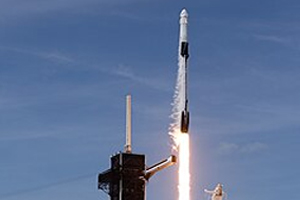
★ NET Oct 30 — SpaceX, Launch Falcon 9 Block 5 / Dragon CRS-2 SpX-31, SLC-39A, Cape Canaveral SFS FL: 31st commercial resupply launching to ISS by SpaceX, one of 2 companies under contract with NASA (other is Northrop Grumman) to bring critical science / research / general supplies; launch cost ~US$52M; 00:49 EDT.
o Oct 30 – Nov 2 — Morocco Ministry of Industry and Trade, MEDZ Groupe CDG, et al,Marrakech, Morocco:Marrakech Air Show 2024; 7th biennial event, with 300+ exhibitors from 20+ nations; at Royal Moroccan Air Force Base.
☾ Oct 30 — Moon: 0.58° ENE of Spica, 21:00.
☆ Oct 30 — Venus: At aphelion, 0.7282 AU from Sun, 04:00.
☆ Oct 30 — Apollo Asteroid (2021 CV1): Near-Earth Flyby (0.005 AU)
☆ Oct 31 — Apollo Asteroid (2022 UD21): Near-Earth Flyby (0.027 AU)
FRIDAY
★ NET Nov — Blue Origin, Launch New Glenn / Blue Ring, LC 36, Cape Canaveral SFS FL: Maiden New Glenn flight, to carry Blue Origin Blue Ring spacecraft for USSF National Security Space Launch certification flight.
☆ Nov 1 — Deep Space: NASA Deep Space Optical Communications technology demonstration entering 2nd phase after sending a laser signal 460 million kilometers, a record (a distance equivalent to that from Earth to Mars when they are farthest apart) to the Psyche spacecraft.
●Nov 1-2 — Earthlight Foundation, AHURA, Space for Humanity, iRoc Space Radio, et al,Houston TX:New Worlds and Space Cowboy Ball 2024; at Space Center Houston; will include a “Shark Tank”-style business funding contest.
☾ Nov 1 — Moon: New Moon, 02:47.
☆ Nov 1 — Aten Asteroid (2016 VA): Near-Earth Flyby (0.00076 AU)
SATURDAY
☆ Nov 2 — International Space Station, ~405-km LEO: Today marks 24 full years / start to 25th year of continuous Human occupation of ISS; first component Zarya launched Nov 20, 1998, occupation began Nov 2, 2000.
●Nov 2 — University of Hawaii Institute for Astronomy, Mauna Kea Observatories, Kona Commons, Kailua-Kona HI: AstroDay West 2024: Free Family-Friendly Science Fun; at Kona Commons Shopping Center, 10:00-15:00 HST.
At the Spokane Convention Center. The meeting will have a broad scope, with a wide-ranging program of science and workforce topics, and celebrating planetary...
Convene, connect, and collaborate at the 19th annual von Braun Space Exploration Symposium! This year’s event will spotlight how bold ideas, emerging technologies, and...
Themes include: Space & the Arctic; Space & AI; Space & International Collaboration. There is a Student Session, a Technical Session, a Frontier Session,...
Oslo Spaceport Norway offers monthly a knowledgeable speaker and opportunity for networking, 17:00-20:00 local time; free entry but registration required. Ground Control is for...
45 satellites to launch for Amazon Leo, formerly named Project Kuiper. This LEO mega constellation will offer broadband internet access with 3,276 satellites.
Occurring 31 October from 09:00-11:00 local time (16:00-18:00 HST, 19:00-21:00 PDT, 22:00-24:00 EDT on 30 October), this Galaxy Forum will be in hybrid format...
Originally planned around this date for Wenchang, China -- TBC (to be confirmed); As the only professional association for astronauts, ASE supports the advancement of...
Coordinating Division Division C Education, Outreach and Heritage The IAU Symposium on Innovative Research and Techniques in Astronomy Communication will take place from November...
Change clocks back 1 hour from Daylight Saving to Standard Time; does not include Hawai’i, Arizona (except the Navajo Nation), American Samoa, Guam, Northern...
ESWW is the main annual event in the European Space Weather and Space Climate calendar. It is an international meeting organised annually within the...
IAU Symposium: IAUS409 - A Journey Towards Effective Astronomy Communication; online and at National Astronomical Observatory of Japan, 2-21-2 Osawa Mitaka, Tokyo. Topics include:...
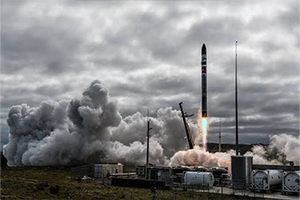
Launch Complex 1, ~39°S, Mahia Peninsula, New Zealand
iQPS Launch 9, an Earth observation satellite with Synthetic aperture radar for Japan-based imaging company iQPS, to launch on "The Sea God Surveys" mission...
Launch window 10:34am - 2:34pm local time for the 15th batch of classified satellites for a reconnaissance constellation built by SpaceX and Northrop Grumman...
Expecting senior government and executives from NASA, Firefly, Blue Origin to discuss innovation, competitive advantages and a "space industrial revolution in LEO". Capped at...
Launch Complex 1, ~39°S, Mahia Peninsula, New Zealand
iQPS Launch 10, an Earth observation satellite with Synthetic aperture radar for Japan-based imaging company iQPS, to launch on “The Mountain God Rises” mission...