Space Law and Policy in Focus: UNOOSA Conference, Multi-Nation Agreements
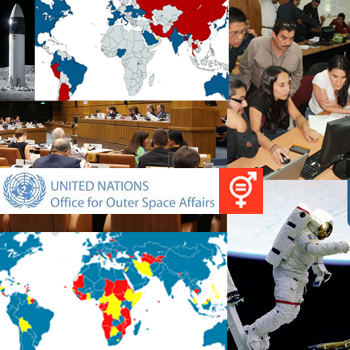
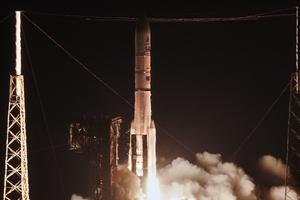
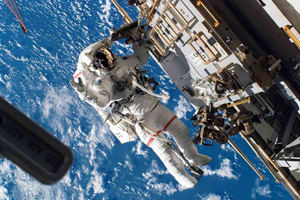
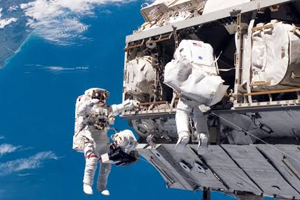
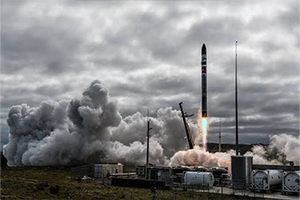
United Nations Office for Outer Space Affairs (UNOOSA) will host discussion of space law / policy November 19-21 with emphases on space debris, dark / quiet skies, information sharing, sustainability; 200 invited participants are gender-balanced, invited to experience presentations, panels, informal interaction with UN representatives. Objectives are to promote implementation of UN treaties on outer space and address challenges to international space law. Discussion is rampant regarding lunar property rights although that is not a stated focus of this conference. UN treaties include Outer Space Treaty (1967) that declares space is the common interest of mankind, and Moon Agreement (1979) signed by ~20 parties but not USA, China and Russia that prohibits commercial exploitation of space resources. April 2020 Executive Order 13914 of the USA states “Americans should have the right to engage in commercial exploration, recovery, and use of resources in outer space, consistent with applicable law” and does not view space as a global commons, explicitly rejecting the Moon Agreement. US NASA / Department of State created the Artemis Accords (2020), which are now signed by 47 parties. Mike Gold led their development and states they are not intended to conflict with the Moon Agreement; however, the description of ‘safety zone’ areas is similar to American Property law ‘right to exclude’ principles. Other lawyers say space mining is not national appropriation under the Outer Space Treaty since it likely would be done by private companies. (Image credits: UNOOSA, NASA, SpaceX, r/space)
MONDAY
☆Nov 18 — International Space Station, ~415-km LEO: Expedition 72 seven-member crew look forward to potential arrival of next Progress cargo ship (MS-90) this week, working with immune and digestive systems studies, samples from Electrostatic Levitation Furnace in Kibo module, and maintaining Orlan spacesuits for planned upcoming Russia EVA (date TBC).
☆Nov 18 — Tiangong Space Station, ~390-km LEO: Shenzhou-19 Commander Cai Xuzhe, Engineers Song Lingdong and Wang Haoze transferring cargo from newly arrived Tianzhou 8 (launch mass 14,000 kg), plan to set up bricks made from lunar simulant for 3-years of experimentation including exposure to ultraviolet light, cosmic rays and temperature extremes.
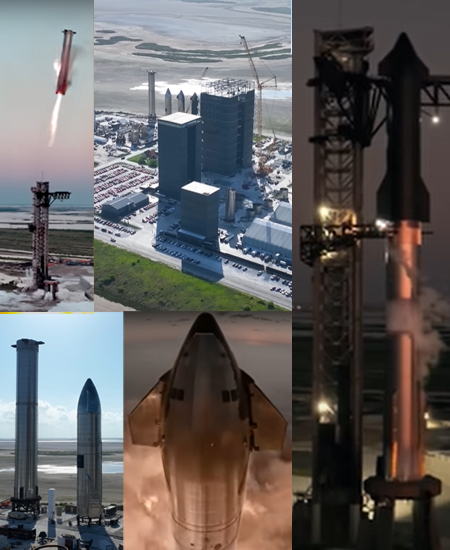
★ Nov 18 — SpaceX, Launch Super Heavy / Starship, Starbase, Boca Chica TX: Starship Flight Test 6; similar orbital profile to Oct 13 flight, Super Heavy booster to return and be caught by launch tower, a Raptor engine to be re-lit while in flight, heat-shielding test, upper stage splashdown in Indian Ocean; 12:00 HST begins 30-minute launch window.
☆ Nov 18 — Mercury: At southernmost declination, 20:00.
☆ Nov 18 — Apollo Asteroid (2024 UZ10): Near-Earth Flyby (0.030 AU)
Ongoing…
● Sep 4 – Nov 25 —NASA, Online:Lunar Navigation Challenge; ahead of Artemis mission, 2 prizes available for invention of orienteering aid and device to map bottom of Shackleton Crater.
★ NET Nov — Blue Origin, Launch New Glenn / Blue Ring, LC 36A, Cape Canaveral SFS FL: Maiden New Glenn flight, to carry Blue Origin Blue Ring payload tug; initial USSF National Security Space Launch certification flight.
● = Terrestrial and… o = International terrestrial events
☾ = Moon activity
★ = Space and… ☆ = International space / astro events; in Hawaii Standard Time unless noted. Add 10 hours to obtain UT (‘Universal Time’).
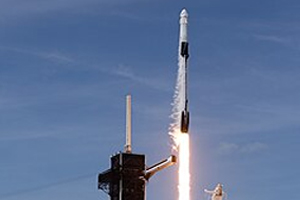
Starship (S31) and Super Heavy booster (B13) are planned to fly on a suborbital trajectory, launching no earlier than November 18 from SpaceX Starship Orbital Launch Pad at Boca Chica, Texas. The flight will have a re-light of a raptor engine, and it will test limits of the flaps during reentry into Earth atmosphere. If all goes well, this may be the last suborbital flight before orbital trajectories with a new generation of Starship. SpaceX is hoping to achieve an ambitious goal of 25 flights of Starship in 2025. (Image credits: SpaceX)
o Nov 19-21 — Smarter Shows, Bremen, Germany:Space Tech Expo Europe; expecting 8,000+ attendees, 700+ exhibitors, 150+ speakers for Europe’s largest B2B space event; free for attendees.
o Nov 19-21 — UNOOSA, Vienna, Austria: 2024 United Nations Conference on Space Law and Policy; to promote adherence to 5 UN treaties on outer space, assist in implementing them via space law, help meet SDG; 200 participants balanced women / men; at International Centre.
o Nov 19-22 — Japanese Rocket Society, American Astronautical Society, Chinese Society of Astronautics, Obihiro, Japan: 16th International Space Conference of Pacific-basin Societies (ISCOPS); space decision-makers, experts, engineers and scientists discuss “DO Actions for Game Changing in Space Exploration.”
☾ Nov 19 — Moon: 5.2° S of Castor, 11:00; 1.85° S of Pollux, 17:00.
☆ Nov 19 — Apollo Asteroid (2024 VU2): Near-Earth Flyby (0.038 AU)
WEDNESDAY
★ Nov 20 — Swift, LEO: Observing gamma-ray bursts & their afterglows in gamma-ray, X-ray, ultraviolet, optical wavelengths from LEO, multiwavelength craft reaches 20 full years / begins 21st year of operations in space today, launched in 2004.
o Nov 20-21 — Space Generation Advisory Council, Secure World Foundation, Abuja, Nigeria: 8th African Space Generation Workshop; hosted by the National Space Research and Development Agency (NASRDA), and the Nigerian Communications Satellite Limited (NIGCOMSAT) invite students and young professionals; reports and recommendations will be submitted to the United Nations Committee on the Peaceful Uses of Outer Space (UN COPUOS).
☾ Nov 20 — Moon: 2.35° NNE of Mars, 13:00; with Mars and Beehive Cluster within circle of diameter 3.65°, 15:00; 3.0° NNE of Beehive Cluster, 19:00.
☆ Nov 20 — Apollo Asteroid (2012 KO11): Near-Earth Flyby (0.016 AU)
THURSDAY
☆Nov 21 — Roscosmos, Launch Soyuz 2.1A / Progress MS-29 (90P),Baikonur Cosmodrome, Kazakhstan: ISS resupply craft to launch with cargo for Expedition 72, arriving at ISS about 2 days later.
● Nov 21 — American Institute of Aeronautics and Astronautics (AIAA) Los Angeles Section,El Segundo CA / Online: Applying Centrifugal Propulsion to Enable Asteroid Deflection; presentation by Nahum Melamed of The Aerospace Corporation; 17:30-20:35 PST, Free – US$30.
●Nov 21 — American Institute of Aeronautics and Astronautics,Online:Submissions close for abstracts / session suggestions for 2025 ASCEND Conference to be held Jul 22-24, 2025, Las Vegas, Nevada.
o Nov 21-22 — China Manned Space (CMS) Engineering Office, Shenzhen, Guangdong, China:6th Human Spaceflight Conference; presentation of papers; at Sun Yat-sen University.
☆ Nov 21 — Apollo Asteroid (2024 TT1): Near-Earth Flyby (0.078 AU)
FRIDAY
☾ Nov 22 — Moon: At last quarter, 15:29.
☆ Nov 22 — Apollo Asteroid (2017 FS128): Near-Earth Flyby (0.035 AU)
SATURDAY
● Nov 23 — American Institute of Aeronautics and Astronautics (AIAA) San Francisco Section,San Francisco CA: Annual Awards Banquet; lunch, admission to Chabot Space & Science Center (10:00-17:00), presentation by Todd Barber of JPL on Voyager 1 & 2 spacecraft; 12:00-14:00 PST, US$19-39.
☆ Nov 23 — Apollo Asteroid (2008 UW91): Near-Earth Flyby (0.065 AU)
SUNDAY
o Nov 24-28 — Center of Space Exploration (COSE) Ministry of Education, Chongqing University, Beijing Institute of Technology, et al, Chongqing, China: ICSHE 2024: International Conference on Space Habitation and Exploitation; topics are Progress of International Lunar / Planetary Exploration, Space Habitation / Construction of Extraterrestrial Ecosystem, Development / Utilization of Space Science / Technology at this 2nd annual conference; 600-2400CNY, US$83-332.
☆ Nov 24 — Apollo Asteroid (2024 VY2): Near-Earth Flyby (0.042 AU)
At the Spokane Convention Center. The meeting will have a broad scope, with a wide-ranging program of science and workforce topics, and celebrating planetary...
Convene, connect, and collaborate at the 19th annual von Braun Space Exploration Symposium! This year’s event will spotlight how bold ideas, emerging technologies, and...
Themes include: Space & the Arctic; Space & AI; Space & International Collaboration. There is a Student Session, a Technical Session, a Frontier Session,...
Oslo Spaceport Norway offers monthly a knowledgeable speaker and opportunity for networking, 17:00-20:00 local time; free entry but registration required. Ground Control is for...
45 satellites to launch for Amazon Leo, formerly named Project Kuiper. This LEO mega constellation will offer broadband internet access with 3,276 satellites.
Occurring 31 October from 09:00-11:00 local time (16:00-18:00 HST, 19:00-21:00 PDT, 22:00-24:00 EDT on 30 October), this Galaxy Forum will be in hybrid format...
Originally planned around this date for Wenchang, China -- TBC (to be confirmed); As the only professional association for astronauts, ASE supports the advancement of...
Coordinating Division Division C Education, Outreach and Heritage The IAU Symposium on Innovative Research and Techniques in Astronomy Communication will take place from November...
Change clocks back 1 hour from Daylight Saving to Standard Time; does not include Hawai’i, Arizona (except the Navajo Nation), American Samoa, Guam, Northern...
ESWW is the main annual event in the European Space Weather and Space Climate calendar. It is an international meeting organised annually within the...
IAU Symposium: IAUS409 - A Journey Towards Effective Astronomy Communication; online and at National Astronomical Observatory of Japan, 2-21-2 Osawa Mitaka, Tokyo. Topics include:...
Launch Complex 1, ~39°S, Mahia Peninsula, New Zealand
iQPS Launch 9, an Earth observation satellite with Synthetic aperture radar for Japan-based imaging company iQPS, to launch on "The Sea God Surveys" mission...
Launch window 10:34am - 2:34pm local time for the 15th batch of classified satellites for a reconnaissance constellation built by SpaceX and Northrop Grumman...
Expecting senior government and executives from NASA, Firefly, Blue Origin to discuss innovation, competitive advantages and a "space industrial revolution in LEO". Capped at...
Launch Complex 1, ~39°S, Mahia Peninsula, New Zealand
iQPS Launch 10, an Earth observation satellite with Synthetic aperture radar for Japan-based imaging company iQPS, to launch on “The Mountain God Rises” mission...