AIAA Aviation Forum 2028
The only aviation event that covers the entire integrated spectrum of aviation business, research, development and technology. At Manchester Grand Hyatt.
The only aviation event that covers the entire integrated spectrum of aviation business, research, development and technology. At Manchester Grand Hyatt.
At Monona Terrace.
NASA spacecraft reaches 19 full years in Moon orbit today; launched Jun 18, 2009, arrived at Moon 5 days later.
NASA ARTEMIS P1 craft surpasses another year in lunar orbit since 2011; it was 1 of 5 satellites launched 2007 to study Earth magnetosphere.
UN-Sanctioned annual, global asteroid awareness program supporting thousands of independently organized events, providing educational resources; held on June 30, the anniversary of the Tunguska event in 1908 when a meteor air burst levelled about 2,150 km² of forest in Siberia, Russia.
Planned launch of Chandrayaan-5 joint ISRO and JAXA mission to explore permanently shadowed regions near Moon South Pole, landing on elevated ridge of Shackleton Crater ~89.45°S, 222.85°E.
NET Q3 2028 — Chang'E-8 planned to land at Moon South Pole with 10 international projects to conduct in-situ resource utilization experiments; mission includes lander, Pakistan SUPARCO rover, robots for supporting international lunar base buildout.
NASA ARTEMIS P2 craft surpasses another full year in lunar orbit since 2011; 1 of 5 satellites launched 2007 to study Earth magnetosphere
First Human mission to land on Moon in 1969; 1st steps by humans on another World taken by Commander Neil Armstrong and Lunar Module Pilot Buzz Aldrin; Command Module piloted by Michael Collins.
Celebrating the 1st people walking on the Moon / another celestial body – International Moon Day has been a recognized / endorsed declaration by the United Nations since 2022.
First USA spacecraft to successfully land on another planet commemorated today for its accomplishment 52 years ago; originally scheduled for July 4, landing was delayed until this day in 1976 due to rough landing site.
NASA craft surpasses another full year in space today, having launched Aug 12, 2018; probe came within ~6.16M km of the Sun on Dec 24, 2024 which is ~7 times closer than any prior spacecraft, traveling faster than any other human-made object at ~692,000 km/hr.
Chandrayaan-3 Vikram lander and Pragyan rover celebrated today after successfully landing on Moon in 2023; marking India as the 4th country to land on Moon, and 1st near the Moon South Pole.
NASA spacecraft surpasses another full year in space today, launched 2012; adding to the understanding of Earth radiation belt environment and its variability.
NASA's Artemis 5th flight (4th crewed mission) is planned to send touchdown on the Moon's surface.
Japan's X-Ray Imaging and Spectroscopy Mission (XRISM), studying galactic plasma, surpasses another full year in space today at ~550-km LEO, having launched 2023.
NASA Mars Atmosphere and Volatile Evolution (MAVEN) spacecraft surpasses another full year of operations in Mars orbit after insertion on this day 2014; continuing to study upper atmosphere.
Observed today is 1st planetary defense / asteroid deflection test success: NASA DART crashed into minor-planet moon Dimorphos of asteroid Didymos on this day in 2022, shortening Dimorphos’ orbital period.
Indian Space Research Organisation (ISRO) first dedicated multi-wavelength space observatory surpasses another full year in space today, launched 2015.
In 1957 the Soviet Union launched the Sputnik 1 mission which became the first artificial Earth satellite and launched humankind into the Space Age. It was launched into an elliptical low Earth orbit by the Soviet Union on 4 October. Size and Weight: Orbit Time: Mission: End of Life: It […]
Celebrating international contributions of space science for betterment of the human condition; Oct 4 is 71st observation of 1st Space mission Sputnik One launched by Soviet Union 1957; Oct 10 is 61st observation of Outer Space Treaty going into effect 1967.

On October 10, 1967 the Outer Space Treaty went into effect - establishing the foundational legal framework for international space law and peaceful exploration. Key Rules of the Treaty: No Weapons of Mass Destruction Peaceful Use Only No Territorial Claims Global Benefit: Declares that space exploration should be carried out […]
Detecting some of the most energetic radiation in space, ESA, NASA, Roscosmos spacecraft surpasses another year of operations in space, despite loss of its thrusters; launched 2002, instruments were officially powered down in February 2025, and planned reentry into Earth's atmosphere expected Feb 2029.
NASA spacecraft mapping boundary between the Solar System and interstellar space surpasses another full year in space; launched on this day 2008.
European Space Agency (ESA) and Roscosmos spacecraft surpasses another full year at Mars, launched 2016; craft continues collecting data on atmosphere, deployed Schiaparelli demonstration lander 19 Oct 2016 (unsuccessful).
European Space Agency / JAXA Mercury Planetary Orbiter (MPO) and Mercury Magnetospheric Orbiter (dubbed Mio ‘waterway or fairway’) surpasses another full year in space today, launched 2018; expected to reach Mercury polar orbit in Nov 2026 to map planet, investigate magnetosphere.
NASA spacecraft surpasses another full year in orbit around Mars today, holds record for longest-surviving continually active spacecraft in orbit around a planet other than Earth; launched 2001.
NASA craft imaging Sun and solar phenomena surpasses another full year in space today; launched 2006.
Today marks another full year of continuous Human occupation of ISS; first component Zarya launched Nov 20, 1998, occupation began Nov 2, 2000.
NASA Lucy mission, to encounter 11 asteroids including a main belt and 7 Jupiter Trojans, to come within 1,000 km of 51-km diameter 21900 Orus asteroid (which may be a possible binary) today.
NASA 12-U CubeSat Capstone acting as a pathfinder for planned International Lunar Gateway surpasses another year around Moon today; launched in 2022.
Observing gamma-ray bursts & their afterglows in gamma-ray, X-ray, ultraviolet, optical wavelengths from LEO, multiwavelength craft surpasses another year of operations in space today, launched in 2004.
☆ Nov 24 — 242nd Galactic Tick Day, Milky Way Galaxy: Highlighting Galaxy awareness by celebrating the Solar System traveling around Milky Way Galaxy Center every ~225 million Earth years, one Galactic Tick happens every 633.7 days; first Tick Day was one Tick after October 2nd, 1608 when the first telescope patent […]
Mars launch window is open December 2028 into early 2029. Rosalind Franklin Rover will launch to search for life on Mars, NASA announced on 4.16.26. The Rosalind Franklin is part of Europe's ExoMars exploration program, which was established about 15 years ago with NASA as a key partner. NASA-ESA partnership […]
European Space Agency (ESA) / National Aeronautics and Space Administration (NASA) craft studying sun, surpasses another full year of operations in space today, launched 1995; discovered more than 3,000 comets.
Japan Aerospace Exploration Agency (JAXA) Hayabusa surpasses another full year in space today; launched Dec 3, 2014, returned samples to Earth in 2020, and now in extended mission to flyby asteroid 98943 Torifune in 2026 and rendezvous with 1998 KY26 in 2031.
European Space Agency (ESA) craft in Very Eccentric Elliptical LEO studying X-ray emissions, star-forming regions, galaxy clusters, environment of supermassive black holes, mapping dark matter, surpasses next full year in space today, launched 1999.
Save the date for future Annual Meetings: December 11-15, 2028 | San Diego
China National Space Administration (CNSA) spacecraft at Guang Han Gong "Moon Palace", Sinus Iridum / Mare Imbrium, 44.12°N 19.51°W, surpasses another full year on Moon surface, landed 2013.
NASA Wide-field Infrared Survey Explorer spacecraft (redubbed Near-Earth Object WISE – NEOWISE) surpasses another full year in space today; launched 2009, went into hibernation February 17, 2011 and reactivated August 21, 2013.
ESA spacecraft surpasses another full year in space today; now in extended mission phase working to map more than 1 billion stars; launched in 2013.
NASA (STSci) / ESA / CSA-ASC infrared astronomy telescope surpasses next full year in space since launching on this day via Ariane 5 ECA rocket in 2021.
ESA spacecraft surpasses next full year in Mars orbit today; will continue to study Mars atmosphere & climate, planet structure, mineralogy, geology, and to search for traces of water; launched June 2, 2003 and arrived at Mars in Dec 2003.
NET 2029 — Tentative date for China's crewed spaceflight program to have first of its multiple human Moon missions to the Moon South Pole region using 2 launches, one for crew spacecraft Mengzhou and one for lander Lanyue that will rendezvous in lunar orbit; developed by China Academy of Launch Vehicle […]
NET Jan — ESA Jupiter Icy Moons Explorer (JUICE) expected to perform 3rd and final flyby of Earth this month, arriving at Jupiter in 2031.
NET 2029 — Roscosmos hoping to launch Launch Luna-28 (Luna-Resurs 2) to the Moon South Pole region for sample return mission.
NET 2029 — Japan plans to launch JAXA Astronauts to space this year on indigenous HTV Return Vehicle.
NET 2029 — China planning to launch its first probe to Jupiter this year with the Tianwen-3.
NET 2029 — Expected launch of CNSA Solar Polar Orbit Observatory spacecraft to enter a high-inclination orbit around the Sun to observe its poles, via a gravity-assist maneuver at Jupiter.
NET 2029 — Scheduled end of European Space Agency Euclid mission which is measuring accelerated expansion of Universe, aiding in understanding of dark energy / dark matter; future plans / extensions to be determined.
NET 2029 — NASA and JPL Caltech Psyche Mission to investigate all-metal asteroid Psyche to insert itself into asteroid orbit around beginning on this year if launching 2026.
Increasing space awareness and education, remembrances and events honor three Apollo 1 crew members lost in 1967 during a launch pad test: Command Pilot Virgil “Gus” Grissom, Senior Pilot Edward H. White and Pilot Roger B. Chaffee.
Educational and ceremonial events held worldwide to advance space technology / education and honor 7 crew members killed in Shuttle accident 28 January 1986: Commander Francis R. “Dick” Scobee, Pilot Michael J. Smith, Astronaut Christa McAuliffe (the 1st ‘Teacher in Space’), Mission Specialists Ellison S. Onizuka, Judith A. Resnick and […]
Annual international conferences and events take place to further space exploration efforts in remembrance of Columbia 7 loss in 2003: Commander Richard D. Husband, Mission Specialist Laurel Clark, Payload Specialist Ilan Ramon (the ‘1st Israeli astronaut’) and Astronauts: William C. McCool, Michael P. Anderson, David M. Brown and Kalpana Chawla […]
NET Feb — INTErnational Gamma-Ray Astrophysics Laboratory (INTEGRAL) space telescope will burn up upon Earth atmosphere reentry this month due to natural orbit decay after running out of fuel reserves / end of science mission in early 2020s; launched Oct 2002.
Lunar New Year 2029 Spring Festival marks the Year of the Rooster.
NET Apr — European Space Agency / JAXA Mercury Magnetospheric Orbiter (BepiColombo) end of extended mission, 9.98 Mercury years after orbit insertion; potential extension of mission or de-orbit plans TBD.
Recognized proclamation to celebrate the first-ever imaged black hole M87* by Event Horizon Telescope collaboration involving Mauna Kea Observatories, given the Hawaiian name Pōwehi; imaged in April 2017 and released Apr 10, 2019.
Celebrating Yuri Gagarin, the 1st human to orbit Earth on Vostok 1 spacecraft in 1961; the flight lasted 108 minutes at 27,400 kph and 327 km above Earth.
Launching parties around the world every year on or around April 12th, in commemoration of Yuri Gagarin becoming the first human to venture into space on April 12, 1961, and the inaugural launch of the first Space Shuttle on April 12, 1981. We use space to bring the world together, […]
On this day, which happens to be a Friday, 370-meter diameter asteroid (previously known as 2004 MN4) will narrowly miss Earth by about 30,000 km, which is classified as Medium Earth Orbit (2,000 - 35,786 km).
OSIRIS-APophis EXplorer (OSIRIS-APEX) is planned rendezvous with and orbit asteroid Apophis starting today for 9 months following the asteroid’s close Earth approach which occurred April 13, 2029; craft previously known as Origins-Spectral Interpretation-Resource Identification-Security-Regolith Explorer (OSIRIS-REx) which returned samples from asteroid Bennu to Earth on Sep 24, 2023.
Commemorating the launch of China’s first satellite, Dongfanghong-1 on April 24, 1970.
First Friday in May, events and presentations to promote STEM education and inspire people to continue the work of Space explorers; originally began as ‘National Space Day’ in 1997 by Lockheed Martin Corp.
Today marks 7th full year / starts 8th year of continuous Human occupation of TSS; Shenzhou 14 three-member crew launched on this day in 2022, beginning occupation.
NASA ARTEMIS P1 craft surpasses another year in lunar orbit since 2011; it was 1 of 5 satellites launched 2007 to study Earth magnetosphere.
NET July — China Chang’E-2 spacecraft expected to come within 7M km of Earth around this date after reaching 300M km apogee; craft was launched 1 October 2010.
NASA ARTEMIS P2 craft surpasses another full year in lunar orbit since 2011; 1 of 5 satellites launched 2007 to study Earth magnetosphere
First USA spacecraft to successfully land on another planet commemorated today for its accomplishment 53 years ago; originally scheduled for July 4, landing was delayed until this day in 1976 due to rough landing site.
First human mission to land on Moon in 1969; 1st steps by humans on another World taken by Commander Neil Armstrong and Lunar Module Pilot Buzz Aldrin; Command Module piloted by Michael Collins.
Celebrating the 1st people walking on the Moon / another celestial body – International Moon Day has been a recognized / endorsed declaration by the United Nations since 2022.
NASA craft surpasses another full year in space today, having launched Aug 12, 2018; probe came within ~6.16M km of the Sun on Dec 24, 2024 which is ~7 times closer than any prior spacecraft, traveling faster than any other human-made object at ~692,000 km/hr.
Chandrayaan-3 Vikram lander and Pragyan rover celebrated today after successfully landing on Moon in 2023; marking India as the 4th country to land on Moon, and 1st near the Moon South Pole.
NASA spacecraft surpasses another full year in space today, launched 2012; adding to the understanding of Earth radiation belt environment and its variability.
Japan's X-Ray Imaging and Spectroscopy Mission (XRISM), studying galactic plasma, surpasses another full year in space today at ~550-km LEO, having launched 2023.
NASA Mars Atmosphere and Volatile Evolution (MAVEN) spacecraft surpasses another full year of operations in Mars orbit after insertion on this day 2014; continuing to study upper atmosphere.
Indian Space Research Organisation (ISRO) first dedicated multi-wavelength space observatory surpasses another full year in space today, launched 2015.
NET Oct — ESA Jupiter Icy Moons Explorer (JUICE) expected to perform flyby of Asteroid 223 Rosa this month, arriving at Jupiter in 2031.
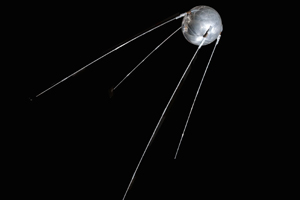
In 1957 the Soviet Union launched the Sputnik 1 mission which became the first artificial Earth satellite and launched humankind into the Space Age. It was launched into an elliptical low Earth orbit by the Soviet Union on 4 October. Size and Weight: Orbit Time: Mission: End of Life: It […]
Celebrating international contributions of space science for betterment of the human condition; Oct 4 is 72nd observation of 1st Space mission Sputnik One launched by Soviet Union 1957; Oct 10 is 62nd observation of Outer Space Treaty going into effect 1967.
On October 10, 1967 the Outer Space Treaty went into effect - establishing the foundational legal framework for international space law and peaceful exploration. Key Rules of the Treaty: No Weapons of Mass Destruction Peaceful Use Only No Territorial Claims Global Benefit: Declares that space exploration should be carried out […]
NASA spacecraft mapping boundary between the Solar System and interstellar space surpasses another full year in space; launched on this day 2008.
European Space Agency (ESA) and Roscosmos spacecraft surpasses another full year at Mars, launched 2016; craft continues collecting data on atmosphere, deployed Schiaparelli demonstration lander 19 Oct 2016 (unsuccessful).
European Space Agency / JAXA Mercury Planetary Orbiter (MPO) and Mercury Magnetospheric Orbiter (dubbed Mio ‘waterway or fairway’) surpasses another full year in space today, launched 2018; expected to reach Mercury polar orbit in Nov 2026 to map planet, investigate magnetosphere.
NASA spacecraft surpasses another full year in orbit around Mars today, holds record for longest-surviving continually active spacecraft in orbit around a planet other than Earth; launched 2001.
NASA craft imaging Sun and solar phenomena surpasses another full year in space today; launched 2006.
Today marks another full year of continuous Human occupation of ISS; first component Zarya launched Nov 20, 1998, occupation began Nov 2, 2000.
NASA 12-U CubeSat Capstone acting as a pathfinder for planned International Lunar Gateway surpasses another year around Moon today; launched in 2022.
Observing gamma-ray bursts & their afterglows in gamma-ray, X-ray, ultraviolet, optical wavelengths from LEO, multiwavelength craft surpasses another year of operations in space today, launched in 2004.
European Space Agency (ESA) / National Aeronautics and Space Administration (NASA) craft studying sun, surpasses another full year of operations in space today, launched 1995; discovered more than 3,000 comets.
Japan Aerospace Exploration Agency (JAXA) Hayabusa surpasses another full year in space today; launched Dec 3, 2014, returned samples to Earth in 2020, and now in extended mission to flyby asteroid 98943 Torifune in 2026 and rendezvous with 1998 KY26 in 2031.
European Space Agency (ESA) craft in Very Eccentric Elliptical LEO studying X-ray emissions, star-forming regions, galaxy clusters, environment of supermassive black holes, mapping dark matter, surpasses next full year in space today, launched 1999.
China National Space Administration (CNSA) spacecraft at Guang Han Gong "Moon Palace", Sinus Iridum / Mare Imbrium, 44.12°N 19.51°W, surpasses another full year on Moon surface, landed 2013.
NASA Wide-field Infrared Survey Explorer spacecraft (redubbed Near-Earth Object WISE – NEOWISE) surpasses another full year in space today; launched 2009, went into hibernation February 17, 2011 and reactivated August 21, 2013.
ESA spacecraft surpasses another full year in space today; now in extended mission phase working to map more than 1 billion stars; launched in 2013.
NASA (STSci) / ESA / CSA infrared astronomy telescope surpasses next full year in space since launching on this day via Ariane 5 ECA rocket in 2021.
ESA spacecraft surpasses next full year in Mars orbit today; will continue to study Mars atmosphere & climate, planet structure, mineralogy, geology, and to search for traces of water; launched June 2, 2003 and arrived at Mars in Dec 2003.
NET 2030 — Europe hopes to have built a sustainable Moon Village by this date, while working toward Mars missions.
NET 2030 — Projected date / decade for NASA to send Humans to Mars.
NET 2030 — Roscosmos hoping to launch Angara A5 with Luna-29 (Luna-Resurs 3) Moon South Pole lander and rover; mission goals / landing site TBD, will support future Human base.
NET 2030 — Russia hopes to launch Millimetron (Spektr-M) space observatory with a diameter of 10 meters to Sun-Earth L2 Lagrange Point to study black holes, formation of stars, planets, galaxies.
At Gaylord National Resort & Convention Center.
Recognized proclamation to celebrate the first-ever imaged black hole M87* by Event Horizon Telescope collaboration involving Mauna Kea Observatories, given the Hawaiian name Pōwehi; imaged in April 2017 and released Apr 10, 2019.
Europa Clipper mission to insert into Jupiter orbit on this day to study Galileo moon Europa through a series of 44 close flybys (25 to 2,700 km); launched 10 October 2024.
Launching parties around the world every year on or around April 12th, in commemoration of Yuri Gagarin becoming the first human to venture into space on April 12, 1961, and the inaugural launch of the first Space Shuttle on April 12, 1981. We use space to bring the world together, […]
Celebrating Yuri Gagarin, the 1st human to orbit Earth on Vostok 1 spacecraft in 1961; the flight lasted 108 minutes at 27,400 kph and 327 km above Earth.
Commemorating the launch of China’s first satellite, Dongfanghong-1 on April 24, 1970.
First Friday in May, events and presentations to promote STEM education and inspire people to continue the work of Space explorers; originally began as ‘National Space Day’ in 1997 by Lockheed Martin Corp.
Today marks 8th full year / starts 9th year of continuous Human occupation of TSS; Shenzhou 14 three-member crew launched on this day in 2022, beginning occupation.
NASA ARTEMIS P1 craft surpasses another year in lunar orbit since 2011; it was 1 of 5 satellites launched 2007 to study Earth magnetosphere.
NASA ARTEMIS P2 craft surpasses another full year in lunar orbit since 2011; 1 of 5 satellites launched 2007 to study Earth magnetosphere
First USA spacecraft to successfully land on another planet commemorated today for its accomplishment 54 years ago; originally scheduled for July 4, landing was delayed until this day in 1976 due to rough landing site.
Celebrating the 1st people walking on the Moon / another celestial body – International Moon Day has been a recognized / endorsed declaration by the United Nations since 2022.
NET Aug — Japan Martian Moons eXploration (MMX) mission, now with Phobos sample, to begin its return to Earth this month, and planned to arrive at Earth by July 2029 to deliver Sample Return Capsule.
NASA craft surpasses another full year in space today, having launched Aug 12, 2018; probe came within ~6.16M km of the Sun on Dec 24, 2024 which is ~7 times closer than any prior spacecraft, traveling faster than any other human-made object at ~692,000 km/hr.
Chandrayaan-3 Vikram lander and Pragyan rover celebrated today after successfully landing on Moon in 2023; marking India as the 4th country to land on Moon, and 1st near the Moon South Pole.
NASA spacecraft surpasses another full year in space today, launched 2012; adding to the understanding of Earth radiation belt environment and its variability.
Japan's X-Ray Imaging and Spectroscopy Mission (XRISM), studying galactic plasma, surpasses another full year in space today at ~550-km LEO, having launched 2023.
NASA Mars Atmosphere and Volatile Evolution (MAVEN) spacecraft surpasses another full year of operations in Mars orbit after insertion on this day 2014; continuing to study upper atmosphere.
Indian Space Research Organisation (ISRO) first dedicated multi-wavelength space observatory surpasses another full year in space today, launched 2015.
NASA spacecraft mapping boundary between the Solar System and interstellar space surpasses another full year in space; launched on this day 2008.
European Space Agency / JAXA Mercury Planetary Orbiter (MPO) and Mercury Magnetospheric Orbiter (dubbed Mio ‘waterway or fairway’) surpasses another full year in space today, launched 2018; expected to reach Mercury polar orbit in Nov 2026 to map planet, investigate magnetosphere.
NASA spacecraft surpasses another full year in orbit around Mars today, holds record for longest-surviving continually active spacecraft in orbit around a planet other than Earth; launched 2001.
NASA craft imaging Sun and solar phenomena surpasses another full year in space today; launched 2006.
NASA mission to encounter 11 asteroids, including a main belt and 7 Jupiter Trojans, to perform Earth flyby / gravity assist today coming within 660 km after reaching Jupiter orbit and returning to the vicinity of the Earth.
Roscosmos State Corporation planning to launch Launch Luna-30 lander to deliver a reusable cargo delivery spacecraft with supplies for human missions.
European Space Agency planning to launch the Argonaut Lunar Descent Element -- lunar lander built by Thales Alenia Space to the Moon.
ISEE-3 (International Sun-Earth Explorer-3) craft, presumably in safe mode, is traveling around Sun & predicted to return to vicinity of Earth this year – may be able to reestablish contact; launched August 12, 1978.
NET July — ESA Jupiter Icy Moons Explorer (JUICE) expected to reach Jupiter this month if launched April 2023; will perform a flyby of Ganymede 7.5-hours before Jupiter insertion; will spend at least 3.5 years studying Jupiter atmosphere and magnetosphere, moons Ganymede, Europa, Callisto and Io with 10 state-of-the-art instruments […]
☆ NET Jul — JAXA Hayabusa 2 mission to rendezvous with asteroid 1998 KY26, after returning samples from (162173) Ryugu to Earth in 2020 and flying by asteroid 98943 Torifune in 2026.
NET July — Japan Martian Moons eXploration (MMX) mission with Mars moon Phobos' sample to arrive at Earth this month and deliver Sample Return Capsule.
NASA craft surpasses another full year in space today, having launched Aug 12, 2018; probe came within ~6.16M km of the Sun on Dec 24, 2024 which is ~7 times closer than any prior spacecraft, traveling faster than any other human-made object at ~692,000 km/hr.
Highlighting Galaxy awareness by celebrating the Solar System traveling around Milky Way Galaxy Center every ~225 million Earth years, one Galactic Tick happens every 633.7 days; first Tick Day was one Tick after October 2nd, 1608 when the first telescope patent was filed.
South Korea planning to launch Moon lander & rover to look for signs of rare minerals on Moon surface.
ESA Jupiter Icy Moons Explorer (JUICE) expected to perform flyby of moon Europa this month.
Mercury to pass directly between Earth and Sun; observers see distant planet as small dot gliding slowly across face of Sun; starts Nov 12 at 20:41 HST, ends 01:07 Nov 13.
Tentative date for China to test launch its next-gen rocket intended to carry people and cargo to the Moon.
Roscosmos hoping to launch lander to deliver a heavy lunar rover weighing up to 5,000 kg, capable of mining / extracting lunar resources.
Türkiye hopes to have space-launch capabilities and more than 20 operational satellites by this date.
NASA Lucy mission to come within 1,000 km of 113-km diameter 617 Patroclus and 104-km diameter Menoetius, p-type binary asteroids; Lucy will be in a stable, 6-year orbit between the L4 and L5 -- mission extension may be granted.
End of primary mission for NASA Lucy mission, future science and mission plan extension TBD; mission is a twelve-year journey to eight different asteroids, and craft will continue to orbit the Sun in a stable orbit between the L4 and L5 Trojan swarms around Jupiter.
Today marks 10th full year / starts 11th year of continuous Human occupation of Tiangong Space Station; Shenzhou 14 three-member crew launched on this day in 2022, beginning occupation.
ESA Jupiter Icy Moons Explorer (JUICE) expected to achieve Ganymede elliptical orbit insertion this month.
International Lunar Research Station ILRS-5 mission to occur by this date; final mission before human occupation of ILRS will include lunar-based astronomy and Earth observation capabilities.
India planning to launch Soorya for final module completing space station Bharatiya Antariksh in LEO.
Roscosmos hopes to launch Luna-32 to deliver heavy modules weighing up to 5,000 kg for the construction of the International Lunar Research Station by this date.
Roscosmos hopes to launch Luna-33 orbiter to be used for communication and navigation for Human Moon Missions and lunar base.