Leonids Meteor Shower Peak
From Comet Tempel-Tuttle (55P) dust cloud, peak rate 15 per hour. Moon is 9% full.
From Comet Tempel-Tuttle (55P) dust cloud, peak rate 15 per hour. Moon is 9% full.
The northern hemisphere's autumn equinox on Mars marks the beginning of the autumn season in the northern hemisphere and coincides with the start of the planet's dust storm season. Unlike Earth, which has a nearly circular orbit, Mars' elliptical orbit causes its seasons to vary in length.
Appearing at brightest magnitude 0.9, traveling from SW to E, Hubble Space Telescope will appear over Hawaiian Islands from 18:56:02 to 19:03:04 HST.
Usually strongest meteor shower yearly, up to 150 hourly. Moon is 30% full.
Occurs 05:01 HST, 15:01 UTC; It is the winter solstice in the Northern Hemisphere, resulting in the shortest day and longest night of the year; and conversely, it is the summer solstice in the Southern Hemisphere, bringing the longest day and shortest night.
From Comet Tuttle (8P), with up to 10 per hour. Moon only 3% full helps viewing on peak nights; active Dec 17-26.
At magnitude 2.9, the Hubble Space Telescope will travel over Hawaiian Islands from SSE to E, rising at 04:58:50 to 05:04:49 HST.
NASA Juno indicates Europa ice may be 6x deeper than thickest Antarctic ice; timing of craft planned plunge into Jupiter clouds TBD | ESA JUICE heading toward Earth gravity assist Sep 2026.
The Quadrantid shower is known for its brief, intense peak, lasting only a few hours. Appearing to radiate from Constellation Quadrans Muralis, there can be 25-120 meteors per hour. Comets are traveling ~40km/second and come from the debris trail of Asteroid 2003 EH1, discovered in 2003 by the Lowell Observatory […]
08:00 HST, 18:00 UTC; Earth perihelion is the point in its orbit when it is closest to the Sun, occurring annually in early January.
Visible at -3.9 magnitude, the International Space Station will travel over Hawaiian Islands from NW to SE, rising at 04:48:07 to 04:54:02 HST.
Beginning 06:20:51 HST from the SSW, Tiangong will make a visible pass at brightest magnitude 1.2 over Hawaiian Islands, setting 06:29:49 in the ENE.
Total solar eclipse, starts 17:02:06 UTC (07:02:0 HST), will sweep across the Arctic, Greenland, Iceland, and northern Spain, offering up to 2 minutes of totality; Maximum Eclipse: 17:45:53
Best-known for occasional rare, intense bursts and bright, long-lasting fireballs, they average 3–6 meteors per hour, up to 25+; body producing them is still unknown; seen in the constellation Centaurus, making them most-visible in the Southern Hemisphere with viewing also from Hawai'i and southern Florida / Texas / Asia.
Begins 11:42 UTC (01:42 HST), maximum at 12:13 UTC, creating a "ring of fire" visible primarily over remote parts of Antarctica and the southern ocean; 96% of the sun obscured.
Mercury, Venus, Jupiter, Saturn, Uranus and Neptune form an arc across the sky, most visible in the west 20-40 minutes after sunset. Venus and Jupiter will be easily visible. Saturn and Mercury may be visible, but they will be lower on the horizon and set quickly. Uranus and Neptune will […]
Maximum eclipse 11:33 UTC (01:33 HST); visible across North America, the Pacific, East Asia, and Australia. The total phase (totality) lasts from 11:04 to 12:02 UTC.
Occurs 04:45 HST / 14:45 UTC; March equinox is known as the vernal equinox (or spring equinox) in the Northern Hemisphere and as the autumnal equinox (or fall equinox) in the Southern Hemisphere; it is the equinox on the Earth when the subsolar point appears to leave the Southern Hemisphere […]
02:12 UTC (14:12 HT)
Predicted date for the comet to make a close pass by the Sun (perihelion), potentially triggering a sudden brightening and dramatic tail. If it survives the encounter, it may become visible to the naked eye. This event is part of a rare opportunity in April to potentially view two comets—C/2026 […]
Best seen from Northern Hemisphere, with a lower hourly rate in the Southern Hemisphere, Lyrids seem to stream from the Constellation Lyra. They actually derive from the debris trail of Comet C/1861 G1 Thatcher, which has a period of 415 years. Can be "fireball" bright but usually lack persistent trains, […]
17:24 UTC (07:24 HST).
Strongest viewed from southern tropics; north of the equator, expect medium rates of 10-30 per hour just before dawn, with this year's waning gibbous Moon reducing viewing to less than 10. Originating from Halley's Comet, seen in constellation Aquarius from April 19 to May 28, 2026.
22:46 HST on May 30 | 08:46 UTC on May 31.
Seen in the sunrise direction in the dark hour before dawn, with a predicted rate of 60 to 200 per hour, 2026 will have a thick waxing crescent Moon so watch from a place in the Moon shadow or with a distant object that blocks moonlight. Called the most-active daytime […]
23:57 UTC (13:57 HST).
Occurs 07:30 HST / 17:30 UTC; Earth aphelion is the point in its elliptical orbit where it is farthest from the Sun, occurring annually in early July; at aphelion , Earth is about 94.5 million miles from the Sun, or roughly 3% farther than its closest point, perihelion, in January.
Closest Earth approach, peak brightness for viewing, tracking and studies.
Lāhainā Noon is a phenomenon where the sun passes directly overhead, causing vertical objects to cast zero shadow. It occurs twice a year in the tropics. On the Big Island Lāhainā Noon will occur: Waimea: Hilo: Kailua-Kona: July 24 at 12:30 p.m. HST
14:37 UTC / 04:37 HST.
Emanating from ~6km-wide comet with 5.3-year Solar orbit, visible in constellation Aquarius near star Delta Aquarii, fast, faint meteors peak on this night, best seen from the Southern Hemisphere; the bright Moon in 2026 may make the best viewing several days earlier.
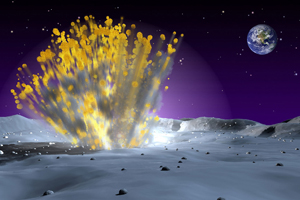
At 06:34:33 UTC on August 5, the upper stage (catalogued as 2025-010D) from the launch of Firefly's Blue Ghost-1 lander on January 15, 2025 will impact the Moon at roughly 2.43 km/s (8,700 km/h or 5,400 mph) - resulting in a flash of light, vaporizing the upper stage and a […]
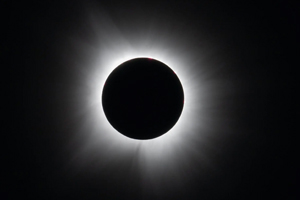
A total solar eclipse with a magnitude of 1.0386 (greatest eclipse 17:47:06 UTC) will be visible in parts of Greenland, Iceland, northern Russia, the Atlantic Ocean, Spain and a small corner of Portugal. Viewers in other places in the Northern Hemisphere also will have the chance to experience a partial solar […]
With 93% of the Moon falling into Earth's umbral shadow, maximum eclipse 18:19 HST // 04:12 UTC on August 28, visible from the Americas, Europe, Africa, and parts of Asia.

Starting 08:30 EDT, NASA's Jessica Meir and ESA's Sophie Adenot to work outside the ISS for ~6.5 hours to replace a retroreflector on the forward port of the space station’s Harmony module to support spacecraft navigation during rendezvous and docking operations. After installing the reflector, the crew will work to […]
14:02 HST (04:02 UTC); the Sun rises exactly in east traveling through sky for 12 hours, sets exactly in west; every place on Earth experiences a ~12-hour day.
16:49 UTC (06:49 HST).
Appearing in constellation Orion, Orionids are a Class I shower providing up to 20 per hour, swiftly moving ~66km/sec. With activity spanning October 2 - November 12, other nights might provide good viewing since Moon on the peak night is 80% full.
18:12 HST // 04:12 UTC on Oct 26.
14:54 UTC (04:54 HST).
10:49 HST (00:49 UTC); the Sun reaches the point where it is farthest South of the celestial equator, marking the shortest day and longest night of the year (opposite in Southern Hemisphere).
25:29 HST // 01:29 UTC on Dec 24.
Highlighting Galaxy awareness by celebrating the Solar System traveling around Milky Way Galaxy Center every ~225 million Earth years, one Galactic Tick happens every 633.7 days; first Tick Day was one Tick after October 2nd, 1608 when the first telescope patent was filed.
☆ Nov 24 — 242nd Galactic Tick Day, Milky Way Galaxy: Highlighting Galaxy awareness by celebrating the Solar System traveling around Milky Way Galaxy Center every ~225 million Earth years, one Galactic Tick happens every 633.7 days; first Tick Day was one Tick after October 2nd, 1608 when the first telescope patent […]
On this day, which happens to be a Friday, 370-meter diameter asteroid (previously known as 2004 MN4) will narrowly miss Earth by about 30,000 km, which is classified as Medium Earth Orbit (2,000 - 35,786 km).
NET Aug — Japan Martian Moons eXploration (MMX) mission, now with Phobos sample, to begin its return to Earth this month, and planned to arrive at Earth by July 2029 to deliver Sample Return Capsule.
NASA mission to encounter 11 asteroids, including a main belt and 7 Jupiter Trojans, to perform Earth flyby / gravity assist today coming within 660 km after reaching Jupiter orbit and returning to the vicinity of the Earth.
ISEE-3 (International Sun-Earth Explorer-3) craft, presumably in safe mode, is traveling around Sun & predicted to return to vicinity of Earth this year – may be able to reestablish contact; launched August 12, 1978.
☆ NET Jul — JAXA Hayabusa 2 mission to rendezvous with asteroid 1998 KY26, after returning samples from (162173) Ryugu to Earth in 2020 and flying by asteroid 98943 Torifune in 2026.
NET July — ESA Jupiter Icy Moons Explorer (JUICE) expected to reach Jupiter this month if launched April 2023; will perform a flyby of Ganymede 7.5-hours before Jupiter insertion; will spend at least 3.5 years studying Jupiter atmosphere and magnetosphere, moons Ganymede, Europa, Callisto and Io with 10 state-of-the-art instruments […]
NET July — Japan Martian Moons eXploration (MMX) mission with Mars moon Phobos' sample to arrive at Earth this month and deliver Sample Return Capsule.
Highlighting Galaxy awareness by celebrating the Solar System traveling around Milky Way Galaxy Center every ~225 million Earth years, one Galactic Tick happens every 633.7 days; first Tick Day was one Tick after October 2nd, 1608 when the first telescope patent was filed.
Mercury to pass directly between Earth and Sun; observers see distant planet as small dot gliding slowly across face of Sun; starts Nov 12 at 20:41 HST, ends 01:07 Nov 13.