• 26 Years in Space: INTErnational Gamma-Ray Astrophysics Laboratory (INTEGRAL)

    Low Earth Orbit (LEO)

    Detecting some of the most energetic radiation in space, ESA, NASA, Roscosmos spacecraft surpasses another year of operations in space, despite loss of its thrusters; launched 2002, instruments were officially powered down in February 2025, and planned reentry into Earth's atmosphere expected Feb 2029.

  • 12 Years at Mars: ExoMars 2016 Orbiter

    Mars Orbit

    European Space Agency (ESA) and Roscosmos spacecraft surpasses another full year at Mars, launched 2016; craft continues collecting data on atmosphere, deployed Schiaparelli demonstration lander 19 Oct 2016 (unsuccessful).

  • 27 Years in Mars Orbit: Mars Odyssey

    Mars Orbit

    NASA spacecraft surpasses another full year in orbit around Mars today, holds record for longest-surviving continually active spacecraft in orbit around a planet other than Earth; launched 2001.

  • 24 Years in Space: Swift Spacecraft

    Low Earth Orbit (LEO)

    Observing gamma-ray bursts & their afterglows in gamma-ray, X-ray, ultraviolet, optical wavelengths from LEO, multiwavelength craft surpasses another year of operations in space today, launched in 2004.

  • 33 Years in Space: Solar and Heliospheric Observatory (SOHO)

    Low Earth Orbit (LEO)

    European Space Agency (ESA) / National Aeronautics and Space Administration (NASA) craft studying sun, surpasses another full year of operations in space today, launched 1995; discovered more than 3,000 comets.

  • 14 Years in Space: Japan’s Hayabusa 2

    Asteroid 98943 Torifune Trajectory

    Japan Aerospace Exploration Agency (JAXA) Hayabusa surpasses another full year in space today; launched Dec 3, 2014, returned samples to Earth in 2020, and now in extended mission to flyby asteroid 98943 Torifune in 2026 and rendezvous with 1998 KY26 in 2031.

  • 29 Years in Space: XMM-Newton

    Low Earth Orbit (LEO)

    European Space Agency (ESA) craft in Very Eccentric Elliptical LEO studying X-ray emissions, star-forming regions, galaxy clusters, environment of supermassive black holes, mapping dark matter, surpasses next full year in space today, launched 1999.

  • 19 Years in Space: WISE / NEOWISE

    Low Earth Orbit (LEO)

    NASA Wide-field Infrared Survey Explorer spacecraft (redubbed Near-Earth Object WISE – NEOWISE) surpasses another full year in space today; launched 2009, went into hibernation February 17, 2011 and reactivated August 21, 2013.

  • 15 Years in Space: Gaia Spacecraft

    Sun-Earth L2 Lagrange point

    ESA spacecraft surpasses another full year in space today; now in extended mission phase working to map more than 1 billion stars; launched in 2013.

  • 7 Years in Space: James Webb Space Telescope

    Sun-Earth L2 Lagrange point

    NASA (STSci) / ESA / CSA-ASC infrared astronomy telescope surpasses next full year in space since launching on this day via Ariane 5 ECA rocket in 2021.

  • 25 Years in Mars Orbit: ESA’s Mars Express

    Mars Orbit

    ESA spacecraft surpasses next full year in Mars orbit today; will continue to study Mars atmosphere & climate, planet structure, mineralogy, geology, and to search for traces of water; launched June 2, 2003 and arrived at Mars in Dec 2003.

  • 62nd Anniversary of Apollo 1 Loss

    Nationwide USA

    Increasing space awareness and education, remembrances and events honor three Apollo 1 crew members lost in 1967 during a launch pad test: Command Pilot Virgil “Gus” Grissom, Senior Pilot Edward H. White and Pilot Roger B. Chaffee.

  • 43rd Anniversary: Loss of Challenger STS-51L

    Nationwide USA

    Educational and ceremonial events held worldwide to advance space technology / education and honor 7 crew members killed in Shuttle accident 28 January 1986: Commander Francis R. “Dick” Scobee, Pilot Michael J. Smith, Astronaut Christa McAuliffe (the 1st ‘Teacher in Space’), Mission Specialists Ellison S. Onizuka, Judith A. Resnick and […]

  • 26th Anniversary: Loss of Columbia STS-107

    Nationwide USA

    Annual international conferences and events take place to further space exploration efforts in remembrance of Columbia 7 loss in 2003: Commander Richard D. Husband, Mission Specialist Laurel Clark, Payload Specialist Ilan Ramon (the ‘1st Israeli astronaut’) and Astronauts: William C. McCool, Michael P. Anderson, David M. Brown and Kalpana Chawla […]

  • Lunar New Year

    China (Zhongguo) / Worldwide

    Lunar New Year 2029 Spring Festival marks the Year of the Rooster.

  • Pōwehi Day

    Statewide Hawai’i, USA

    Recognized proclamation to celebrate the first-ever imaged black hole M87* by Event Horizon Telescope collaboration involving Mauna Kea Observatories, given the Hawaiian name Pōwehi; imaged in April 2017 and released Apr 10, 2019.

  • National Day of Space Flight

    China (Zhongguo)

    Commemorating the launch of China’s first satellite, Dongfanghong-1 on April 24, 1970.

  • International Moon Day (Annual)

    Global / Inter-Global

    Celebrating the 1st people walking on the Moon / another celestial body – International Moon Day has been a recognized / endorsed declaration by the United Nations since 2022.

  • 53rd Anniversary: First-Ever Landing on Mars (Viking 1)

    Nationwide USA

    First USA spacecraft to successfully land on another planet commemorated today for its accomplishment 53 years ago; originally scheduled for July 4, landing was delayed until this day in 1976 due to rough landing site.

  • 11 Years in Space: Parker Solar Probe

    Heliocentric Orbit

    NASA craft surpasses another full year in space today, having launched Aug 12, 2018; probe came within ~6.16M km of the Sun on Dec 24, 2024 which is ~7 times closer than any prior spacecraft, traveling faster than any other human-made object at ~692,000 km/hr.

  • 6th Anniversary: India’s First Lunar Landing (Chandrayaan-3)

    Statio Shiv Shakti, 69.373°S 32.319°E, Moon Surface

    Chandrayaan-3 Vikram lander and Pragyan rover celebrated today after successfully landing on Moon in 2023; marking India as the 4th country to land on Moon, and 1st near the Moon South Pole.

  • 17 Years in Space: Van Allen Probes

    Low Earth Orbit (LEO)

    NASA spacecraft surpasses another full year in space today, launched 2012; adding to the understanding of Earth radiation belt environment and its variability.

  • 14 Years in Space: India’s Astrosat

    Low Earth Orbit (LEO)

    Indian Space Research Organisation (ISRO) first dedicated multi-wavelength space observatory surpasses another full year in space today, launched 2015.

  • World Space Week

    Worldwide

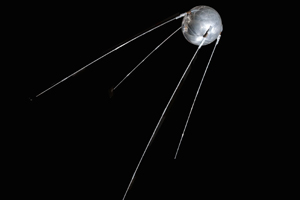
    Celebrating international contributions of space science for betterment of the human condition; Oct 4 is 68th observation of 1st Space mission Sputnik One launched by Soviet Union 1957; Oct 10 is 58th observation of Outer Space Treaty going into effect 1967.

  • 13 Years at Mars: ExoMars 2016 Orbiter

    Mars Orbit

    European Space Agency (ESA) and Roscosmos spacecraft surpasses another full year at Mars, launched 2016; craft continues collecting data on atmosphere, deployed Schiaparelli demonstration lander 19 Oct 2016 (unsuccessful).

  • 28 Years in Mars Orbit: Mars Odyssey

    Mars Orbit

    NASA spacecraft surpasses another full year in orbit around Mars today, holds record for longest-surviving continually active spacecraft in orbit around a planet other than Earth; launched 2001.

  • 25 Years in Space: Swift Spacecraft

    Low Earth Orbit (LEO)

    Observing gamma-ray bursts & their afterglows in gamma-ray, X-ray, ultraviolet, optical wavelengths from LEO, multiwavelength craft surpasses another year of operations in space today, launched in 2004.

  • 34 Years in Space: Solar and Heliospheric Observatory (SOHO)

    Low Earth Orbit (LEO)

    European Space Agency (ESA) / National Aeronautics and Space Administration (NASA) craft studying sun, surpasses another full year of operations in space today, launched 1995; discovered more than 3,000 comets.

  • 15 Years in Space: Japan’s Hayabusa 2

    Asteroid 98943 Torifune Trajectory

    Japan Aerospace Exploration Agency (JAXA) Hayabusa surpasses another full year in space today; launched Dec 3, 2014, returned samples to Earth in 2020, and now in extended mission to flyby asteroid 98943 Torifune in 2026 and rendezvous with 1998 KY26 in 2031.

  • 30 Years in Space: XMM-Newton

    Low Earth Orbit (LEO)

    European Space Agency (ESA) craft in Very Eccentric Elliptical LEO studying X-ray emissions, star-forming regions, galaxy clusters, environment of supermassive black holes, mapping dark matter, surpasses next full year in space today, launched 1999.

  • 20 Years in Space: WISE / NEOWISE

    Low Earth Orbit (LEO)

    NASA Wide-field Infrared Survey Explorer spacecraft (redubbed Near-Earth Object WISE – NEOWISE) surpasses another full year in space today; launched 2009, went into hibernation February 17, 2011 and reactivated August 21, 2013.

  • 16 Years in Space: Gaia Spacecraft

    Sun-Earth L2 Lagrange point

    ESA spacecraft surpasses another full year in space today; now in extended mission phase working to map more than 1 billion stars; launched in 2013.

  • 8 Years in Space: James Webb Space Telescope

    Sun-Earth L2 Lagrange point

    NASA (STSci) / ESA / CSA infrared astronomy telescope surpasses next full year in space since launching on this day via Ariane 5 ECA rocket in 2021.

  • 26 Years in Mars Orbit: ESA’s Mars Express

    Mars Orbit

    ESA spacecraft surpasses next full year in Mars orbit today; will continue to study Mars atmosphere & climate, planet structure, mineralogy, geology, and to search for traces of water; launched June 2, 2003 and arrived at Mars in Dec 2003.

  • Pōwehi Day

    Statewide Hawai’i, USA

    Recognized proclamation to celebrate the first-ever imaged black hole M87* by Event Horizon Telescope collaboration involving Mauna Kea Observatories, given the Hawaiian name Pōwehi; imaged in April 2017 and released Apr 10, 2019.

  • National Day of Space Flight

    China (Zhongguo)

    Commemorating the launch of China’s first satellite, Dongfanghong-1 on April 24, 1970.

  • International Moon Day (Annual)

    Global / Inter-Global

    Celebrating the 1st people walking on the Moon / another celestial body – International Moon Day has been a recognized / endorsed declaration by the United Nations since 2022.

  • 54th Anniversary: First-Ever Landing on Mars (Viking 1)

    Nationwide USA

    First USA spacecraft to successfully land on another planet commemorated today for its accomplishment 54 years ago; originally scheduled for July 4, landing was delayed until this day in 1976 due to rough landing site.

  • 12 Years in Space: Parker Solar Probe

    Heliocentric Orbit

    NASA craft surpasses another full year in space today, having launched Aug 12, 2018; probe came within ~6.16M km of the Sun on Dec 24, 2024 which is ~7 times closer than any prior spacecraft, traveling faster than any other human-made object at ~692,000 km/hr.

  • 7th Anniversary: India’s First Lunar Landing (Chandrayaan-3)

    Statio Shiv Shakti, 69.373°S 32.319°E, Moon Surface

    Chandrayaan-3 Vikram lander and Pragyan rover celebrated today after successfully landing on Moon in 2023; marking India as the 4th country to land on Moon, and 1st near the Moon South Pole.

  • 18 Years in Space: Van Allen Probes

    Low Earth Orbit (LEO)

    NASA spacecraft surpasses another full year in space today, launched 2012; adding to the understanding of Earth radiation belt environment and its variability.

  • 15 Years in Space: India’s Astrosat

    Low Earth Orbit (LEO)

    Indian Space Research Organisation (ISRO) first dedicated multi-wavelength space observatory surpasses another full year in space today, launched 2015.

  • 29 Years in Mars Orbit: Mars Odyssey

    Mars Orbit

    NASA spacecraft surpasses another full year in orbit around Mars today, holds record for longest-surviving continually active spacecraft in orbit around a planet other than Earth; launched 2001.

  • 13 Years in Space: Parker Solar Probe

    Heliocentric Orbit

    NASA craft surpasses another full year in space today, having launched Aug 12, 2018; probe came within ~6.16M km of the Sun on Dec 24, 2024 which is ~7 times closer than any prior spacecraft, traveling faster than any other human-made object at ~692,000 km/hr.