NET Aug — Jupiter Icy Moons Explorer (JUICE) to perform flyby of Venus this month
ESA Jupiter Icy Moons Explorer (JUICE) expected to perform flyby of Venus this month, arriving at Jupiter in 2031.
ESA Jupiter Icy Moons Explorer (JUICE) expected to perform flyby of Venus this month, arriving at Jupiter in 2031.
NASA craft to perform Jupiter flyby during Perijove 75, its 75th close flyby of Jupiter and 74th science flyby with instruments turned on.
NASA craft to perform Jupiter flyby during Perijove 76, its 76th close flyby of Jupiter and 75th science flyby with instruments turned on – to be last flyby of planet before controlled impact into Jupiter clouds.
Today marks 25 full years / start to 26th year of continuous Human occupation of ISS; first component Zarya launched Nov 20, 1998, occupation began Nov 2, 2000.
ISS Expedition 73 members Sergey Ryzhikov, Alexey Zubritsky and Jonny Kim planned to return to Earth today in Roscosmos Soyuz MS-27 craft, landing in Kazakhstan.
After a final reboost of the ISS, CRS-33, SpaceX Cargo Dragon, is scheduled to undock from the International Space Station for return to Earth, with research samples and cargo, via spashdown in the Pacific Ocean. The reboost capability of Dragon is from the "kit" attached to the outside of the […]
NASA Astronauts Jessica Meir and Chris Williams will conduct U.S. spacewalk 94, exiting the Quest airlock at about 08:00 EDT | 12:00 UTC | 02:00 HST (video coverage beginning 1.5 hours ahead) to prepare the 2A power channel for the future International Space Station Roll-Out Solar Arrays (IROSA) installation. It will be […]
Expected for 17:07 PDT | 14:07 HST | 20:07 EDT | 00:07 UTC, after ~10-day journey around the Moon and 4-day return to Earth from Moon. A joint team of NASA specialists and U.S. Navy divers will secure the capsule, check for hazards, and recover the crew. Five large airbags […]
Expected 2 days after launch from Kazakhstan, arriving ~22:21 UTC with ~7,280 kg of cargo.
On its way to the asteroid Psyche, the Psyche spacecraft will pass within 4,500 km of Mars and will harness the planet’s gravitational pull to speed up and adjust its trajectory toward the metal-rich asteroid. The spacecraft was launched October 13, 2023, and by August 2029, the spacecraft will begin […]
Today marks 4th full year / starts 5th year of continuous Human occupation of TSS; Shenzhou 14 three-member crew launched on this day in 2022, beginning occupation.
Sample-return spacecraft Tianwen-2 will perform an orbit-insertion burn at asteroid 469219 Kamoʻoalewa on Sunday, June 7, 13 months after its launch in May 2025. It is expected to begin collecting samples early next month. https://www.techtimes.com/articles/317613/20260602/tianwen-2-asteroid-orbit-insertion-set-june-7-amateurs-decode-telemetry.htm Kamoʻoalewa, formally designated 2016 HO3, was discovered in April 2016 by the Pan-STARRS 1 telescope […]
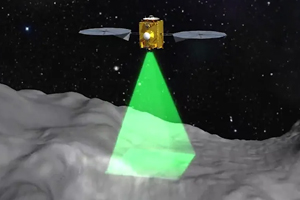
After arriving at Kamo’oalewa on June 7, China asteroid sample return mission planned to collect at least 100 grams via anchoring-drilling, hover-sampling and touch-and-go techniques; scheduled to depart Apr 24, 2027 and return to Earth Nov 29, 2027.
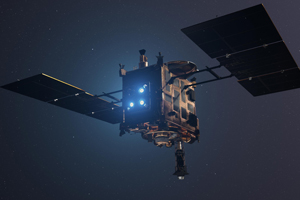
JAXA Hayabusa 2 mission to flyby S-type asteroid 98943 Torifune within 1 to 10 km of the asteroid's surface at a relative velocity of approximately 5 km/s. The mission is planned to rendezvous with asteroid 1998 KY26 in 2031, after returning samples from (162173) Ryugu to Earth in 2020.
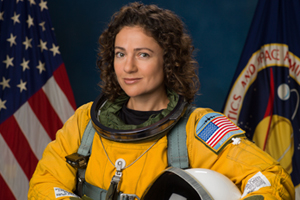
NASA astronaut Jessica Meir takes command of ISS during changeover, followed by three Expedition 74 crew members returning to Earth.
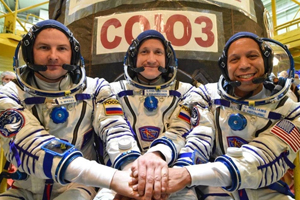
Sergey Kud-Sverchkov, Sergey Mikayev and Christopher Williams set to undock from ISS in Soyuz MS-28, triggering the start to Expedition 75 with Commander Jessica Meir.
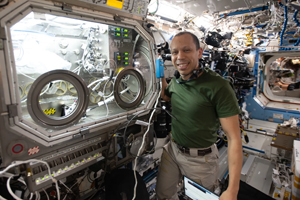
2:45 pm EDT from Johnson Space Center, NASA astronaut Chris Williams will recap his recent eight-month mission aboard the International Space Station. Williams returned to Earth on July 26, after logging 241 days as an Expedition 73/74 flight engineer during his first spaceflight. He returned along with Roscosmos cosmonauts Sergey Kud-Sverchkov and […]
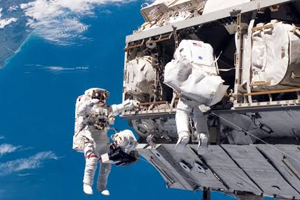
NASA astronauts Jessica Meir and Anil Menon will exit the Quest airlock to install hardware that will modify the station’s 3B power channel and prepare it for the future installation of an International Space Station Roll-Out Solar Array (IROSA). The solar array, scheduled for delivery later this year, will be […]
During U.S. spacewalk 97, two astronauts will replace a Space-to-Ground antenna on the orbital complex. The antenna is a critical communication system NASA uses to transmit data and high‑speed communication between the Mission Control Center in Houston and the space station. This will be the 282nd spacewalk conducted in support […]
The U.S. spacewalk 98 crew members will connect power channel cables and data relay systems as part of ongoing maintenance, including preparations for the space station’s future deorbit. The astronauts also will replace a navigational aid used for spacecraft docking on the Harmony module’s forward port. NASA will share additional […]
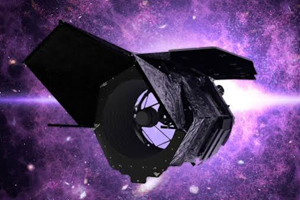
Launch set for 07:26 EDT | Roman spacecraft is 12.7 meters long and 4.4 meters wide when fully deployed. Its primary mirror is 2.4 meters in diameter, which is the same size as the Hubble Space Telescope's primary mirror. It will have sensitivity and resolution comparable to Hubble, but a […]
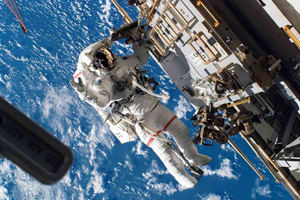
Starting 08:30 EDT, NASA's Jessica Meir and ESA's Sophie Adenot to work outside the ISS for ~6.5 hours to replace a retroreflector on the forward port of the space station’s Harmony module to support spacecraft navigation during rendezvous and docking operations. After installing the reflector, the crew will work to […]
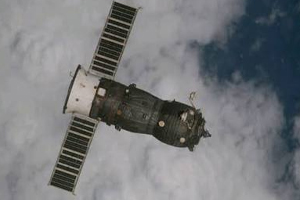
At 15:15 UTC, Roscosmos Progress-33 (94P) resupply craft loaded with waste will undock from ISS and burn up upon reentry into Earth's atmosphere. Coverage of undocking available on NASA Live TV.
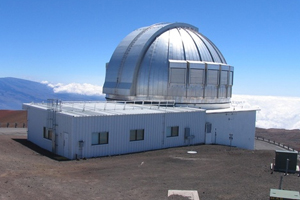
In preparation for its decommissioning, United Kingdom Infrared Telescope (UKIRT) atop Mauna Kea will stop science operations today, with removal to be completed by 2030.
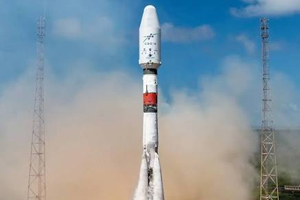
Resupply mission to launch to ISS and arrive within 3.5 hours.
Russia's resupply craft is set to dock to ISS at 09:46 EDT on the Poisk module space-facing port; live coverage on NASA TV with arrival coverage beginning at 09:00.
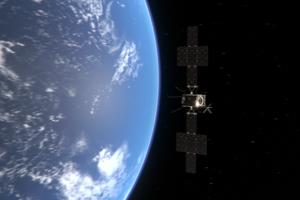
ESA Jupiter Icy Moons Explorer (JUICE) expected to perform its second flyby of Earth this month, arriving at Jupiter in 2031.
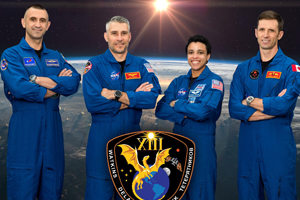
11:10 EDT - Launch to ISS of Jessica Watkins (NASA) – Commander, Luke Delaney (NASA) – Pilot, Joshua Kutryk (Canadian Space Agency) – Mission Specialist, and Sergey Teteryatnikov (Roscosmos) – Mission Specialist to join Expedition 75. The four crew members of the SpaceX Crew-12 mission, who have been on ISS […]
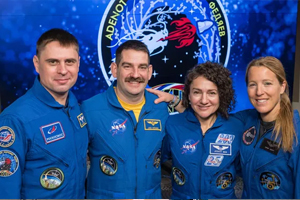
After about a week of overlap with Crew-13, SpaceX Crew-12 Dragon capsule with NASA Astronauts Jessica Meir and Jack Hathaway, and Flight Engineers Sophie Adenot from France and Andrei Fedyaev from Russia will undock from ISS and splash down in the Pacific Ocean. Undocking is broadcast on NASA TV.
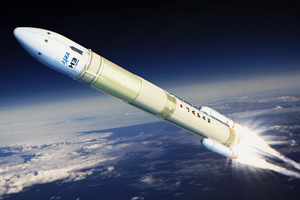
Japan's first Mars mission is planned to conduct observations of Mars, Phobos & Deimos, to land on Phobos to collect samples and return them to Earth. Led by JAXA with major contributions from international partners including NASA, ESA, CNES, and DLR. Scheduled for launch in late 2026, the mission aims […]
Today marks another full year of continuous Human occupation of ISS; first component Zarya launched Nov 20, 1998, occupation began Nov 2, 2000.
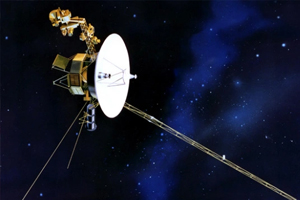
NASA interstellar craft set to reach 16.1 billion miles today, marking one full light-day of communication delays. Craft is operating with only 2 science instruments.
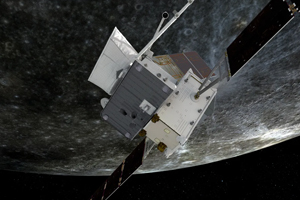
ESA / JAXA Mercury Planetary Orbiter (MPO) and Mercury Magnetospheric Orbiter (MMO) expected to execute a critical capture burn on November 21, 2026, deploy the Mio orbiter on December 9–10, 2026, and begin full science operations in April 2027.
After executing a critical capture burn on , today the craft is planned to deploy the Mio orbiter on , and begin full science operations in April 2027.
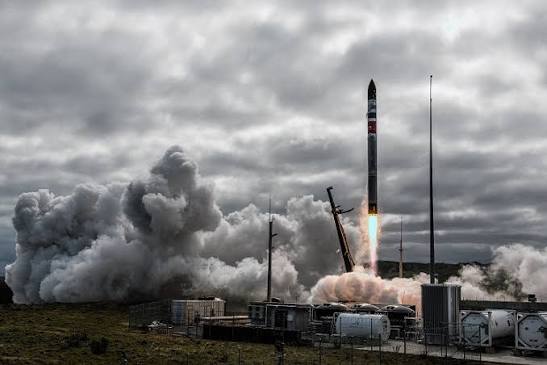
NASA astrophysics 9-month mission to gather ultraviolet light information for understanding origins of stars / planets / life.
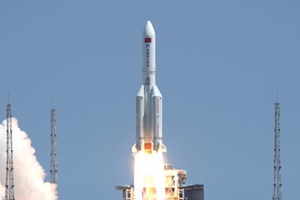
(Estimated Date) CNSA to launch Chang'e-7 mission which is planned to land near the illuminated southeast ridge of Shackleton crater at about 85°S to survey environment and resources with a Relay Satellite, Orbiter, Lander (Rashid-2 from UAE), Rover, Mini-Flying Probe; orbiter and the lander carry Chinese national science payloads as […]
China Tianwen-2 asteroid sample return mission planned to depart Kamo’oalewa (2016 HO3) today and return to Earth with least 100 grams of sample, to enter Earth atmosphere on Nov 29, 2027.
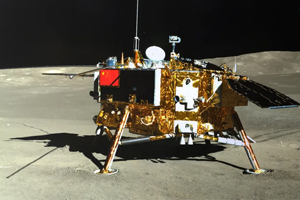
Estimated date if launch is Q1 2027 - CNSA CE-7 mission planned to land at Shackleton Crater Ridge near Moon South Pole region to survey environment and resources with Relay Satellite, Orbiter, Lander (Rashid-2 from UAE), Rover, Mini-Flying Probe; lander has national science payloads as well as 6 international instruments […]
Today marks 5th full year / starts 6th year of continuous Human occupation of TSS; Shenzhou 14 three-member crew launched on this day in 2022, beginning occupation.
NASA mission to encounter 11 asteroids including a main belt and 7 Jupiter Trojans to come within 1,000 km of 64-km diameter 3548 Eurybates asteroid and its 1-km diameter satellite Queta.
NASA mission to encounter 11 asteroids including a main belt and 7 Jupiter Trojans to come within 415 km of 21-km diameter 15094 Polymele asteroid which may be a collisional fragment and rich in organic tholin compounds.
Today marks another full year of continuous Human occupation of ISS; first component Zarya launched Nov 20, 1998, occupation began Nov 2, 2000.
China asteroid sample return capsule planned to return to Earth today with at least 100 grams from Kamo’oalewa (2016 HO3); main Tianwen-2 craft is on trajectory to Main Asteroid Belt to rendezvous with comet 311/P PanSTARRS in 2035.
☆ NET Dec — JAXA Hayabusa 2 mission to perform first flyby Earth today on way to rendezvous with asteroid 1998 KY26 in 2031, after returning samples from (162173) Ryugu to Earth in 2020 and flying by asteroid 98943 Torifune in 2026.
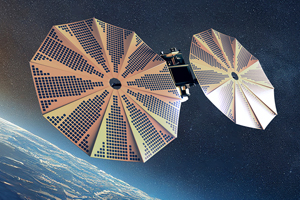
NET March - The MBR Explorer by the United Arab Emirates Space Agency's (UAESA) is a $1 billion, 13-year mission to explore six main-belt asteroids and deploy a lander on a seventh, 269 Justitia, in 2034; launch vehicle / location TBA.
NET Apr — European Space Agency / JAXA Mercury Magnetospheric Orbiter (BepiColombo) nominal mission ends this month, 5.82 Mercury years after orbit insertion; potential extended mission and plans TBD.
NASA's Lucy mission, to encounter 11 asteroids including a main belt and 7 Jupiter Trojans, planned to come within 1,000 km of 34-km diameter 11351 Leucus asteroid today.
☆ NET Jun — JAXA Hayabusa 2 mission to perform second flyby Earth today on way to rendezvous with asteroid 1998 KY26 in 2031, after returning samples from (162173) Ryugu to Earth in 2020 and flying by asteroid 98943 Torifune in 2026.
Today marks 6th full year / starts 7th year of continuous Human occupation of TSS; Shenzhou 14 three-member crew launched on this day in 2022, beginning occupation.
Today marks another full year of continuous Human occupation of ISS; first component Zarya launched Nov 20, 1998, occupation began Nov 2, 2000.
NASA Lucy mission, to encounter 11 asteroids including a main belt and 7 Jupiter Trojans, to come within 1,000 km of 51-km diameter 21900 Orus asteroid (which may be a possible binary) today.
NET 2029 — Scheduled end of European Space Agency Euclid mission which is measuring accelerated expansion of Universe, aiding in understanding of dark energy / dark matter; future plans / extensions to be determined.
NET 2029 — NASA and JPL Caltech Psyche Mission to investigate all-metal asteroid Psyche to insert itself into asteroid orbit around beginning on this year if launching 2026.
NET Jan — ESA Jupiter Icy Moons Explorer (JUICE) expected to perform 3rd and final flyby of Earth this month, arriving at Jupiter in 2031.
NET Feb — INTErnational Gamma-Ray Astrophysics Laboratory (INTEGRAL) space telescope will burn up upon Earth atmosphere reentry this month due to natural orbit decay after running out of fuel reserves / end of science mission in early 2020s; launched Oct 2002.
OSIRIS-APophis EXplorer (OSIRIS-APEX) is planned rendezvous with and orbit asteroid Apophis starting today for 9 months following the asteroid’s close Earth approach which occurred April 13, 2029; craft previously known as Origins-Spectral Interpretation-Resource Identification-Security-Regolith Explorer (OSIRIS-REx) which returned samples from asteroid Bennu to Earth on Sep 24, 2023.
Today marks 7th full year / starts 8th year of continuous Human occupation of TSS; Shenzhou 14 three-member crew launched on this day in 2022, beginning occupation.
NET July — China Chang’E-2 spacecraft expected to come within 7M km of Earth around this date after reaching 300M km apogee; craft was launched 1 October 2010.
NET Oct — ESA Jupiter Icy Moons Explorer (JUICE) expected to perform flyby of Asteroid 223 Rosa this month, arriving at Jupiter in 2031.
Today marks another full year of continuous Human occupation of ISS; first component Zarya launched Nov 20, 1998, occupation began Nov 2, 2000.
NET 2030 — Europe hopes to have built a sustainable Moon Village by this date, while working toward Mars missions.
Europa Clipper mission to insert into Jupiter orbit on this day to study Galileo moon Europa through a series of 44 close flybys (25 to 2,700 km); launched 10 October 2024.
Today marks 8th full year / starts 9th year of continuous Human occupation of TSS; Shenzhou 14 three-member crew launched on this day in 2022, beginning occupation.
NET Aug — Japan Martian Moons eXploration (MMX) mission, now with Phobos sample, to begin its return to Earth this month, and planned to arrive at Earth by July 2029 to deliver Sample Return Capsule.
NASA mission to encounter 11 asteroids, including a main belt and 7 Jupiter Trojans, to perform Earth flyby / gravity assist today coming within 660 km after reaching Jupiter orbit and returning to the vicinity of the Earth.
ISEE-3 (International Sun-Earth Explorer-3) craft, presumably in safe mode, is traveling around Sun & predicted to return to vicinity of Earth this year – may be able to reestablish contact; launched August 12, 1978.
NET July — ESA Jupiter Icy Moons Explorer (JUICE) expected to reach Jupiter this month if launched April 2023; will perform a flyby of Ganymede 7.5-hours before Jupiter insertion; will spend at least 3.5 years studying Jupiter atmosphere and magnetosphere, moons Ganymede, Europa, Callisto and Io with 10 state-of-the-art instruments […]
☆ NET Jul — JAXA Hayabusa 2 mission to rendezvous with asteroid 1998 KY26, after returning samples from (162173) Ryugu to Earth in 2020 and flying by asteroid 98943 Torifune in 2026.
NET July — Japan Martian Moons eXploration (MMX) mission with Mars moon Phobos' sample to arrive at Earth this month and deliver Sample Return Capsule.
ESA Jupiter Icy Moons Explorer (JUICE) expected to perform flyby of moon Europa this month.
NASA Lucy mission to come within 1,000 km of 113-km diameter 617 Patroclus and 104-km diameter Menoetius, p-type binary asteroids; Lucy will be in a stable, 6-year orbit between the L4 and L5 -- mission extension may be granted.
End of primary mission for NASA Lucy mission, future science and mission plan extension TBD; mission is a twelve-year journey to eight different asteroids, and craft will continue to orbit the Sun in a stable orbit between the L4 and L5 Trojan swarms around Jupiter.
Today marks 10th full year / starts 11th year of continuous Human occupation of Tiangong Space Station; Shenzhou 14 three-member crew launched on this day in 2022, beginning occupation.
ESA Jupiter Icy Moons Explorer (JUICE) expected to achieve Ganymede elliptical orbit insertion this month.
China asteroid sample return mission, having returned at least 100 grams from Kamo’oalewa (2016 HO3), to rendezvous with and begin orbiting Comet 311/P PanSTARRS for 1 year.
ESA Jupiter Icy Moons Explorer (JUICE) is planned to be deorbited and impact Ganymede at the end of 2035, having reached Jupiter in 2031.