• Islamic New Year 1448 AH

    Worldwide

    New Year 1 Muharram (1st day) to begin at sunset on Jun 16; if young New Moon is not visible the beginning of the month and year may be delayed.

  • International Space Day

    Worldwide

    First Friday in May, events and presentations to promote STEM education and inspire people to continue the work of Space explorers; originally began as ‘National Space Day’ in 1997 by Lockheed Martin Corp.

  • Lyrids Meteor Shower Peak

    Worldwide

    Best seen from Northern Hemisphere, with a lower hourly rate in the Southern Hemisphere, Lyrids seem to stream from the Constellation Lyra. They actually derive from the debris trail of Comet C/1861 G1 Thatcher, which has a period of 415 years. Can be "fireball" bright but usually lack persistent trains, […]

  • Yuri’s Night Celebrations

    Worldwide

    Launching parties around the world every year on or around April 12th, in commemoration of Yuri Gagarin becoming the first human to venture into space on April 12, 1961, and the inaugural launch of the first Space Shuttle on April 12, 1981. We use space to bring the world together, […]

  • March Equinox

    Worldwide

    Occurs 04:45 HST / 14:45 UTC; March equinox is known as the vernal equinox (or spring equinox) in the Northern Hemisphere and as the autumnal equinox (or fall equinox) in the Southern Hemisphere; it is the equinox on the Earth when the subsolar point appears to leave the Southern Hemisphere […]

  • Planetary Parade: 6 Planets Form a Celestial Arc

    Worldwide

    Mercury, Venus, Jupiter, Saturn, Uranus and Neptune form an arc across the sky, most visible in the west 20-40 minutes after sunset. Venus and Jupiter will be easily visible. Saturn and Mercury may be visible, but they will be lower on the horizon and set quickly. Uranus and Neptune will […]

  • Alpha Centaurids Meteor Shower Peak

    Worldwide

    Best-known for occasional rare, intense bursts and bright, long-lasting fireballs, they average 3–6 meteors per hour, up to 25+; body producing them is still unknown; seen in the constellation Centaurus, making them most-visible in the Southern Hemisphere with viewing also from Hawai'i and southern Florida / Texas / Asia.

  • Quadrantids Meteor Shower Peak

    Worldwide

    The Quadrantid shower is known for its brief, intense peak, lasting only a few hours. Appearing to radiate from Constellation Quadrans Muralis, there can be 25-120 meteors per hour. Comets are traveling ~40km/second and come from the debris trail of Asteroid 2003 EH1, discovered in 2003 by the Lowell Observatory […]

  • Geminids Meteor Shower Peak

    Worldwide

    Usually strongest meteor shower yearly, up to 150 hourly. Moon is 30% full.

  • Leonids Meteor Shower Peak

    Worldwide

    From Comet Tempel-Tuttle (55P) dust cloud, peak rate 15 per hour. Moon is 9% full.

  • Sagan Day Events

    Worldwide

    Various science and astronomy-related events to be held worldwide, such as star parties, lectures and viewings of his show Cosmos. Sagan Day was created in 2009 to honor the birthdate of astronomer and science communicator Carl Sagan.

  • Southern Taurids Meteor Shower Peak

    Worldwide

    Known for fireballs in a swarm year such as 2025, they will have to compete with a Full Moon Nov 5. Appearing in the Constellation Taurus, they emanate from Comet Encke (2P). Traveling relatively slowly, ~27km / second, there may be 5-7 per hour. Southern Taurids are active Sep 20 […]

  • Orionids Meteor Shower Peak

    Worldwide

    One of 2 showers yearly from Halley’s Comet dust, one dust cloud from Halley's path toward the Sun, and one from its path away. Orionids appear to radiate from Constellation Orion, are swift (~67 km/sec), and can be bright and leave persistent trains. Between 10 and 75 meteors per hour […]

  • Draconids Meteor Shower Peak

    Worldwide

    Appearing when Earth passes through the tail of Comet 21P / Giacobini-Zinner, the comet was a perihelion in 2025; speculation has arisen this may be a year with peak yielding many hundreds per hour. However, the Full Moon the day prior may compromise viewing. Most years show 10-20 per hour, […]

  • World Space Week

    Worldwide

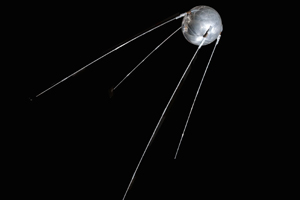
    Celebrating international contributions of space science for betterment of the human condition; Oct 4 is 68th observation of 1st Space mission Sputnik One launched by Soviet Union 1957; Oct 10 is 58th observation of Outer Space Treaty going into effect 1967.

  • NASA Space Apps Challenge

    Worldwide

    48-hour hackathon in French and English for space enthusiasts, programmers, designers, engineers, entrepreneurs and students; 2800+ local events and online

  • International Observe the Moon Night 2025

    Worldwide

    For observation, appreciation, understanding of the Moon / its connection to planetary science / exploration; 1st quarter Moon is best time due to shallow angle of sunlight that illuminates details.

  • Fall Astronomy Day 2025

    Worldwide

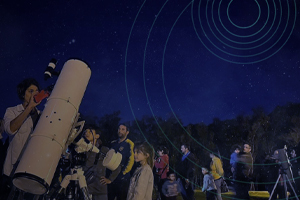
    Astronomical societies, planetariums, museums and observatories sponsor public viewing sessions, presentations and workshops.

  • September Equinox

    Worldwide

    The Sun rises exactly in east traveling through sky for 12 hours, sets exactly in west; every place on Earth experiences a ~12-hour day, 18:19 UTC (08:19 HST).