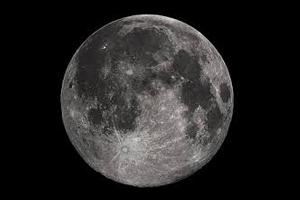
NASA Updates on Plans to Return the the Moon by 2028
Featured
Low Earth Orbit (LEO)
2pm ET, NASA to provide an update on the agency’s plans to return American astronauts to the surface of the Moon by 2028.
2pm ET, NASA to provide an update on the agency’s plans to return American astronauts to the surface of the Moon by 2028.
Detecting some of the most energetic radiation in space, ESA, NASA, Roscosmos spacecraft surpasses another year of operations in space, despite loss of its thrusters; launched 2002, expected to run out of fuel early 2020s and fall to Earth Feb 2029.
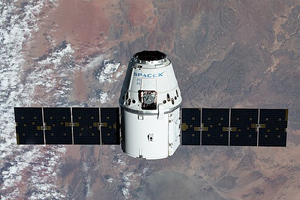
The 35th Commercial Resupply Services craft to arrive at 11:00am EDT (coverage begins 9:15am) with 7,200 pounds of cargo, live coverage provided by NASA. Will dock with the space-facing port of the Harmony module.
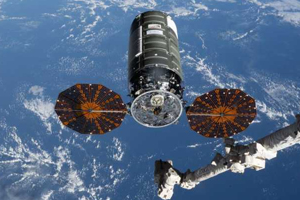
Love coverage of the departure of Northrop Grumman’s Cygnus XL cargo spacecraft from ISS starting 12:30 EDT, release at 12:45 from Canadarm2. The ship, filled with waste, will reentry Earth atmosphere and burn up.
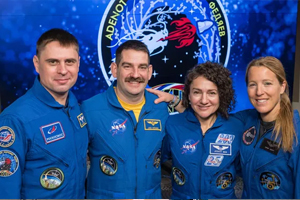
After about a week of overlap with Crew-13, SpaceX Crew-12 Dragon capsule with NASA Astronauts Jessica Meir and Jack Hathaway, and Flight Engineers Sophie Adenot from France and Andrei Fedyaev from Russia will undock from ISS and splash down in the Pacific Ocean. Undocking is broadcast on NASA TV.
Indian Space Research Organisation (ISRO) first dedicated multi-wavelength space observatory surpasses another full year in space today, launched 2015.
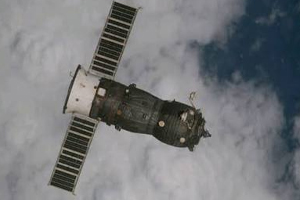
Russia's resupply craft is set to dock to ISS at 09:46 EDT on the Poisk module space-facing port; live coverage on NASA TV with arrival coverage beginning at 09:00.
At 15:15 UTC, Roscosmos Progress-33 (94P) resupply craft loaded with waste will undock from ISS and burn up upon reentry into Earth's atmosphere. Coverage of undocking available on NASA Live TV.
Japan's X-Ray Imaging and Spectroscopy Mission (XRISM), studying galactic plasma, surpasses another full year in space today at ~550-km LEO, having launched 2023.
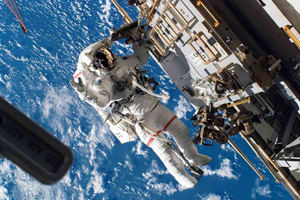
Starting 08:30 EDT, NASA's Jessica Meir and ESA's Sophie Adenot to work outside the ISS for ~6.5 hours to replace a retroreflector on the forward port of the space station’s Harmony module to support spacecraft navigation during rendezvous and docking operations. After installing the reflector, the crew will work to […]
NASA spacecraft surpasses another full year in space today, launched 2012; adding to the understanding of Earth radiation belt environment and its variability.
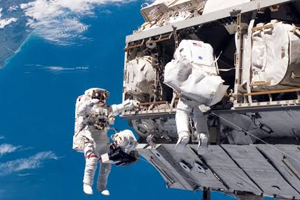
The U.S. spacewalk 98 crew members will connect power channel cables and data relay systems as part of ongoing maintenance, including preparations for the space station’s future deorbit. The astronauts also will replace a navigational aid used for spacecraft docking on the Harmony module’s forward port. NASA will share additional […]
During U.S. spacewalk 97, two astronauts will replace a Space-to-Ground antenna on the orbital complex. The antenna is a critical communication system NASA uses to transmit data and high‑speed communication between the Mission Control Center in Houston and the space station. This will be the 282nd spacewalk conducted in support […]
NASA astronauts Jessica Meir and Anil Menon will exit the Quest airlock to install hardware that will modify the station’s 3B power channel and prepare it for the future installation of an International Space Station Roll-Out Solar Array (IROSA). The solar array, scheduled for delivery later this year, will be […]
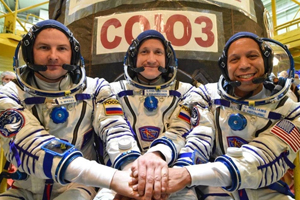
Sergey Kud-Sverchkov, Sergey Mikayev and Christopher Williams set to undock from ISS in Soyuz MS-28, triggering the start to Expedition 75 with Commander Jessica Meir.
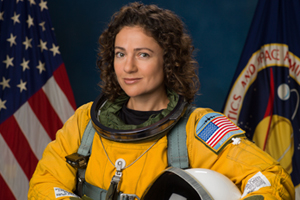
NASA astronaut Jessica Meir takes command of ISS during changeover, followed by three Expedition 74 crew members returning to Earth.
NASA, Cal-tech high-energy astrophysics satellite surpasses another year in space, having launched on this day in 2012.
Seen in the sunrise direction in the dark hour before dawn, with a predicted rate of 60 to 200 per hour, 2026 will have a thick waxing crescent Moon so watch from a place in the Moon shadow or with a distant object that blocks moonlight. Called the most-active daytime […]
Today marks 4th full year / starts 5th year of continuous Human occupation of TSS; Shenzhou 14 three-member crew launched on this day in 2022, beginning occupation.
Strongest viewed from southern tropics; north of the equator, expect medium rates of 10-30 per hour just before dawn, with this year's waning gibbous Moon reducing viewing to less than 10. Originating from Halley's Comet, seen in constellation Aquarius from April 19 to May 28, 2026.
Expected 2 days after launch from Kazakhstan, arriving ~22:21 UTC with ~7,280 kg of cargo.
NASA spacecraft with 2.4-meter diameter main telescope begins 37th year in space today, launched Apr 24, 1990; could continue operations until 2040s.
For U.S. spacewalk 95, planned for April, two NASA Astronauts (yet to be named) will prepare the station’s 3B power channel for a future solar array installation. NASA will provide more information on the date and time of the spacewalk, and other details, closer to the operation. The spacewalks will […]
NASA Astronauts Jessica Meir and Chris Williams will conduct U.S. spacewalk 94, exiting the Quest airlock at about 08:00 EDT | 12:00 UTC | 02:00 HST (video coverage beginning 1.5 hours ahead) to prepare the 2A power channel for the future International Space Station Roll-Out Solar Arrays (IROSA) installation. It will be […]
After a final reboost of the ISS, CRS-33, SpaceX Cargo Dragon, is scheduled to undock from the International Space Station for return to Earth, with research samples and cargo, via spashdown in the Pacific Ocean. The reboost capability of Dragon is from the "kit" attached to the outside of the […]
Beginning 06:20:51 HST from the SSW, Tiangong will make a visible pass at brightest magnitude 1.2 over Hawaiian Islands, setting 06:29:49 in the ENE.
Visible at -3.9 magnitude, the International Space Station will travel over Hawaiian Islands from NW to SE, rising at 04:48:07 to 04:54:02 HST.
At magnitude 2.9, the Hubble Space Telescope will travel over Hawaiian Islands from SSE to E, rising at 04:58:50 to 05:04:49 HST.
From Comet Tuttle (8P), with up to 10 per hour. Moon only 3% full helps viewing on peak nights; active Dec 17-26.
Occurs 05:01 HST, 15:01 UTC; It is the winter solstice in the Northern Hemisphere, resulting in the shortest day and longest night of the year; and conversely, it is the summer solstice in the Southern Hemisphere, bringing the longest day and shortest night.
Surpassing 14 full years / starting 15th year in Space, the NASA Wide-field Infrared Survey Explorer spacecraft (redubbed Near-Earth Object WISE – NEOWISE) launched in 2009, went into hibernation February 17, 2011 and reactivated August 21, 2013.
European Space Agency (ESA) craft surpasses 26 full years / begins 27th year in space today, launched 1999, in very eccentric elliptical LEO studying X-ray emissions, star-forming regions, galaxy clusters, environment of supermassive black holes, and mapping dark matter.
ISS Expedition 73 members Sergey Ryzhikov, Alexey Zubritsky and Jonny Kim planned to return to Earth today in Roscosmos Soyuz MS-27 craft, landing in Kazakhstan.
Surpassing 30 full years of operations in space today, European Space Agency (ESA) / National Aeronautics and Space Administration (NASA) craft continues studying the Sun, has also discovered more than 3,000 comets.
Appearing at brightest magnitude 0.9, traveling from SW to E, Hubble Space Telescope will appear over Hawaiian Islands from 18:56:02 to 19:03:04 HST.
Surpassing 21 full years in space, having launched in 2004, Swift is observing gamma-ray bursts & their afterglows in gamma-ray, X-ray, ultraviolet, optical wavelengths from LEO.
Today marks 25 full years / start to 26th year of continuous Human occupation of ISS; first component Zarya launched Nov 20, 1998, occupation began Nov 2, 2000.
Detecting some of the most energetic radiation in space, ESA, NASA, Roscosmos spacecraft surpasses another year of operations in space, despite loss of its thrusters; launched 2002, expected to run out of fuel early 2020s and fall to Earth Feb 2029.
Indian Space Research Organisation (ISRO) first dedicated multi-wavelength space observatory surpasses another full year in space today, launched 2015.
Japan's X-Ray Imaging and Spectroscopy Mission (XRISM), studying galactic plasma, surpasses another full year in space today at ~550-km LEO, having launched 2023.
NASA spacecraft surpasses another full year in space today, launched 2012; adding to the understanding of Earth radiation belt environment and its variability.
NASA, Cal-tech high-energy astrophysics satellite surpasses another year in space, having launched on this day in 2012.