2025 Welcomes SpaceX Starship Launch #7 and Blue Origin Inaugural New Glenn Flight
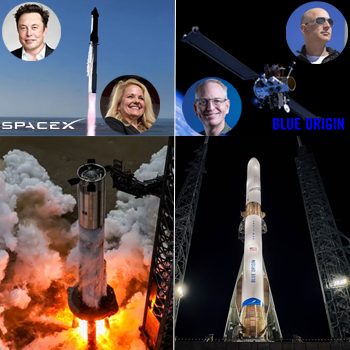
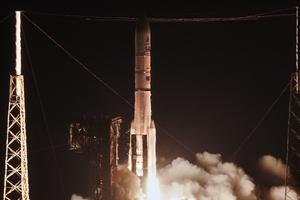
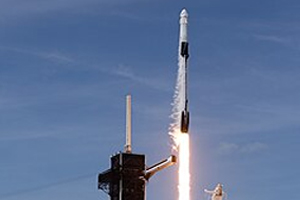
The fully reusable, 121-meter tall, two-stage super heavy-lift launch vehicle, Starship 33, with Booster 14 is planned to fly from from SpaceX Orbital Launch Mount A at Starbase, in Boca Chica, Texas for the 7th Test Flight of a Starship on January 10 (launch window opens 16:00 local time). After stage separation, Booster 14 will attempt to return to launch site and land vertically from where it was launched. The suborbital trajectory of Starship will see it splashdown in the Indian Ocean near Australia about an hour after launch. Images of this Starship nighttime reentry and peak-heating are planned to be taken by NASA’s Gulfstream V aircraft (NASA5 / N95NA) as Starship comes over the horizon before splashdown. The second launch pad at Starbase, Orbital Launch Mount B, is being equipped and should see a first launch this year. In December, SpaceX filed a request to have the launch site incorporated as a new city, named Starbase. Launch is now scheduled for January 8 (local time, launch window opens 01:00) for first flight of Blue Origin New Glenn NG-1 vehicle with Booster GS1-SN001 from LC 36A, Cape Canaveral SFS FL. New Glenn has 7 BE-4 engines, stands 98 meters tall and has a reusable first stage aiming for 25 missions. NG-1 will carry a Blue Ring Pathfinder, a demo platform designed to deliver payloads to GEO, cislunar and interplanetary destinations. The booster will attempt to land on ‘Jacklyn’, the first floating landing platform for New Glenn stationed in the Atlantic Ocean. (Image credits: SpaceX, The Royal Society, Blue Origin)
MONDAY
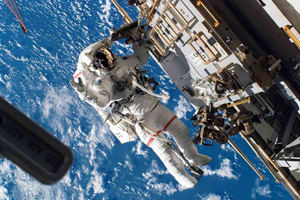
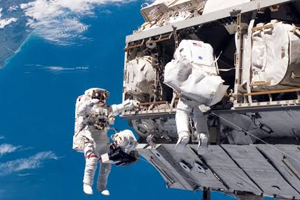
☆Jan 6 — International Space Station, ~415-km LEO: Expedition 72 seven-member crew using Astrobeat experiment to assess cold welding in microgravity, continue Plant Habitat-07 growth of ‘Outredgeous’ red romaine lettuce; Astronauts Suni Williams, Nick Hague, Butch Wilmore and Don Pettit to speak with NASA Admin Bill Nelson and Deputy Admin Pam Melroy about mission status / updates (livestream starts 13:30 EST).
☆Jan 6 — Tiangong Space Station, ~390-km LEO: Shenzhou 19 three-member crew working with flame and hydrodynamic studies; TSS to carry out thousands of experiments over next 10-15 years, expand international cooperation; CMSA notes 181 experiments and nearly 2,000 kg of scientific materials delivered to TSS so far.
★ Jan 6 — SpaceX, Launch Falcon 9 / Starlink Group 12-11, LC39A, Kennedy Space Center FL: Launch window open 06:19-10:50 HST for Starlink space-based Internet communication system.
★ Jan 6 — SpaceX, Launch Falcon 9 / Starlink Group 6-71, SLC-40,Cape Canaveral SFS FL: Launch window open 06:44-11:15 HST for Starlink space-based Internet communication system.
● Jan 6-10 — American Institute of Aeronautics and Astronautics (AIAA), Boeing, RTX, Lockheed Martin, et al,Orlando FL: AIAA SciTech Forum; 6,000+ attendees, 2,920 technical presentations, 1,100 government, corporate, academic institutions, 744 technical sessions, 81 exhibitors, 45 countries; at Hyatt Regency, US$79-1,599.
☆ Jan 6 — Apollo Asteroid (2024 YW3): Near-Earth Flyby (0.014 AU)
TUESDAY
☆ Jan 7 — SpaDeX (Space Docking Experiment), ~470-km LEO: India twin sats known as ‘Chaser’ and ‘Target’, each ~220kg, to attempt autonomous docking in orbit ~12:00 IST / 20:30 Jan 6 HST.
★ Jan 7 — Blue Origin, Launch New Glenn / Blue Ring, LC 36A, Cape Canaveral SFS FL: First New Glenn flight, to carry Blue Origin Blue Ring payload tug; initial USSF National Security Space Launch certification flight; launch window 20:00-23:45 HST.
● = Terrestrial and… o = International terrestrial events
☾ = Moon activity
★ = Space and… ☆ = International space / astro events; in Hawaii Standard Time unless noted. Add 10 hours to obtain UT (‘Universal Time’).
ISRO Moves Forward with SpaDeX Space Docking Experiment; India Science Fest Held
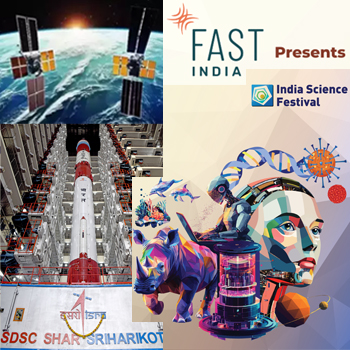
The space docking SpaDeX satellites DX01 (chaser) and SDX02 (target) are in LEO at ~470 km. Separated to ~20 km because of 10 meters/sec velocity difference, they wait 4 days to optimal solar orientation. Re-approaching each other, a radio frequency link will be established at ~5 km apart for docking planned January 7. Sensors developed by ISRO will guide the process using 3 guidance algorithms once the satellites are ~1.5 km apart, at speed 10mm/s. A ring extended on ‘chaser’ will retract, pulling ‘target’ towards it. Once latched, electricity transfer will be demonstrated. The satellites will undock and begin operation of 24 payloads for ~2 years. Docking is technology vital for ISRO Chandrayaan-4 mission to the Moon, and India joins USA, Russia and China with this capability. Launch was Dec 30, ISRO’s 99th from SDSC-SHAR at 13.7° N. Ananth Technologies Limited did satellite assembly, integration and testing. India Science Festival 2025 is held in Pune, an information technology and manufacturing hub, sometimes called “Oxford of the East” because of many educational institutions. Metro area population is over 7 million. 61 speakers from 10 countries are confirmed on subjects including astronomy, physics, AI, batteries, math, biology, neuroscience, R&D strategy, chemistry, engineering, writing, art, law. It is free; some events require registration. The 2024 festival saw 23,000+ attendees, 100+ speakers. (Image credits: ISRO, Foundation for Advancing Science and Technology – FAST India)
● Jan 7-9 — NASA Small Bodies Assessment Group (SBAG),Orlando FL and Online: 2025 Meeting of the NASA SBAG; at University of Central Florida.
☆ Jan 7 — Apollo Asteroid (2024 YZ9): Near-Earth Flyby (0.024 AU)
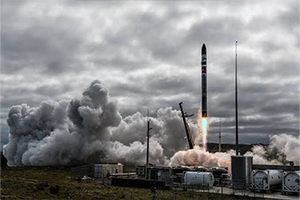
☆ NET Jan — Rocket Lab, Launch Electron / Venus probe, Launch Complex 1, Mahia Peninsula, New Zealand: Independent mission to Venus developed by Rocket Lab and MIT to send tiny probe flying in atmosphere for 5 minutes at altitude 48-60 km.
☆ Jan 8 — BepiColombo, 6th Mercury Flyby / Gravity Assist,Mercury Flyby: European Space Agency / JAXA Mercury Planetary Orbiter (MPO) and Mercury Magnetospheric Orbiter (dubbed Mio ‘waterway or fairway’) to perform its fifth Mercury flyby today, will arrive Mercury November 2026 after being launched 2018.
☆ Jan 8 — Apollo Asteroid (2024 YA10): Near-Earth Flyby (0.022 AU)
THURSDAY
★ Jan 9 — SpaceX, Launch Falcon 9 / NROL-153, SLC-4E,Cape Canaveral SFS FL: Launch window open 17:19-18:49 HST for 7th batch of satellites for a reconnaissance satellite constellation built by SpaceX and Northrop Grumman for the National Reconnaissance Office.
☆ Jan 9 — Apollo Asteroid (2024 PT5): Near-Earth Flyby (0.012 AU); from Arjuna asteroid belt, called an Earth mini-moon when it orbited September 29 – Nov 25, 2024.
☾ Jan 9 — Moon: 4.3° NNW of Uranus, 04:00; 0.37° NNE of Pleiades, 16:00.
☆ Jan 9 — Apollo Asteroid (2024 PT5): Near-Earth Flyby (0.012 AU)
FRIDAY
★ Jan 10 — SpaceX, Launch Super Heavy / Starship, Starbase, Boca Chica TX: Suborbital test flight, Starship Flight Test 7; launch window open 12:00-13:37 HST.
★ Jan 10 — SpaceX, Launch Falcon 9 / Starlink Group 12-12, SLC-40,Cape Canaveral SFS FL: Launch window open 05:27-09:58 HST for Starlink space-based Internet communication system.
☾ Jan 10 — Moon: 5.4° N of Jupiter, 13:00.
☆ Jan 10 — Apollo Asteroid (2024 YD5): Near-Earth Flyby (0.038 AU)
At the Spokane Convention Center. The meeting will have a broad scope, with a wide-ranging program of science and workforce topics, and celebrating planetary...
Convene, connect, and collaborate at the 19th annual von Braun Space Exploration Symposium! This year’s event will spotlight how bold ideas, emerging technologies, and...
Themes include: Space & the Arctic; Space & AI; Space & International Collaboration. There is a Student Session, a Technical Session, a Frontier Session,...
Oslo Spaceport Norway offers monthly a knowledgeable speaker and opportunity for networking, 17:00-20:00 local time; free entry but registration required. Ground Control is for...
45 satellites to launch for Amazon Leo, formerly named Project Kuiper. This LEO mega constellation will offer broadband internet access with 3,276 satellites.
Occurring 31 October from 09:00-11:00 local time (16:00-18:00 HST, 19:00-21:00 PDT, 22:00-24:00 EDT on 30 October), this Galaxy Forum will be in hybrid format...
Originally planned around this date for Wenchang, China -- TBC (to be confirmed); As the only professional association for astronauts, ASE supports the advancement of...
Coordinating Division Division C Education, Outreach and Heritage The IAU Symposium on Innovative Research and Techniques in Astronomy Communication will take place from November...
Change clocks back 1 hour from Daylight Saving to Standard Time; does not include Hawai’i, Arizona (except the Navajo Nation), American Samoa, Guam, Northern...
ESWW is the main annual event in the European Space Weather and Space Climate calendar. It is an international meeting organised annually within the...
IAU Symposium: IAUS409 - A Journey Towards Effective Astronomy Communication; online and at National Astronomical Observatory of Japan, 2-21-2 Osawa Mitaka, Tokyo. Topics include:...
Launch Complex 1, ~39°S, Mahia Peninsula, New Zealand
iQPS Launch 9, an Earth observation satellite with Synthetic aperture radar for Japan-based imaging company iQPS, to launch on "The Sea God Surveys" mission...
Launch window 10:34am - 2:34pm local time for the 15th batch of classified satellites for a reconnaissance constellation built by SpaceX and Northrop Grumman...
Expecting senior government and executives from NASA, Firefly, Blue Origin to discuss innovation, competitive advantages and a "space industrial revolution in LEO". Capped at...
Launch Complex 1, ~39°S, Mahia Peninsula, New Zealand
iQPS Launch 10, an Earth observation satellite with Synthetic aperture radar for Japan-based imaging company iQPS, to launch on “The Mountain God Rises” mission...