New USA Vision for 21st Century Human Solar System Complete Exploration?
Strategic planning for the next 75 years (2025-2100) is of high priority for Earth / terrestrial protection and human exploration and expansion into the complete Solar System. January 20 USA Presidential Inauguration Day, also Martin Luther King Jr. Day and Buzz Aldrin 95th Birthday, marks the start of the next administration to Office. Hopefully the future of USA and its space policies will be directed toward peaceful, inclusive and scientific goals beyond the decades-old Moon-Mars vision, propelling humans there and beyond. NASA, universities, NewSpace enterprises and think tanks should work to advance the Artemis mission of the first lunar landing for a woman and person of color and related goal of building a sustainable base, the first step towards complete Solar System habitation. It is a highly valuable, almost imperative challenge to explore / travel beyond the inner Solar System for science and discovery. By 2100, how many of the 95 worlds of Jupiter and 146 of Saturn could be inhabited? Long-range planning for China includes Tianwen-4 study of Jupiter 2036, Uranus and potentially the Kuiper Belt. 21st Century Complete Solar System exploration will drive humankind toward intriguing icy moons and gas giants, with interstellar ambition, for the millions who came before, for the billions here now and for the trillions yet to come. (Image credits: NASA, W. Myers, Wayfare Entertainment, et al)
MONDAY
☆Jan 20 — International Space Station, ~415-km LEO: Expedition 72 seven-member crew calibrate genetic sequencing hardware to identify bacteria and fungi, process research samples from the Gradient Heating Furnace enabling semiconductor crystal growth research, study how microgravity affects blood flow through the capillaries in the human circulatory system.
☆Jan 20 — Tiangong Space Station, ~390-km LEO: Shenzhou 19 three-member crew are testing a pipeline inspection robot, using electroencephalography to learn about the effects of gravity on sight and music on the brain, collecting data on plantar and joint pressure, tracking sleep movements and heart rates.
● Jan 20 — USA Inauguration Day: 2025 Inauguration of incoming 47th President of the United States of America; will include inaugural address, hopefully advocating for peace, freedom, equality and long-range goals for off-world human space exploration.
● Jan 20 — Buzz Aldrin 95th Birthday Observation: While USA looks to land next generation of Astronauts on the Moon–soon, today marks the 95th birthday of Apollo 11 Moonwalker, American / international hero Buzz Aldrin.
o Jan 20 — International Astronautical Federation (IAF), Online: Submissions due for IAF Newsletter electronic quarterly to be published this month; send to newsletter@iafastro.org.
● Jan 20 — USRA Lunar and Planetary Institute, Online: Applications due for Exploration Science summer intern program May 27 – July 25; activities this year will support Artemis missions.
Southeast Asia Cooperation for Space Access, SEASA, Lunar Missions
The region Southeast Asia has about 700 million people in 11 countries, 5 time zones, 4.5 million km of land mass, and diversity of cultures, geography and assets. 21st Century goals for SEA access to space could come in the form of international partnerships for launch locations: Indonesia has >17,000 islands and plans through the 2045 Space Map to take advantage of equatorial flight paths over low-to-no population zones; Philippines has been considering near-equatorial launch sites at Mindanao (8°N, 125°E) or Mati, Davao Oriental (6°N 126°E); the southern part of Thailand near the equator is noted for stable temperatures and unlikely to have earthquakes. Five countries in SEA have national space programs: Indonesia, Malaysia, the Philippines, Thailand and Vietnam, while Singapore has a plethora of commercial space activities and the Office for Space Technology & Industry (OSTIn). A Southeast Asia Space Agency (SEASA) regional partnership, similar to ESA, could greatly advance astronautical, astronomical, scientific and economic growth. Enhancing space activities are annual events Asia Pacific Regional Space Agency Forum (APRSAF), Global Space Technology Convention & Exhibition (GSTCE), as well as ILOA-hosted Galaxy Forums and Lunar Commercial Communications Workshops. ILOA seeks to advance SEA lunar astronomy and lunar missions through its proposed SEA Principal Operating Partnership (POP) Memorandum of Understandings and its flagship ILO-1 payload planned to launch NET 2026. (Image credits: NASA, ASEAN, NARIT, ESA, ASI)
TUESDAY
☾ Jan 21 — Moon: At last quarter, 10:31.
☆ Jan 21 — Apollo Asteroid 2014 OG300: Near-Earth Flyby (0.092 AU)
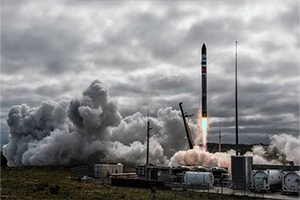
☆ NET Jan — Rocket Lab, Launch Electron / Venus probe, Launch Complex 1, Mahia Peninsula, New Zealand: Independent mission to Venus developed by Rocket Lab and MIT to send tiny probe flying in atmosphere for 5 minutes at altitude 48-60 km.
● Jan 19-23 — American Astronautical Society (AAS), American Institute of Aeronautics and Astronautics (AIAA),Kaua’i HI / Online: 2025 AAS / AIAA Space Flight Mechanics Meeting; at Lihue Royal Sonesta Kaua’i Resort.
☆ Jan 22 — Apollo Asteroid 265196 (2004 BW58): Near-Earth Flyby (0.072 AU)
THURSDAY
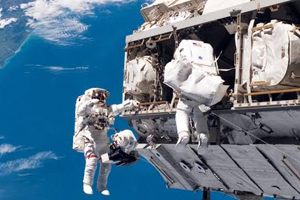
☆Jan 23 — International Space Station, U.S. EVA #92, ~415-km LEO: Expedition 72 Astronauts (names TBA) to remove a radio frequency group antenna assembly, collect samples of surface material, and prepare a spare elbow joint for Canadarm2 robotic arm during 6.5-hour spacewalk beginning 07:00 EST.
● Jan 24 — International Astronautical Federation, Online: Nomination Letters Due for IAF Young Space Leaders to be inducted at 76th IAC2025 being held Sep 29 – Oct 3 in Sydney, Australia.
☆ Jan 24 — Apollo Asteroid 2011 EL11: Near-Earth Flyby (0.065 AU)
SATURDAY
☆ Jan 25 — CNSA, Launch Long March 8A / Payload TBA, Wenchang Spacecraft Launch Center Hainan, China: Inaugural flight of Long March 8 variant 8A with more powerful second stage which increases payload capacity to 700-km SSO by 2,000 kg.
☆ Jan 25 — Apollo Asteroid 2025 AL: Near-Earth Flyby (0.080 AU)
SUNDAY
☆ Jan 26 — Apollo Asteroid 2024 YY5: Near-Earth Flyby (0.031 AU)
At the Spokane Convention Center. The meeting will have a broad scope, with a wide-ranging program of science and workforce topics, and celebrating planetary...
Convene, connect, and collaborate at the 19th annual von Braun Space Exploration Symposium! This year’s event will spotlight how bold ideas, emerging technologies, and...
Themes include: Space & the Arctic; Space & AI; Space & International Collaboration. There is a Student Session, a Technical Session, a Frontier Session,...
Oslo Spaceport Norway offers monthly a knowledgeable speaker and opportunity for networking, 17:00-20:00 local time; free entry but registration required. Ground Control is for...
45 satellites to launch for Amazon Leo, formerly named Project Kuiper. This LEO mega constellation will offer broadband internet access with 3,276 satellites.
Occurring 31 October from 09:00-11:00 local time (16:00-18:00 HST, 19:00-21:00 PDT, 22:00-24:00 EDT on 30 October), this Galaxy Forum will be in hybrid format...
Originally planned around this date for Wenchang, China -- TBC (to be confirmed); As the only professional association for astronauts, ASE supports the advancement of...
Coordinating Division Division C Education, Outreach and Heritage The IAU Symposium on Innovative Research and Techniques in Astronomy Communication will take place from November...
Change clocks back 1 hour from Daylight Saving to Standard Time; does not include Hawai’i, Arizona (except the Navajo Nation), American Samoa, Guam, Northern...
ESWW is the main annual event in the European Space Weather and Space Climate calendar. It is an international meeting organised annually within the...
IAU Symposium: IAUS409 - A Journey Towards Effective Astronomy Communication; online and at National Astronomical Observatory of Japan, 2-21-2 Osawa Mitaka, Tokyo. Topics include:...
Launch Complex 1, ~39°S, Mahia Peninsula, New Zealand
iQPS Launch 9, an Earth observation satellite with Synthetic aperture radar for Japan-based imaging company iQPS, to launch on "The Sea God Surveys" mission...
Launch window 10:34am - 2:34pm local time for the 15th batch of classified satellites for a reconnaissance constellation built by SpaceX and Northrop Grumman...
Expecting senior government and executives from NASA, Firefly, Blue Origin to discuss innovation, competitive advantages and a "space industrial revolution in LEO". Capped at...
Launch Complex 1, ~39°S, Mahia Peninsula, New Zealand
iQPS Launch 10, an Earth observation satellite with Synthetic aperture radar for Japan-based imaging company iQPS, to launch on “The Mountain God Rises” mission...