10 International Astronauts in Low Earth Orbit Focus on Experiments, EVAs, Cargo
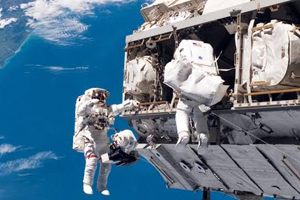
Tiangong Space Station Shenzhou 19 crew Cai Xuzhe, Song Lingdong and Wang Haoze are now halfway into their 6-month mission and continue to work with ~6,000 kg of supplies and experiments from Tianzhou-8 cargo craft. The crew performed the longest duration EVA (9 hrs 06 mns) in December to install more space debris protection equipment outside the station, and future crews including Shenzhou 20 (launching May 29) are likely to install additional pieces. TSS is intended to be permanently occupied for at least 10 years – out to 2032 – and include international and commercial crew. Looking to the future, the current T-shaped, three-module TSS may be expanded into an X shape with a new module attachment (the ‘duplicate’ back up for Tianhe core). This would increase working / living space, experiment research platforms and docking ports. The International Space Station is planned to be deorbited around 2031; assuming missions change ~6 months, Expedition 85 could be the last official crew at the station (departing mid-2030). Currently aboard ISS are seven Exp 72 station inhabitants who just wrapped up USA EVA #90, and are working with cargo from Progress 89P & 90P, and Cygnus 21. Coming soon is ‘2024 Annual Highlights of Results from the International Space Station‘ featuring synopses of recent scientific findings from ISS investigations and a list of all the publications documented in FY2024. (Image credits: NASA, ISS Partners, CMSA, CCTV, CNSA)
MONDAY
☆Feb 3 — International Space Station, ~415-km LEO: Expedition 72 seven-member crew participate in live stream events with Asian Pacific Affinity Council and Thomas Edison Energysmart Charter School this week; maintaining thale cress plants and red lettuce for nutritional value studies, installing new command and telemetry hardware inside Zvezda module.
☆Feb 3 — Tiangong Space Station, ~390-km LEO: Shenzhou 19 three-member crew send Spring Festival, Lunar New Year greetings to Earth, are planned to complete at least 86 experiments during mission; working with a pipeline inspection robot, EEG equipment, resistance exercises, sleep surveys, plantar pressure and joint kinematics.
☆ Feb 3 — Apollo Asteroid 2025 BK3: Near-Earth Flyby (0.028 AU)
TUESDAY
★ Feb 4 — Blue Origin, Launch New Shepard NS-29,Corn Ranch, Van Horn TX: Twenty-ninth suborbital flight of New Shepard, flying 30 payloads to simulate Moon gravity.
● Feb 4-6 — Planetary Science Institute, Tucson AZ: Culturally Inclusive Planetary Engagement; participants engage to discuss and model effective strategies for engaging Black and Latinx communities in planetary science.
● Feb 4-6 — NASA, Mercury Exploration Assessment Group, Universities Space Research Association, Laurel MD and Online: MExAG Annual Meeting 2025; to share the science of Mercury exploration.
● = Terrestrial and… o = International terrestrial events
☾ = Moon activity, ★ = Space and… ☆ = International space / astro events in local time unless noted.
Up Next at Mars: Sample Return and Uncrewed Landings Planned for Earth-Mars Transfer Windows
Logical windows for travel to Mars open every 26 months, to coincide with opposition that has Earth in-between Mars and Sun, when our distance to Mars is shortest, and traveling there still takes ~200 days. The CNSA Tianwen program is planning to send its second lander, and first sample return mission, to Mars in 2028. UAE, having launched Hope orbiter to the Red Planet in 2020, is working on the Mars Science City project which aims to establish a settlement on Mars within 100 years (2117). Hope was the first of 3 missions launched to Mars in 2020—the other 2 were China’s Tianwen-1 (orbiter, lander and Zhurong rover) and USA’s Mars 2020 lander, Perseverance rover and Ingenuity helicopter. NASA Artemis program continues to pursue a human Moon landing 2027 with crewed Mars landings in 2030s. Commercially, SpaceX CEO announced the desire to send uncrewed 5 Starships to Mars starting October 2026, potentially making way for crewed missions in 2028-29. So far, 6 space agencies have sent craft to Mars and are currently operating 2 rovers and 7 orbiters. NASA plans to launch the dual Escape and Plasma Acceleration and Dynamics Explorers (ESCAPADE) orbiters to Mars in spring 2025. ESA Mars Express is expected to send data until at least 2028, while MRO sends 29K images yearly, Curiosity rover is exploring the surface, MAVEN continues communications with Perseverance, and ESA ExoMars studies the atmosphere. (Image credits: ESA, ATG medialab, NASA, MBRSC, K. Hutchinson, ISRO, ISSDC, E. Lakdawalla)
● Feb 4-6 — SatNews Publishers, Mountain View CA: 10th Smallsat Symposium; in person access US$1,695, virtual $795; at Computer History Museum.
☾ Feb 4 — Moon: At first quarter, 22:03.
Ongoing…
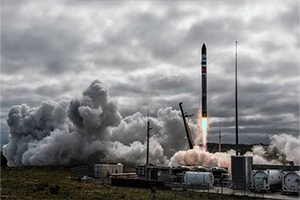
☆ NET Jan — Rocket Lab, Launch Electron / Venus probe, Launch Complex 1, Mahia Peninsula, New Zealand: Independent mission to Venus developed by Rocket Lab and MIT to send tiny probe flying in atmosphere for 5 minutes at altitude 48-60 km.
● Jan 31 – Feb 5 — American Astronautical Society (AAS) Rocky Mountain Section,Online / Breckinridge CO: 47th Annual AAS Guidance, Navigation and Control (GN&C) Conference; includes themes on New Space & Cislunar Exploration, GN&C in Human Spaceflight; at Beaver Run Resort & Conference Center, US$225-780.
☆ Feb 5 — Aten Asteroid 2025 BM2: Near-Earth Flyby (0.069 AU)
THURSDAY
● Feb 6 — Beyond Earth Institute, Online / Washington DC: Panel Discussion: Exploring the Potential of Lunar Helium-3 Mining; with Steve Wolfe (Beyond Earth), Chris Salvino (Lunar Helium-3 Mining LLC), Ahmed Diallo (ARPA-E), Gerald Sanders (NASA JSC),13:00-14:30 EST.
● Feb 6 — National Science Foundation, ISS National Laboratory, Online / Washington DC: Feasibility Review Form due for proposed research to be conducted onboard the International Space Station; funding will be provided.
☆ Feb 9 — Hope Orbiter, Mars Orbit: UAE Hope, studying Mars atmosphere and climate, reaches 4 full years / enters 5th year in Mars orbit today; launched July 19, 2020 on JAXA H2A rocket, arrived at Mars on this day 2021.
☾ Feb 9 — Moon: 0.85° NE of Mars, 11:00; 5.3° S of Castor, 14:00; 2.03° S of Pollux, 20:00.
☆ Feb 9 — Mercury: At superior conjunction with Sun, 1.393 AU from Earth, 02:00.
☆ Feb 9 — Apollo Asteroid 2012 PB20: Near-Earth Flyby (0.008 AU)
At the Spokane Convention Center. The meeting will have a broad scope, with a wide-ranging program of science and workforce topics, and celebrating planetary...
Convene, connect, and collaborate at the 19th annual von Braun Space Exploration Symposium! This year’s event will spotlight how bold ideas, emerging technologies, and...
Themes include: Space & the Arctic; Space & AI; Space & International Collaboration. There is a Student Session, a Technical Session, a Frontier Session,...
Oslo Spaceport Norway offers monthly a knowledgeable speaker and opportunity for networking, 17:00-20:00 local time; free entry but registration required. Ground Control is for...
45 satellites to launch for Amazon Leo, formerly named Project Kuiper. This LEO mega constellation will offer broadband internet access with 3,276 satellites.
Occurring 31 October from 09:00-11:00 local time (16:00-18:00 HST, 19:00-21:00 PDT, 22:00-24:00 EDT on 30 October), this Galaxy Forum will be in hybrid format...
Originally planned around this date for Wenchang, China -- TBC (to be confirmed); As the only professional association for astronauts, ASE supports the advancement of...
Coordinating Division Division C Education, Outreach and Heritage The IAU Symposium on Innovative Research and Techniques in Astronomy Communication will take place from November...
Change clocks back 1 hour from Daylight Saving to Standard Time; does not include Hawai’i, Arizona (except the Navajo Nation), American Samoa, Guam, Northern...
ESWW is the main annual event in the European Space Weather and Space Climate calendar. It is an international meeting organised annually within the...
IAU Symposium: IAUS409 - A Journey Towards Effective Astronomy Communication; online and at National Astronomical Observatory of Japan, 2-21-2 Osawa Mitaka, Tokyo. Topics include:...
Launch Complex 1, ~39°S, Mahia Peninsula, New Zealand
iQPS Launch 9, an Earth observation satellite with Synthetic aperture radar for Japan-based imaging company iQPS, to launch on "The Sea God Surveys" mission...
Launch window 10:34am - 2:34pm local time for the 15th batch of classified satellites for a reconnaissance constellation built by SpaceX and Northrop Grumman...