2 Lunar Landings in March: Firefly Blue Ghost Followed by IM Nova-C Athena
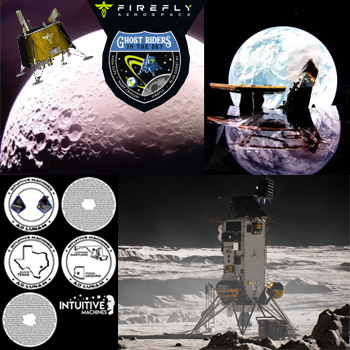
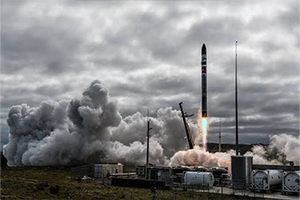
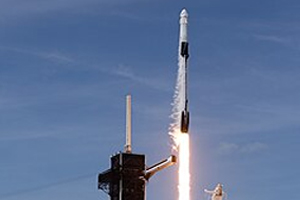
The first attempted Moon landing by Firefly Aerospace, on the mission named Ghost Riders in the Sky, is set to occur on March 2 at 02:45 CST, after many successes so far: insertion into lunar orbit, instrument check- outs, in-transit color images (of Earth, Moon, Sun, space), communications to Earth and commercial payload customers. If soft touchdown is achieved at Mare Crisium, a basin on the lunar near side, Blue Ghost is planned to operate for about 2 weeks, giving power to the 10 NASA instruments. Some of the science will investigate the Moon’s subsurface layer of lunar dust and regolith. The mission will also aim to capture imagery of a total eclipse on March 14, the lunar sunset on March 16 (possibly providing data on lunar dust levitation), and attempt to operate several hours into the lunar night. The 2nd Intuitive Machines lunar lander, having launched February 26, will attempt to land March 6 at Mons Mouton, a plateau near the Moon South Pole. This Nova-C lander Athena carries the Polar Resources Ice Mining Experiment-1 (PRIME-1) suite, the Lunar Retroreflector Array, 2 commercial technology demonstrations (funded by NASA Tipping Point awards), and other privately-funded payloads. CLPS next launches: Blue Origin Blue Moon (NET March), Astrobotic Griffin One (NET Sep), IM-3 (2026), Firefly Blue Ghost 2 (2026), Draper Apex 1 (2026), IM-4 (2027), Firefly Blue Ghost 3 (2028). (Image credits: Firefly Aerospace, Intuitive Machines, collectSPACE)
MONDAY
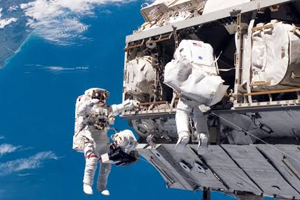
☆Mar 3 — International Space Station, ~415-km LEO: Expedition 72 seven-member crew working with nearly 3,000 kg of newly arrived food, fuel and supplies from Progress 91P; Gorbunov, Hague, Williams and Wilmore to give pre-departure news conference this week, expect to return to Earth on SpaceX Crew-9 a few days after Crew-10 launch / docking NET Mar 12.
☆Mar 3 — Tiangong Space Station, ~390-km LEO: Shenzhou 19 three-member crew continues work with pipeline inspection robot which utilizes active and passive leg-scissor motions to crawl in order to inspect power and other integral systems.
☆ Mar 3 — ESA, Launch Ariane 62 / CSO-3, VA263, ELA-4, Guiana Space Centre, Kourou, French Guiana: First commercial flight for heavy-lift launch vehicle, taking satellite for DGA, CNES and CDE of France; 13:24 GFT.
● Mar 3-5 — National Space Society, Alliance for Space Development, Washington DC:March Storm 2025; to engage with USA legislators and advocate for policies that support the development and commercialization of space.
☆ Mar 3 — Aten Asteroid 2019 ED1: Near-Earth Flyby (0.056 AU)
TUESDAY
★ Mar 4 — Juno, Perijove 70 / 69th Science Flyby,Jupiter Orbit: NASA craft to perform Jupiter flyby during Perijove 70, its 70th close flyby of Jupiter and 69th science flyby with instruments turned on.
Transporter-13 Launch Demonstrates Viability of New Space Commercial Enterprise
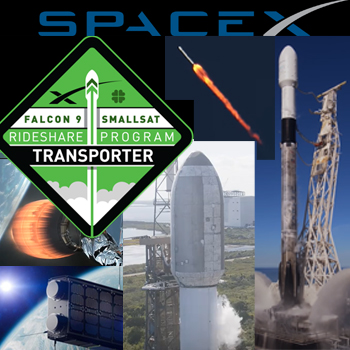
SpaceX Transporter-13 launch allows dozens of companies to have reduced cost for off-Earth transport. Next Falcon 9 launch to SSO leaves from Cape Canaveral Space Force Station and carries within its 13 x 5.2 meter fairing satellites from Alba Orbital (5cm cubes), Liftero (“green” propulsion demonstrator), Arkadia Space (propulsion module from Spanish company), D-Orbit (collaborating with Arkadia), Hermes (Pathfinder from Italy, DCubed (10x10x30 cm satellite from German company), The Exploration Company (RASCube-1 from Europe, which will orbit and return with projects from students across the globe), Loft Orbital (YAC-1 constellation of ten satellites totaling 120x105x103 cm and 216 kg), SatVu (HotSat2), U-Space (2 12U cubesats from France), Startical partners: Indra, ENAIRE, NAV Portugal, DLR, CRIDA and MITIGA (IOD.1 satellite from Europe), HEX20 with partner DCubed (TRL 9), Rogue Space Systems with Isidore Space (COMSEC / Orbot / OTP-2, tested in New Hampshire and Bulgaria), and MyRadar (HORIS-1, which will communicate with Iridium). Other payloads are from commercial entities Aerospace Corp, Turion Space, Sidus Space, Muon Space, Near Space Launch, TrustPoint, and Iomorrow.io. Also included in the launch are a NASA mission to image the magnetic fingerprint of the auroras, and payloads from education institutions in New Hampshire, Alabama, Norway, Australia, North Dakota. In addition to its reusable first stage, the Falcon 9 payload fairing is also reclaimed via parafoils steering the two halves toward a recovery vessel. (Image credits: SpaceX)
● Mar 4-6 — University of Chicago Women’s Board, Kavli Institute for Cosmological Physics,Chicago IL: Picture An Astronomer; scientific symposium including female astrophysicists from diverse institutions and backgrounds.
☾ Mar 4 — Moon: 4.6° NNW of Uranus, 16:00.
☆ Mar 4 — Mercury: At perihelion; 0.3075 AU from the Sun.
☆ Mar 4 — Apollo Asteroid 2025 DT4: Near-Earth Flyby (0.016 AU)
★ NET Mar — Blue Origin, Launch New Glenn / Blue Moon MK1 “Pathfinder”, Cape Canaveral SFS FL: First lunar lander from Blue Origin to launch to Moon South Pole region with payloads including NASA Stereo Cameras for Lunar Plume Surface Studies (SCALPSS).
● Mar 1-8 — Institute of Electrical and Electronics Engineers (IEEE), Big Sky MT:46th IEEE Aerospace Conference; at Yellowstone Conference Center, US$125-1,860.
WEDNESDAY
★ Mar 5 — SpaceX, Launch Falcon 9 / Starlink Group 12-21, SLC-40, Cape Canaveral SFS FL: Next batch of Starlink satellites to launch for mega-constellation; launch window 01:00-05:31 EST.
● Mar 5 — NOAA Advisory Committee on Excellence in Space (ACES), Washington DC:NOAA ACES Meeting 2025.
☾ Mar 5 — Moon: 0.70° N of Pleiades, 04:00.
☆ Mar 5 — Apollo Asteroid 5358442015 BY310: Near-Earth Flyby (0.024 AU)
THURSDAY
☾ NET Mar 6 — Intuitive Machines IM-2 NOVA-C Athena Lander / PRIME-1, Mons Mouton, 84.6° S, Lunar Landing: Under US$47M NASA CLPS, Intuitive Machines to attempt second Moon surface landing; Athena to touchdown with PRIME-1 drill and MSolo, Micro-Nova Hopper, and private payloads.
★ Mar 6 — SpaceX, Launch Falcon 9 / Transporter 13, Cape Canaveral SFS FL: Next Transporter mission carrying many dozens of commercial and government payloads to a sun-synchronous orbit; launch window open 01:39-02:25 EST.
☾ Mar 6 — Moon: 5.5° N of Jupiter, 01:00; at First Quarter, 06:32.
☆ Mar 6 — Apollo Asteroid 2025 DU2: Near-Earth Flyby (0.003 AU)
FRIDAY
★ Mar 7 — SpaceX, Launch Falcon 9 / Starlink Group 12-16, SLC-40, Cape Canaveral SFS FL: Next batch of Starlink satellites to launch for mega-constellation; launch window 09:09-13:40 EST.
★ Mar 7 — SpaceX, Launch Falcon 9 / Starlink Group 11-7, SLC-4E, Vandenberg SFB CA: Next batch of Starlink satellites to launch for mega-constellation; launch window 18:00-22:31 PST.
● Mar 7 — Maunakea Visitor Information Station, International Lunar Observatory Association (ILOA), Hale Pohaku ~9,200 ft, Mauna Kea HI: Maunakea Moon Viewing with Lecture; ILOA presents Astronomy Moon Missions they are advancing, followed by Moon gazing including upcoming lunar South Pole-region missions and ILOA 2024 landing site; 16:00-18:30 HST, limited to 45 people.
At the Spokane Convention Center. The meeting will have a broad scope, with a wide-ranging program of science and workforce topics, and celebrating planetary...
Convene, connect, and collaborate at the 19th annual von Braun Space Exploration Symposium! This year’s event will spotlight how bold ideas, emerging technologies, and...
Themes include: Space & the Arctic; Space & AI; Space & International Collaboration. There is a Student Session, a Technical Session, a Frontier Session,...
Oslo Spaceport Norway offers monthly a knowledgeable speaker and opportunity for networking, 17:00-20:00 local time; free entry but registration required. Ground Control is for...
45 satellites to launch for Amazon Leo, formerly named Project Kuiper. This LEO mega constellation will offer broadband internet access with 3,276 satellites.
Occurring 31 October from 09:00-11:00 local time (16:00-18:00 HST, 19:00-21:00 PDT, 22:00-24:00 EDT on 30 October), this Galaxy Forum will be in hybrid format...
Originally planned around this date for Wenchang, China -- TBC (to be confirmed); As the only professional association for astronauts, ASE supports the advancement of...
Coordinating Division Division C Education, Outreach and Heritage The IAU Symposium on Innovative Research and Techniques in Astronomy Communication will take place from November...
Change clocks back 1 hour from Daylight Saving to Standard Time; does not include Hawai’i, Arizona (except the Navajo Nation), American Samoa, Guam, Northern...
ESWW is the main annual event in the European Space Weather and Space Climate calendar. It is an international meeting organised annually within the...
IAU Symposium: IAUS409 - A Journey Towards Effective Astronomy Communication; online and at National Astronomical Observatory of Japan, 2-21-2 Osawa Mitaka, Tokyo. Topics include:...
Launch Complex 1, ~39°S, Mahia Peninsula, New Zealand
iQPS Launch 9, an Earth observation satellite with Synthetic aperture radar for Japan-based imaging company iQPS, to launch on "The Sea God Surveys" mission...
Launch window 10:34am - 2:34pm local time for the 15th batch of classified satellites for a reconnaissance constellation built by SpaceX and Northrop Grumman...