JAXA Akatsuki Venus Orbiter & IKAROS Solar Sail to Advance Solar System Exploration
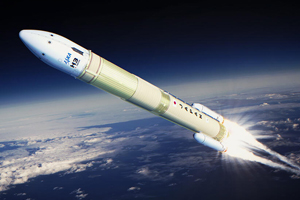
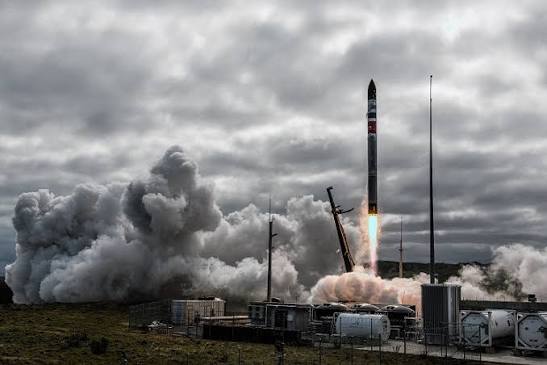
‘Akatsuki,’ the world’s 1st planetary observation satellite (TC) to explore the climate of Venus, will launch aboard a JAXA H-2A rocket on May 17 from Tanegashima Center, Japan. Also known as ‘Planet C’ and weighing a total of 650 kg, the robotic spacecraft will travel towards Venus for 6 months until its orbital insertion date in December 2010. The scientific payload consists of a radio science experiment, a long-wave infrared camera, an ultraviolet imager, as well as 2 other cameras. Once in orbit, Akatsuki will begin its investigation by capturing surface imagery to confirm the presence of lightning or volcanic activity. The orbiter will also study the unique carbon dioxide environment and observe the atmospheric movement and cloud formation process of Venus. The mission aims to deepen our understanding of Venus and find clues into Earth’s formation process. The mission is expected to last 2 years and cost over US$200million. Also on board the H2-A is JAXA IKAROS (LC), Japan’s 1st ‘space yacht’ propelled only by the radiation of the Sun bouncing off its kite-shaped sails. Once Ikaros reaches space, the pod will spin over 20 times a minute to unfold its 14m sails. Space systems expert at JAXA, Yuichi Tsuda (BL) says, “The availability of electricity would enable us to navigate farther and more effectively in the solar system.” Also Pictured: Akatsuki Project Scientist Takeshi Imamura (BC). (Credit: JAXA)
IST-Africa Conference to Advance Continent’s Science, Technology, Space Endeavors
On May 19-21 the Information Technology Societies in Africa (IST-Africa) initiative will hold its 5th annual meeting in Durban, South Africa. The conference is a major joint effort between leading government, academic and commercial leaders in both Africa and Europe, and will focus on bridging the Digital Divide using 21st Century technology for Africa’s people. IST-Africa directly supports the goals of the Africa-EU Partnership on Science, Information Society and Space, and will hold high-level talks on space and technology development in the opening day plenary. The substantial breadth and depth of topics at IST-Africa include: improving education with Web 2.0, grid computing and software development, modernizing agriculture, eGovernment models and cutting-edge medical research — often through the use of satellite and tele-science applications. On Day 2, Gregory Pedersen of EADS Astrium in France will present an update on the GEO-Africa / AfricaSat-1 project. Concurrent with the conference will be the meeting of the Joint Expert Group (JEG8) for the 8th Africa-EU Strategic Partnership for Science, Information Society and Space on Tuesday 18 May from 14:00 – 18:00 at the Durban International Convention Center. (Credit: EADS Astrium, IST, satimagingcorp.com)
= All times for terrestrial events in local time unless noted. = All times for international terrestrial events in local time unless noted. = All times for space events, and… = All times for international space / astro events in Hawaii Standard Time unless noted. Add 10 hours to obtain UT (‘Universal Time;’ Greenwich, England).
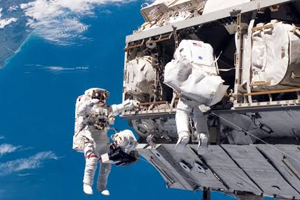
May 17 — International Space Station, LEO: E-23 crew members joined by STS-132 crew: Cmdr. Ken Ham, Pilot Tony Antonelli and mission specialists Garrett Reisman, Michael Good, Steve Bowen and Piers Sellers.
May 17 — NASA Lunar Reconnaissance Orbiter (LRO), Lunar Orbit: LRO operating nominally in low polar orbit (50km) and continues to return global data of lunar surface.
May 17 — Mars Rover Opportunity, Red Planet: Mars Rover team continues to monitor Opportunity after lengthening its awake time to balance rover’s recharge period for upcoming winter season.
May 17 — JAXA, Launch H-2A / Akatsuki / Ikaros,Tanegashima Space Center, Japan: The Japanese H-2A rocket set to launch the Akatsuki spacecraft to Venus.
Jan 30 — Museum of Science and Industry, Confucius Institute / University of Manchester, Manchester, United Kingdom: ‘Exhibition: From Gunpowder to Space Rockets – The China Space Program,’ includes models of ancient rockets, recent satellites, rockets, space ships and a lunar rover; through Aug 7.
May 19 — Moon: 4.9° SSW of Mars, 21:00; At Perigee (Distance 57.97 Earth-Radii).
May 19 — Asteroid 2003 QC10: Near Earth Fly-by (0.089 AU).
THURSDAY
NET May 20 — United Launch Alliance LLC, Launch Delta 4 / GPS 2F-1,Cape Canaveral FL: United Launch Alliance Delta 4 rocket set to launch the 1st Air Force Block 2F navigation satellite for Global Positioning System.
May 20 — Moon: At First Quarter, (13:43); 4.3° SSW of Regulus, 14:00.
May 20 — Omicron Cetid Meteors: Daylight meteor shower radiating from Constellation Cetus.
May 20 — Asteroid 2010 JM33: Near Earth Fly-by (0.030 AU).
May 20 — Asteroid 11055 Honduras: Closest Approach to Earth (0.985 AU).
FRIDAY
May21— Arianespace, Launch Ariane 5 / Astra3B & COMSATBw 2, Kourou, French Guiana: Arianespace Flight 194 to use Ariane 5 rocket with cryogenic upper stage to launch Astra 3B satellite for Europe and COMSATBw 2 communications satellite for German military.
May 21 — Asteroid 2010 GA34: Near Earth Fly-by (0.033 AU).
May 21 — Asteroid 1865 Cerberus: Closest Approach to Earth (0.334 AU).
SATURDAY
May 22 — Moon: 7.5° SSW of Saturn; 13:00.
SUNDAY
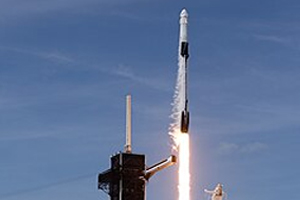
NET May 23 — SpaceX, Launch Falcon 9 / Dragon,Cape Canaveral FL: Falcon 9 rocket maiden launch demonstration mission to test future resupply flights to the ISS.
Includes ~150 meetings covering the fields of COSPAR Scientific Commissions / Panels / Task Groups, such as SC B: The Earth-Moon System, Planets, and...
At the Palais des Nations and online. Outer space is entering a renewed phase of strategic importance, defined by rapid innovation, growing competition and deepening...
This international lunar science meeting has two objectives: to provide a platform for leading experts to review recent advances across lunar research, from the...
At CSIR International Convention Centre. Key topics are Earth Observation, Developing Space Tourism, Space Supply Manufacturing. Cultural tours are offered.
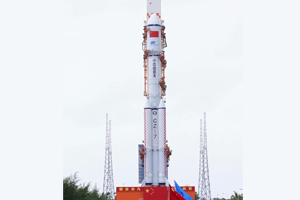
(No earlier than 10 Aug) Japan to launch the MICHIBIKI No. 7 | Quasi-Zenith Satellite System (QZS-7) navigation satellite. Launch window remains open through...
Participants will receive theoretical and hands-on training in electron imaging and X-ray spectroscopy for application to planetary samples. This training opportunity is targeted at...
"Leading Australia’s Space Future for Our Strategic Advantage". Southern Space 2026 brings together decision-makers who set the direction for Australia’s space sector. It is...
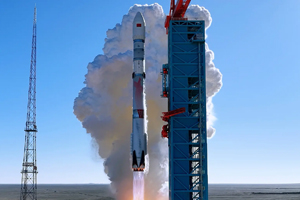
The second test launch of LandSpace's ZQ-3 rocket with undisclosed test payloads. Zhuque-3 first stage booster will attempt to land on its downrange landing...
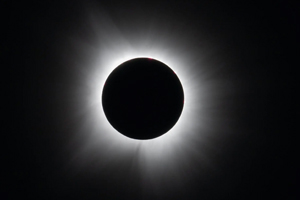
A total solar eclipse with a magnitude of 1.0386 (greatest eclipse 17:47:06 UTC) will be visible in parts of Greenland, Iceland, northern Russia, the Atlantic...
Includes presentation of the Neil Armstrong Award of Excellence, activities for the new class of Astronaut Scholars, 2-day Technical Conference where Scholars present their...
During U.S. spacewalk 97, two astronauts will replace a Space-to-Ground antenna on the orbital complex. The antenna is a critical communication system NASA uses...
Key themes include: Characterizing exoplanet-host solar-like stars; Star-planet interactions; Planet populations around solar-like stars. At University of Liège.
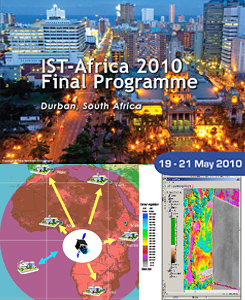 On May 19-21 the Information Technology Societies in Africa (IST-Africa) initiative will hold its 5th annual meeting in Durban, South Africa. The conference is a major joint effort between leading government, academic and commercial leaders in both Africa and Europe, and will focus on bridging the Digital Divide using 21st Century technology for Africa’s people. IST-Africa directly supports the goals of the Africa-EU Partnership on Science, Information Society and Space, and will hold high-level talks on space and technology development in the opening day plenary. The substantial breadth and depth of topics at IST-Africa include: improving education with Web 2.0, grid computing and software development, modernizing agriculture, eGovernment models and cutting-edge medical research — often through the use of satellite and tele-science applications. On Day 2, Gregory Pedersen of EADS Astrium in France will present an update on the GEO-Africa / AfricaSat-1 project. Concurrent with the conference will be the meeting of the Joint Expert Group (JEG8) for the 8th Africa-EU Strategic Partnership for Science, Information Society and Space on Tuesday 18 May from 14:00 – 18:00 at the Durban International Convention Center. (Credit: EADS Astrium, IST, satimagingcorp.com)
 = All times for terrestrial events in local time unless noted.
 = All times for international terrestrial events in local time unless noted.
 = All times for space events, and…
 = All times for international space / astro events in Hawaii Standard Time unless noted. Add 10 hours to obtain UT (‘Universal Time;’ Greenwich, England).
 May 17 — International Space Station, LEO: E-23 crew members joined by STS-132 crew: Cmdr. Ken Ham, Pilot Tony Antonelli and mission specialists Garrett Reisman, Michael Good, Steve Bowen and Piers Sellers.
 May 17-19 — American Astronautical Society, Monterey CA: ‘Kyle Alfriend Astrodynamics Symposium.’
 May 17-19 — ESA, Noordwijk, The Netherlands: ‘Europa Jupiter System Mission Science Meeting.’
 NET May 20 — United Launch Alliance LLC, Launch Delta 4 / GPS 2F-1, Cape Canaveral FL: United Launch Alliance Delta 4 rocket set to launch the 1st Air Force Block 2F navigation satellite for Global Positioning System.