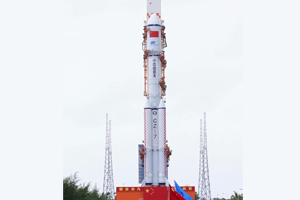
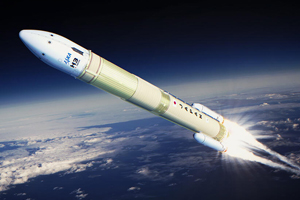
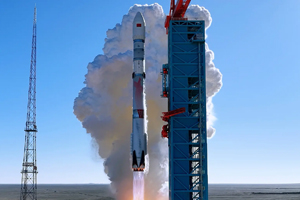
Lunar scientists, entrepreneurs and space agency leaders from all over the world will gather in Beijing on May 31 to June 3 for the Global Lunar Conference. Sponsored by the International Astronautical Federation and the Chinese Society of Astronautics, the conference will feature over 400 technical presentations and a series of plenary sessions directly relevant to the theme of Lunar Exploration. During the conference, Space Agencies will present their plans for the next decade and beyond at the Moon, results from recent lunar missions will be shared, technical challenges for creating sustainable habitats on the Moon and in cislunar space will be explored and global benefits for society will be highlighted. Conference attendees will also be afforded the opportunity to tour National Astronomical Observatories of Chinese Academy of Science and the China Academy of Launch Vehicle Technology. China Academy of Space Technology (CAST) VP Li Ming, ILEWG Executive Director Bernard Foing and Raymond Arvidson of Washington University, Missouri lead the conference program committee. (Credit: NASA, IAF, CSA, JAXA)
ISRO Forges Ahead with PSLV Launch of Advanced Cartosat-2B Satellite
On June 4, the Indian Space Research Organization (ISRO) will attempt to launch its 300-ton Polar Satellite Launch Vehicle (PSLV-C15) (R) carrying the Cartosat-2B satellite (TL) from Satish Dhawan Space Center in Sriharikota, India. ISRO technicians worked diligently to dismantle the entire 2nd stage of the PSLV and replace faulty parts after a marginal drop in pressure caused launch delays on May 5 and May 9. The main payload of the mission is the ISRO Cartosat-2B remote sensing satellite equipped with a sophisticated panchromatic camera. Weighing nearly 700 kg, the satellite will take higher spatial resolution imagery at 0.8 meters from sun-synchronous orbit and aid India in infrastructure and urban planning as well as other cartographic applications. Expected operational life of the satellite is 5 years. The PSLV is also slated to carry the Algeria Alsat (CL) communication satellite, 2 nano satellites from Canada and a StudSat pico satellite (BL, BR) developed by college students in Hyderabad and Bangalore. Since 1994, ISRO has used its PSLV to launch 41 satellites into orbit, setting a world record in 2008 by successfully launching 10 satellites in one launch. Pictured: K Radhakrishnan (CR). (Credit: ISRO, teamstudsat.com)
= All times for terrestrial events in local time unless noted. = All times for international terrestrial events in local time unless noted. = All times for space events, and… = All times for international space / astro events in Hawaii Standard Time unless noted. Add 10 hours to obtain UT (‘Universal Time;’ Greenwich, England).
May 31 — International Space Station, LEO: E-23 Crew perform light maintenance duties and make preparations for the departure of Commander Oleg Kotov and Flight Engineers TJ Creamer and Soichi Noguchi; Kotov to hand over command of the station to Skvortsov in change of command ceremony.
May 31 — NASA Lunar Reconnaissance Orbiter (LRO), Lunar Orbit: Instruments aboard LRO continue to work nominally as they return detailed information of lunar imagery, topography and temperature measurements.
May 31 — Mars Reconnaissance Orbiter / Mars Phoenix Lander, Red Planet: NASA JPL scientists continue to evaluate damage to lander after MRO imagery shows severe damage to solar panels; scientists plan to continue analysis of information from Phoenix’s science activities despite ending all operations.
May 31 — Wallops Flight Facility, Wallops Island VA / Online: Application deadline for NASA ‘RockOn! 2010 Workshop,’ event on June 19-24.
May 31-Jun 3 — International Astronautical Federation, Chinese Society of Astronautics,Beijing, China: ‘Global Lunar Congress,’ conference to advance lunar exploration and applications.
May 31-Jun 4 — Institute of Astronomy of the Russian Academy of Sciences, Network for the Ultraviolet Astronomy, et al,St. Petersburg, Russia: ‘Ultraviolet Universe 2010.’
Continued from . . .
Jan 30 — Museum of Science and Industry, Confucius Institute / University of Manchester, Manchester, United Kingdom: ‘Exhibition: From Gunpowder to Space Rockets – The China Space Program,’ includes models of ancient rockets, recent satellites, rockets, space ships and a lunar rover; through Aug 7.
Jun 1 — Deep Space, Jupiter: NASA to launch new robotic mission to Jupiter in Aug 2011; Juno spacecraft mission to last 1 year and orbit planet 32 times.
Jun 1 — Silicon Valley Education Foundation, NASA Ames Research Center, Hispanic Foundation of Silicon Valley,Moffett Field CA: ‘Smart Skies,’ renewing the spark of curiosity in math and science for students.
Jun 1-4 — Eurospace, CSA, ESA, et al, Budapest, Hungary: ‘DAta Systems in Aerospace 2010,’ where space meets ground and related non-space applications of similar technology.
Jun 1 — Asteroid 2010 HZ104: Near Earth Fly-by (0.064 AU).
WEDNESDAY
Jun 2 — Eurockot Launch Services, Launch Rockot / SERVIS 2,Plesetsk Cosmodrome, Russia: A Eurockot Rockot vehicle set to launch SERVIS 2 satellite for Japan’s Institute for Unmanned Space Experiment Free Flyer (USEF) to test commercial off-the-shelf technologies for space applications.
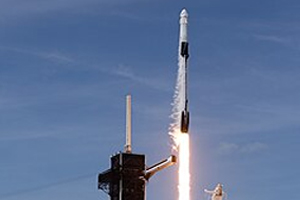
NET Jun 2 — SpaceX, Launch Falcon 9 / Dragon,Cape Canaveral FL: Falcon 9 rocket maiden launch demonstration mission to test future resupply flights to the ISS.
Jun 2 — EADS Astrium, Institution of Engineering and Technology, London, United Kingdom: ‘IET Seminar: Milsatcoms.’
Jun 2-6 — Science Festival Foundation, New York City NY: ‘World Science Festival,’ an unprecedented annual tribute to imagination, ingenuity and inventiveness, takes science out of the laboratory and into the streets, theaters, museums, and public halls of New York City; Opening night to honor theoretical physicist Stephen W. Hawking /Jun 5, NASA Tweet-up event / James Webb Space Telescope.
THURSDAY
Jun 3 — International Launch Services, Launch Proton / Badr 5, Baikonur Cosmodrome, Kazakhstan: International Launch Services Proton rocket with Breeze M upper stage set to deploy Badr 5 telecommunications spacecraft which will provide direct broadcasting, HDTV programming and interactive services.
Jun 6-10 — University of Oslo Physics of Geological Processes,Oslo, Norway: ‘Damage to Target Rocks During Impact Cratering,’ Workshop and field excursion to Ritland impact structure, southwestern Norway on Jun 9-11.
Includes ~150 meetings covering the fields of COSPAR Scientific Commissions / Panels / Task Groups, such as SC B: The Earth-Moon System, Planets, and...
At the Palais des Nations and online. Outer space is entering a renewed phase of strategic importance, defined by rapid innovation, growing competition and deepening...
This international lunar science meeting has two objectives: to provide a platform for leading experts to review recent advances across lunar research, from the...
At CSIR International Convention Centre. Key topics are Earth Observation, Developing Space Tourism, Space Supply Manufacturing. Cultural tours are offered.
(No earlier than 10 Aug) Japan to launch the MICHIBIKI No. 7 | Quasi-Zenith Satellite System (QZS-7) navigation satellite. Launch window remains open through...
Participants will receive theoretical and hands-on training in electron imaging and X-ray spectroscopy for application to planetary samples. This training opportunity is targeted at...
"Leading Australia’s Space Future for Our Strategic Advantage". Southern Space 2026 brings together decision-makers who set the direction for Australia’s space sector. It is...
The second test launch of LandSpace's ZQ-3 rocket with undisclosed test payloads. Zhuque-3 first stage booster will attempt to land on its downrange landing...
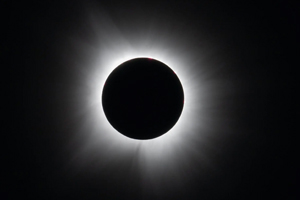
A total solar eclipse with a magnitude of 1.0386 (greatest eclipse 17:47:06 UTC) will be visible in parts of Greenland, Iceland, northern Russia, the Atlantic...
Includes presentation of the Neil Armstrong Award of Excellence, activities for the new class of Astronaut Scholars, 2-day Technical Conference where Scholars present their...
During U.S. spacewalk 97, two astronauts will replace a Space-to-Ground antenna on the orbital complex. The antenna is a critical communication system NASA uses...
Key themes include: Characterizing exoplanet-host solar-like stars; Star-planet interactions; Planet populations around solar-like stars. At University of Liège.
 Lunar scientists, entrepreneurs and space agency leaders from all over the world will gather in Beijing on May 31 to June 3 for the Global Lunar Conference. Sponsored by the International Astronautical Federation and the Chinese Society of Astronautics, the conference will feature over 400 technical presentations and a series of plenary sessions directly relevant to the theme of Lunar Exploration. During the conference, Space Agencies will present their plans for the next decade and beyond at the Moon, results from recent lunar missions will be shared, technical challenges for creating sustainable habitats on the Moon and in cislunar space will be explored and global benefits for society will be highlighted. Conference attendees will also be afforded the opportunity to tour National Astronomical Observatories of Chinese Academy of Science and the China Academy of Launch Vehicle Technology. China Academy of Space Technology (CAST) VP Li Ming, ILEWG Executive Director Bernard Foing and Raymond Arvidson of Washington University, Missouri lead the conference program committee. (Credit: NASA, IAF, CSA, JAXA)
 On June 4, the Indian Space Research Organization (ISRO) will attempt to launch its 300-ton Polar Satellite Launch Vehicle (PSLV-C15) (R) carrying the Cartosat-2B satellite (TL) from Satish Dhawan Space Center in Sriharikota, India. ISRO technicians worked diligently to dismantle the entire 2nd stage of the PSLV and replace faulty parts after a marginal drop in pressure caused launch delays on May 5 and May 9. The main payload of the mission is the ISRO Cartosat-2B remote sensing satellite equipped with a sophisticated panchromatic camera. Weighing nearly 700 kg, the satellite will take higher spatial resolution imagery at 0.8 meters from sun-synchronous orbit and aid India in infrastructure and urban planning as well as other cartographic applications. Expected operational life of the satellite is 5 years. The PSLV is also slated to carry the Algeria Alsat (CL) communication satellite, 2 nano satellites from Canada and a StudSat pico satellite (BL, BR) developed by college students in Hyderabad and Bangalore. Since 1994, ISRO has used its PSLV to launch 41 satellites into orbit, setting a world record in 2008 by successfully launching 10 satellites in one launch. Pictured: K Radhakrishnan (CR). (Credit: ISRO, teamstudsat.com)
 = All times for terrestrial events in local time unless noted.
 = All times for international terrestrial events in local time unless noted.
 = All times for space events, and…
 = All times for international space / astro events in Hawaii Standard Time unless noted. Add 10 hours to obtain UT (‘Universal Time;’ Greenwich, England).
 May 31 — International Space Station, LEO: E-23 Crew perform light maintenance duties and make preparations for the departure of Commander Oleg Kotov and Flight Engineers TJ Creamer and Soichi Noguchi; Kotov to hand over command of the station to Skvortsov in change of command ceremony.
 May 31 — Wallops Flight Facility, Wallops Island VA / Online: Application deadline for NASA ‘RockOn! 2010 Workshop,’ event on June 19-24.
 May 31-Jun 3 — International Astronautical Federation, Chinese Society of Astronautics, Beijing, China: ‘Global Lunar Congress,’ conference to advance lunar exploration and applications.
 NET Jun 2 — SpaceX, Launch Falcon 9 / Dragon, Cape Canaveral FL: Falcon 9 rocket maiden launch demonstration mission to test future resupply flights to the ISS.