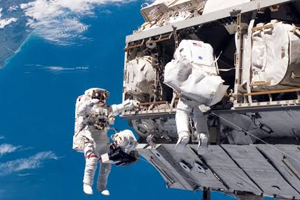
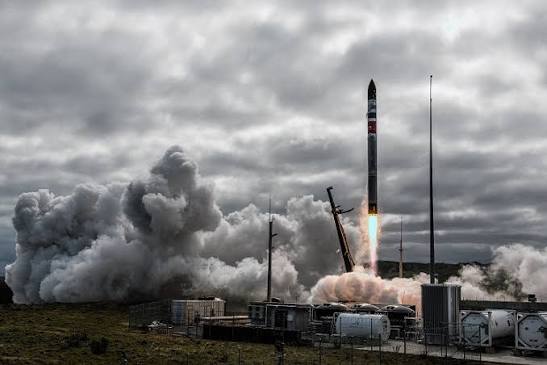
The final flight of Space Shuttle Discovery STS-133 (BL) is scheduled to depart Kennedy Space Center FL for the ISS NET November 2 at 16:17 EDT. The crew (T) consists of Cmdr Steve Lindsey, Pilot Eric Boe and Mission Specialists Alvin Drew, Tim Kopra, Michael Barratt and Nicole Stott. The 10-day mission will include delivery and installation of the 12,346 kg Permanent Multipurpose Module (PMM) ‘Leonardo,’ the Express Logistics Carrier 4 and Robonaut 2 (R2) (BL), the 1st humanoid robot developed by NASA and General Motors. Weighing 136 kg and standing at almost 1m, R2 will operate inside the Destiny lab and be a permanent fixture on board the ISS. Kopra and Drew will perform two 6.5 hour spacewalks on Nov 5 & 7 to install an extension cable for the PMM and complete work on a failed pump module that occurred in August. Since 1984, Discovery, the oldest shuttle in service, has flown 38 flights, completed 5,628 orbits and carried a total of 246 crew members to space. (Credit: NASA)
EPOXI Mission to Uncover Mysteries of Early Solar System Development
The Deep Impact spacecraft will make its closest approach to comet Hartley 2 (TL) at about 10:01 EDT on November 4. Traveling at a rate of 12.5km per second, the probe will approach the comet at a distance of about 700km. It will be the 5th time a comet has been imaged close-up and the 1st time 2 comets have been imaged with the same instruments and same spatial resolution. With an original budget of US$33M, the craft was designed and employed successfully for the July 4, 2005 encounter with comet Tempel 1 (B). Recycling Deep Impact for the extended EPOXI mission provided savings of 90% over that of a new mission with similar goals. To better understand how comets formed and evolved, researchers will compare EPOXI observations with previous flyby observations of comets. Pictured (inset): EPOXI PI Michael A’Hearn of the University of Maryland. (Credit: NASA)
= All times for terrestrial events in local time unless noted.
= All times for international terrestrial events in local time unless noted.
= All times for space events, and…
= All times for international space / astro events in Hawaii Standard Time unless noted. Add 10 hours to obtain UT (‘Universal Time;’ Greenwich, England).
Nov 1 — International Space Station, LEO: E-25 crew members await arrival of STS-133 crew as they continue with scientific research, maintenance activities and scheduled conference with Charles Bolden on Nov 2 to mark 10-year commemoration of the ISS.
Nov 1 — NASA Lunar Reconnaissance Orbiter (LRO), Lunar Orbit: Newly released LRO data of LCROSS impact estimates the dirt in Cabeus crater consisted of 5.6% water, the equivalent of 3,785,411,800 liters.
Nov 1 — Asteroid 2009 WY7: Near-Earth Flyby (0.065 AU).
Continued from:
Oct 29 — Windows to the Universe, Global: ‘Great World Wide Star Count,’ event to raise awareness about light pollution and the night sky as well as encourage learning in astronomy; through Nov 12.
NET Nov 2 — NASA, Launch Discovery STS-133,Cape Canaveral FL: USA mission to the International Space Station set to deliver the Express Logistics Carrier 4, a Multi-Purpose Logistics Module and critical spare components. Delayed from Nov 1.
Nov 2 — NASA, International Space Station Agencies, USA, LEO: ‘10th Commemoration of International Space Station,’ conference event wtih NASA Administrator Charles Bolden & E-25 crew members; The ISS has completed 57,361 orbits of the Earth, traveled 2,414,016,000 km and have had 196 visitors.
Nov 3-5 — Human Exploration Framework Team (HEFT), Washington DC: ‘NASA HEFT Industry Affordability Meetings,’ seeks input from NASA contractors and other commercial spaceflight on how it can reduce costs, maintain quality & performance and improve the affordability of human spaceflight programs & activities.
Nov 4 — Deep Impact / Epoxi,Deep Space: Deep Impact spacecraft to fly by additional target, Comet Hartley-2; spacecraft involved in Epoxi mission (Extrasolar Planet Observation and Characterization and the Deep Impact Extended Investigation) since successful primary mission impact of Comet Temple-1 in Jul 2005.
Nov 4-7 — American Society for Gravitational and Space Biology (ASGSB), Washington DC: ‘2010 Annual Meeting of ASGSB.’
Nov 4 — Moon: 2.8° S of Spica, 12:00; 1.1° W of Venus, 21:00.
Nov 4 — Asteroid 2006 JY26: Near-Earth Flyby (0.037 AU).
FRIDAY
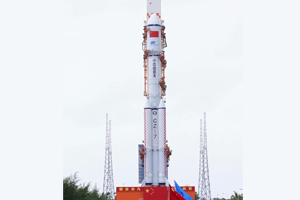
Nov 5 — CNSA, Launch Long March 3A / Fengyun 3B,Taiyuan, China: A China Long March 4C rocket is set to launch the Fengyun 3B weather satellite in polar orbit.
Nov 5 — Explore Mars Inc, Cambridge MA: ‘ISS Mars I,’ series of public outreach programs which will explore the question, “How can the International Space Station be used to advance exploration beyond LEO- to Mars?”
Nov 5 — Southern Taurid MeteorsPeak: Radiating from the constellation Taurus, the Taurid stream is associated with Comet Encke and produces bright, slow moving orange fireballs at ZHR rates of 5 meteors per hour.
Nov 5 — Moon: New Moon (Beginning of Lunation 1087); 18:51.
SATURDAY
Nov 6 — Team Phoenicia, TechShop, Menlo Park CA: ‘Nanosatellite Launcher Challenge Seminar,’ with presentations by NASA Centennial Challenge Program, FAA, California Space Authority, Team Phoenicia and other SF Bay Area teams.
Nov 7-11 — Harvard Department of Astronomy, Smithsonian Astrophysical Observatory, Boston MA: ‘20th Annual Astronomical Data Analysis Software and Systems (ADASS) Conference,’ provides a forum for scientists and developers concerned with algorithms, software and software systems employed in the acquisition, reduction, analysis, and dissemination of astronomical data.
Nov 7 — Moon: 1.7° SSE of Mars, 13:00; 2.5° N of Antares, 15:00.
Nov 7 — Asteroid 3753 Cruithne: Closest Approach to Earth (0.422 AU).
Includes ~150 meetings covering the fields of COSPAR Scientific Commissions / Panels / Task Groups, such as SC B: The Earth-Moon System, Planets, and...
At the Palais des Nations and online. Outer space is entering a renewed phase of strategic importance, defined by rapid innovation, growing competition and deepening...
This international lunar science meeting has two objectives: to provide a platform for leading experts to review recent advances across lunar research, from the...
At CSIR International Convention Centre. Key topics are Earth Observation, Developing Space Tourism, Space Supply Manufacturing. Cultural tours are offered.
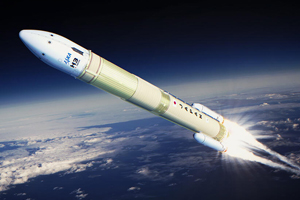
(No earlier than 10 Aug) Japan to launch the MICHIBIKI No. 7 | Quasi-Zenith Satellite System (QZS-7) navigation satellite. Launch window remains open through...
Participants will receive theoretical and hands-on training in electron imaging and X-ray spectroscopy for application to planetary samples. This training opportunity is targeted at...
"Leading Australia’s Space Future for Our Strategic Advantage". Southern Space 2026 brings together decision-makers who set the direction for Australia’s space sector. It is...
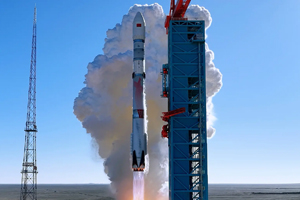
The second test launch of LandSpace's ZQ-3 rocket with undisclosed test payloads. Zhuque-3 first stage booster will attempt to land on its downrange landing...
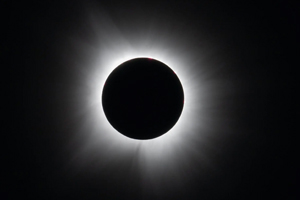
A total solar eclipse with a magnitude of 1.0386 (greatest eclipse 17:47:06 UTC) will be visible in parts of Greenland, Iceland, northern Russia, the Atlantic...
Includes presentation of the Neil Armstrong Award of Excellence, activities for the new class of Astronaut Scholars, 2-day Technical Conference where Scholars present their...
During U.S. spacewalk 97, two astronauts will replace a Space-to-Ground antenna on the orbital complex. The antenna is a critical communication system NASA uses...
Key themes include: Characterizing exoplanet-host solar-like stars; Star-planet interactions; Planet populations around solar-like stars. At University of Liège.
 The final flight of Space Shuttle Discovery STS-133 (BL) is scheduled to depart Kennedy Space Center FL for the ISS NET November 2 at 16:17 EDT. The crew (T) consists of Cmdr Steve Lindsey, Pilot Eric Boe and Mission Specialists Alvin Drew, Tim Kopra, Michael Barratt and Nicole Stott. The 10-day mission will include delivery and installation of the 12,346 kg Permanent Multipurpose Module (PMM) ‘Leonardo,’ the Express Logistics Carrier 4 and Robonaut 2 (R2) (BL), the 1st humanoid robot developed by NASA and General Motors. Weighing 136 kg and standing at almost 1m, R2 will operate inside the Destiny lab and be a permanent fixture on board the ISS. Kopra and Drew will perform two 6.5 hour spacewalks on Nov 5 & 7 to install an extension cable for the PMM and complete work on a failed pump module that occurred in August. Since 1984, Discovery, the oldest shuttle in service, has flown 38 flights, completed 5,628 orbits and carried a total of 246 crew members to space. (Credit: NASA)
  The Deep Impact spacecraft will make its closest approach to comet Hartley 2 (TL) at about 10:01 EDT on November 4. Traveling at a rate of 12.5km per second, the probe will approach the comet at a distance of about 700km. It will be the 5th time a comet has been imaged close-up and the 1st time 2 comets have been imaged with the same instruments and same spatial resolution. With an original budget of US$33M, the craft was designed and employed successfully for the July 4, 2005 encounter with comet Tempel 1 (B). Recycling Deep Impact for the extended EPOXI mission provided savings of 90% over that of a new mission with similar goals. To better understand how comets formed and evolved, researchers will compare EPOXI observations with previous flyby observations of comets. Pictured (inset): EPOXI PI Michael A’Hearn of the University of Maryland. (Credit: NASA)
 = All times for terrestrial events in local time unless noted.
 = All times for international terrestrial events in local time unless noted.
 = All times for space events, and…
 = All times for international space / astro events in Hawaii Standard Time unless noted. Add 10 hours to obtain UT (‘Universal Time;’ Greenwich, England).
 Nov 1 — International Space Station, LEO: E-25 crew members await arrival of STS-133 crew as they continue with scientific research, maintenance activities and scheduled conference with Charles Bolden on Nov 2 to mark 10-year commemoration of the ISS.