Next Generation Thirty Meter Telescope to Advance Hawaii Astronomy, International Collaboration
The recent decision to establish the Thirty Meter Telescope (TMT) on Hawaii Island’s Mauna Kea gives the Aloha State great prospects for 21st Century astronomy leadership. The TMT is set to be operational by 2018, at which time it will be the largest and most powerful astrophysical observatory in the world. Adding to the project’s dynamism are substantial international investments and partnerships between USA (Univ. of California, Caltech), Canada (ACURA), Japan (NAOJ), China (NAOC) and India (Dept. of Science and Technology India). The main instrument of the TMT Observatory will be a “Ritchey-Chrétien” telescope with a 30 meter diameter segmented primary mirror, supported by a secondary mirror and flat tertiary mirror. Using Multi-Conjugate Adaptive Optics, all of the mirrors will work together to produce diffraction-limited images over a 30 arcsecond diameter field-of-view. This caliber of star observation will exceed the capabilities of the Hubble Space Telescope. Currently, proponents and opponents of the TMT are evenly divided in Hawaii. Those in favor say the project will boost science, astronomy, STEM education, local jobs and the economy, while those not in favor contend the telescope would be built on sacred land and potentially threatens the surrounding environment. The Hawaii-based International Lunar Observatory offers similar, complimentary benefits to the TMT, including the establishment of its world-class processing facility and ILOA headquarters in Kamuela. (Credit: TMT Corporation, Caltech, ACURA, NAOJ, NAOC, Dept of Science and Technology India)
South Africa Establishes Foothold in Space Exploration, Technology & Education
With the December 9 opening of the South African Space Agency (SANSA), the progressive African nation has secured its position as a major international partner in space exploration. South Africa’s (SA) Trade and Industry Minister Rob Davies appointed 15 members to the South African Council for Space Affairs (SACSA) led by National Research Foundation space scientist Peter Martinez (C). SACSA will be involved with all space initiatives including collaborations between Brazil and China to share data from a series of Earth resource satellites being developed. It will also manage SA’s experimental SumbandillaSat micro satellite (CR), which has made nearly 6000 orbits around Earth and created 186 images since its launch September 2009. The International Astronomical Union (IAU) will establish the IAU Astronomy Development Office in SA to promote astronomy in developing countries across the world. The program will help to advance STEM education, promote jobs and possibly strengthen Africa’s bid for the Square Kilometer Array (SKA) telescope (BL). SA will host the 62nd International Astronautical Congress October 3-7, 2011 in Cape Town. As Africa’s population nears 1 billion, SA’s pioneering efforts will serve to unite and inspire the continent. Pictured: South African astronaut and entrepreneur Mark Shuttleworth (BR). (Credit: SKA, IAU, IAF, SANSA)
= All times for terrestrial events in local time unless noted.
= All times for international terrestrial events in local time unless noted.
= All times for space events, and…
= All times for international space / astro events in Hawaii Standard Time unless noted. Add 10 hours to obtain UT (‘Universal Time;’ Greenwich, England).
Dec 20 — International Space Station, LEO: E-26 crew members begin 5-month stay in space with various science experiments and routine maintenance activities.
Dec 20 — NASA Lunar Reconnaissance Orbiter (LRO), Lunar Orbit: All systems nominal in scientific phase of mission as LRO continues to return data from the Moon.
NET Dec 20 — ISRO, Launch GSLV / GSAT 5,Sriharikota, India: ISRO to launch GSAT 5 communications satellite which will cover India, Asia, Africa and parts of Europe.
Dec 20 — Total Lunar Eclipse: 20:32-00:01 (Dec 21); Visible in Asia, Australia, the Pacific, the Americas, and Europe.
Dec 20-23, 27-30 — Cranbrook Institute of Science, Bloomfield Hills MI: ‘The Mystery of the Christmas Star,’ journey back 2000 years to Bethlehem as we seek to discover a scientific explanation for the Star sighted by the Wise Men.
Dec 20 — Moon: Full Moon; 22:14.
Dec 20 — Leo Minorids Meteors: Minor meteor shower radiating from Constellation Leo.
Dec 20 — Coma Berenicid Meteors: Radiating from Constellation Coma Berenices, this meteor shower emits a few bright fireballs every hour.
Dec 20 — Asteroid 2008 YL2: Near Earth Flyby (0.032 AU).
Dec 19 — Kennedy Space Center, Cape Canaveral FL:‘Astronaut Encounter with Charlie Walker,’ a half-hour, interactive Q&A oriented program aims at inspiring children and adults alike to strive for excellence; through Dec 24.
Dec 21 — Winter Solstice: The Sun, appearing to travel along the ecliptic, reaches the point where it is farthest South of the celestial equator, making days shorter and nights longer; 13:42.
Dec 21 — Asteroid 3192 A’Hearn: Closest Approach to Earth (1.172 AU).
Dec 22 — Singapore National University – Center for International Law, Singapore: ‘Fly Me to the Moon: Legal, Regulatory and Policy Challenges of Commercial Human Spaceflight,’ seminar given by Gerardine Goh Escolar to examine the legal, regulatory and policy challenges in the context of a hypothetical commercial spaceflight and spaceport establishment operating in Singapore.
Dec 22 — Moon: 8.5° SSW of Pollux; 14:00.
Dec 22 — Ursid Meteors: A minor meteor shower emitting up to 10 meteors per hour and best viewed in the Northern Hemisphere.
NET Dec 25 — RSA, Launch Zenit 3F / Electro-L1,Baikonur Cosmodrome, Kazakhstan: A Russian government Zenit 3F rocket set to launch 1st Electro-L weather satellite which will collect visible and infrared satellite for Russian meteorologists.
Dec 25 — Moon: At Perigee (Distance 57.77 Earth-radii), 02:00; 5.0° SSW of Regulus, 06:00.
Dec 25 — Asteroid 74625 Tieproject: Closest Approach to Earth (1.035 AU).
SUNDAY
Dec 26 — The Space Show, Nationwide: The Space Show to talk with Stan Rosen and discuss current space events.
Dec 26 — Asteroid (Near Earth Flyby): 2010 XW (0.051 AU); 2010 XN (0.081 AU); 2010 WR7 (0.069 AU).
Includes ~150 meetings covering the fields of COSPAR Scientific Commissions / Panels / Task Groups, such as SC B: The Earth-Moon System, Planets, and...
At the Palais des Nations and online. Outer space is entering a renewed phase of strategic importance, defined by rapid innovation, growing competition and deepening...
This international lunar science meeting has two objectives: to provide a platform for leading experts to review recent advances across lunar research, from the...
At CSIR International Convention Centre. Key topics are Earth Observation, Developing Space Tourism, Space Supply Manufacturing. Cultural tours are offered.
(No earlier than 10 Aug) Japan to launch the MICHIBIKI No. 7 | Quasi-Zenith Satellite System (QZS-7) navigation satellite. Launch window remains open through...
Participants will receive theoretical and hands-on training in electron imaging and X-ray spectroscopy for application to planetary samples. This training opportunity is targeted at...
"Leading Australia’s Space Future for Our Strategic Advantage". Southern Space 2026 brings together decision-makers who set the direction for Australia’s space sector. It is...
The second test launch of LandSpace's ZQ-3 rocket with undisclosed test payloads. Zhuque-3 first stage booster will attempt to land on its downrange landing...
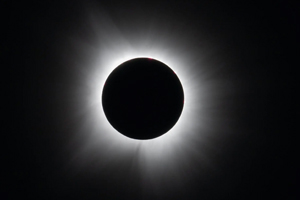
A total solar eclipse with a magnitude of 1.0386 (greatest eclipse 17:47:06 UTC) will be visible in parts of Greenland, Iceland, northern Russia, the Atlantic...
Includes presentation of the Neil Armstrong Award of Excellence, activities for the new class of Astronaut Scholars, 2-day Technical Conference where Scholars present their...
During U.S. spacewalk 97, two astronauts will replace a Space-to-Ground antenna on the orbital complex. The antenna is a critical communication system NASA uses...
Key themes include: Characterizing exoplanet-host solar-like stars; Star-planet interactions; Planet populations around solar-like stars. At University of Liège.
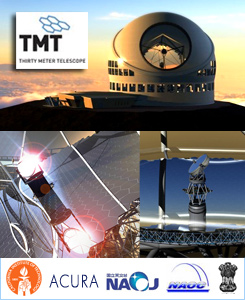 The recent decision to establish the Thirty Meter Telescope (TMT) on Hawaii Island’s Mauna Kea gives the Aloha State great prospects for 21st Century astronomy leadership. The TMT is set to be operational by 2018, at which time it will be the largest and most powerful astrophysical observatory in the world. Adding to the project’s dynamism are substantial international investments and partnerships between USA (Univ. of California, Caltech), Canada (ACURA), Japan (NAOJ), China (NAOC) and India (Dept. of Science and Technology India). The main instrument of the TMT Observatory will be a “Ritchey-Chrétien” telescope with a 30 meter diameter segmented primary mirror, supported by a secondary mirror and flat tertiary mirror. Using Multi-Conjugate Adaptive Optics, all of the mirrors will work together to produce diffraction-limited images over a 30 arcsecond diameter field-of-view. This caliber of star observation will exceed the capabilities of the Hubble Space Telescope. Currently, proponents and opponents of the TMT are evenly divided in Hawaii. Those in favor say the project will boost science, astronomy, STEM education, local jobs and the economy, while those not in favor contend the telescope would be built on sacred land and potentially threatens the surrounding environment. The Hawaii-based International Lunar Observatory offers similar, complimentary benefits to the TMT, including the establishment of its world-class processing facility and ILOA headquarters in Kamuela. (Credit: TMT Corporation, Caltech, ACURA, NAOJ, NAOC, Dept of Science and Technology India)
 With the December 9 opening of the South African Space Agency (SANSA), the progressive African nation has secured its position as a major international partner in space exploration. South Africa’s (SA) Trade and Industry Minister Rob Davies appointed 15 members to the South African Council for Space Affairs (SACSA) led by National Research Foundation space scientist Peter Martinez (C). SACSA will be involved with all space initiatives including collaborations between Brazil and China to share data from a series of Earth resource satellites being developed. It will also manage SA’s experimental SumbandillaSat micro satellite (CR), which has made nearly 6000 orbits around Earth and created 186 images since its launch September 2009. The International Astronomical Union (IAU) will establish the IAU Astronomy Development Office in SA to promote astronomy in developing countries across the world. The program will help to advance STEM education, promote jobs and possibly strengthen Africa’s bid for the Square Kilometer Array (SKA) telescope (BL). SA will host the 62nd International Astronautical Congress October 3-7, 2011 in Cape Town. As Africa’s population nears 1 billion, SA’s pioneering efforts will serve to unite and inspire the continent. Pictured: South African astronaut and entrepreneur Mark Shuttleworth (BR). (Credit: SKA, IAU, IAF, SANSA)
 = All times for terrestrial events in local time unless noted
 .
. = All times for international terrestrial events in local time unless noted.
 = All times for space events, and…
 = All times for international space / astro events in Hawaii Standard Time unless noted. Add 10 hours to obtain UT (‘Universal Time;’ Greenwich, England).
 Dec 20 — International Space Station, LEO: E-26 crew members begin 5-month stay in space with various science experiments and routine maintenance activities.