Scientists to Discuss Impact of Solar Variability at Space Climate Symposium 4
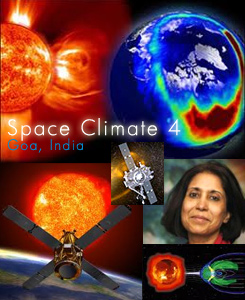
The 4th Space Climate Symposium (SCS) will take place on January 16-20 in Goa, India. Sponsored by 9 organizations including the Indian Institute of Science Education and Research, NASA Living with a Star Program (LWS) and the University of Oulu, the event will feature presentations from over 40 international scientists who will discuss the effects of long term solar variability and its impact on Earth’s climate. Initiated in 2004 in Oulu, Finland, the SCS series serves to advance the interdisciplinary science of Heliophysics and gain an understanding of the Sun-Earth connection as well as find solutions for satellite communication disruptions and radiation hazards to astronauts and spacecraft. The symposium will cover solar atmospheric processes, geomagnetic activity, cosmic-ray modulation, solar variability inputs in climate models and a special focus on the long minimum of solar cycle 23. JPL scientist Bruce Tsurutani and former lead program scientist for the LWS program Madhulika Guhathakurta (CR) will discuss recent data from several space missions including the Solar Dynamics Observatory, JAXA Hinode (Solar-B), Solar Terrestrial Relations Observatory and the Magnetospheric Multiscale mission planned for launch in 2014. (Credit: NASA)
Boulder Colorado Forum to Explore Technical Aspects of Commercial Human Spaceflight
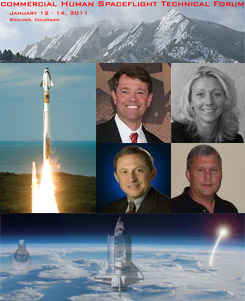
Special Aerospace Services (SAS) is hosting its inaugural Commercial Human Spaceflight Technical Forum on January 12-14 in Boulder CO. At the forum, representatives from the aerospace industry, U.S.A government agencies and the emerging commercial spaceflight sector will gain insight into techniques required to successfully achieve NASA human rating certification and FAA spaceflight licensing. SAS chief systems engineer Thomas Martin (BR) will provide an overview of the commercial human rating requirements and SAS CEO Heather Bulk (TR) will explain why system safety makes good business sense. NASA astronauts Jeff Ashby (TL) and Scott Parazynski will give a dinner talk on Thursday Jan 13 on ‘The astronaut experience.’ Alan Stern (BL) and NASTAR training center representative Brienna Henwood will outline a crew training syllabus for space tourists and other non-astronauts. With team member experience in NASA, Air Force and Industry programs (Space Plane, Launch Services, EELV, Constellation and COTS) and involvement in over 30 successful LEO and Planetary missions, SAS offers technical analyses and consulting in the fields of engineering, mission assurance, hardware development and international business. (Credit: CHSTF)
= All times for terrestrial events in local time unless noted.
= All times for international terrestrial events in local time unless noted.
= All times for space events, and…
= All times for international space / astro events in Hawaii Standard Time unless noted. Add 10 hours to obtain UT (‘Universal Time;’ Greenwich, England).
Jan 10 — International Space Station, LEO: Cmdr Scott Kelly and flight engineers Catherine Coleman and Paolo Nespoli continue rehearsing capture techniques at the robotics workstation for the grapple and berthing of the H-2 Transfer Vehicle set to arrive at the International Space Station on Jan 27.
Jan 10 — NASA Lunar Reconnaissance Orbiter (LRO), Lunar Orbit: LRO continues to function nominally in scientific phase of mission; Upcoming LRO 2011 data release dates: March 15, June 15, September 15 and December 15.
Jan 10 — Mars Rover Spirit, Red Planet: Increasing sunlight on Mars’ surface gives Spirit team some hope to put the solar-powered rover back in commission.
Jan 10-12 — NASTAR Center,Philadelphia PA: ‘NASTAR Suborbital Scientist Training Program,’ provides researchers, professors and graduate students with hands-on space flight physiology training to prepare them to design experiments and perform research aboard commercial suborbital space flights.
Jan 10-13 — Applied Technology Institute, Cape Canaveral FL: ‘Fundamentals of Orbital & Launch Mechanics,’ instructed by Thomas Logsdon, 4-day comprehensive course to cover practical rules of thumb and physical insights to help understand the mysteries of powered flight maneuvers and the beneficial properties of space.
Jan 10-14 — ESA, The Paris Observatory, et al, Paris, France: ‘The Millimeter and Submillimeter Sky in the Planck Mission Era,’ conference to discuss Planck flight performances and the implications of the cosmological goals for Cosmic Microwave Background science.
Jan 5 — International Space University, University of South Australia, Adelaide, Australia: ‘Southern Hemisphere Summer Space Program,’ an intensive, interdisciplinary, live-in program for professionals, graduates and senior graduates with 40 core lectures, workshops and a group research project; through Feb 4.
Jan 14 — ESA, Paris, France: Start-of-the-year press breakfast with ESA Director General Jean-Jacques Dordain to discuss Agency’s activities of 2010 and planned events for 2011.
Jan 14 — Adler Planetarium, Chicago IL: ‘Astro-Overnight,’ families will enjoy a one-of-a-kind experience offering exclusive programs which include recycling water, growing food in space and stories of the stars.
Jan 15 — Moon: 1.3° SSE of Pleiades, 04:00; 7.5° N of Aldebaran, 22:00.
SUNDAY
Jan 16-21 — Indian Institute of Science and Research, Indian Institute of Astrophysics, University of Oulu Finland, et al, Goa, India: ‘4th Space Climate Symposium,’ event to cover space mission data resources, long-term solar variability, assessment of Earth’s upper climate and climate model discussion.
Includes ~150 meetings covering the fields of COSPAR Scientific Commissions / Panels / Task Groups, such as SC B: The Earth-Moon System, Planets, and...
At the Palais des Nations and online. Outer space is entering a renewed phase of strategic importance, defined by rapid innovation, growing competition and deepening...
This international lunar science meeting has two objectives: to provide a platform for leading experts to review recent advances across lunar research, from the...
At CSIR International Convention Centre. Key topics are Earth Observation, Developing Space Tourism, Space Supply Manufacturing. Cultural tours are offered.
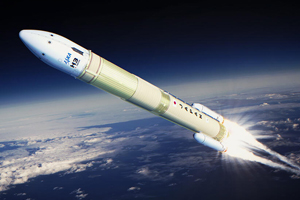
(No earlier than 10 Aug) Japan to launch the MICHIBIKI No. 7 | Quasi-Zenith Satellite System (QZS-7) navigation satellite. Launch window remains open through...
Participants will receive theoretical and hands-on training in electron imaging and X-ray spectroscopy for application to planetary samples. This training opportunity is targeted at...
"Leading Australia’s Space Future for Our Strategic Advantage". Southern Space 2026 brings together decision-makers who set the direction for Australia’s space sector. It is...
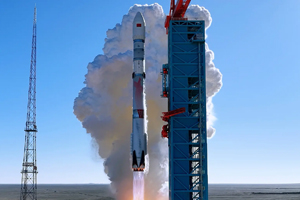
The second test launch of LandSpace's ZQ-3 rocket with undisclosed test payloads. Zhuque-3 first stage booster will attempt to land on its downrange landing...
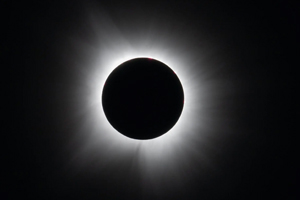
A total solar eclipse with a magnitude of 1.0386 (greatest eclipse 17:47:06 UTC) will be visible in parts of Greenland, Iceland, northern Russia, the Atlantic...
Includes presentation of the Neil Armstrong Award of Excellence, activities for the new class of Astronaut Scholars, 2-day Technical Conference where Scholars present their...
During U.S. spacewalk 97, two astronauts will replace a Space-to-Ground antenna on the orbital complex. The antenna is a critical communication system NASA uses...
Key themes include: Characterizing exoplanet-host solar-like stars; Star-planet interactions; Planet populations around solar-like stars. At University of Liège.
 The 4th Space Climate Symposium (SCS) will take place on January 16-20 in Goa, India. Sponsored by 9 organizations including the Indian Institute of Science Education and Research, NASA Living with a Star Program (LWS) and the University of Oulu, the event will feature presentations from over 40 international scientists who will discuss the effects of long term solar variability and its impact on Earth’s climate. Initiated in 2004 in Oulu, Finland, the SCS series serves to advance the interdisciplinary science of Heliophysics and gain an understanding of the Sun-Earth connection as well as find solutions for satellite communication disruptions and radiation hazards to astronauts and spacecraft. The symposium will cover solar atmospheric processes, geomagnetic activity, cosmic-ray modulation, solar variability inputs in climate models and a special focus on the long minimum of solar cycle 23. JPL scientist Bruce Tsurutani and former lead program scientist for the LWS program Madhulika Guhathakurta (CR) will discuss recent data from several space missions including the Solar Dynamics Observatory, JAXA Hinode (Solar-B), Solar Terrestrial Relations Observatory and the Magnetospheric Multiscale mission planned for launch in 2014. (Credit: NASA)
 Special Aerospace Services (SAS) is hosting its inaugural Commercial Human Spaceflight Technical Forum on January 12-14 in Boulder CO. At the forum, representatives from the aerospace industry, U.S.A government agencies and the emerging commercial spaceflight sector will gain insight into techniques required to successfully achieve NASA human rating certification and FAA spaceflight licensing. SAS chief systems engineer Thomas Martin (BR) will provide an overview of the commercial human rating requirements and SAS CEO Heather Bulk (TR) will explain why system safety makes good business sense. NASA astronauts Jeff Ashby (TL) and Scott Parazynski will give a dinner talk on Thursday Jan 13 on ‘The astronaut experience.’ Alan Stern (BL) and NASTAR training center representative Brienna Henwood will outline a crew training syllabus for space tourists and other non-astronauts. With team member experience in NASA, Air Force and Industry programs (Space Plane, Launch Services, EELV, Constellation and COTS) and involvement in over 30 successful LEO and Planetary missions, SAS offers technical analyses and consulting in the fields of engineering, mission assurance, hardware development and international business. (Credit: CHSTF)
 = All times for terrestrial events in local time unless noted.
 = All times for international terrestrial events in local time unless noted.
 = All times for space events, and…
 = All times for international space / astro events in Hawaii Standard Time unless noted. Add 10 hours to obtain UT (‘Universal Time;’ Greenwich, England).
 Jan 10 — International Space Station, LEO: Cmdr Scott Kelly and flight engineers Catherine Coleman and Paolo Nespoli continue rehearsing capture techniques at the robotics workstation for the grapple and berthing of the H-2 Transfer Vehicle set to arrive at the International Space Station on Jan 27.