2011 promises to be a pivotal year for Jupiter exploration. The most massive planet in our solar system, with dozens of moons, an enormous magnetic field and possibilities of life must surely be the ultimate goal of solar system exploration plans. Alyssa Rhoden of UC Berkeley will initiate this year’s focus on Jupiter with a talk at the SETI Institute in Mountain View, CA on February 2. Dr Rhoden will present her case that obliquity and physical libration contribute to the pattern of tidal stress on Europa. She will also remark on the implication for non-synchronous rotation and polar wander. 2011 will also see the launch of NASA’s newest mission to Jupiter, Juno. Set to launch in August, the spacecraft will carry 9 scientific instruments to verify the existence of Jupiter’s solid core, map the intense magnetic field, measure the amount of water and ammonia in its deep atmosphere and observe the planet’s auroras. Juno will be the 9th spacecraft to visit Jupiter and the 2nd dedicated solely for Jupiter exploration. (Credit: NASA, SETI)
ESA / NASA Workshop in Morocco to Advance Geobiology in Space Exploration
ESA’s Topical Team Geomicrobiology for Space Settlement and Exploration (GESSE) along with NASA have organized a community workshop, ‘Geobiology in Space Exploration’ on February 7-9 at the University of Cadi Ayyad in Marrakech, Morocco. Investigators from numerous fields involved in geobiologic research including mineralogy, atmospheric science, geomicrobiology (investigating the interactions between microbes and minerals) and astrobiology will be on hand to make presentations as well as help devise a strategic document on the range of geobiology applications and possible space missions for ESA. Several topics include biosignatures and life, the quantitative analysis of the effect of coronal mass ejections on the rate of formation of hydroxyls and water on the Moon’s surface, micro niches in Antarctica as examples for Mars analog habitats and growing water and soil microbes in space. Eight scientists including Portland University Geology Professor Sherry Cady (B) and German Aerospace Center Institute of Planetary Research scientist Jean-Pierre de Vera (T) will chair over 30 presentations and 15 poster sessions. The event will also feature a field trip on Feb 10-14 to investigate several sites with geomicrobiological / geological interests. (Credit: NASA, ESA, University of Cadi Ayyad, Portland University)
= All times for terrestrial events in local time unless noted.
= All times for international terrestrial events in local time unless noted.
= All times for space events, and…
= All times for international space / astro events in Hawaii Standard Time unless noted. Add 10 hours to obtain UT (‘Universal Time;’ Greenwich, England).
Jan 31 — International Space Station, LEO: E-26 crew members will be busy unloading cargo this week from Progress 41 which delivered 870kg of propellant, 50kg of oxygen, 421kg of water and 1400kg of spare parts and supplies to the station.
Jan 31 — NASA Lunar Reconnaissance Orbiter (LRO), Lunar Orbit: LRO continues to make digital elevation and terrain maps that will be a fundamental reference for future human exploration.
Jan 31 — ESA Mars Express, Red Planet: Scientists continue to analyze imagery from a recent flyby of Mars’ moon Phobos which, for the 1st time, covered a large part of its Southern Hemisphere; data will be used to compose topographic maps used for Russia Phobos-Grunt mission NET 2011, early 2012.
Jan 31 — Asteroid 1999 CG9: Near-Earth Flyby (0.095 AU).
Continued from . . .
Jan 5 — International Space University, University of South Australia, Adelaide, Australia: ‘Southern Hemisphere Summer Space Program,’ an intensive, interdisciplinary, live-in program for professionals, graduates and senior graduates with 40 core lectures, workshops and a group research project; through Feb 4.
Jan 26 — Virginia Tech, University of Colorado, NASA, Poker Flat Research Range, Fairbanks AK: Scientists from Virginia Tech and the University of Colorado make preparations to launch 2 NASA sounding rockets to obtain an electronic telescope image of a far-off galaxy; through Feb 15.
Jan 29 — The Astronomy School of the Institute for Research in Fundamental Science, Sharif University of Technology, Kish Island, Iran: ‘International Workshop on Extrasolar Planets;’ through Feb 8.
Feb 1 — 8th Columbia STS-107 Observation,Nationwide USA: Shuttle crew members David M. Brown, Rick Husband, Laurel Clark, Kalpana Chawla, Michael P. Anderson, William McCool, and Ilan Ramon were tragically killed when the Columbia spacecraft broke apart on its return to Earth on February 1, 2003.
Feb 1 — Deep Space, Jupiter: Follow-up research into the Jupiter asteroid impact of July 2009 suggests the asteroid had a rock like density of approximately 2.5 grams per cubic centimeter with a diameter around 200 to 500 meters and released energy equivalent to 5 gigatons of TNT, or about 250,000 times more energy than was released by the atomic bomb the USA dropped on Nagasaki, Japan in 1945.
Feb 1 — Capricornid / Sagittarid Meteors: Daylight radio shower which radiates from constellation Capricorn and Sagittarius.
Feb 2 — NASA Headquaters, Washington DC: Media briefing to announce Kepler mission’s latest findings about planets outside our solar system at 13:00 EST.
Feb 2 — Moon: New Moon (Beginning of Lunation 1090), 16:31; 4.5° NNW of Mars; 16:00.
THURSDAY
Feb 3 — US Space and Rocket Center, Huntsville AL: ‘Tranquility Base Rendezvous,’ event to feature honorary guest Neil Armstrong and honor George von Tiesenhausen with the Lifetime Achievement Award for Education.
Feb 3-5 — Space Center Houston, Houston TX: ‘17th Space Exploration Educators Conference,’ a 3-day of complete submersion into the out-of-this world adventure of space exploration.
Feb 3 — Moon: 4.8° NNW of Neptune; 18:00.
Feb 3 — Asteroid (Near Earth Flyby): 2008 CK (0.043 AU); 2006 SU217 (0.085 AU); 1998 HE3 (0.097 AU).
FRIDAY
Feb 4 — Adler Planetarium, Chicago IL: ‘Astro-Overnight,’ families will enjoy a one-of-a-kind experience offering exclusive programs which include recycling water, growing food in space and stories of the stars.
Feb 5 — USAF, Launch Minotaur 1 / NROL-66, Vandenberg Air Force Base CA: The Air Force Minotaur 1 rocket set to launch classified satellite payload for the USA National Reconnaissance Office.
Feb 5 — Jet Propulsion Laboratory, Pasadena CA: ‘Comets and Asteroids Educators Conference,’ event to feature focus on real-life exploration and new discovery in a way that will excite and inspire students.
Includes ~150 meetings covering the fields of COSPAR Scientific Commissions / Panels / Task Groups, such as SC B: The Earth-Moon System, Planets, and...
At the Palais des Nations and online. Outer space is entering a renewed phase of strategic importance, defined by rapid innovation, growing competition and deepening...
This international lunar science meeting has two objectives: to provide a platform for leading experts to review recent advances across lunar research, from the...
At CSIR International Convention Centre. Key topics are Earth Observation, Developing Space Tourism, Space Supply Manufacturing. Cultural tours are offered.
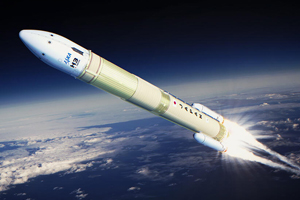
(No earlier than 10 Aug) Japan to launch the MICHIBIKI No. 7 | Quasi-Zenith Satellite System (QZS-7) navigation satellite. Launch window remains open through...
Participants will receive theoretical and hands-on training in electron imaging and X-ray spectroscopy for application to planetary samples. This training opportunity is targeted at...
"Leading Australia’s Space Future for Our Strategic Advantage". Southern Space 2026 brings together decision-makers who set the direction for Australia’s space sector. It is...
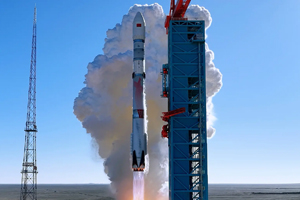
The second test launch of LandSpace's ZQ-3 rocket with undisclosed test payloads. Zhuque-3 first stage booster will attempt to land on its downrange landing...
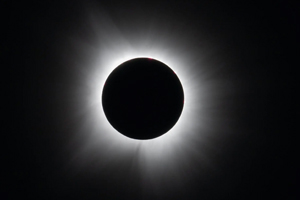
A total solar eclipse with a magnitude of 1.0386 (greatest eclipse 17:47:06 UTC) will be visible in parts of Greenland, Iceland, northern Russia, the Atlantic...
Includes presentation of the Neil Armstrong Award of Excellence, activities for the new class of Astronaut Scholars, 2-day Technical Conference where Scholars present their...
During U.S. spacewalk 97, two astronauts will replace a Space-to-Ground antenna on the orbital complex. The antenna is a critical communication system NASA uses...
Key themes include: Characterizing exoplanet-host solar-like stars; Star-planet interactions; Planet populations around solar-like stars. At University of Liège.
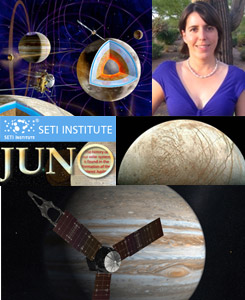 2011 promises to be a pivotal year for Jupiter exploration. The most massive planet in our solar system, with dozens of moons, an enormous magnetic field and possibilities of life must surely be the ultimate goal of solar system exploration plans. Alyssa Rhoden of UC Berkeley will initiate this year’s focus on Jupiter with a talk at the SETI Institute in Mountain View, CA on February 2. Dr Rhoden will present her case that obliquity and physical libration contribute to the pattern of tidal stress on Europa. She will also remark on the implication for non-synchronous rotation and polar wander. 2011 will also see the launch of NASA’s newest mission to Jupiter, Juno. Set to launch in August, the spacecraft will carry 9 scientific instruments to verify the existence of Jupiter’s solid core, map the intense magnetic field, measure the amount of water and ammonia in its deep atmosphere and observe the planet’s auroras. Juno will be the 9th spacecraft to visit Jupiter and the 2nd dedicated solely for Jupiter exploration. (Credit: NASA, SETI)
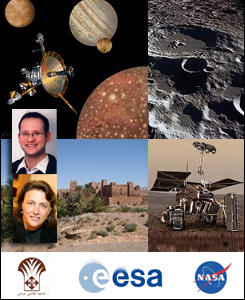 ESA’s Topical Team Geomicrobiology for Space Settlement and Exploration (GESSE) along with NASA have organized a community workshop, ‘Geobiology in Space Exploration’ on February 7-9 at the University of Cadi Ayyad in Marrakech, Morocco. Investigators from numerous fields involved in geobiologic research including mineralogy, atmospheric science, geomicrobiology (investigating the interactions between microbes and minerals) and astrobiology will be on hand to make presentations as well as help devise a strategic document on the range of geobiology applications and possible space missions for ESA. Several topics include biosignatures and life, the quantitative analysis of the effect of coronal mass ejections on the rate of formation of hydroxyls and water on the Moon’s surface, micro niches in Antarctica as examples for Mars analog habitats and growing water and soil microbes in space. Eight scientists including Portland University Geology Professor Sherry Cady (B) and German Aerospace Center Institute of Planetary Research scientist Jean-Pierre de Vera (T) will chair over 30 presentations and 15 poster sessions. The event will also feature a field trip on Feb 10-14 to investigate several sites with geomicrobiological / geological interests. (Credit: NASA, ESA, University of Cadi Ayyad, Portland University)
 = All times for terrestrial events in local time unless noted.
 = All times for international terrestrial events in local time unless noted.
 = All times for space events, and…
 = All times for international space / astro events in Hawaii Standard Time unless noted. Add 10 hours to obtain UT (‘Universal Time;’ Greenwich, England).
 Jan 31 — International Space Station, LEO: E-26 crew members will be busy unloading cargo this week from Progress 41 which delivered 870kg of propellant, 50kg of oxygen, 421kg of water and 1400kg of spare parts and supplies to the station.