Astrophysics, space surveillance and a geology field trip will be the focus of 3 space events in Spain. The ‘2nd Workshop on Robotic Autonomous Observatories’ in Malaga began on June 5 and will continue through June 10. Sponsored by the Andalucia Institute of Astrophysics and the University of Malaga, the event centers on the growing number of robotic observatories worldwide and how they impact the field of astrophysics. Tokyo Institute of Technology Scientist Nobuyuki Kawai (CR) spoke on the discoveries of the MITSuME robotic telescope (TR) in Japan. The 91cm IR telescope consists of 3 robotic telescopes, 2 optical telescopes and an IR telescope. On Jun 7-9, ESA will hold the ‘1st European Space Surveillance’ in Madrid. International experts include ESA Director of Human Spaceflight and Operations Thomas Reiter (CL) and Beijing Institute of Tracking and Telecommunications Technology Scientist Zhonggui Liu will share the latest research on space debris, orbital hazard detection and satellite safety. NASA and ESA will sponsor ‘Mars Week in Europe’ Jun 12-21 in Lisbon, Portugal. The event will conclude with a 2-day field trip to study 2 geological locations in Rio Tinto, Spain (BL) on Jun 17-19. (Credit: NASA, ESA, fungur.com, phys.titech.ac.jp)
JPL Lecture Explores Potential Impact of Climate Change
On Thursday, June 9, NASA Jet Propulsion Laboratory (JPL) lead scientist in terrestrial studies Ron Blom will present a lecture entitled ‘Climate Change Impact on Civilizations: Lessons from Space Data and Archaeology’ at the von Kármán Auditorium at JPL, in Pasadena, CA. In order to assess and anticipate possible impacts and responses of civilization to climate change, Blom will examine the historical and archaeological record and compare it to the increasingly detailed climate records from ice cores, sediment cores, cave data and other climate data. NASA currently has 15 satellites monitoring climate change processes in orbit and JPL is preparing for the launch of the Aquarius / SAC-D observatory. Scheduled to launch June 9 from Vandenberg Air Force Base in CA, Aquarius will measure ocean surface salinity to study the interactions between ocean circulation, the water cycle and climate. JPL is also hosting a Tweetup for approximately 120 Twitter followers on Monday, June 6. The Tweetup will include a tour of JPL, robotics demonstrations and a last chance to see the Curiosity rover before it ships to Florida to prepare for a November launch. (Credit:NASA)
= All times for terrestrial events in local time unless noted.
= All times for international terrestrial events in local time unless noted.
= All times for space events, and…
= All times for international space / astro events in Hawaii Standard Time unless noted. Add 10 hours to obtain UT (‘Universal Time;’ Greenwich, England).
Jun 6 — International Space Station, LEO: Expedition 28 crew members Cmdr Andrey Borisenko and Flight Engineers Alexander Samokutyaev and Ron Garan prepare for this week’s arrival of Flight Engineers Mike Fossum, Sergei Volkov and Satoshi Furukawa.
Jun 6 — NASA Lunar Reconnaissance Orbiter (LRO), Lunar Orbit: All systems nominal in scientific phase of mission as LRO continues to make digital elevation and terrain maps that will be a fundamental reference for future human exploration.
Jun 6 — Mars Odyssey, Red Planet: NASA Mars Odyssey orbiter due to take last listen for UHF signals from rover Spirit on Jun 8 with the final relay pass due at 12:30 PDT.
Jun 6-8 — National Institute of Aerospace, NASA, Cocoa Beach FL: ‘2011 Revolutionary Aerospace Systems Concepts Academic Linkage Competition,’ to provide university-level engineering students the opportunity to design projects based on NASA engineering challenges as well as offer NASA access to new research and design projects by students.
Jun 6-9 — Applied Technology Institute, Colorado Springs CO: ‘Earth Station Design.’
Continued from . . .
May 9 — Google Lunar X Prize Foundation, LEGO Group, Online: Free registration and Phase 1 of ‘Moonbots 2.0 Challenge‘ open; through Jun 13.
May 31 — NASA Lunar Science Institute, Lunar and Planetary Institute, Houston TX: ‘Lunar Exploration Summer Intern Program,’ 10-week program to evaluate possible landing sites for robotic and human exploration missions; through Aug 5.
Jun 5 — NASA Astrobiology Institute, University of Colorado at Boulder, et al, Bozeman MT: ‘AbGradCon11,’ event for aspiring astrobiologists to participate in presentations, poster sessions, public outreach and a field trip to Yellowstone National Park; through Jun 8.
NET Jun 7 — RSA, Launch Soyuz / ISS 27S, Baikonur Cosmodrome, Kazakhstan: Russian government Soyuz rocket set to launch Soyuz spacecraft to the ISS with members of the next Expedition crew.
Jun 7 — Arietid Meteors: Strongest daylight meteor shower of the year which radiates from Constellation Aries, the Arietids usually hit Earth’s atmosphere with a velocity of 39 km/s.
NET Jun 9 — ULA, Launch Delta 2 / SAC-D, Aquarius, Vandenberg AFB CA: ULA Delta rocket set to launch Argentina’s SAC-D satellite with the Aquarius instrument for NASA. Satellites to map salt concentrations of the world’s oceans.
NET Jun 9 — NASA, Launch Terrier – Orion / SMART, Wallops Island VA: A test of several new rocket technologies on a Terrier- Improved Orion suborbital sounding rocket set to launch from NASA’s Launch Range at the Wallops Flight Facility in Virginia between 07:00 – 10:00 EDT.
Jun 10-12 — Technical University of Munich Scientific Working Group for Rocketry & Spaceflight, Klaus Höchstetter Foundation, EuroSpaceward, et al, Munich, Germany: ‘1st European Space Elevator Challenge.’
Jun 10-12 — American Astronautical Society, American Institute of Aeronautics and Astronautics, Abilene TX: ‘Student CanSat Competition 2011.’
Jun 10 — Moon: 7.6° SSW of Saturn; 07:00.
SATURDAY
Jun 11 — Moon: 2.6° S of Spica, 06:00; At Perigee (Distance 57.57 Earth-Radii).
Includes ~150 meetings covering the fields of COSPAR Scientific Commissions / Panels / Task Groups, such as SC B: The Earth-Moon System, Planets, and...
At the Palais des Nations and online. Outer space is entering a renewed phase of strategic importance, defined by rapid innovation, growing competition and deepening...
This international lunar science meeting has two objectives: to provide a platform for leading experts to review recent advances across lunar research, from the...
At CSIR International Convention Centre. Key topics are Earth Observation, Developing Space Tourism, Space Supply Manufacturing. Cultural tours are offered.
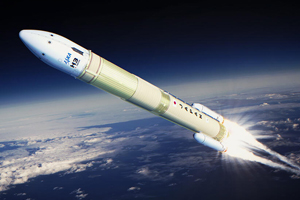
(No earlier than 10 Aug) Japan to launch the MICHIBIKI No. 7 | Quasi-Zenith Satellite System (QZS-7) navigation satellite. Launch window remains open through...
Participants will receive theoretical and hands-on training in electron imaging and X-ray spectroscopy for application to planetary samples. This training opportunity is targeted at...
"Leading Australia’s Space Future for Our Strategic Advantage". Southern Space 2026 brings together decision-makers who set the direction for Australia’s space sector. It is...
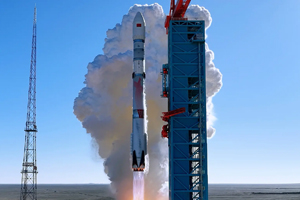
The second test launch of LandSpace's ZQ-3 rocket with undisclosed test payloads. Zhuque-3 first stage booster will attempt to land on its downrange landing...
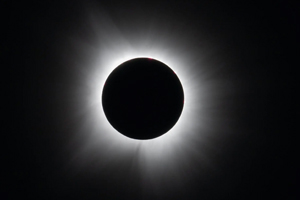
A total solar eclipse with a magnitude of 1.0386 (greatest eclipse 17:47:06 UTC) will be visible in parts of Greenland, Iceland, northern Russia, the Atlantic...
Includes presentation of the Neil Armstrong Award of Excellence, activities for the new class of Astronaut Scholars, 2-day Technical Conference where Scholars present their...
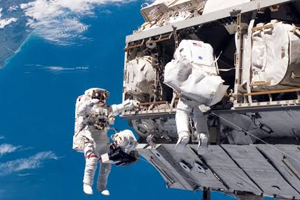
During U.S. spacewalk 97, two astronauts will replace a Space-to-Ground antenna on the orbital complex. The antenna is a critical communication system NASA uses...
Key themes include: Characterizing exoplanet-host solar-like stars; Star-planet interactions; Planet populations around solar-like stars. At University of Liège.
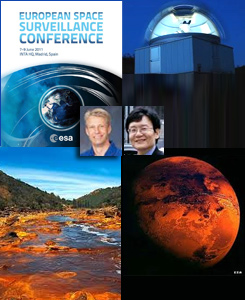 Astrophysics, space surveillance and a geology field trip will be the focus of 3 space events in Spain. The ‘2nd Workshop on Robotic Autonomous Observatories’ in Malaga began on June 5 and will continue through June 10. Sponsored by the Andalucia Institute of Astrophysics and the University of Malaga, the event centers on the growing number of robotic observatories worldwide and how they impact the field of astrophysics. Tokyo Institute of Technology Scientist Nobuyuki Kawai (CR) spoke on the discoveries of the MITSuME robotic telescope (TR) in Japan. The 91cm IR telescope consists of 3 robotic telescopes, 2 optical telescopes and an IR telescope. On Jun 7-9, ESA will hold the ‘1st European Space Surveillance’ in Madrid. International experts include ESA Director of Human Spaceflight and Operations Thomas Reiter (CL) and Beijing Institute of Tracking and Telecommunications Technology Scientist Zhonggui Liu will share the latest research on space debris, orbital hazard detection and satellite safety. NASA and ESA will sponsor ‘Mars Week in Europe’ Jun 12-21 in Lisbon, Portugal. The event will conclude with a 2-day field trip to study 2 geological locations in Rio Tinto, Spain (BL) on Jun 17-19. (Credit: NASA, ESA, fungur.com, phys.titech.ac.jp)
 On Thursday, June 9, NASA Jet Propulsion Laboratory (JPL) lead scientist in terrestrial studies Ron Blom will present a lecture entitled ‘Climate Change Impact on Civilizations: Lessons from Space Data and Archaeology’ at the von Kármán Auditorium at JPL, in Pasadena, CA. In order to assess and anticipate possible impacts and responses of civilization to climate change, Blom will examine the historical and archaeological record and compare it to the increasingly detailed climate records from ice cores, sediment cores, cave data and other climate data. NASA currently has 15 satellites monitoring climate change processes in orbit and JPL is preparing for the launch of the Aquarius / SAC-D observatory. Scheduled to launch June 9 from Vandenberg Air Force Base in CA, Aquarius will measure ocean surface salinity to study the interactions between ocean circulation, the water cycle and climate. JPL is also hosting a Tweetup for approximately 120 Twitter followers on Monday, June 6. The Tweetup will include a tour of JPL, robotics demonstrations and a last chance to see the Curiosity rover before it ships to Florida to prepare for a November launch. (Credit:NASA)
 = All times for terrestrial events in local time unless noted.
 = All times for international terrestrial events in local time unless noted.
 = All times for space events, and…
 = All times for international space / astro events in Hawaii Standard Time unless noted. Add 10 hours to obtain UT (‘Universal Time;’ Greenwich, England).
 Jun 6 — International Space Station, LEO: Expedition 28 crew members Cmdr Andrey Borisenko and Flight Engineers Alexander Samokutyaev and Ron Garan prepare for this week’s arrival of Flight Engineers Mike Fossum, Sergei Volkov and Satoshi Furukawa.